Jung and Tarot
 75
75

Jung and Tarot
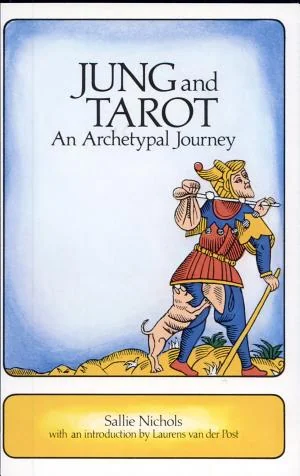
Sallie Nichols' Jung and Tarot is a remarkable synthesis, bridging the esoteric tradition of the Tarot with the rigorous analytical framework of Jungian psychology. Its strength lies in its detailed mapping of the Major Arcana onto the individuation process, offering a psychologically resonant interpretation of the archetypal journey. The book's thoroughness in connecting each card to specific Jungian concepts, like the ego, the self, and the shadow, is particularly illuminating. However, for readers unfamiliar with Jungian terminology, the dense psychological analysis might present a steep learning curve. A passage that stands out is Nichols' treatment of The Fool, not as mere innocence, but as the initiating spark of conscious awareness venturing into the unknown archetypal realms. The book ultimately offers a compelling argument for the Tarot as a profound psychological mirror for self-discovery.
📝 Description
75
Sallie Nichols' Jung and Tarot, published in 1980, interprets the 78-card deck using Jungian psychology.
First released in 1980, Sallie Nichols' Jung and Tarot offers a detailed interpretation of the 78-card Tarot deck through the framework of Carl Jung's analytical psychology. Nichols argues that the Major Arcana, specifically, functions as a symbolic guide to the development of the human psyche. This development mirrors the archetypal stages of individuation, a central concept in Jungian thought. The book is for individuals interested in the confluence of psychology and esoteric symbolism. It appeals to readers who want to understand the Tarot not just as a divinatory tool but as a psychological system that reflects universal patterns of growth and transformation within the human experience.
Nichols aligns the Tarot's imagery with key Jungian ideas. These include archetypes, the shadow, the anima/animus, and the individuation process. The Great Cycle of the Major Arcana is presented as an allegory for the hero's journey. Each card represents a stage in an individual's pursuit of wholeness and self-understanding. Emerging during a period of growing interest in Jungian ideas and alternative spiritualities, Nichols' book provided a structured approach to examining the Tarot's deeper meanings. It contributed to a broader reassessment of ancient symbolic systems within modern psychological contexts, moving beyond simple fortune-telling applications.
Nichols' work emerged in the late 20th century, a time when Western esotericism saw a significant scholarly and popular engagement with depth psychology. This period fostered attempts to integrate ancient symbolic systems, such as the Tarot, with the theoretical frameworks of figures like Carl Jung. The book fits within a tradition that sought to understand Tarot not merely for prediction, but as a symbolic language reflecting universal psychological processes and stages of human development. It represents a move to ground esoteric practices within a more structured, psychological understanding, moving away from purely mystical interpretations.
💡 Why Read This Book?
• Gain a psychological framework for understanding the Tarot's archetypal imagery, moving beyond simple divination to explore personal growth. • Discover how the Major Arcana can be interpreted as a map of the individuation process, reflecting stages of self-realization. • Understand the symbolic language of the Tarot through the lens of Jungian psychology, offering new insights into universal human experiences.
⭐ Reader Reviews
Honest opinions from readers who have explored this book.
❓ Frequently Asked Questions
When was Sallie Nichols' Jung and Tarot first published?
Sallie Nichols' seminal work, Jung and Tarot, was first published on June 1, 1980. This publication date places it within a period of significant interest in integrating psychological theories with esoteric traditions.
What is the primary psychological theory used in Jung and Tarot?
The primary psychological theory underpinning Jung and Tarot is analytical psychology, developed by Carl Jung. Nichols applies concepts such as archetypes, the collective unconscious, and the process of individuation to interpret the Tarot cards.
How does Nichols relate the Tarot to personal growth?
Nichols presents the Major Arcana as a symbolic representation of the stages of personal growth and individuation. The sequence of cards is interpreted as a metaphorical journey towards psychological wholeness and self-understanding.
Is Jung and Tarot suitable for beginners to the Tarot?
While valuable, the book assumes some familiarity with both Tarot symbolism and Jungian psychology. Beginners might find it beneficial to have a basic understanding of Tarot or Jungian concepts beforehand to fully grasp the depth of Nichols' analysis.
What makes this interpretation of the Tarot unique?
Its uniqueness lies in the systematic application of Jungian analytical psychology to the entire Tarot deck, particularly the Major Arcana, framing it as a comprehensive blueprint for the human psyche's developmental journey.
Does the book discuss the Minor Arcana in detail?
While the primary focus is on the Major Arcana as a map of individuation, Nichols also addresses the Minor Arcana, integrating their symbolism within the broader psychological framework established for the Major Arcana.
🔮 Key Themes & Symbolism
Archetypes and the Psyche
Nichols meticulously examines the Tarot's figures and scenes as manifestations of universal archetypes, concepts central to Carl Jung's analytical psychology. She demonstrates how cards like The Magician, The High Priestess, and The Emperor embody primal patterns of human experience. The work posits that engaging with these archetypal images allows individuals to confront and integrate unconscious aspects of their personality, fostering psychological wholeness.
The Individuation Journey
Central to Nichols' thesis is the interpretation of the Major Arcana as a symbolic roadmap of the individuation process—the lifelong journey toward psychological integration and self-realization. The sequence from The Fool to The World is presented as a narrative of the soul's development, encompassing challenges, transformations, and the eventual attainment of a unified self. This perspective reframes the Tarot as a tool for understanding one's unique path toward maturity.
Mythology and Symbolism
The book draws parallels between Tarot symbolism and figures from world mythology, comparative religion, and the graphic arts. Nichols highlights how ancient stories and visual motifs resonate with the psychological dramas depicted in the cards. This cross-cultural approach underscores the universality of the archetypal patterns embedded within the Tarot, connecting its esoteric language to broader human narratives.
Tarot as a Psychological Mirror
Rather than solely a divinatory instrument, Nichols positions the Tarot as a profound psychological mirror. The cards offer a symbolic language through which individuals can explore their inner world, gain insight into unconscious dynamics, and identify areas for personal development. This psychological lens encourages introspection and a deeper understanding of one's motivations and life path.
💬 Memorable Quotes
Direct passages from the work, attributed to the author.
“The Tarot cards are archetypal images, and the archetypes are constituents of the psyche.”
— This statement expresses the core argument: the Tarot's power stems from its direct connection to the fundamental, universal patterns of the human mind as described by Jung.
“The sequence of the major arcana constitutes a map of the life journey.”
— This highlights the book's central thesis, presenting the Major Arcana not as random images, but as a structured, progressive narrative of psychological development and self-discovery.
“The Fool represents the beginning of consciousness, the spark of awareness venturing into the unknown.”
— An interpretation of the first Major Arcana card, emphasizing its role as the initiator of the psychological journey, characterized by potential and the inherent risks of exploration.
“Individuation is the process by which a person becomes a psychological individual.”
— A direct definition of the Jungian concept that forms the bedrock of Nichols' analysis, explaining the ultimate goal of the Tarot's symbolic journey presented in the book.
“The cards can serve as a guide to understanding the unconscious.”
— This points to the practical application of the Tarot within a Jungian framework, suggesting its utility as a tool for introspection and accessing deeper layers of the psyche.
🌙 Esoteric Significance
Tradition
Nichols' work aligns with the Western Esoteric tradition, specifically drawing from Jungian analytical psychology, which itself integrated Gnostic and Hermetic concepts of the psyche. While not strictly a Kabbalistic or Theosophical text, it engages with the Tarot as a symbolic system that, like these traditions, seeks to map spiritual and psychological realities. It departs from purely mystical interpretations by grounding the Tarot's power in the structure of the human psyche.
Symbolism
Key symbols include The Fool, representing the innocent ego starting the individuation journey; The Great Mother archetype, embodied by cards like The Empress, signifying nurturing and creation; and The World, symbolizing wholeness and the culmination of the archetypal journey. Nichols interprets these not just as mystical forces but as fundamental psychic potentials and stages of development.
Modern Relevance
Jung and Tarot remains highly relevant for contemporary practitioners of depth psychology, Jungian analysts, and Tarot enthusiasts seeking a sophisticated interpretive framework. It influences modern approaches to archetypal psychology, the use of symbolic systems in therapy, and the academic study of divination as a psychological phenomenon. Thinkers in transpersonal psychology and those exploring consciousness studies continue to reference Nichols' foundational work.
👥 Who Should Read This Book
• Students of Jungian psychology seeking to apply archetypal theory to symbolic systems. • Tarot readers aiming to deepen their understanding beyond divinatory meanings, focusing on personal growth and psychological insight. • Comparative religion and mythology scholars interested in how ancient symbols map onto universal human experiences and psychological development.
📜 Historical Context
Published in 1980, Sallie Nichols' Jung and Tarot emerged during a period of intense cross-pollination between academic psychology and esoteric studies. Carl Jung's groundbreaking work on archetypes and the collective unconscious, primarily developed in the mid-20th century, had gained significant traction beyond clinical circles. Simultaneously, interest in the Tarot, often relegated to fortune-telling, was being revitalized by scholars and practitioners seeking deeper symbolic meaning. Nichols' book arrived as a sophisticated attempt to bridge these worlds, offering a rigorous psychological interpretation of the Tarot's imagery, which had previously been explored through more mystical or occult lenses. It stood alongside other works that sought to legitimize esoteric traditions by grounding them in psychological theory, aligning with a broader cultural curiosity about the inner life and symbolic systems. This era saw figures like Joseph Campbell popularizing comparative mythology, further fueling an appetite for understanding universal human narratives.
📔 Journal Prompts
How does the archetype of 'The Fool' manifest in your own life's beginnings?
Reflect on a time you encountered a challenge represented by a Major Arcana card.
Consider 'The Hermit' card: what inner wisdom are you currently seeking?
In what ways does the 'hero's journey' symbolism of the Major Arcana mirror your personal path?
How can the archetypes presented in the Tarot inform your understanding of relationships (e.g., anima/animus)?
🗂️ Glossary
Individuation
In Jungian psychology, the lifelong process of psychological integration whereby a person becomes an individual, whole, and distinct being, integrating conscious and unconscious aspects of the self.
Archetype
Universal, archaic patterns and images that derive from the collective unconscious and are the psychic counterpart of the instincts; fundamental structures of the human psyche.
Major Arcana
The 22 trump cards of the Tarot deck, representing significant life events, archetypal figures, and major spiritual or psychological lessons on the path of individuation.
Collective Unconscious
A concept introduced by Carl Jung, referring to the deepest layer of the unconscious psyche, inherited and shared by all humanity, containing archetypes.
Shadow
In Jungian psychology, the unconscious or repressed aspects of the personality that the conscious ego does not identify in itself.
Anima/Animus
The unconscious feminine aspect in the male psyche (anima) and the unconscious masculine aspect in the female psyche (animus), representing contrasexual archetypes.
Ego
The center of consciousness; the part of the psyche that governs identity and sense of self, distinct from the total personality.
This book appears in 1 collection
🔮 Readers Also Liked
Browse all →









From the “Tarot” Collection
View all →
![The New-England primre [sic] improved.](/img/thumb/the-new-england-primre-sic-improved.webp)







More Free Occult Philosophy Books
View all →