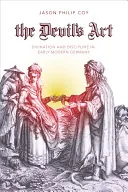
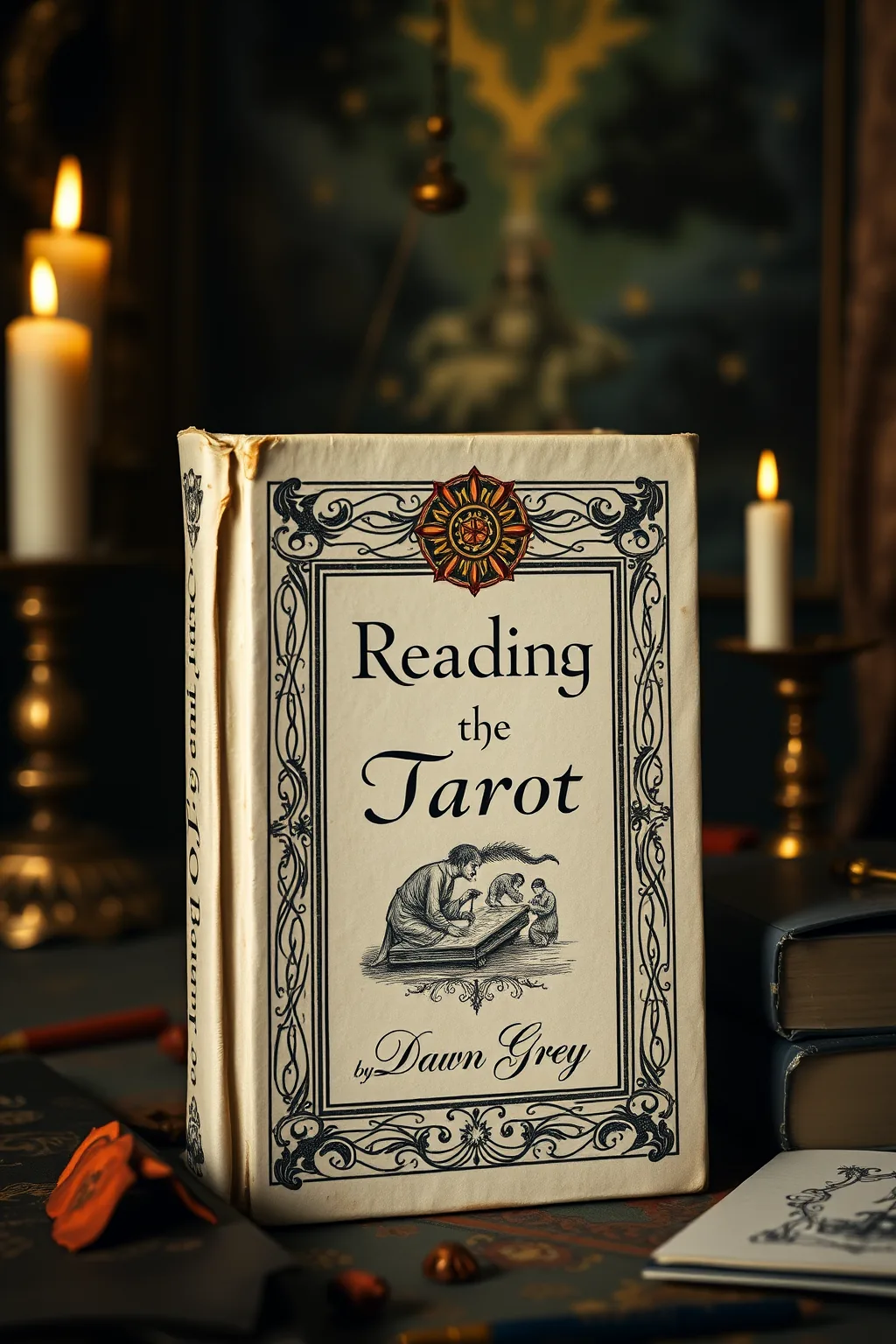
Reading the Tarot
 61
61

Reading the Tarot



Lorelei Sage, Contemplative Literature Editor: Dawn Grey’s 'Reading the Tarot' is a beacon for those seeking authentic esoteric knowledge. Sage’s prose is both scholarly and deeply intuitive, guiding readers beyond rote memorization into a profound understanding of Tarot's symbolic grammar. The book excels in its exploration of the underlying metaphysical principles that imbue the cards with their divinatory power. It’s an indispensable resource for serious students of occultism and divination, offering clarity and depth that resonate long after the final page. For the ardent seeker yearning to connect with the ancient wisdom of the Tarot, this volume is an essential companion on their spiritual quest.
📝 Description
61
Dawn Grey's 'Reading the Tarot' was published in 1998, offering a philosophical approach to card interpretation.
Dawn Grey's 'Reading the Tarot' moves beyond simple card meanings to frame the practice as a tool for self-understanding. The book examines the symbolism within both the Major and Minor Arcana, connecting them to broader archetypal patterns. Grey suggests these connections offer insights into life's complexities and the interplay of destiny and personal choice.
The text aims to foster intuition and guide readers toward recognizing their inner potential through the use of tarot cards. It is written for those who approach the cards not just for prediction, but as a means of philosophical inquiry and introspection. The book invites readers to engage with the cards as a reflective surface for personal growth.
Published in 1998, 'Reading the Tarot' emerged during a period of renewed interest in Western esoteric traditions, particularly those related to divination and personal development. It aligns with a lineage of authors who view tarot as a symbolic language for psychological exploration rather than solely a predictive tool. This approach echoes movements that integrate Jungian psychology with symbolic systems, seeking to uncover the 'ancient language of the soul' through established esoteric frameworks.
💡 Why Read This Book?
Unlock the ancient wisdom of the Tarot with Dawn Grey's profound guide. This book is essential for seekers who wish to move beyond superficial interpretations and connect with the deeper mystical currents of the cards. Practitioners will find enriched techniques, while scholars will appreciate the detailed exploration of symbolism and archetypes. Embark on a transformative journey of self-discovery and intuitive empowerment, gaining profound insights into life's mysteries.
⭐ Reader Reviews
Honest opinions from readers who have explored this book.
❓ Frequently Asked Questions
What is the primary focus of 'Reading the Tarot'?
The book's primary focus is on understanding the Tarot not just as a tool for prediction, but as a rich symbolic language for self-exploration and spiritual growth, emphasizing its esoteric and metaphysical dimensions.
Is this book suitable for beginners?
Yes, while rich in esoteric depth, Dawn Grey presents the material in an accessible manner, making it an excellent starting point for beginners who are serious about learning the Tarot's deeper meanings.
What makes this Tarot guide unique?
Its uniqueness lies in its deep dive into the metaphysical and symbolic underpinnings of each card, connecting them to universal archetypes and esoteric traditions, rather than focusing solely on predictive outcomes.
Does the book cover different Tarot spreads?
While the emphasis is on understanding the core symbolism, the book often provides context and examples that can be applied to various traditional and intuitive spreads.
What kind of esoteric knowledge can one expect to gain?
Readers can expect to gain insights into Jungian archetypes, Kabbalistic correspondences, Hermetic principles, and the energetic flow within the Tarot deck, fostering a more holistic understanding.
🔮 Key Themes & Symbolism
The Archetypal Journey of the Soul
This theme looks at how the Major Arcana mirrors the human soul's pilgrimage through life's challenges and triumphs. Each card represents a stage, a lesson, or an encounter with universal forces that shape our consciousness and destiny. Grey illuminates the deep psychological and spiritual resonances, positioning the Tarot as a map for working through the inner landscape and understanding the collective unconscious. This exploration encourages readers to see their own lives reflected in these potent archetypes, fostering self-awareness and personal transformation through the symbolic narrative of the cards.
The Language of Symbolism and Intuition
The book emphasizes that the Tarot communicates through a rich, multilayered language of symbols, colors, and numerology. It teaches readers to move beyond literal interpretations and attune themselves to the intuitive whispers embedded within each card's imagery. Grey guides practitioners in developing their psychic senses and trusting their inner knowing, transforming the reading process into a dialogue between the querent, the cards, and the divine. This fosters a deeper, more personal connection with the Tarot, allowing its wisdom to unfold organically.
Tarot as a Mirror of Cosmic Order
This theme posits the Tarot as a microcosm reflecting the macrocosm – the underlying order and interconnectedness of the universe. Grey explores how the cards, through their structured relationships and numerological patterns, offer insights into the grand design of existence. Readers learn to perceive the divine intelligence at play, understanding how seemingly random events are part of a larger, meaningful range. This perspective elevates Tarot reading from simple fortune-telling to a profound practice of spiritual contemplation and alignment with universal energies.
💬 Memorable Quotes
Direct passages from the work, attributed to the author.
“Each card is a doorway, inviting us to step into deeper understanding.”
— This evocative phrase emphasizes the transformative power of the Tarot, suggesting that engaging with each card opens new pathways for wisdom and self-discovery.
“The Fool's leap is not of recklessness, but of unwavering faith.”
— This interpretation elevates the archetype of The Fool, portraying its journey not as naive ignorance but as a courageous act of trust in the unknown and the unfolding path.
“In the spiral of the Wheel, we find the rhythm of destiny.”
— This metaphor links the Wheel of Fortune to the cyclical nature of existence and the inherent order within apparent chaos, suggesting a divine cadence to life's changes.
💡 Key Ideas
Editorial paraphrase of the work's core concepts — not direct quotes.
The Tarot is not a crystal ball, but a mirror to the soul.
This quote highlights the book's core philosophy: Tarot's primary function is introspective, revealing inner truths and potentials rather than external futures.
The High Priestess guards secrets whispered by the cosmos.
This quote captures the mystical essence of The High Priestess, positioning her as an intermediary to hidden knowledge and cosmic truths, accessible through intuition.
🌙 Esoteric Significance
Tradition
This work deeply engages with Hermeticism and Jungian psychology, viewing the Tarot as a symbolic representation of universal archetypes and the journey of individuation. It also subtly touches upon Kabbalistic principles through its numerological and symbolic correspondences, framing the Tarot as a microcosm of creation and a tool for spiritual ascent.
Symbolism
Key symbols explored include the journey of the Fool, the duality of The High Priestess and The Hierophant, the transformative power of The Tower, and the cyclical nature represented by The Wheel of Fortune. The book unpacks the deeper meanings behind the pips, court cards, and elemental associations, revealing their interconnectedness and role in the grand range of existence.
Modern Relevance
In an age of information overload and existential questioning, 'Reading the Tarot' offers a grounding, intuitive path to self-understanding and meaning. It provides a timeless framework for navigating personal challenges, fostering creativity, and connecting with a deeper sense of purpose, making its esoteric teachings profoundly relevant for contemporary spiritual seekers.
👥 Who Should Read This Book
This book is a valuable collection for a diverse audience. Beginners beginning their Tarot journey will find a clear, yet profound, introduction to the cards' esoteric depths. Seasoned practitioners seeking to deepen their intuition and expand their understanding of symbolism will discover new layers of insight. Scholars of occultism and comparative religion will appreciate the meticulous exploration of archetypes and their historical resonance. Ultimately, any seeker yearning for a more profound connection with their inner self and the mysteries of the universe will find 'Reading the Tarot' an invaluable companion.
📜 Historical Context
Published in an era where esoteric thought began to re-emerge from periods of skepticism, 'Reading the Tarot' by Dawn Grey stands as a proof of the enduring human fascination with divination and symbolic systems. The late 20th and early 21st centuries saw a resurgence of interest in occultism, mysticism, and ancient wisdom traditions, fueled by a desire for deeper meaning and spiritual connection in a rapidly changing world. Grey's work emerged within this context, drawing upon established Tarot scholarship while infusing it with a fresh, intuitive perspective. It aligns with movements that sought to integrate psychological depth with spiritual practice, offering a holistic approach to understanding the self and the cosmos through the archetypal language of the Tarot.
📔 Journal Prompts
Reflect on the 'Fool's Journey' as it relates to a current transition or beginning in your life. What 'leap of faith' are you being called to take?
Choose a card that resonates strongly with you today. Meditate on its symbolism and write down any intuitive messages or insights it offers.
How does the concept of 'cosmic order' as presented in the book influence your perspective on a recent challenge or success?
Explore the duality of two contrasting cards (e.g., The Emperor and The Empress, The Devil and Temperance). What personal lessons can you draw from their symbolic interplay?
Consider the 'language of symbols.' What everyday symbols in your life might hold deeper, untapped meaning for you?
🗂️ Glossary
Archetype
Universal, archaic patterns and images that derive from the collective unconscious and are the psychic counterpart of instinct. In Tarot, they are represented by the Major Arcana figures.
Esoteric
Intended for or likely to be understood by only a small number of people with a specialized knowledge or interest; relating to mystical, spiritual, or occult subjects.
Individuation
A psychological concept introduced by Carl Jung, referring to the process by which an individual becomes a distinct, integrated personality; the development of the self.
Macrocosm
The universe considered as a whole; a complex of systems that mirrors a larger system; often used in contrast to microcosm.
Hermeticism
A religious, philosophical, and esoteric tradition based primarily upon writings attributed to Hermes Trismegistus. It emphasizes spiritual enlightenment and the attainment of higher consciousness.
This book appears in 3 collections
🔮 Readers Also Liked
Browse all →








From the “Tarot” Collection
View all →







More Free Divination & Tarot Books
View all →