Keywords for the Crowley Tarot
 75
75

Keywords for the Crowley Tarot
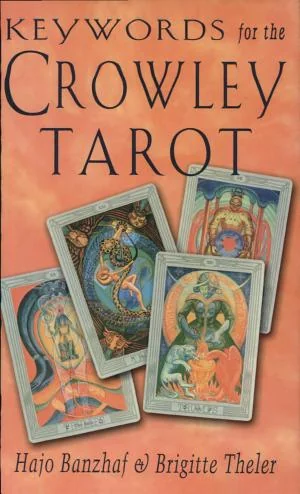
Banzhaf and Theler’s Keywords for the Crowley Tarot offers a necessary distillation for anyone grappling with the dense symbolism of the Thoth deck. Where other guides might overwhelm with esoteric minutiae, this work provides concise, accessible keywords for each card, a genuine strength for practitioners. The authors successfully foreground the unique astrological attributions Crowley himself assigned, a critical component often glossed over. However, the book’s brevity, while an advantage for quick reference, sometimes sacrifices the depth needed to fully explore the alchemical and Kabbalistic layers so integral to the Thoth system. The discussion of the court cards, for instance, while clear, feels somewhat superficial. Despite this limitation, the text remains a valuable, if introductory, companion for those encountering the Thoth Tarot, particularly its 2001 iteration. It serves as a functional primer for the deck's foundational meanings.
📝 Description
75
Published in 2001, Keywords for the Crowley Tarot offers a structured guide to Aleister Crowley's Thoth deck.
Hajo Banzhaf and Brigitte Theler's book functions as a focused reference for understanding Aleister Crowley's Thoth Tarot deck. It moves beyond general tarot principles to address the specific symbolism and structure of the Thoth system. The authors aim to give readers a clear framework for interpreting the cards within Crowley's esoteric philosophy. The book details the Major Arcana, Minor Arcana, and court cards, providing keyword associations and interpretative notes for each.
This text is primarily for individuals already familiar with the Thoth Tarot who seek a more structured approach to its study. It suits beginner and intermediate tarot students who find the Thoth deck's astrological, kabbalistic, and alchemical attributions complex. Those interested in Aleister Crowley's spiritual teachings and their expression in a tarot system will find this book useful. It serves as a practical reference for personal divination and comparative study.
The Thoth Tarot, conceived by Aleister Crowley and realized by Lady Frieda Harris, emerged from early 20th century occult interests. Crowley, a central figure in Western esotericism, commissioned the deck in the 1930s. Its design integrates Kabbalah, astrology, and alchemy, reflecting Crowley's syncretic magical system. Published in 1969, it presented a divinatory tool distinct from earlier tarot decks.
💡 Why Read This Book?
• Gain direct access to the core meanings of the Thoth Tarot without getting lost in dense theory. The book provides concise keywords specifically for Crowley's deck, offering a practical shortcut to understanding its unique symbolism. • Understand the Thoth Tarot's specific astrological and Kabbalistic links. You will learn how Banzhaf and Theler connect each card to its assigned planetary, zodiacal, and Sephirothic positions, a crucial element of Crowley's system. • Develop a faster interpretative process for Thoth readings. This guide equips you with a focused vocabulary for the deck, enabling quicker insights and more coherent readings compared to general tarot texts.
⭐ Reader Reviews
Honest opinions from readers who have explored this book.
❓ Frequently Asked Questions
What distinguishes the Thoth Tarot from other tarot decks?
The Thoth Tarot, created by Aleister Crowley and Lady Frieda Harris, features intricate artwork reflecting Kabbalistic, astrological, and alchemical symbolism, a departure from simpler decks. Its publication in 1969 followed extensive development by Crowley, a key figure in 20th-century occultism.
Who were the primary creators of the Thoth Tarot?
Aleister Crowley, a prominent occultist and founder of Thelema, conceived the Thoth Tarot. The artwork was executed by Lady Frieda Harris over a period spanning more than two decades, beginning in the 1930s.
What is the significance of keywords in tarot interpretation?
Keywords serve as mnemonic devices, encapsulating the essence of a tarot card's meaning. In texts like Banzhaf and Theler's, they offer a concise entry point into complex symbolism, aiding both memorization and intuitive understanding.
When was Keywords for the Crowley Tarot first published?
Keywords for the Crowley Tarot by Hajo Banzhaf and Brigitte Theler was first published on July 1, 2001. This edition aimed to provide a structured overview of the Thoth Tarot's specific meanings.
Does this book cover the Rider-Waite-Smith tarot deck?
No, Keywords for the Crowley Tarot specifically focuses on Aleister Crowley's Thoth Tarot deck. It is designed to elucidate the unique symbolism and attributions found within that particular system.
What esoteric traditions influence the Thoth Tarot deck?
The Thoth Tarot draws heavily from Western esotericism, including Kabbalah, astrology, and alchemy, as well as Aleister Crowley's own philosophical system, Thelema. These influences are meticulously integrated into the deck's design and interpretation.
🔮 Key Themes & Symbolism
Thoth Tarot Symbolism
The book systematically breaks down the rich, multi-layered symbolism of Aleister Crowley's Thoth Tarot. It highlights how each card integrates astrological, Kabbalistic, and alchemical elements, as conceived by Crowley and illustrated by Lady Frieda Harris. The keywords provided aim to distill these complex associations into memorable concepts, facilitating a deeper engagement with the deck's unique visual language and esoteric underpinnings.
Astrological Attributions
A central focus is the specific astrological correspondences Crowley assigned to the cards of the Thoth deck. The work details which planets, zodiacal signs, and elements are linked to each Major and Minor Arcana card. Understanding these attributions is crucial for grasping the Thoth system's sophisticated divinatory framework, which differs significantly from other tarot traditions.
Kabbalistic Correspondences
The book explores the Kabbalistic framework underlying the Thoth Tarot, particularly the paths on the Tree of Life and their connection to the Major Arcana. It elucidates how the Hebrew alphabet and the Sephiroth are interwoven with the tarot imagery, offering insights into Crowley's esoteric worldview and the deck's structural integrity.
Practical Divination
Keywords for the Crowley Tarot serves as a practical tool for divination. By offering concise keyword interpretations for each card, the authors aim to empower readers to conduct more accurate and insightful readings. The focus is on providing accessible entry points into the deck's meanings for both personal reflection and predictive purposes.
💬 Memorable Quotes
Direct passages from the work, attributed to the author.
“The Thoth Tarot is a complex system with multiple layers of meaning.”
— This statement underscores the book's premise: that Crowley's deck is not a simple divinatory tool but a sophisticated esoteric system requiring dedicated study, integrating various mystical traditions.
“Each card carries specific astrological and Kabbalistic attributions.”
— This highlights a core feature of the Thoth Tarot, emphasizing the importance of understanding its connections to celestial bodies and the Kabbalistic Tree of Life for accurate interpretation.
“The deck's symbolism is influenced by esoteric traditions.”
— This points to the foundational esoteric currents—Hermeticism, Kabbalah, Alchemy—that shaped Crowley's vision for the Thoth Tarot, setting it apart from more conventional decks.
“Understanding the Minor Arcana requires attention to their elemental and numerical aspects.”
— This indicates the book's approach to the suit cards, suggesting that their interpretation is rooted in the interplay of elements (Wands, Cups, Swords, Disks) and their numerical progression.
💡 Key Ideas
Editorial paraphrase of the work's core concepts — not direct quotes.
Keywords offer a concise entry point into the card's essence.
This paraphrased concept explains the book's methodology, suggesting that distilling complex imagery into single words or short phrases provides a practical key to unlocking deeper understanding.
🌙 Esoteric Significance
Tradition
This work directly engages with the Hermetic and Thelemic traditions, as defined by Aleister Crowley. The Thoth Tarot is a quintessential expression of Crowley's syncretic approach, blending Kabbalah, astrology, alchemy, and Egyptian mythology within a unified esoteric framework. Banzhaf and Theler’s book serves as a guide to navigating this specific, self-contained system, rather than broadly applying general esoteric principles.
Symbolism
Key symbols include the astrological attributions of each card, such as the assignment of Mercury to The Magus (Card 0) or Jupiter to The Hierophant (Card V). The book also emphasizes the Kabbalistic paths on the Tree of Life, explaining how the Major Arcana correspond to these paths. Alchemical motifs, like the transformation of elements, are also implicitly present in the deck's imagery and touched upon in interpretive notes.
Modern Relevance
Contemporary practitioners of Thelema, students of Western esotericism, and tarot enthusiasts seeking advanced study continue to utilize the Thoth Tarot. Schools focused on Kabbalistic or Hermetic studies often reference the deck as a practical application of these traditions. The work of Banzhaf and Theler remains relevant for those seeking structured keyword associations to aid in personal practice and understanding of Crowley's unique magical system.
👥 Who Should Read This Book
• Students of Aleister Crowley and Thelema: Those seeking to understand Crowley's esoteric philosophy as expressed through his unique tarot deck will find this book an invaluable reference for decoding its specific symbolism. • Intermediate Tarot Enthusiasts: Individuals familiar with general tarot principles but wishing to deepen their study of the complex Thoth Tarot will benefit from the structured keyword approach. • Comparative Tarot Researchers: Readers interested in the evolution of tarot and its diverse systems will find this text useful for understanding the specific contributions and divergences of the Thoth deck.
📜 Historical Context
Published in 2001, Hajo Banzhaf and Brigitte Theler's Keywords for the Crowley Tarot emerged during a period when interest in Aleister Crowley's esoteric system, Thelema, and his unique Thoth Tarot deck was well-established. The Thoth Tarot itself, conceived by Crowley and illustrated by Lady Frieda Harris, had a long gestation period, with work beginning in the 1930s and continuing for over two decades. Its official publication in 1969, years after Crowley's death in 1947, marked a significant moment in occult publishing. The deck was revolutionary for its dense integration of astrological, Kabbalistic, alchemical, and mythological symbolism, drawing heavily from the esoteric currents prevalent in the early to mid-20th century. Banzhaf and Theler’s work aimed to provide a more accessible interpretive key to this complex deck, building upon earlier scholarship and practice that sought to clarify Crowley’s intricate creation.
📔 Journal Prompts
How does the keyword 'Balance' for The Adjustment (Justice) card resonate with your personal understanding of equilibrium?
Reflect on the astrological attribution of The Emperor (IV) to Aries. What qualities of this sign do you see in the card's imagery?
Consider the Kabbalistic path associated with The Lovers (VI). How does the concept of choice manifest in your life?
What alchemical symbolism, if any, do you perceive in the suit of Disks within the Thoth Tarot?
How do the keywords provided for the Minor Arcana differ from your prior interpretations?
🗂️ Glossary
Thoth Tarot
A specific tarot deck created by Aleister Crowley, with artwork by Lady Frieda Harris, known for its complex symbolism integrating Kabbalah, astrology, and alchemy.
Thelema
Aleister Crowley's philosophical and religious system, centered on the principle 'Do what thou wilt shall be the whole of the Law'.
Kabbalah
A system of Jewish mysticism exploring the divine nature and creation through symbolic interpretations, often visualized using the Tree of Life.
Astrology
The study of the movements and relative positions of celestial bodies interpreted as having an influence on human affairs and the natural world.
Alchemy
An ancient proto-scientific and philosophical tradition focused on the transformation of matter, often seen as a metaphor for spiritual transformation.
Major Arcana
The trump cards of a tarot deck, typically numbered 0 through 21, representing significant life lessons, archetypal themes, and spiritual milestones.
Minor Arcana
The four suits (Wands, Cups, Swords, Disks/Pentacles) of a tarot deck, usually containing numbered cards and court cards, representing everyday events and circumstances.
This book appears in 1 collection
🔮 Readers Also Liked
Browse all →








From the “Tarot” Collection
View all →







More Free Occult Philosophy Books
View all →