Inventing Superstition
 82
82

Inventing Superstition
Dale B. Martin's examination of the word 'superstition' offers a sharp dissection of how labels shape understanding. He meticulously details the shift in meaning from classical Greece, where it often referred to human error in divine matters, to the Christian Roman Empire, where it became a primary descriptor for pagan rites. A particular strength is the analysis of Pliny the Younger's characterization of Christianity as 'contagious superstition,' juxtaposed with Eusebius's later use of the same term for Roman cults. Martin effectively demonstrates that the label itself carried vastly different weight depending on who wielded it. While the extensive historical tracing is invaluable, the dense academic prose might occasionally obscure the core arguments for a less specialized reader. Nevertheless, the book provides a crucial lens for understanding religious polemic. Martin’s work is an essential study on the historical construction of religious otherness.
📝 Description
82
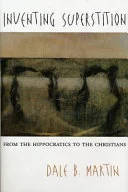
Dale B. Martin's 2004 book, Inventing Superstition, analyzes how the word 'superstition' changed its meaning over eight centuries.
Inventing Superstition, by Dale B. Martin, tracks the shifting definition of the term 'superstition' from classical antiquity through the early Christian era. Martin shows how Greek and Roman authors first used the term to describe religious practices outside their own state-sponsored cults. The book then details how Christian writers repurposed this label, employing it to marginalize and condemn pagan traditions as Christianity gained dominance.
This historical linguistic analysis reveals 'superstition' as a rhetorical tool for defining and devaluing opposing belief systems. Martin emphasizes that the concept was not fixed but evolved significantly, especially as Christianity transitioned from a minority faith to the established religion. The work examines the power structures inherent in designating certain beliefs as legitimate while labeling others as superstitious, illustrating a genealogy of ideas that were inherited, altered, and used to assert authority.
While not strictly an esoteric text, Martin's work contributes to understanding how religious categories are constructed and weaponized. It engages with the history of belief systems, examining how dominant groups define and denigrate alternative practices. This approach resonates with scholarly inquiry into the historical relationship between established religions and marginalized traditions, a common area of interest in broader esoteric studies that question received narratives of religious history.
💡 Why Read This Book?
• Understand the rhetorical power of religious labels, learning how terms like 'superstition' were strategically deployed by figures like Pliny the Younger and Eusebius to marginalize opposing belief systems. • Trace the intellectual lineage of a key concept over eight centuries, appreciating how the meaning of 'superstition' transformed from classical Greece to the Christianized Roman Empire. • Gain insight into the historical construction of religious 'otherness,' recognizing how dominant groups define and dismiss minority practices through linguistic categorization.
⭐ Reader Reviews
Honest opinions from readers who have explored this book.
❓ Frequently Asked Questions
What is the primary argument of 'Inventing Superstition'?
The primary argument is that the concept of 'superstition' has a complex history, evolving significantly over eight centuries. It was used differently by classical authors and later Christian writers to denigrate opposing religious practices.
Who coined the term 'superstition' as discussed in the book?
The book explores the usage of 'superstition' by classical authors like Pliny the Younger and later Christian writers such as Eusebius, detailing their distinct applications of the term.
What historical period does Dale B. Martin's work cover?
The work covers a span of eight centuries, beginning with classical Greece and extending through the Christianized Roman Empire, examining the term 'superstition' during this transition.
How did the meaning of 'superstition' change over time according to the book?
Initially, in classical usage, it often implied excessive or improper religious practice. By the Christian era, it became a pejorative label for pagan religions, signifying their perceived falsity and impotence.
Is this book about ancient magic or occult practices?
While it touches upon ancient religious practices and beliefs, the book's focus is on the *term* 'superstition' itself—its history, evolution, and use as a rhetorical tool, rather than a catalog of magical practices.
What is the significance of Pliny the Younger in this study?
Pliny the Younger is significant because he characterized Christianity as 'contagious superstition,' illustrating an early instance where the term was applied to a nascent religious movement by an established cultural figure.
🔮 Key Themes & Symbolism
Rhetoric of Othering
The work meticulously details how the label 'superstition' functioned not as an objective descriptor but as a potent rhetorical weapon. By examining authors like Pliny the Younger, who famously labeled Christianity as 'contagious superstition,' and later Christian writers like Eusebius, who denounced pagan cults as 'superstitions,' Martin demonstrates how dominant groups historically defined and delegitimized minority or opposing belief systems. This strategy served to consolidate their own religious and cultural authority by demonizing the 'other'.
Genealogy of Concepts
Central to Martin's methodology is the concept of intellectual genealogy. He traces the lineage of the term 'superstition' over eight centuries, revealing its semantic shifts and adaptations. This approach highlights that ideas are not static but are inherited, contested, and transformed. The book shows how the classical understanding of superstition, often related to human error in ritual, was repurposed and recontextualized within Christian discourse, becoming a tool for religious polemic and identity formation.
Christianization of Discourse
A significant theme is the transformation of intellectual discourse during the Christianization of the Roman Empire. Martin illustrates how the ascendant Christian worldview systematically reclassified the religious landscape. Practices once considered normal within Roman polytheism or Greek philosophy were re-evaluated through a monotheistic lens and often branded as 'superstition.' This process was crucial in establishing Christian hegemony and marginalizing alternative spiritualities and philosophies.
Power and Belief
The book implicitly and explicitly explores the intricate relationship between power structures and the definition of belief. By analyzing who used the term 'superstition' and against whom, Martin reveals how power dictates what is considered legitimate religious practice versus what is deemed erroneous or demonic. The shift from pagan to Christian dominance is a prime example of how evolving power dynamics reshaped the very vocabulary used to discuss religion.
💬 Memorable Quotes
Direct passages from the work, attributed to the author.
“Pliny the Younger characterizes Christianity as 'contagious superstition.'”
— This serves as a crucial early example of 'superstition' being used to label a new religious movement, highlighting its potential for social contagion and perceived threat from an established perspective.
“The term of abuse is the same, yet the two writers suggest entirely different things by 'superstition.'”
— This observation underscores Martin's core argument: the meaning and application of 'superstition' are context-dependent and often serve polemical purposes rather than denoting a fixed category of belief.
“Martin provides the first detailed genealogy of the idea of superstition.”
— This highlights the book's pioneering contribution, emphasizing its systematic historical tracing of the concept's development across centuries and intellectual traditions.
“The work covers eight centuries, from classical Greece to the Christianized Roman Empire.”
— This specifies the extensive chronological scope of the study, framing the historical transformation of the term 'superstition' within a key era of Western intellectual and religious history.
💡 Key Ideas
Editorial paraphrase of the work's core concepts — not direct quotes.
Eusebius vigorously denounces Greek and Roman religions as vain and impotent 'superstitions.'
This quote illustrates the term's evolution within Christian discourse, where it became a primary tool to dismiss and invalidate entire religious traditions deemed pagan or heretical.
🌙 Esoteric Significance
Tradition
While not strictly within a single esoteric lineage like Hermeticism or Kabbalah, Martin's work is foundational for understanding the historical construction of 'occult' or 'magical' practices as distinct from 'religion.' It provides the intellectual and historical framework necessary for analyzing how later esoteric traditions were often labeled 'superstitious' by mainstream academia and religious institutions. It helps contextualize the historical marginalization of practices now reclaimed by esoteric practitioners.
Symbolism
The primary 'symbol' Martin analyzes is the term 'superstition' itself, demonstrating its mutable and often pejorative nature. He unpacks how this label symbolically marked the 'other' – whether it was the superstitious pagan by the Christian, or the Christian by the pagan Roman. The work implicitly explores the symbolism of established cults versus perceived deviant practices, where 'superstition' represented a deviation from divinely or socially sanctioned order.
Modern Relevance
Contemporary esoteric thinkers and practitioners benefit from Martin's analysis by understanding the historical roots of skepticism and dismissal they often face. The work informs discussions on the academic study of religion, critical theory, and the sociology of belief. Scholars of modern paganism, ceremonial magic, and various New Age movements can use this book to deconstruct the historical biases embedded in terminology used to categorize their practices.
👥 Who Should Read This Book
• Scholars of Classics and Religious Studies: Gain a deeper understanding of the rhetorical strategies used in ancient religious polemics and the evolution of key theological terms. • Intellectual Historians: Analyze the genealogy of concepts and how labels shape historical narratives, particularly concerning the transition from pagan antiquity to Christian dominance. • Students of Comparative Religion: Appreciate how terms like 'superstition' are culturally constructed and used to differentiate and devalue 'other' belief systems.
📜 Historical Context
Dale B. Martin's "Inventing Superstition" emerged in 2004, a period of heightened academic interest in the construction of religious categories and the history of ideas. The book's scope spans from classical Greece to the late Roman Empire, a time marked by profound intellectual and religious transitions. Competing schools of thought included Stoicism, Epicureanism, and the burgeoning Neoplatonism, all of which engaged with differing conceptions of the divine and human piety. The work builds upon scholarship that critically examined the Greco-Roman religious landscape and the early Christian engagement with it. While not directly a reception event, the book implicitly engages with the legacy of scholars like Edward Gibbon, who analyzed the decline of Rome partly through the lens of religious change. Martin's study offers a nuanced perspective on how terms like 'superstition' were wielded in the power struggles between paganism and Christianity, particularly during the 3rd and 4th centuries CE.
📔 Journal Prompts
The rhetorical deployment of 'superstition' by Pliny the Younger.
The transformation of the term 'superstition' from classical Greece to the Christianized Roman Empire.
Eusebius's denunciation of pagan religions as 'superstitions'.
The function of 'superstition' as a label for the 'other'.
Tracing the genealogy of 'superstition' across eight centuries.
🗂️ Glossary
Superstition
In the context of this book, 'superstition' refers to a term whose meaning evolved significantly over eight centuries. Initially, it could denote excessive or improper religious practice, later becoming a pejorative label used by dominant religious groups (like Christians) to dismiss and denigrate alternative or minority beliefs and rituals.
Genealogy of Ideas
A method of tracing the historical development and transformation of concepts or terms. Martin uses this approach to show how the meaning of 'superstition' changed from classical antiquity through the rise of Christianity.
Paganism
A broad term historically used, particularly by Christians, to refer to polytheistic religions and practices prevalent in the Greco-Roman world and beyond, often contrasted with monotheistic faiths.
Christianized Roman Empire
The period in Roman history, particularly from the 4th century CE onwards, when Christianity transitioned from a minority religion to the dominant state religion, profoundly influencing its laws, culture, and intellectual discourse.
Rhetorical Weapon
A term or concept used primarily for persuasive effect or to attack an opponent, rather than for objective description. 'Superstition' is presented as such a weapon in the book's analysis.
Pliny the Younger
A Roman author and administrator (c. 61 – c. 113 CE) known for his letters. In the book, he is cited for his characterization of early Christianity as 'contagious superstition'.
Eusebius
An early Christian bishop and historian (c. 263 – c. 339 CE), often called the 'Father of Church History.' Martin references his use of 'superstition' to denounce pagan religions.
This book appears in 1 collection
🔮 Readers Also Liked
Browse all →









From the “Superstition” Collection
View all →







More Free Occult Philosophy Books
View all →