Intuition
 72
72

Intuition
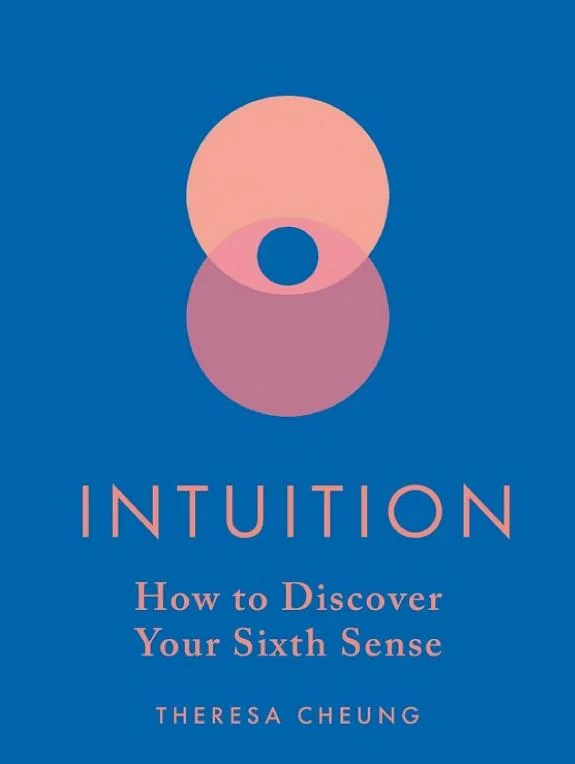
Theresa Cheung’s *Intuition* offers a refreshingly grounded approach to a subject often shrouded in New Age mysticism. The author’s strength lies in demystifying intuition, framing it as an accessible, integrated sensory faculty rather than an esoteric gift reserved for a select few. Cheung effectively synthesizes psychological understanding with anecdotal evidence, making the concept relatable. A particularly compelling section discusses how everyday sensory input, when processed holistically, forms the basis of intuitive leaps. However, the book could benefit from a deeper engagement with the historical development of intuition as a concept, perhaps by more explicitly contrasting its approach with that of earlier thinkers like William James. The limitation is a slight lack of theoretical depth for seasoned scholars of consciousness studies. Nevertheless, Cheung provides a practical and encouraging guide for anyone seeking to better understand their inner compass.
📝 Description
72
Theresa Cheung defines intuition as a super-sense integrating all sensory inputs into cohesive awareness.
This book presents intuition not simply as a psychological oddity, but as a vital, often overlooked, faculty. Cheung argues that intuition is the product of our sight, hearing, taste, touch, and smell all working together. It acts as an internal guide, allowing for a deeper grasp of ourselves and the world, moving beyond the limits of pure logic. The author shows how this natural ability, present in everyone, can be consciously honed and strengthened. This development can unlock personal potential and help uncover hidden meanings in everyday life.
The work is for anyone wishing to sharpen their inner knowing and personal perception. It will particularly resonate with those who have experienced premonitions or a strong sense of "just knowing" and want to understand these events. Readers interested in personal growth, mindfulness, and the subtler dimensions of consciousness will find value here. It also addresses skeptics curious about the psychological basis of intuition and those drawn to esoteric studies seeking practical ways to develop psychic awareness.
Theresa Cheung's exploration of intuition connects with a long history of thought concerning inner guidance. Ancient Greek philosophers like Plato touched on innate knowledge, and later mystics and alchemists referenced inner direction. The 20th century saw renewed focus, with Carl Jung identifying intuition as a fundamental psychological function and discussing archetypes. Cheung's book engages with this lineage, building on earlier ideas and adding contemporary perspectives relevant to modern discussions of consciousness and parapsychology.
💡 Why Read This Book?
• Understand intuition as an integrated "super-sense" based on the unified input of sight, hearing, taste, touch, and smell, a concept explored in Cheung's 2025 publication, offering a novel framework beyond common definitions. • Learn practical methods for "unifying your senses" to consciously strengthen your intuitive abilities, moving beyond passive recognition of "hunches" to active cultivation. • Gain insight into "premonitions" and "inner knowing" by exploring their psychological and experiential basis, providing a tangible understanding of these phenomena as outlined in the book.
⭐ Reader Reviews
Honest opinions from readers who have explored this book.
❓ Frequently Asked Questions
When was Theresa Cheung's book 'Intuition' first published?
Theresa Cheung's *Intuition* was first published on February 13, 2025, offering contemporary perspectives on this innate human faculty.
What is the core concept of intuition as presented by Theresa Cheung?
Cheung presents intuition as a "super-sense," the cumulative power of all five physical senses integrated into a unified awareness, allowing for deeper perception beyond rational thought.
Can anyone develop their intuition according to this book?
Yes, the book asserts that everyone possesses intuition and can therefore learn to unify their senses and strengthen this ability through conscious practice.
What kind of examples does the book use to illustrate intuition?
The book discusses common experiences like dreams that later seem to come true, strong hunches about future events, and knowing what someone else is thinking as examples of intuition in action.
Is 'Intuition' by Theresa Cheung considered an esoteric text?
Yes, the book falls within the Esoteric category, exploring the metaphysical and psychological dimensions of intuition as a faculty that connects us to broader potentials.
What is the primary goal of reading Theresa Cheung's 'Intuition'?
The primary goal is to take a first step into understanding and developing one's intuitive abilities, recognizing it as a powerful tool for personal insight and potential.
🔮 Key Themes & Symbolism
The Super-Sense Framework
This book redefines intuition not as a mystical gift, but as a sophisticated "super-sense." Cheung posits that it is the advanced integration of our primary senses – sight, hearing, taste, touch, and smell – culminating in a unified awareness. This perspective suggests that intuitive insights are not random occurrences but rather the result of a deeply processed, holistic understanding of external stimuli and internal states. By framing intuition this way, the work aims to explain it, making it accessible as a learnable and cultivable faculty for everyone, moving beyond purely rational perception towards a more complete sensory engagement with reality.
Cultivating Inner Knowing
A central theme is the active cultivation of "inner knowing" or "gut feelings." Cheung guides readers to recognize and trust these subtle signals, often dismissed by the rational mind. The work emphasizes that these intuitive nudges are vital communication from our subconscious, offering guidance and foresight. The process involves learning to quiet mental chatter and pay attention to somatic responses and subtle perceptions. By fostering this connection, individuals can harness intuition as a reliable compass for decision-making, personal growth, and navigating life's complexities with greater confidence and clarity.
The Power of Unified Senses
The concept of "unifying senses" is key, proposing a method to integrate sensory inputs for enhanced intuitive perception. Instead of experiencing sight, sound, and touch as separate data streams, the book suggests a practice of synthesizing them into a singular, coherent experience. This unified perception allows for a richer, more nuanced understanding of situations and people. It is through this integration that intuition transcends ordinary awareness, enabling individuals to perceive patterns, anticipate outcomes, and connect with a deeper layer of reality, thereby unlocking previously untapped potential.
Premonitions and Foresight
Cheung addresses "premonitions" and uncanny "hunches" as tangible manifestations of intuition. The book explores the nature of these experiences, suggesting they arise from the subconscious mind’s ability to process information below the threshold of conscious awareness. By understanding the mechanisms behind these phenomena, readers are encouraged to view them not as mere coincidences but as valid forms of intuitive communication. The work provides a framework for interpreting these signals, empowering individuals to leverage foresight for personal benefit and to gain a more profound sense of agency in their lives.
💬 Memorable Quotes
Direct passages from the work, attributed to the author.
“Intuition is a super-sense, the cumulative power of all the senses.”
— This core assertion frames intuition not as an external mystical force, but as an internal, integrated faculty. It suggests that by harmonizing our physical senses, we unlock a higher form of perception available to all.
“We are all able to unify our senses, giving us the power to find mean”
— This highlights the universal accessibility of intuition. The implication is that developing the ability to "unify senses" is the key to accessing this inherent power and discovering deeper meaning.
“Have you ever had dreams that later seemed to come true?”
— This question serves as an accessible entry point, connecting the reader's personal experiences of uncanny coincidences to the broader concept of intuition being explored in the text.
“Or had a hunch that something would happen and then it did?”
— Similar to the dream example, this prompts recognition of common intuitive experiences. It grounds the abstract idea of intuition in relatable, everyday occurrences that many people have encountered.
“Do you ever just know what someone else is thinking?”
— This query directly addresses empathetic or telepathic-like intuitive experiences. It suggests that intuition can manifest in interpersonal connections, offering insights into others' internal states.
🌙 Esoteric Significance
Tradition
Cheung's work aligns broadly with the Hermetic tradition's emphasis on the unity of all things and the potential for human consciousness to apprehend hidden realities. It echoes Gnostic ideas of inner knowing as a divine spark within humanity, accessible through direct experience rather than solely through dogma. While not strictly adhering to Kabbalistic or Theosophical frameworks, the book taps into a general esoteric current that posits a reality beyond the purely material, accessible through refined perception and inner awareness.
Symbolism
The concept of the "super-sense" itself acts as a potent symbol, representing the integration and transcendence of the mundane. "Hunche" and "premonitions" function symbolically as messengers from a deeper, more knowing aspect of the self or consciousness. The "unification of senses" symbolizes the Hermetic principle of "As Above, So Below," suggesting that the microcosm (human senses) reflects the macrocosm (universal consciousness) when properly aligned and integrated.
Modern Relevance
Contemporary thinkers and practitioners in fields like mindfulness, integral psychology, and even certain branches of neuroscience exploring consciousness continue to engage with the concept of intuition. Schools of thought emphasizing embodied cognition and somatic awareness find resonance in Cheung's idea of intuition as a synthesized sensory experience. Modern intuitive development courses and workshops often draw on similar principles of cultivating inner awareness and trusting non-rational knowing, making her work relevant to current self-help and personal growth movements.
👥 Who Should Read This Book
• Individuals new to esoteric studies: Readers seeking an accessible introduction to the nature of intuition and its potential benefits, presented without overly complex jargon. • Personal development enthusiasts: Those looking to enhance their decision-making skills, self-awareness, and ability to trust their inner guidance system. • Students of consciousness: Anyone interested in exploring the interplay between psychology, perception, and the subtle aspects of human awareness beyond conventional scientific models.
📜 Historical Context
The study of intuition has a long, albeit fragmented, history. While not a singular movement, it touches upon fields like philosophy, psychology, and esoteric traditions. In the early 20th century, figures like Carl Jung explored intuition as a primary psychological function in his analytical psychology, contrasting it with sensation, thought, and feeling. Simultaneously, the burgeoning field of parapsychology, with organizations like the American Society for Psychical Research (founded 1885), investigated phenomena like telepathy and precognition, areas often linked to intuitive abilities. Esoteric circles, from Theosophy influenced by Helena Blavatsky in the late 19th century to later New Age movements, consistently emphasized intuition as a path to spiritual knowledge. Theresa Cheung's work, published in 2025, engages with this legacy, offering a contemporary synthesis that bridges psychological understanding with the practical application of intuition, potentially addressing a modern audience familiar with both scientific inquiry and spiritual exploration.
📔 Journal Prompts
Reflect on your personal experiences of "hunches" and "premonitions" before encountering the "super-sense" concept.
How might "unifying your senses" alter your perception of a familiar environment?
Identify a recent situation where trusting your "inner knowing" proved beneficial.
Consider the "cumulative power of all the senses" in understanding a complex emotion.
Explore the potential for "inner knowing" to guide your daily interactions.
🗂️ Glossary
Intuition
A faculty described as a "super-sense," representing the integrated awareness derived from all five physical senses, enabling perception beyond rational thought.
Super-sense
The concept that intuition is not a separate faculty but the culmination and synthesis of sight, hearing, taste, touch, and smell into a unified perceptive power.
Unify senses
The practice or ability to integrate sensory inputs – sight, sound, touch, etc. – into a cohesive whole, thereby enhancing intuitive awareness.
Hunch
A strong intuitive feeling or guess, often experienced as a "gut feeling," believed to be a manifestation of subconscious processing and intuitive guidance.
Premonition
A forewarning or feeling about the future, often experienced as an intuitive insight or sense that something is about to happen.
Inner knowing
A direct, intuitive understanding or certainty that arises from within, independent of external validation or logical deduction.
Potential
The inherent capacity or possibility for development or achievement, particularly as unlocked or enhanced through the cultivation of intuition.
This book appears in 1 collection
🔮 Readers Also Liked
Browse all →








From the “Aura Reading” Collection
View all →



More Free Occult Philosophy Books
View all →