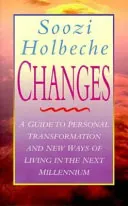
Stoned free

 80
80

Stoned free
Patrick Wells’ Stoned Free presents a bracingly direct examination of consciousness, eschewing the usual New Age platitudes for a stark philosophical confrontation. The work’s strength lies in its uncompromising insistence on the internal locus of perceived reality. Wells forces the reader to consider the architecture of their own mental constructs, particularly when exploring altered states. A particularly sharp passage discusses the "eidetic resonance" between internal states and external phenomena, challenging the reader to question causal relationships. However, the book’s relentless intellectual rigor can also be its limitation; its abstract nature and lack of practical exercises may leave some readers adrift, yearning for more tangible anchors. The prose, while precise, occasionally borders on the austere, demanding significant reader engagement. Stoned Free is a challenging, rewarding, and ultimately stark exploration for the committed philosopher of the mind.
📝 Description
80
Patrick Wells' Stoned Free, published in 1995, examines consciousness through unconventional philosophical inquiry.
This book challenges conventional understandings of consciousness and perception by focusing on the mind's ability to alter its own reality. It is not a guide to drug use, but rather uses altered states as a conceptual tool to examine subjective experience. Wells posits that individual consciousness is the ultimate arbiter of reality, a concept he terms 'subjective sovereignty.' The work details the 'architecture of perception,' suggesting our perceived world is a mental construct. It is written for serious students of esoteric philosophy and those interested in subjective reality, who appreciate direct language and are prepared for challenging ideas. Readers should have prior engagement with Western esoteric traditions and seek material that expands beyond typical thought.
Published in 1995, Stoned Free emerged during a period of renewed interest in consciousness studies, influenced by New Age thought and counter-cultural philosophies. While influenced by figures like Terence McKenna exploring entheogenic states, Wells’ work is distinct in its focus on the internal philosophical structure of altered perception, rather than external stimuli or anthropological accounts.
💡 Why Read This Book?
• Gain a framework for understanding subjective reality that moves beyond common New Age discourse, particularly concerning the "architecture of perception" explored in the book. • Confront the concept of "subjective sovereignty" and its implications for personal experience, challenging assumptions about external versus internal causation. • Explore the idea of "gnostic freedom" as presented by Wells, offering a unique perspective on achieving liberation through radical self-awareness and the deconstruction of imposed mental frameworks.
⭐ Reader Reviews
Honest opinions from readers who have explored this book.
❓ Frequently Asked Questions
What is the primary philosophical stance of Stoned Free?
The book advocates for "subjective sovereignty," positing that individual consciousness is the primary architect of perceived reality. It challenges the notion of an objective, external world independent of the observer's mental state.
Does Stoned Free promote drug use?
No, Stoned Free uses altered states of consciousness, which can be induced by various means including psychedelics, as a conceptual model to explore the mind's inherent capacity to shape reality. It focuses on the philosophical implications, not the act of consumption.
What does Patrick Wells mean by 'eidetic resonance'?
Eidetic resonance, as explored in the work, refers to a perceived correspondence or feedback loop between an individual's internal mental states, imagery, and the external phenomena they experience. It suggests a deeper connection than mere coincidence.
Is Stoned Free a difficult book to read?
The book demands significant intellectual engagement due to its abstract philosophical nature and direct, unadorned prose. Readers accustomed to more narrative or overtly practical esoteric texts might find it challenging.
When was Stoned Free first published?
Stoned Free was first published in 1995, placing it within a broader late 20th-century interest in consciousness and esoteric philosophy.
What is the concept of 'gnostic freedom' in the context of this book?
In Stoned Free, gnostic freedom is interpreted as a state of liberation achieved through profound self-knowledge and the conscious dismantling of mental constructs and societal conditioning that obscure true perception.
🔮 Key Themes & Symbolism
Subjective Sovereignty
This theme posits that individual consciousness holds ultimate authority over the perceived world. Wells argues against a purely objective reality, suggesting that our experience is fundamentally shaped by our internal state. The work explores how this sovereignty can be recognized and potentially expanded, moving beyond the limitations of ordinary perception. It’s a call to understand oneself as the primary architect of one's experienced universe, a concept central to many mystical traditions but articulated here with stark philosophical rigor.
Architecture of Perception
Wells details the mind's role in constructing reality, referring to this process as the 'architecture of perception.' This concept suggests that our sensory input and cognitive frameworks build the world we inhabit. The book examines how these structures can be analyzed and altered, particularly during non-ordinary states of consciousness. Understanding this architecture is presented as key to unlocking new modes of experience and achieving a more profound grasp of subjective truth.
Gnostic Freedom
Within the framework of Stoned Free, 'gnostic freedom' is not merely intellectual understanding but a state of liberation achieved through radical self-awareness and the transcendence of imposed mental limitations. It involves recognizing the illusory nature of certain external authorities and internal compulsions. This freedom is attained by dismantling the veils of conditioned thought and embracing the direct apprehension of reality as filtered through one's own sovereign consciousness.
Eidetic Resonance
This concept explores the connection between internal mental imagery and external reality. Wells suggests that there can be a form of resonance, where the patterns of one's inner world, the 'eidolon,' can manifest or align with external events or perceptions. It challenges linear causality, hinting at a more interconnected, participatory relationship between the mind and the fabric of existence. This idea encourages an investigation into the subtle interplay between thought and manifestation.
💬 Memorable Quotes
Direct passages from the work, attributed to the author.
“The world is a mirror, and the self is the face it reflects.”
— This aphorism captures the essence of subjective sovereignty, suggesting that external reality is not an independent entity but a projection or consequence of the observer's internal state and self-perception.
“Ordinary consciousness is but one room in the house of the mind.”
— This highlights the idea that our everyday awareness is a limited facet of a much larger, more complex mental landscape. It implies that other rooms, representing altered states or deeper levels of consciousness, are accessible.
“To seek truth outside oneself is to chase shadows in a sunlit room.”
— This emphasizes the internal nature of esoteric inquiry. Wells argues that genuine understanding and truth are not found in external doctrines or authorities but through introspective exploration and direct experience.
“Perception is not a window, but a wall we build.”
— This redefines perception not as passive reception of external data but as an active, constructive process. It underscores the 'architecture of perception' theme, where the mind actively shapes what is experienced.
“Freedom is the recognition of the cage we ourselves have fashioned.”
— This points to the concept of gnostic freedom, suggesting that true liberation comes from acknowledging that our limitations are often self-imposed through our own mental constructs and conditioning.
🌙 Esoteric Significance
Tradition
Stoned Free occupies a space adjacent to Gnostic and Hermetic traditions, emphasizing direct knowledge (gnosis) and the power of the individual mind. It departs from some traditional lineages by foregrounding a radical subjective idealism, positing the mind as the ultimate reality-creator. While echoing Hermetic principles of "As Above, So Below" and the mental nature of the universe, Wells pushes these ideas towards an extreme of personal sovereignty, making the individual consciousness the sole verifiable locus of existence.
Symbolism
The 'architecture of perception' serves as a central symbolic motif, representing the constructed nature of reality. The concept of 'eidetic resonance' can be seen as symbolizing the interconnectedness of the inner and outer worlds, a subtle mirroring effect. Furthermore, the idea of 'gnostic freedom' symbolizes the breaking of chains, not external ones, but those forged by one's own limited understanding and conditioned thought processes, akin to the Gnostic liberation from the materialist demiurge.
Modern Relevance
Contemporary thinkers and practitioners interested in consciousness hacking, radical self-inquiry, and philosophical explorations of subjective reality often find resonance with Wells' ideas. His emphasis on the mind's capacity to shape experience is relevant to modern mindfulness practices and cognitive behavioral approaches, albeit from a more esoteric standpoint. The work's challenge to objective consensus reality also speaks to ongoing debates in philosophy of mind and quantum physics, offering an esoteric perspective on observer-dependent phenomena.
👥 Who Should Read This Book
• Students of Western Esotericism: Those seeking to understand non-dualistic philosophies and radical interpretations of consciousness beyond standard Theosophy or Kabbalah. • Philosophers of Mind: Individuals interested in alternative models of consciousness and reality construction, particularly those who question materialist paradigms. • Advanced Seekers of Self-Knowledge: Readers prepared for challenging intellectual work who wish to explore the limits of subjective experience and the power of the inner landscape.
📜 Historical Context
Emerging in 1995, Patrick Wells' Stoned Free arrived during a period when Western esotericism was grappling with the legacy of the psychedelic movement and the burgeoning field of consciousness studies. While figures like Timothy Leary had explored altered states extensively, Wells’ approach distinguished itself by grounding its inquiry firmly in philosophical analysis rather than purely experiential or anthropological accounts. The mid-1990s saw a diverse intellectual climate, with New Age philosophies often blending with more rigorous psychological and mystical traditions. Wells’ work can be seen as a response to both the excesses of uncritical spiritual seeking and the limitations of purely materialistic scientific models, offering a path toward understanding subjective reality through a unique philosophical lens. Its reception was likely within niche circles interested in Gnosticism, Hermeticism, and radical approaches to consciousness, distinct from the more mainstream New Age trends of the era.
📔 Journal Prompts
The architecture of perception: what are the primary building materials of your current reality?
Subjective sovereignty: in what areas of your life do you most strongly assert or most readily cede control?
Eidetic resonance: describe an instance where your inner state seemed to directly influence external events.
Gnostic freedom: what mental cages have you recognized and begun to dismantle?
The house of the mind: what other rooms beyond ordinary consciousness do you suspect exist within you?
🗂️ Glossary
Subjective Sovereignty
The philosophical principle that individual consciousness is the ultimate authority and creator of its own experienced reality, challenging the primacy of an external, objective world.
Architecture of Perception
The framework or structure through which consciousness filters, interprets, and constructs sensory data and cognitive information, thereby building the perceived world.
Gnostic Freedom
A state of liberation achieved through direct knowledge (gnosis) of oneself and reality, involving the dismantling of internal and external illusions and limitations.
Eidetic Resonance
The concept suggesting a connection or feedback loop between the inner mental landscape (eidolon) and external phenomena, implying a participatory relationship between mind and reality.
Ordinary Consciousness
The default state of awareness experienced by most individuals on a daily basis, characterized by a specific set of perceptual and cognitive filters.
Eidolon
In this context, referring to the internal mental image, pattern, or construct that is projected or recognized as part of the 'eidetic resonance'.
Mental Cages
The self-imposed limitations, conditioned beliefs, and restrictive thought patterns that inhibit perception and hinder the attainment of gnostic freedom.
🔮 Readers Also Liked
Browse all →








More Free Occult Philosophy Books
View all →