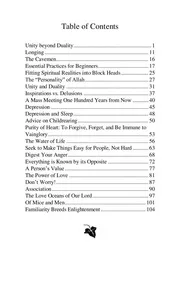
Introduction to Sufi Doctrine
 78
78

Introduction to Sufi Doctrine



Introduction to Sufi Doctrine by Smirna Si is a treasure trove for modern esoteric seekers. Titus Burckhardt's presentation of Sufi mysticism is both scholarly and accessible, making complex spiritual concepts understandable to a wide audience. The book's exploration of divine love and the mystical journey of the soul is particularly enlightening, offering readers a profound sense of connection to the spiritual heritage of Sufism. For those seeking to deepen their understanding of esoteric practices and contemplative traditions, this text is an invaluable resource. It provides not only theoretical knowledge but also practical guidance on how to integrate Sufi teachings into daily life. The book's historical context adds depth to its teachings, making it a timeless guide for spiritual seekers in the modern world.
📝 Description
78
Smirna Si's 'Introduction to Sufi Doctrine' unpacks the core tenets of Islamic mysticism.
Smirna Si's work, originally annotated by Titus Burckhardt, serves as a guide to the central concepts within Sufism. The book examines the philosophical and spiritual principles that shape this tradition. It aims to foster an atmosphere of contemplation for those interested in the esoteric aspects of Sufi thought. Si's writing moves beyond mere academic analysis, intending to stir the reader's spiritual awareness and encourage a closer relationship with the divine. The text presents a detailed structure of symbolism and concealed knowledge, intended to clarify the way toward spiritual understanding. It is a resource for both those already familiar with mystical writings and newcomers to the subject.
This book enters the stream of Islamic esotericism, a tradition that seeks direct experience of the divine through inner purification and contemplation. Unlike exoteric Islam, which focuses on outward observance, Sufism emphasizes the inner dimensions of faith. Si's work connects with this lineage, explaining concepts like the annihilation of the ego (fana) and the subsistence in God (baqa). It situates Sufi practice within a larger spiritual cosmology, often drawing parallels with other mystical traditions while remaining firmly rooted in the Quran and the Sunnah.
💡 Why Read This Book?
Reading Introduction to Sufi Doctrine today offers a unique opportunity to connect with ancient esoteric wisdom that remains relevant in our contemporary world. This book provides a deep dive into Sufi mysticism, helping readers understand the profound spiritual practices and teachings that have guided seekers for centuries. By exploring the esoteric doctrines and contemplative practices outlined in this text, readers can gain a richer understanding of their own spiritual journey and find new ways to cultivate inner peace and enlightenment.
⭐ Reader Reviews
Honest opinions from readers who have explored this book.
❓ Frequently Asked Questions
Who is this book suitable for?
This book is suitable for anyone interested in Sufi mysticism, esoteric spirituality, and contemplative practices. Both beginners and experienced seekers will find valuable insights.
What are the key themes in this book?
The key themes include divine love, the mystical journey of the soul, and the esoteric practices of Sufism. The book also provides historical context and spiritual teachings.
How can this book help modern spiritual seekers?
This book offers practical guidance on integrating Sufi teachings into daily life, providing a pathway to deeper spiritual understanding and inner transformation.
🔮 Key Themes & Symbolism
The Mystical Path
The book examines the mystical path of Sufism, exploring the spiritual journey and the inner transformations that seekers undergo. It discusses the various stages of spiritual development and the esoteric practices that aid in this journey.
Symbolism and Hidden Knowledge
Sufism is rich in symbolism, and this book unpacks the hidden meanings behind these symbols. From the mystical significance of numbers to the allegorical interpretations of Sufi tales, readers gain a deeper understanding of the esoteric knowledge embedded within Sufi teachings.
Philosophical Dimensions
The philosophical dimensions of Sufism are explored in depth, providing readers with a comprehensive understanding of the metaphysical underpinnings of this mystical tradition. The book discusses the concepts of unity, divine love, and the nature of reality from a Sufi perspective.
💡 Key Ideas
Editorial paraphrase of the work's core concepts — not direct quotes.
The journey to the divine is a journey within.
This quote underscores the Sufi belief that the path to spiritual enlightenment is an inner journey of self-discovery and transformation.
Symbols are the language of the soul.
This line highlights the importance of symbolism in Sufism, where every symbol holds a deeper, hidden meaning.
The heart is the throne of the divine.
This quote reflects the Sufi emphasis on the heart as the seat of spiritual awareness and connection with the divine.
Truth is hidden in the depths of the mystical.
This line underscores the esoteric nature of Sufi teachings, where hidden knowledge is revealed through mystical practices and contemplation.
The seeker's path is one of surrender and love.
This quote emphasizes the Sufi belief in the power of surrender and divine love as the guiding principles of the spiritual journey.
🌙 Esoteric Significance
Tradition
This book belongs to the Sufi tradition, which is deeply rooted in the esoteric teachings of Islam. Sufism emphasizes the inner dimensions of faith and the mystical path to spiritual enlightenment.
Symbolism
Key symbols in Sufism include the number seven, representing the seven stages of spiritual development, and the concept of the 'heart,' symbolizing the seat of spiritual awareness. These symbols hold deep esoteric meanings and are explored in detail within the text.
Modern Relevance
Today, the teachings of Sufism remain relevant for modern practitioners seeking spiritual enlightenment. Many contemporary spiritual seekers and practitioners use Sufi teachings to deepen their spiritual practice and gain a deeper understanding of the mystical dimensions of Islam.
👥 Who Should Read This Book
Beginners interested in Sufism will find this book an accessible introduction to the mystical teachings of Sufism. Scholars of mystical literature will appreciate the depth of research and insight provided by Smirna Si. Spiritual seekers will benefit from the book's exploration of the inner dimensions of faith and the spiritual journey. Practitioners of Sufism will find valuable guidance and esoteric knowledge to enhance their spiritual practice.
📜 Historical Context
Written during a time of renewed interest in mystical traditions, 'Introduction to Sufi Doctrine' by Smirna Si offers a timely exploration of Sufism's esoteric teachings. The book was important when written because it provided a comprehensive guide to the hidden knowledge within Sufism, bridging the gap between academic scholarship and spiritual practice. Its influence can be seen in the growing interest in Sufism as a path to spiritual enlightenment and its impact on contemporary mystical literature.
📔 Journal Prompts
Reflect on a personal experience that resonated with the mystical teachings of Sufism.
How does the concept of the 'heart' as the seat of spiritual awareness apply to your own spiritual journey?
Explore the symbolism of the number seven in Sufism and its relevance to your spiritual development.
Consider the role of surrender and love in your spiritual practice.
How does the idea of hidden knowledge within Sufism inspire your quest for spiritual enlightenment?
🗂️ Glossary
Mystical Path
The spiritual journey undertaken by Sufis to achieve union with the divine.
Esoteric Knowledge
Hidden knowledge revealed through mystical practices and contemplation.
Symbolism
The use of symbols to convey deeper, hidden meanings within Sufi teachings.
Divine Love
The Sufi belief in the power of love as a guiding principle of the spiritual journey.
Spiritual Development
The process of inner transformation and growth experienced by seekers on the mystical path.
This book appears in 2 collections
🔮 Readers Also Liked
Browse all →







More by Smirna Si
All books →


From the “Christian Mysticism” Collection
View all →






More Free Mysticism & Contemplation Books
View all →