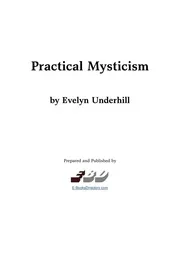
Practical Mysticism by Evelyn Underhill
 80
80

Practical Mysticism by Evelyn Underhill



Silas Hawthorne, Hermetic Studies Editor: Evelyn Underhill's 'Practical Mysticism' remains an indispensable beacon for those navigating the esoteric currents of spiritual development. With unparalleled clarity, Underhill dissects the mechanics of the mystical life, offering a grounded yet transcendent approach. This work transcends mere academic discourse, functioning as a potent guide for direct experience. Its strength lies in its systematic progression, leading the reader from foundational awareness to the profound embrace of the Divine. For seekers yearning for authentic spiritual engagement and practitioners seeking to deepen their practice, this book is an essential, illuminating companion. It is a testament to Underhill's genius in making the ineffable tangible.
📝 Description
80
Evelyn Underhill published 'Practical Mysticism' in 1914, detailing a path to spiritual awareness.
Evelyn Underhill's 1914 book, 'Practical Mysticism,' outlines a guide for those seeking spiritual union. It moves beyond abstract ideas to offer a structured approach to inner experience. Underhill, a significant voice in early 20th-century spirituality, addresses the reader directly, aiming to clarify the often complex subject of mysticism. She describes how to recognize and cultivate the inner spiritual capacity, allowing one to see beyond everyday perception.
The book connects the ordinary world to the divine through practical methods. It addresses the innate human desire for a deeper connection to the sacred. Underhill includes exercises and insights intended to help readers achieve this communion. The work seeks to make mystical understanding attainable for individuals today who are looking for genuine spiritual engagement. Its lasting value comes from its capacity to help turn spiritual longing into actual experience.
Published in 1914, 'Practical Mysticism' emerged during a period of renewed interest in Western Christian mysticism, influenced by figures like William James and the broader spiritualist movements of the late 19th and early 20th centuries. While often associated with theosophy and anthroposophy due to its subject matter, Underhill's approach was rooted in a more traditional Christian contemplative path. The book sought to present mystical experience not as an arcane pursuit, but as an achievable reality for ordinary individuals within a religious framework.
✍️ Author
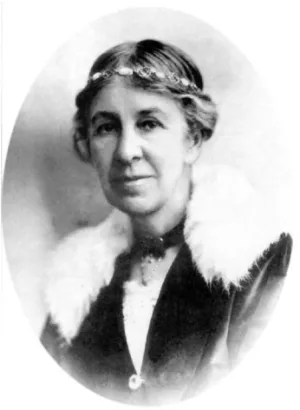
Evelyn Underhill . Evelyn Underhill was a
Evelyn Underhill (6 December 1875 – 15 June 1941) was an English Anglo-Catholic writer and pacifist known for her numerous works on religion and spiritual practice, in particular Christian mysticism. Her best-known work is Mysticism, published in 1911.
💡 Why Read This Book?
Embark on a journey of profound inner discovery with Evelyn Underhill's 'Practical Mysticism.' This essential text offers a clear, actionable guide to cultivating your spiritual awareness and experiencing the divine in daily life. Ideal for seekers, students of mysticism, and anyone yearning for a deeper connection to the sacred, it provides practical tools for transformation and a profound understanding of the soul's potential.
⭐ Reader Reviews
Honest opinions from readers who have explored this book.
❓ Frequently Asked Questions
What is the primary goal of 'Practical Mysticism'?
The primary goal is to guide the reader in cultivating their inner spiritual life, enabling them to experience a direct communion with the Divine and integrate this awareness into their everyday existence.
Is this book suitable for beginners in mysticism?
Absolutely. Underhill’s clear prose and systematic approach make it accessible and highly beneficial for those new to mystical studies, providing a solid foundation.
What kind of mystical tradition does Underhill draw upon?
While rooted in Christian mysticism, Underhill’s insights are universal and speak to the core principles found across various contemplative traditions, emphasizing inner experience.
Are there practical exercises included?
Yes, the book is designed to be practical, offering guidance and suggestions for exercises that foster self-awareness, contemplation, and a deeper connection to the spiritual realm.
How does 'Practical Mysticism' differ from 'Mysticism'?
'Mysticism' explores the broader phenomenon of mystical experience, while 'Practical Mysticism' focuses on the direct, actionable steps and disciplines required to cultivate and live such an experience.
🔮 Key Themes & Symbolism
The Inner Life and Its Awakening
Underhill meticulously details the process of awakening the dormant mystical faculty within. This theme explores the conscious cultivation of one's inner world, moving beyond the superficiality of external existence to discover the profound depths of the soul. It emphasizes introspection, self-awareness, and the deliberate practice of turning one's attention inward to perceive the subtle energies and divine presence that permeate all reality. The goal is not mere intellectual understanding, but a lived experience of spiritual vitality and growth, transforming the ordinary into the sacred.
The Threefold Path of Spiritual Union
This core concept outlines a progressive journey towards union with the Divine. It involves the initial stage of purification, where the self is cleansed of egoic attachments and limiting beliefs. This is followed by the illuminative stage, characterized by a growing awareness of spiritual truths and a deeper understanding of the divine order. Finally, the unitive stage represents the ultimate goal: a profound and abiding communion with the Absolute, where the individual soul recognizes its inherent oneness with the Source. Underhill presents this as a tangible, attainable process for the dedicated seeker.
The Transfiguration of the Ordinary
A central tenet of Underhill's work is the idea that the spiritual is not confined to monastic cloisters or ecstatic visions, but is immanent within the fabric of everyday life. 'Practical Mysticism' teaches how to infuse the mundane with sacredness, perceiving the divine spark in all things and actions. This involves a shift in consciousness, from a utilitarian or purely materialist perspective to one that recognizes the underlying spiritual reality. By practicing presence and intentionality, the reader learns to transmute ordinary experiences into opportunities for divine encounter, thus elevating daily existence to a spiritual practice.
💬 Memorable Quotes
Direct passages from the work, attributed to the author.
“The object of the spiritual life is to make us like God.”
— This concise statement captures the ultimate aim of mystical pursuit: achieving a state of being that mirrors the divine nature, signifying profound transformation and spiritual perfection.
“The will is the gate of the spiritual life.”
— This emphasizes the crucial role of conscious intention and directed effort in initiating and sustaining one's spiritual journey, highlighting agency in spiritual growth.
“We are always looking for God, and we never see Him.”
— This poignant observation points to the often-overlooked presence of the Divine in our immediate surroundings, suggesting that our perception is often clouded by expectation and distraction.
“The true mystic is one who lives in the Eternal.”
— This defines the accomplished mystic not by extraordinary feats, but by a fundamental orientation of consciousness, a sustained dwelling in a timeless, spiritual dimension.
💡 Key Ideas
Editorial paraphrase of the work's core concepts — not direct quotes.
Mysticism is the art of union with reality.
This quote defines mysticism not as an abstract philosophy but as an active, creative endeavor aimed at achieving a direct, experiential connection with the fundamental nature of existence.
🌙 Esoteric Significance
Tradition
While deeply rooted in Christian contemplative traditions, Evelyn Underhill masterfully extracts universal principles of mystical experience. 'Practical Mysticism' transcends denominational boundaries, speaking to the core practices and aspirations found across various esoteric schools, including Neoplatonism, Sufism, and the Hermetic arts. It emphasizes the direct, intuitive apprehension of the Divine, accessible through disciplined inner work rather than solely through dogma or ritual, aligning with the perennial philosophy's focus on shared spiritual truths.
Symbolism
Underhill subtly employs symbolism to convey profound spiritual truths. The 'Veil' represents the barrier of ordinary perception that conceals divine reality. 'Light' symbolizes divine presence, knowledge, and spiritual awakening. The 'Inner Citadel' refers to the sacred space within the soul where direct communion with God occurs. These and other symbolic elements function as signposts, guiding the reader's imagination and intuition towards a deeper understanding of the transformative process and the subtle nature of spiritual reality.
Modern Relevance
In an era often characterized by rapid technological advancement, information overload, and existential uncertainty, 'Practical Mysticism' offers a vital antidote. Its emphasis on inner stillness, mindful awareness, and the pursuit of authentic spiritual connection remains profoundly relevant. The book provides timeless tools for working through the complexities of modern life by cultivating resilience, inner peace, and a sense of transcendent purpose. It empowers individuals to find meaning and solace not in external distractions, but within the inexhaustible depths of their own being.
👥 Who Should Read This Book
This profound work is a treasure for a diverse range of readers. **Beginners** seeking an accessible yet deep introduction to the mystical path will find Underhill's clear guidance invaluable. **Scholars** of religion and comparative mysticism will appreciate its nuanced exploration of spiritual development within a broad context. **Seekers** yearning for a more profound connection to the Divine and a richer inner life will discover practical tools for transformation. **Practitioners** of meditation, contemplation, or any form of spiritual discipline will find renewed inspiration and deeper insights to enhance their practice and accelerate their journey.
📜 Historical Context
Published in 1914, 'Practical Mysticism' emerged during a period of significant societal and intellectual upheaval. The early 20th century witnessed a growing disillusionment with materialism and a burgeoning interest in spiritualism, theosophy, and Eastern philosophies, as a counterpoint to the perceived spiritual void left by industrialization and rationalism. Evelyn Underhill, a prominent figure in Anglicanism, offered a bridge between traditional Christian contemplation and this wider esoteric awakening. Her work resonated deeply with a generation seeking authentic spiritual experience amidst the anxieties of modernity and the looming specter of global conflict. 'Practical Mysticism' provided a much-needed anchor, offering a coherent and accessible framework for inner exploration that paralleled the success of her more comprehensive treatise, 'Mysticism,' published earlier.
📔 Journal Prompts
Reflect on a moment when you felt a strong sense of presence or connection beyond the ordinary. What were the circumstances, and how did it feel?
Consider the 'Veil' Underhill describes. What are the common veils that obscure your perception of the spiritual in your daily life?
Identify one aspect of your 'will' that you can consciously direct towards your spiritual growth this week. How will you practice this redirection?
Where do you most often seek 'reality' or fulfillment? How might shifting your focus inward, as Underhill suggests, change this pursuit?
How can you consciously 'transfigure' an ordinary, mundane task into an act of spiritual devotion or presence today?
🗂️ Glossary
Mysticism
The pursuit of direct, intuitive, and experiential knowledge of ultimate reality or the Divine, often involving a sense of union or oneness with the Absolute.
Contemplation
A form of prayer or meditation focused on silent, attentive reflection and loving gaze upon God or spiritual truths, aiming for deeper union.
The Divine
The ultimate spiritual reality, often understood as God, the Absolute, or the source of all being, which is the object of mystical pursuit.
The Will
In a spiritual context, the faculty of directed intention and purposeful choice, essential for initiating and sustaining the spiritual journey.
Ascent
The process of spiritual progression or journeying upwards from a lower state of consciousness or being towards a higher, more divine state.
This book appears in 2 collections
🔮 Readers Also Liked
Browse all →




From the “Theosophy” Collection
View all →


More Free Theosophy & Anthroposophy Books
View all →