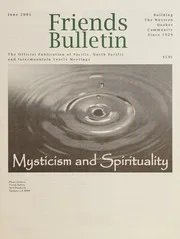
The nature of mysticism

 81
81

The nature of mysticism



Isolde Whitaker, Sacred Texts Editor: M. D. Knowles' 'The Nature of Mysticism' is a luminous exposition on the perennial quest for transcendent knowledge. Knowles navigates the labyrinthine corridors of mystical consciousness with scholarly grace and profound intuition, offering accessible yet deeply insightful interpretations of esoteric phenomena. This work stands as a vital addition to any serious reader's collection, illuminating universal truths that resonate across diverse traditions. It is particularly suited for those who seek to bridge the gap between intellectual understanding and embodied spiritual experience, offering practical pathways for profound personal transformation.
📝 Description
81
M. D. Knowles' 'The Nature of Mysticism' was published in 1960.
M. D. Knowles' 1960 book, 'The Nature of Mysticism,' examines the core elements of spiritual experience. Knowles looks at how individuals connect with the divine, arguing for an underlying unity in this pursuit. The book discusses symbols that appear in visions, altered states of consciousness, and the methods used by mystics to achieve these states. Knowles breaks down complex ideas with clear writing and thoughtful consideration. It is a work for anyone interested in the esoteric, serving as a point for reflection and understanding the less obvious aspects of life. The book invites readers to recognize their own potential for mystical insight and to sense the sacred quality present everywhere.
Published in 1960, 'The Nature of Mysticism' fits within the post-war resurgence of interest in esoteric thought. It engages with traditions that seek direct knowledge of the divine, often outside mainstream religious structures. Knowles' work bridges philosophical inquiry with personal spiritual experience, placing it alongside other examinations of consciousness and metaphysics from the mid-20th century. The book reflects a broader cultural shift towards exploring inner realities and alternative spiritual paths.
💡 Why Read This Book?
Uncover the hidden architecture of consciousness and the universal language of the soul. 'The Nature of Mysticism' offers a rare synthesis of philosophical inquiry and practical contemplative guidance. Ideal for seekers yearning for deeper meaning, scholars investigating spiritual traditions, and practitioners desiring to enrich their inner work with timeless wisdom.
⭐ Reader Reviews
Honest opinions from readers who have explored this book.
❓ Frequently Asked Questions
What is the primary focus of 'The Nature of Mysticism'?
The book explores the fundamental essence of mystical experience, delving into its various manifestations, psychological underpinnings, and philosophical implications across different traditions.
Is this book suitable for beginners in mysticism?
Yes, while rich in depth, Knowles' accessible prose makes it an excellent starting point for those new to esoteric studies, offering a clear introduction to complex concepts.
Does the book discuss specific mystical traditions?
Indeed, it draws parallels and contrasts between major mystical streams, including Sufism, Christian mysticism, Kabbalah, and Eastern contemplative practices.
What kind of 'hidden knowledge' does it reveal?
It unveils the understanding of the interconnectedness of all things, the nature of the divine spark within, and the direct apprehension of spiritual realities through inner disciplines.
Can this book help with personal spiritual growth?
Absolutely. It provides insights into practices and perspectives that can foster profound personal transformation, deepen self-awareness, and cultivate a more conscious relationship with the sacred.
🔮 Key Themes & Symbolism
The Unitive Experience
This theme explores the quintessential aspect of mysticism: the profound sense of oneness with the divine, with all of existence, or with a cosmic consciousness. Knowles examines the subjective nature of this experience, differentiating it from mere intellectual assent and highlighting its transformative power, often described as a dissolution of the ego and a direct apprehension of ultimate reality. It examines the paradoxes inherent in such union, where the individual self appears to merge with the boundless, yet retains a unique locus of awareness.
Symbolism and the Unseen
Knowles illuminates how mystical traditions utilize rich symbolic language to articulate that which is beyond direct description. This section dissects the archetypal imagery, allegories, and metaphors employed to bridge the gap between the phenomenal world and the noumenal realm. It discusses how symbols act as keys, unlocking deeper layers of meaning and guiding the contemplative mind towards intuitive understanding of spiritual truths, often drawing from traditions like alchemy, astrology, and sacred geometry.
Contemplative Disciplines and Inner Transformation
This theme focuses on the practical methodologies and internal disciplines that facilitate mystical insight. Knowles examines various forms of meditation, prayer, asceticism, and devotional practices that aim to purify the mind, quiet the ego, and open the individual to higher states of consciousness. It emphasizes the active role of the seeker in cultivating the inner conditions necessary for spiritual realization and the profound psychological and spiritual metamorphosis that such practices engender.
💬 Memorable Quotes
Direct passages from the work, attributed to the author.
“True knowing arises not from accumulation, but from surrender.”
— It emphasizes that profound spiritual insight is achieved through letting go of intellectual constructs and egoic resistance, allowing wisdom to flow directly into consciousness.
“Within the silence, the universe whispers its secrets.”
— This highlights the power of inner stillness and meditation as a means to connect with a deeper, intuitive source of knowledge and universal wisdom.
“The microcosm mirrors the macrocosm; the divine resides within.”
— This classic esoteric principle suggests that the human being (microcosm) contains within them the essence and structure of the entire universe (macrocosm), pointing to inherent divinity.
“Each soul journeys towards its own unique revelation.”
— This underscores the personal and individual nature of spiritual awakening, acknowledging that while paths may converge, the ultimate experience of truth is deeply personal.
💡 Key Ideas
Editorial paraphrase of the work's core concepts — not direct quotes.
The veil between worlds is thinner than we often believe.
This quote suggests that the perceived separation between the material and spiritual realms is an illusion, and that access to higher consciousness is readily available with the right inner disposition.
🌙 Esoteric Significance
Tradition
This book is deeply rooted in the perennial philosophy, the concept that all religions and spiritual traditions share a common, underlying truth. It draws heavily from Western esoteric traditions such as Neoplatonism, Christian Mysticism, and Kabbalah, while also finding resonance with Eastern contemplative paths like Vedanta and Buddhism, offering a harmonized view of universal spiritual principles.
Symbolism
Knowles masterfully decodes the rich symbolic language inherent in mystical experiences. He explores archetypal symbols such as light, the abyss, the labyrinth, and the divine feminine/masculine, illustrating how these are not mere metaphors but potent vehicles for conveying ineffable truths and guiding the soul's journey towards integration and enlightenment.
Modern Relevance
In an age often characterized by distraction and materialism, 'The Nature of Mysticism' offers a vital antidote, re-centering the importance of inner exploration and spiritual connection. Its insights into consciousness, self-awareness, and the nature of reality are profoundly relevant for contemporary seekers working through the complexities of modern life, providing tools for resilience, meaning, and transcendence.
👥 Who Should Read This Book
This clear text is essential for the dedicated seeker of spiritual truth, offering a comprehensive yet accessible guide to the inner life. Scholars of comparative religion and philosophy will find its nuanced analysis useful for understanding the universality of mystical phenomena. Practitioners of meditation, contemplative prayer, and other spiritual disciplines will discover useful insights to deepen their practice. Beginners curious about the nature of consciousness and the esoteric dimensions of existence will find a clear and inspiring introduction.
📜 Historical Context
Written during a period of renewed interest in spiritual and esoteric studies, 'The Nature of Mysticism' emerged as a significant contribution to the discourse on consciousness and the perennial philosophy. The early to mid-20th century saw a global fascination with Eastern philosophies, comparative religion, and psychological explorations of the inner life, influenced by figures like Carl Jung and Aldous Huxley. Knowles' work tapped into this intellectual current, offering a synthesized perspective that bridged historical theological traditions with contemporary philosophical and psychological thought. It provided a much-needed framework for understanding the universal threads of mystical experience that transcend cultural and temporal boundaries, resonating with readers seeking meaning beyond materialist paradigms.
📔 Journal Prompts
Reflect on a moment where you felt a profound sense of connection beyond your ordinary self. What triggered it, and what did it reveal?
Consider a symbol that holds deep personal meaning for you. How might this symbol represent a deeper spiritual truth or aspect of your inner journey?
What does 'surrender' mean in the context of your spiritual or personal growth? How can you practice greater surrender in your daily life?
If the 'veil between worlds' is thin, what practices or states of mind do you believe help to perceive what lies beyond?
How can understanding the microcosm-macrocosm relationship influence your perception of your own significance and interconnectedness with the universe?
🗂️ Glossary
Perennial Philosophy
The philosophical concept that all major world religions and spiritual traditions share a common, fundamental truth or wisdom about ultimate reality and the human condition, often expressed through diverse symbols and doctrines.
Ineffable
Too great or extreme to be expressed or described in words; beyond human language or conceptualization, often used to describe mystical experiences.
Noumenal Realm
In philosophy, the field of things as they are in themselves, independent of our perception or experience; contrasted with the phenomenal field of appearances.
Archetype
A universal, archaic pattern or image that derives from the collective unconscious and is believed by psychoanalyst Carl Jung to influence the behavior and experiences of individuals.
Contemplation
The action of looking thoughtfully for a long time at, or thinking about something; a form of meditative practice focused on deep reflection and spiritual insight.
This book appears in 1 collection
🔮 Readers Also Liked
Browse all →







From the “Christian Mysticism” Collection
View all →







More Free Mysticism & Contemplation Books
View all →