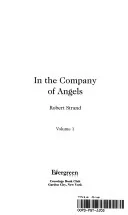
In the Company of Angels
 73
73

In the Company of Angels
Robert Strand's "In the Company of Angels" offers a structured approach to a subject often shrouded in devotional language. The strength lies in its systematic presentation of angelic orders, drawing parallels between different historical esoteric systems. Strand's analysis of angelic "correspondences" offers a practical lens, moving beyond mere cataloging to suggest energetic interactions. However, the work occasionally feels overly systematic, at times reducing the numinous to a set of definable principles. A particularly compelling section details the "descent" of angelic influence, illustrating how these energies are thought to manifest in the material plane. While dense, its methodical nature makes it a valuable resource for serious students of angelology. It serves as a focused manual for those seeking to understand the mechanics of celestial interaction.
📝 Description
73
Robert Strand's 2005 book examines angelic hierarchies and their energetic principles.
Published in 2005, Robert Strand's "In the Company of Angels" moves beyond devotional accounts to analyze angelic hierarchies and their connection to the human spiritual path. The book investigates the energetic principles and symbolic language used to understand celestial beings within esoteric traditions. It is written for individuals undertaking advanced studies in Western esotericism, especially those viewing angelology as a practical discipline rather than a purely theological one.
Strand's work is situated within a modern resurgence of interest in angelic studies. It draws upon a long history of thought, engaging with concepts that developed from ancient Near Eastern angelology through medieval grimoires and Theosophical writings. This places the book within a clear lineage of esoteric thought, building on earlier occult revivalists and mystics. The author focuses on how angelic "correspondences" map angelic influences to planetary, elemental, and psychological states. He also discusses the manifestation of angelic energy through symbolic forms and ritual practices, providing a method for understanding spiritual assistance.
This book engages with angelology within the broader field of Western esotericism. It follows a tradition that has incorporated angelic studies from ancient Mesopotamian cultures, through Jewish mysticism, and into medieval European magical texts like grimoires. Later influences from the Theosophical Society and the occult revival of the late 19th and early 20th centuries also inform its approach. Strand's work is part of a contemporary interest in applying these historical systems to practical spiritual development.
💡 Why Read This Book?
• Gain a systematic understanding of angelic hierarchies and their correspondences, as detailed in Strand's framework, offering a structured approach to celestial energetics. • Explore the concept of "angelic descent" and its manifestation through symbolic forms and ritual, providing practical insights into how spiritual energies are believed to interact with the material world. • Discover how historical esoteric traditions, from medieval angelology to later occult revivalism, conceptualized angelic assistance, situating "In the Company of Angels" within a rich intellectual lineage.
⭐ Reader Reviews
Honest opinions from readers who have explored this book.
❓ Frequently Asked Questions
What is the primary focus of Robert Strand's "In the Company of Angels"?
The book focuses on angelic hierarchies and their interaction with human spiritual paths, examining energetic principles and symbolic language used in esoteric traditions to understand celestial beings.
When was "In the Company of Angels" first published?
The book was first published in 2005.
Who would benefit most from reading this book?
Individuals advanced in Western esotericism, particularly those interested in angelology as a practical discipline, seeking to understand spiritual realms and angelic forces, will find it beneficial.
Does the book discuss practical methods for contacting angels?
While not a grimoire, the book explores the energetic architecture and symbolic language through which angelic interaction is understood in esoteric practice, implying methods of engagement.
What historical periods or traditions does Strand draw upon?
Strand synthesizes concepts from ancient Near Eastern angelology, medieval grimoires, and 19th and 20th-century Theosophical writings, placing his work within a broader esoteric continuum.
What are "angelic correspondences" as discussed in the book?
Angelic correspondences refer to the mapping of angelic influences to planetary, elemental, and psychological states, providing a framework for understanding their energetic role.
🔮 Key Themes & Symbolism
Angelic Hierarchies and Orders
The work meticulously details the structured systems of angelic beings, often referencing classical angelic taxonomy found in texts attributed to Pseudo-Dionysius the Areopagite and subsequent occult traditions. It moves beyond mere enumeration to explore the functional roles and energetic signatures attributed to each order, from Seraphim to Archangels, providing a framework for understanding celestial governance and divine emanation within esoteric cosmology.
Energetic Correspondences and Manifestation
A core theme is the concept of "correspondences," wherein angelic forces are linked to specific planets, elements, colors, and even psychological states. Strand elucidates how these correspondences are not arbitrary but represent a celestial energetic architecture. The book explores the "descent" of these energies, detailing how they are believed to manifest and interact with the human experience through symbolic forms and ritualistic engagement, offering a practical lens.
The Human-Angelic Interface
This theme examines the dynamics of interaction between human consciousness and angelic presence. It discusses how esoteric practices aim to bridge the gap between the mundane and the celestial, facilitating divine guidance and spiritual assistance. The book posits that understanding angelic "language"—through symbolism, meditation, and ritual—is key to fostering a conscious relationship with these spiritual intelligences.
Evolution of Angelic Thought
Strand implicitly traces the lineage of angelic studies, showing how ideas evolved from ancient religious texts through medieval mysticism and into modern occultism. The work situates itself within this historical progression, engaging with concepts that have been reinterpreted and systemized over centuries. It highlights how different eras and traditions have conceptualized the nature and function of angels within their respective spiritual frameworks.
💬 Memorable Quotes
Direct passages from the work, attributed to the author.
“The descent of angelic energy provides a bridge between the divine and the manifest.”
— This interpretation emphasizes the book's view of angels as conduits. It suggests that their role is to channel spiritual force downwards, making it accessible and operative within the human realm and the material universe.
“Understanding angelic language requires engaging with symbolic forms.”
— This concept underscores the book's emphasis on symbolism as a primary means of apprehending and interacting with angelic intelligences. It implies that direct, literal communication is less common than understanding through symbolic representation and esoteric grammar.
“Esoteric practice seeks to align human consciousness with angelic currents.”
— This interpretation captures the practical aim of the work, suggesting that engaging with angels involves a conscious effort towards spiritual attunement. It implies that alignment is a key goal for those studying these celestial forces.
💡 Key Ideas
Editorial paraphrase of the work's core concepts — not direct quotes.
Angelic influence is understood through a system of correspondences linking celestial beings to earthly phenomena.
This paraphrased concept highlights the book's focus on the structured, interconnected nature of angelic work. It suggests that understanding angels involves recognizing their patterned relationship with the physical and psychological world, as mapped out in esoteric systems.
The hierarchy of angels reflects a divine order expressed through energetic gradients.
This paraphrased idea points to the book's systematic approach to angelology, viewing angelic structures not just as a ladder but as an expression of divine law and varied energetic intensities within creation.
🌙 Esoteric Significance
Tradition
This work fits within the Western Esoteric tradition, specifically drawing from Hermeticism, Kabbalah, and Theosophy, while also referencing earlier angelic lore. It departs from purely devotional angelology by focusing on the energetic and systemic aspects of angelic hierarchies, treating them as integral components of the spiritual cosmology that underpins magical and mystical practice. It positions angels as vital forces within the divine emanation process.
Symbolism
Key symbols include the "celestial ladder" representing the graded descent of divine energy through angelic ranks, and the "seals" or "sigils" often associated with angelic invocation in grimoires. The book explores how these symbols function as energetic anchors and mnemonic devices, facilitating the alignment of human consciousness with specific angelic forces and their respective domains.
Modern Relevance
Contemporary practitioners of ceremonial magic, angel magic, and those exploring consciousness studies often draw on works like Strand's. It provides a structured framework for understanding angelic intelligences that speaks to modern inclinations towards mapping energetic systems and exploring the psychology of spiritual experience, making it relevant for those seeking systematic approaches to the celestial realms.
👥 Who Should Read This Book
• Students of Western Esotericism: Those seeking to understand the systematic and energetic aspects of angelology beyond devotional contexts will find Strand's correlations and hierarchy analysis valuable. • Practitioners of Magical Arts: Individuals engaged in ceremonial magic or ritualistic work who wish to integrate a conceptual understanding of angelic forces into their practice will benefit from the book's framework. • Comparative Mysticism Scholars: Researchers interested in how different traditions conceptualize spiritual intermediaries and divine order will find the book's synthesis of historical and esoteric ideas informative.
📜 Historical Context
Published in 2005, "In the Company of Angels" arrived during a period of renewed popular and academic interest in angelology, following decades where such subjects were often relegated to fringe esotericism. Strand's work builds upon the foundations laid by earlier occult revivalists like Helena Blavatsky and the Theosophical Society, who sought to integrate ancient angelic lore with modern philosophical and scientific ideas. It also engages with the legacy of medieval Christian angelology and Kabbalistic angel systems, offering a synthesized perspective. In contrast to purely theological treatments, Strand's approach aligns with contemporary esoteric practitioners seeking practical applications. The work emerged in an intellectual climate where comparative religion and mysticism were gaining traction, though it faced competition from more devotional or New Age interpretations of angelic phenomena.
📔 Journal Prompts
The concept of "angelic descent" and its manifestation.
Reflect on the energetic signatures of different angelic orders as presented.
Analyze the role of "symbolic language" in human-angelic communication.
Consider the "correspondences" between angelic forces and earthly phenomena.
Evaluate the historical evolution of angelic thought presented in the work.
🗂️ Glossary
Angelic Correspondences
The mapping of angelic influences to specific planets, elements, colors, sounds, and human psychological states, used within esoteric traditions to understand their energetic function.
Angelic Descent
The process by which divine energy or influence is understood to flow downwards through the angelic hierarchies, becoming progressively more manifest or accessible to the human realm.
Esoteric Angelology
The study and practice concerning angels within mystical and occult traditions, focusing on their energetic roles, symbolic meanings, and methods of interaction, distinct from orthodox theology.
Hierarchy of Angels
The structured system categorizing different orders or ranks of angels, often based on ancient and medieval theological and occult texts, outlining their respective functions and proximity to the divine.
Symbolic Language
The use of archetypal images, metaphors, and signs to convey deeper spiritual or energetic meanings, considered a primary mode of communication with or understanding of angelic beings.
Energetic Signature
The unique vibratory quality or energetic pattern attributed to specific angelic beings or forces, which can be recognized and interacted with through esoteric practices.
Manifestation
The process by which spiritual or energetic realities become apparent or active in the physical world, often facilitated by angelic forces according to esoteric doctrine.
This book appears in 1 collection
🔮 Readers Also Liked
Browse all →







From the “Angels” Collection
View all →


More Free Occult Philosophy Books
View all →