Brain Magick
 77
77

Brain Magick
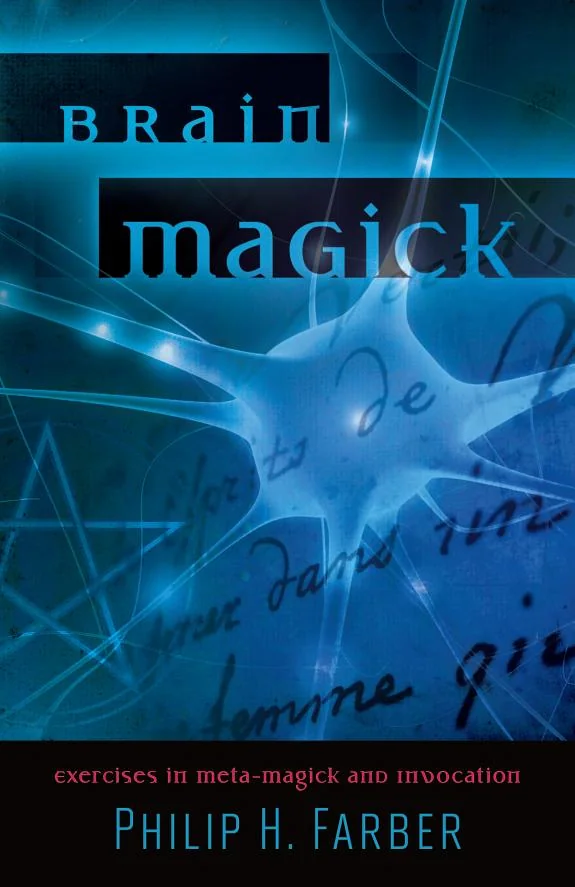
Philip H. Farber’s *Brain Magick* attempts to bridge the chasm between the arcane and the empirical, specifically neuroscience. The book's strength lies in its ambitious effort to map magical techniques onto cognitive functions. Farber’s detailed explanations of how invocation might operate through neural pathways offer a compelling, if speculative, framework. The inclusion of over seventy exercises provides ample opportunity for practical application. However, the sheer volume of concepts, ranging from neuroscience to Jungian psychology and various occult traditions, occasionally feels overwhelming, potentially diluting the focus on invocation itself. A particularly striking passage details how repetitive mental exercises, akin to forming new habits, can reshape the brain's response to symbolic stimuli, thereby enhancing magical efficacy. While the integration is innovative, the conceptual density demands significant reader engagement. *Brain Magick* offers a unique, neurologically-informed perspective on occult practice, best suited for the diligent student.
📝 Description
77
Philip H. Farber's 2011 book *Brain Magick* connects occult principles with modern neuroscience.
Philip H. Farber's *Brain Magick* synthesizes occult principles and modern neuroscience, offering a practical framework for personal transformation through invocation. The book details methods for infusing one's life with enhanced energy, a clearer sense of purpose, and renewed passion. It moves beyond theory, including over seventy exercises that illustrate the intersection of neurological processes, magical theory, and practical invocation.
This work is for individuals seeking to actively engage with their inner and outer worlds through a structured, intellectually rigorous approach. It appeals to those interested in applying psychological principles to magical practice and occult disciplines. Readers who appreciate a blend of empirical understanding, as seen in neuroscience, with traditional esoteric concepts will find value here. It is particularly suited for practitioners who wish to understand the mechanisms behind their magical work and optimize their results.
Published in 2011, *Brain Magick* emerged during a period of increasing overlap between psychology, neuroscience, and esoteric studies. Following the late 20th-century occult revival, which involved cataloging traditions like the Golden Dawn's material, there was a growing effort to demystify magical practices. Farber's work contributes to this trend by grounding esoteric techniques in observable neurological phenomena, diverging from earlier symbolic or faith-based occult literature. This era also saw increased academic interest in consciousness studies and altered states of awareness.
💡 Why Read This Book?
• You will learn to view invocation not as abstract ritual, but as a neurologically-informed practice, understanding how exercises like those described in Chapter 3, 'Invocation and the Brain', can reshape your neural pathways for tangible results. • Gain practical techniques for enhancing personal energy and passion by applying Farber's method of 'active invocation,' which leverages principles of neuroscience to achieve focused intent, as demonstrated in the numerous exercises provided. • Understand the science behind altered states of consciousness and their role in manifestation, moving beyond purely symbolic interpretations to a more mechanistic understanding exemplified by the book's exploration of the limbic system's involvement in magical states.
⭐ Reader Reviews
Honest opinions from readers who have explored this book.
❓ Frequently Asked Questions
What is the core concept of invocation taught in Brain Magick?
Brain Magick teaches invocation as the art of consciously infusing your life with energy, purpose, and passion. It's presented as a practical technique informed by neuroscience, utilizing over seventy exercises to illustrate how mental focus and visualization can be directed for personal transformation.
How does Brain Magick connect neuroscience with magic?
The book links neurological principles, such as brain plasticity and the function of neural pathways, to the mechanics of magical practice. It suggests that understanding these biological processes can enhance the effectiveness and consistency of occult techniques like invocation.
Who is Philip H. Farber?
Philip H. Farber is the author of Brain Magick. He is known for his work integrating esoteric traditions with psychology and neuroscience, aiming to provide practical and scientifically informed approaches to occult studies and personal development.
What kind of exercises are included in Brain Magick?
Brain Magick includes over seventy exercises designed to demonstrate the principles of neuroscience, magic, and invocation. These exercises are practical applications of the book's theories, aimed at helping readers actively engage with and transform their inner and outer worlds.
When was Brain Magick first published?
Brain Magick by Philip H. Farber was first published on October 8, 2011. This publication date places it within a period of renewed interest in the intersection of consciousness studies and esoteric practices.
Is Brain Magick suitable for beginners in occult studies?
Yes, Brain Magick is suitable for beginners who are interested in a more analytical and neuroscience-informed approach to occultism. The numerous exercises provide a hands-on entry point, though a willingness to engage with complex concepts is beneficial.
🔮 Key Themes & Symbolism
Neuroscience of Invocation
This theme explores how the principles of neuroscience, particularly brain plasticity and the functioning of neural pathways, can be applied to the practice of invocation. Farber suggests that by understanding how the brain learns and adapts, practitioners can deliberately shape their mental and emotional states to achieve magical goals. The book offers exercises that leverage this understanding, aiming to make invocation a more precise and effective tool for personal transformation and reality manipulation, moving beyond purely symbolic interpretation.
Active Infusion of Life Energy
Central to Brain Magick is the concept of actively infusing one's existence with heightened energy, a defined purpose, and passionate engagement. This is achieved through the art of invocation, presented not as passive reception but as a deliberate act of will and consciousness. The book provides practical methods, rooted in the synthesis of occult theory and neurological function, to cultivate these qualities, enabling practitioners to take a more direct role in shaping their lived experience and achieving desired outcomes.
The Art of Practical Magic
Brain Magick emphasizes the practical application of magical principles, moving beyond abstract theory. It presents over seventy exercises designed to illustrate the core concepts, integrating insights from neuroscience, psychology, and esoteric traditions. The focus is on actionable techniques that readers can implement to experience tangible changes. This approach grounds the often-esoteric nature of magic in observable phenomena and structured practice, making it accessible to those who seek empirical validation or a more systematic understanding of occult work.
Purpose, Passion, and Energy
The book aims to help readers cultivate a life characterized by enhanced energy, a clear sense of purpose, and vibrant passion. Farber posits that these qualities are not merely desirable but achievable through the disciplined practice of invocation, informed by an understanding of how the mind and brain operate. By applying the techniques detailed, particularly the numerous exercises provided, individuals can learn to direct their internal resources more effectively, leading to a more dynamic and fulfilling existence.
💬 Memorable Quotes
Direct passages from the work, attributed to the author.
“Invocation infuses your life with energy, purpose, and passion.”
— This core statement expresses the book's primary objective: to provide a practical method for enhancing fundamental aspects of human experience through directed mental and energetic work, grounded in occult principles and neurological understanding.
“More than seventy exercises illustrate the principles of neuroscience, magick, and invocation.”
— This highlights the book's pedagogical approach, emphasizing hands-on practice. The sheer number of exercises suggests a comprehensive and detailed guide for readers seeking to actively integrate the theoretical concepts into their personal practice.
“The art of invocation is presented as a means to connect inner potential with outer reality.”
— This interpretation emphasizes the bridge-building aspect of Farber's invocation technique, suggesting it's a method for actualizing latent abilities and aligning one's internal state with the desired manifestation in the external world.
“Focus on neuroscience, magick, and invocation as interconnected disciplines.”
— This suggests that Farber views these fields not as separate but as overlapping domains that can inform and strengthen each other, offering a holistic perspective on consciousness and its interaction with the world.
💡 Key Ideas
Editorial paraphrase of the work's core concepts — not direct quotes.
Understanding the brain's mechanisms enhances magical efficacy.
This paraphrased concept points to the book's unique selling proposition: the integration of scientific understanding of the brain to improve the effectiveness and consistency of occult practices, moving towards a more systematic approach to magic.
🌙 Esoteric Significance
Tradition
While not strictly adhering to a single lineage, *Brain Magick* draws heavily from Western Esoteric traditions, particularly Hermeticism and its modern interpretations, which often emphasize the correspondence between the macrocosm and the microcosm (as above, so below). It integrates principles found in ceremonial magic and psychological approaches to the occult, adapting them through the lens of contemporary neuroscience. Farber’s work can be seen as a modern evolution, seeking to provide a more mechanistic and empirically-testable framework for practices traditionally reliant on faith or subjective experience.
Symbolism
The book's symbolism often draws from the concept of the brain as a locus of power and transformation, akin to a sacred space or a microcosm of the universe. Neural pathways can be seen as symbolic representations of energetic currents or magical circuits. The act of invocation itself symbolizes the conscious directing of will and attention, a core Hermetic principle, towards shaping one's reality, with the brain acting as the primary instrument for this manifestation.
Modern Relevance
Contemporary thinkers in fields like neuroplasticity, consciousness studies, and even transhumanism, while not always directly citing Farber, explore similar intersections of mind, biology, and intentionality. His work appeals to modern practitioners of various magical disciplines who seek a more robust, scientifically-informed understanding of their practices. Schools of thought focusing on practical magic, ritual design, and the psychology of belief systems can find valuable frameworks and exercises within *Brain Magick*.
👥 Who Should Read This Book
• Aspiring occultists interested in a scientifically-grounded approach to magic, seeking to understand the neurological basis of practices like invocation and visualization. • Individuals focused on self-improvement and personal development who wish to harness their mental and energetic potential through structured exercises informed by both esoteric principles and cognitive science. • Practitioners of existing magical or spiritual disciplines seeking to deepen their understanding and efficacy by exploring the intersection of neuroscience and their chosen path.
📜 Historical Context
Published in 2011, *Brain Magick* emerged during a period of significant cross-pollination between esoteric studies and scientific inquiry. The preceding decades had seen a resurgence of interest in Western esotericism, with many practitioners seeking to reconcile ancient practices with modern understanding. Figures like Rupert Sheldrake were exploring controversial theories of science, while disciplines like neuroscience were increasingly investigating consciousness and subjective experience. Farber’s work can be seen as a continuation of the trend initiated by earlier occultists who attempted to integrate psychological insights, such as those of Carl Jung, into magical theory. Unlike purely historical or ritualistic texts, *Brain Magick* explicitly leverages contemporary neuroscience, positioning itself against more traditional, less empirically-grounded occult literature. Its reception was within a niche but growing community interested in the practical, psychological, and even biological underpinnings of magical work.
📔 Journal Prompts
Reflection on the described neural pathways and their potential for magical application.
How the concept of active invocation can be integrated into daily routines.
Identifying personal energetic patterns and how they might be influenced by neurological states.
Mapping the book's exercises to specific desired life outcomes.
Exploring the relationship between focused visualization and observable results, as presented in the text.
🗂️ Glossary
Invocation
In the context of *Brain Magick*, invocation is the art of consciously drawing upon and directing internal energies, purpose, and passion to influence one's life and reality. It is presented as an active, neurologically-informed practice.
Neuroscience
The scientific study of the nervous system and the brain. *Brain Magick* integrates principles of neuroscience to explain the mechanisms behind magical practices and consciousness.
Brain Plasticity
The brain's ability to change and adapt its structure and function throughout life in response to experience. Farber uses this concept to explain how magical practices can create lasting changes.
Neural Pathways
The connections between neurons in the brain. The book suggests that specific mental exercises can strengthen or create neural pathways associated with desired states or outcomes.
Limbic System
A complex set of structures in the brain involved in emotions, motivation, and memory. *Brain Magick* explores its role in emotional resonance during magical practices.
Active Invocation
Farber's term for a proactive and intentional form of invocation, distinct from passive reception, emphasizing the practitioner's direct role in infusing life with energy and purpose.
Esoteric
Relating to or concerned with the inner, secret, or mysterious. In this context, it refers to knowledge or practices intended for a select group or understood through specialized study.
This book appears in 1 collection
🔮 Readers Also Liked
Browse all →








From the “Invocation” Collection
View all →








More Free Occult Philosophy Books
View all →