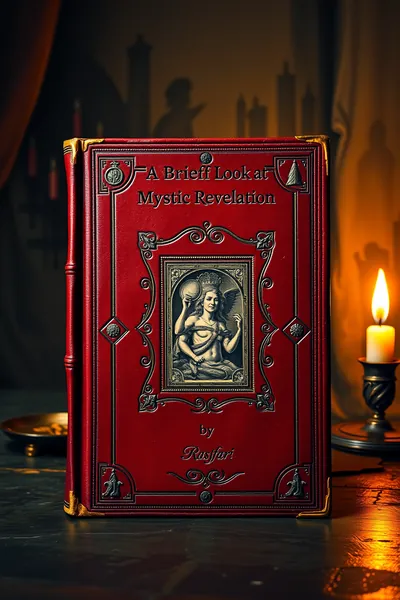
A Big Jewish book

 79
79

A Big Jewish book
Jerome Rothenberg, Harris Lenowitz, and Charles Doria's A Big Jewish Book (1978) offers a dense, often disorienting, but ultimately rewarding exploration of Jewish textual traditions. The anthology’s strength lies in its radical inclusivity, pulling together disparate voices and forms—from ancient liturgical fragments to modern Yiddish poetry—that rarely appear in standard academic surveys. Its deliberate lack of editorial framing forces the reader into a direct, often unmediated, encounter with the material. However, this very approach can be a stumbling block; without extensive prior knowledge, navigating the sheer volume and variety of texts can feel overwhelming. A particularly striking section for me was the inclusion of early Hasidic tales, which, stripped of extensive commentary, reveal their raw, mythic power. The work's ambition to present a 'big' Jewish book is met, though it requires significant reader effort. It’s a valuable resource for those willing to wrestle with its contents.
📝 Description
79
First published in 1978, A Big Jewish Book collects Jewish textual traditions from canonical and marginalized sources.
A Big Jewish Book is an anthology compiled by Jerome Rothenberg, Harris Lenowitz, and Charles Doria. It gathers a wide range of Jewish textual traditions, including fragments, prayers, philosophical writings, and poetry. The editors deliberately selected material from both well-known and less-recognized sources, aiming to present a broad and varied picture of Jewish thought and literature.
The collection is intended for readers interested in a less conventional view of Jewish culture and spirituality. It will appeal to those studying comparative religion, literature scholars interested in textual variety, and individuals drawn to the mystical and philosophical aspects of various traditions. The book is particularly suited for readers who appreciate substantial primary source material, often dense and challenging in nature.
When A Big Jewish Book appeared in 1978, Jewish studies saw growing interest. This anthology offered a more inclusive view of Jewish textual life, incorporating diverse vernacular traditions and figures like Rabbi Nachman of Breslov. The editors sought to move beyond a singular, Western European perspective on Jewish intellectual history.
This anthology engages with the rich and varied history of Jewish mysticism and esoteric thought. While scholars like Gershom Scholem previously focused on specific mystical elements of Kabbalah, this book broadens the scope. It includes diverse vernacular traditions and lesser-known figures, reflecting a wider spectrum of Jewish spiritual and intellectual life. The collection acknowledges the depth and complexity of Jewish esoteric practices and philosophies beyond common interpretations.
💡 Why Read This Book?
• Gain an expansive understanding of Jewish spiritual literature beyond common Western paradigms, as seen in the inclusion of non-canonical mystical texts and vernacular traditions first compiled in 1978. • Encounter the practice of *midrash* through direct examples, understanding its role in creative textual interpretation and the discovery of layered meaning within Jewish tradition. • Explore the concept of *kavanah* (intention) by examining diverse prayers and devotional writings, feeling the weight of focused spiritual engagement presented across various historical periods.
⭐ Reader Reviews
Honest opinions from readers who have explored this book.
❓ Frequently Asked Questions
What is the historical significance of A Big Jewish Book's 1978 publication date?
Published in 1978, A Big Jewish Book appeared during a resurgence of interest in Jewish studies and mysticism, following figures like Gershom Scholem. It offered a broader, more inclusive view of Jewish textual traditions than was common then.
Are there specific Kabbalistic concepts discussed in A Big Jewish Book?
While not exclusively a Kabbalistic text, the book touches upon Kabbalistic ideas, particularly the concept of the *Shekhinah* (divine feminine presence), through various mystical and poetic expressions.
What is 'midrash' as represented in this anthology?
Midrash, as presented through examples in the book, is an ancient Jewish method of biblical interpretation that seeks to uncover deeper, allegorical, or homiletical meanings within sacred texts beyond their literal sense.
Who are the primary editors credited with A Big Jewish Book?
The primary editors credited with the first publication of A Big Jewish Book are Jerome Rothenberg, Harris Lenowitz, and Charles Doria.
Does the book focus only on religious texts?
No, A Big Jewish Book is intentionally broad, encompassing not only prayers and philosophical discussions but also poetic expressions, fragments, and folklore, reflecting a wide spectrum of Jewish cultural and spiritual output.
What does 'kavanah' mean in the context of this book?
'Kavanah' refers to the focused intention or devotion that animates Jewish prayer and ritual. The book showcases various forms of devotional literature where this concept is central.
🔮 Key Themes & Symbolism
The Breadth of Jewish Expression
This anthology challenges monolithic views of Jewish literature and spirituality by gathering an exceptionally wide range of texts. From ancient liturgical poems and mystical fragments to philosophical dialogues and vernacular storytelling, the collection emphasizes diversity. It includes materials that might be considered esoteric or marginal within broader Jewish scholarship, highlighting the richness found in less-explored corners of the tradition. The sheer volume and variety underscore the editors' intent to present a comprehensive, albeit non-linear, survey of Jewish textual life.
Interpretation and Intention (Midrash & Kavanah)
Central to understanding the book is the exploration of interpretive methods and devotional practices. The inclusion of *midrashic* texts demonstrates the ancient Jewish approach to finding layered meanings within scripture, treating the text as a living source of wisdom. Alongside this is the concept of *kavanah*, the focused intention required for prayer and ritual. The anthology presents numerous examples where the spiritual efficacy of an act is tied to the practitioner's mental and spiritual state, revealing a profound emphasis on inner consciousness.
Mystical and Immanent Divine Presence
While not exclusively a work of mysticism, A Big Jewish Book contains significant elements that speak to the divine's immanence in the world and the human experience. It includes texts that allude to the *Shekhinah*, the feminine aspect of God, and explores ecstatic or visionary experiences. These selections reveal a tradition that, beyond its legal and philosophical dimensions, possesses a deep current of seeking direct, experiential connection with the sacred, often through symbolic language and contemplative practice.
Language as Sacred Vehicle
The anthology implicitly argues for the sacred power of language itself. Whether through the precise invocations of liturgical verse, the allegorical flights of *midrash*, or the philosophical arguments of theologians, the words themselves are treated as vessels carrying spiritual weight and meaning. The collection showcases how different linguistic registers and forms—from formal Hebrew to vernacular Yiddish—can all serve to express profound spiritual truths and engage the reader in contemplative practice.
💬 Memorable Quotes
Direct passages from the work, attributed to the author.
“Finding meaning beyond the literal text is a sacred act.”
— This reflects the principle of *midrash*, suggesting that the act of interpreting scripture to uncover hidden layers of wisdom is a fundamental and spiritually significant practice within Jewish tradition.
“The divine presence is felt in the quietest corners of existence.”
— This interpretation points towards the concept of the *Shekhinah* and divine immanence, suggesting that God's presence is not confined to grand pronouncements but is discoverable in the mundane and subtle aspects of the world.
“A return, not just a turning away from error.”
— This captures the essence of *teshuvah* as more than mere repentance; it signifies a profound turning back towards connection, a redirection of one's spiritual path.
“The vastness of tradition is held in fragments.”
— This speaks to the anthology's structure, implying that the entirety of Jewish textual heritage, though immense, can be accessed and understood through carefully selected, often incomplete, pieces.
💡 Key Ideas
Editorial paraphrase of the work's core concepts — not direct quotes.
The prayers are not merely words, but vessels for the soul's intention.
This paraphrased concept highlights the importance of *kavanah*, emphasizing that the efficacy of prayer lies not just in the utterance but in the focused, devotional state of the individual.
🌙 Esoteric Significance
Tradition
This work engages broadly with the esoteric currents within the Jewish tradition, particularly drawing from Kabbalistic and Hasidic sources. It represents an attempt to compile and present these often-esoteric materials in a manner accessible to a wider audience, moving beyond purely academic or strictly initiated circles. While not a systematic treatise on Kabbalah, it includes elements that speak to divine emanation, the nature of the soul, and the hidden meanings within scripture, aligning with the contemplative and mystical aims found in various Jewish esoteric lineages.
Symbolism
Key symbols explored include the concept of the *Shekhinah*, representing the immanent, feminine aspect of the Divine, often depicted in mystical literature as a presence dwelling among the people or within creation. Another motif is the divine name itself, treated not merely as a label but as a conduit of power and revelation. The anthology also implicitly engages with the symbolism of light and darkness, common in mystical traditions, representing states of divine presence and absence, or spiritual illumination and obscurity.
Modern Relevance
Contemporary practitioners of Jewish renewal, Neo-Hasidism, and those interested in comparative mysticism often draw upon anthologies like this. Thinkers and artists exploring the intersection of text, ritual, and identity find value in its breadth. It serves as a foundational text for understanding the diverse expressions of Jewish spirituality that continue to inform modern contemplative practices, interfaith dialogue, and the search for deeper meaning in ancient textual traditions.
👥 Who Should Read This Book
• Students of comparative religion and Jewish studies seeking to understand the breadth of textual traditions beyond canonical works. • Readers interested in esoteric and mystical practices who want to engage with primary source materials from the Jewish tradition. • Scholars and writers looking for a diverse collection of Jewish prayers, philosophical fragments, and poetry for research or creative inspiration.
📜 Historical Context
A Big Jewish Book’s 1978 publication arrived at an important moment for Jewish studies. The preceding decades had seen a significant scholarly engagement with Jewish mysticism, largely spearheaded by Gershom Scholem, whose work on Kabbalah brought these traditions into academic discourse. However, Scholem's focus often leaned towards the more speculative and historical aspects of mysticism. In contrast, Rothenberg, Lenowitz, and Doria aimed for a more comprehensive and accessible presentation of Jewish textual life, incorporating a wider array of genres and voices, including Hasidic tales and less canonical poetic forms. This anthology emerged in a climate where comparative religion and the study of religious texts were gaining broader traction, yet the specific challenge this book posed was its deliberate inclusion of diverse, sometimes fragmented, materials that defied easy categorization, offering a counterpoint to more narrowly defined academic or theological perspectives.
📔 Journal Prompts
The concept of *kavanah* in relation to your own devotional practices.
Exploring the layered meanings found in the *midrashic* examples provided.
Reflecting on the presence of the *Shekhinah* in contemporary life.
The role of intention in textual interpretation.
How fragments of text can evoke a sense of the sacred.
🗂️ Glossary
Kavanah
Hebrew term signifying intention, devotion, or focus, particularly central to Jewish prayer and ritual, indicating the mental and spiritual concentration required for meaningful engagement.
Midrash
An ancient Jewish method of biblical interpretation that seeks to uncover deeper, allegorical, homiletical, or legal meanings within sacred texts beyond their literal sense.
Shekhinah
The feminine aspect or presence of the Divine in Jewish mysticism, representing God's immanence and dwelling within creation and the people of Israel.
Teshuvah
Hebrew for 'return' or 'turning,' often translated as repentance, signifying a process of spiritual redirection, atonement, and re-establishment of connection with the Divine.
Hasidism
A spiritual movement within Orthodox Judaism founded in 18th-century Eastern Europe, emphasizing joy, mysticism, and the personal experience of God's presence in daily life.
Liturgy
The established form of public worship or religious observance, often comprising prayers, readings, and rituals, as practiced by a particular religious community.
Kabbalah
The esoteric or mystical tradition of Judaism, concerned with the nature of God, the creation of the universe, and the relationship between the divine and the human realms.
🔮 Readers Also Liked
Browse all →






More Free Mysticism & Contemplation Books
View all →