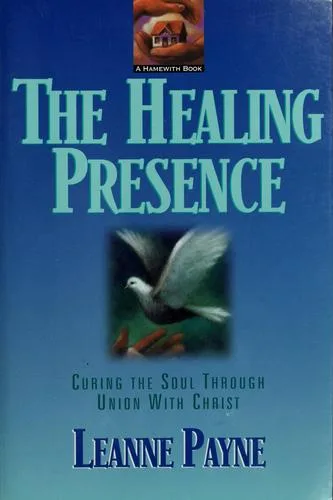
The healing presence
 71
71

The healing presence
Leanne Payne’s The Healing Presence offers a robust exploration of how our internal landscapes shape our spiritual lives. Payne’s insistence on the integration of psychological realities with spiritual pursuits is commendable, particularly her focus on the necessity of unearthing and addressing deep-seated emotional wounds before genuine spiritual progress can occur. A strength lies in her refusal to separate the 'spiritual' from the 'personal,' positing that God's healing can permeate even the most difficult aspects of human experience. However, the work can sometimes feel dense, requiring significant reader investment to fully grasp the nuances of her theological and psychological framework. The concept of "receiving" God's presence, particularly when confronting trauma, is powerfully articulated, though the practical application might prove challenging for some without further guidance. The Healing Presence is a significant contribution for those wrestling with the integration of faith and inner healing.
📝 Description
71
Leanne Payne's The Healing Presence, published in 1995, addresses how emotional patterns impede spiritual growth.
Leanne Payne's 1995 book, The Healing Presence, examines the connection between spiritual progress and psychological health. Payne argues that ingrained emotional and relational issues can obstruct one's spiritual path. The book offers a method for understanding and resolving these hindrances.
This work is for individuals desiring a closer relationship with God, especially those whose spiritual progress is hindered by past hurts, trauma, or unresolved emotional issues. It is particularly suited for people who have faced spiritual or psychological barriers and seek a comprehensive approach to healing and faith. Payne's approach integrates the whole person—spirit, soul, and body—within a Christian framework.
Published in the mid-1990s, The Healing Presence emerged within a Christian contemplative tradition that saw increasing interest in integrating psychological understanding with spiritual practice. It followed the 'inner healing' movement, aiming for a more theologically sound method to address the complete person. Payne emphasizes accessing God's healing power through comprehending personality structures and relational dynamics, with the Holy Spirit as the primary agent of transformation, often through confronting painful memories with divine love.
💡 Why Read This Book?
• Gain a framework for understanding how past relational dynamics and emotional wounds can impede spiritual growth, as detailed in Payne's discussion of the "soul's" capacity to receive God's presence. • Discover the concept of "receiving the Holy Spirit's presence" as a direct pathway to inner healing, moving beyond superficial spiritual practices. • Explore the necessity of addressing deeply held emotional patterns, a core theme that differentiates this work from purely devotional or psychological texts.
⭐ Reader Reviews
Honest opinions from readers who have explored this book.
❓ Frequently Asked Questions
What is the core premise of Leanne Payne's 'The Healing Presence'?
The book's core premise is that genuine spiritual growth is intrinsically linked to emotional and relational healing. Payne argues that unaddressed psychological wounds and relational patterns can obstruct one's ability to fully experience God's presence and love.
When was 'The Healing Presence' first published?
'The Healing Presence' was first published in 1995, placing it within a broader wave of literature exploring the integration of psychology and Christian spirituality.
Who is Leanne Payne and what is her background?
Leanne Payne was an author and speaker known for her work in Christian psychology and spiritual formation. Her teachings often focused on the integration of the whole person – spirit, soul, and body – within a faith context.
Does 'The Healing Presence' offer practical steps for healing?
Yes, the book presents a theological and psychological framework for healing, emphasizing the role of the Holy Spirit and the importance of confronting and processing difficult memories and emotions to receive God's healing presence.
What is the 'soul' in the context of this book?
In Payne's work, the 'soul' encompasses the mind, will, and emotions – the seat of personality and consciousness. Healing the soul is presented as crucial for a vibrant spiritual life.
Is this book suitable for secular readers?
While rooted in a Christian framework, readers of any background interested in the interplay between emotional health, relational patterns, and spiritual experience may find valuable insights, particularly concerning self-understanding and inner peace.
🔮 Key Themes & Symbolism
The Integrated Person
Payne posits that the human being is a unified whole, comprising spirit, soul, and body. She argues against any separation of these components, asserting that genuine spiritual vitality requires the integration and healing of all aspects. This means that psychological distress, emotional wounds, and relational brokenness are not separate from spiritual life but are deeply intertwined and must be addressed for holistic well-being and authentic connection with the divine.
Receiving God's Presence
A central concept is the active reception of God's presence as the primary agent of healing. This is not a passive waiting but an intentional engagement with God, particularly in the midst of pain or past trauma. Payne details how to allow the Holy Spirit to penetrate and bring wholeness to wounded areas of the soul, transforming negative experiences through the encounter with divine love.
Relational Dynamics and Wounding
The book extensively explores how early and ongoing relational experiences shape our inner world and our capacity for spiritual intimacy. Payne identifies common relational patterns that lead to emotional wounding and spiritual blockages. Understanding these dynamics is presented as a critical step in identifying the roots of inner conflict and opening pathways for divine intervention and healing.
Spiritual Growth as Healing
Payne reframes spiritual growth not merely as adherence to doctrine or practice, but as a process of profound inner healing. True spiritual maturity, in her view, involves becoming whole and integrated, which necessitates confronting and allowing God to heal the deepest parts of the self. This perspective challenges superficial notions of spirituality, calling for a deeper, more authentic engagement with God and oneself.
💬 Memorable Quotes
Direct passages from the work, attributed to the author.
“The purpose of this ministry is to help people to receive the Holy Spirit's presence and power in their lives.”
— This statement expresses Payne's core mission: to facilitate a direct, experiential encounter with the divine for the purpose of transformation and healing, moving beyond theoretical faith.
“It is the Holy Spirit's work to bring all of us into the wholeness of God.”
— This highlights the theological underpinnings, emphasizing the Holy Spirit as the active agent in achieving spiritual and emotional integration, positioning human effort as responsive rather than primary.
“When a person receives the Spirit of God, he is born of the Spirit.”
— This refers to the concept of spiritual regeneration, emphasizing the transformative moment of receiving the Holy Spirit as the starting point for a new life and the potential for complete healing.
“We are called to be whole, and wholeness is the result of the Spirit of God.”
— This reinforces the idea that true wholeness is not self-achieved but is a divine gift, realized through the indwelling presence and work of the Holy Spirit within the individual.
💡 Key Ideas
Editorial paraphrase of the work's core concepts — not direct quotes.
We are each of us a spiritual person, a soul, and a body.
This quote articulates the triune nature of the human being as understood by Payne, forming the foundational structure for her integrated approach to healing and spiritual formation.
🌙 Esoteric Significance
Tradition
While rooted in a Christian tradition, Payne's work touches upon esoteric themes of inner transformation and the direct apprehension of the divine. It aligns with Gnostic and Hermetic concepts of accessing divine knowledge and healing through inner work, albeit framed within orthodox Christian theology. The emphasis on the soul's capacity to receive and integrate spiritual presence echoes mystical traditions across various faiths that seek direct experience of the sacred.
Symbolism
The concept of 'wholeness' serves as a key symbolic motif, representing the integrated state of spirit, soul, and body restored through divine presence. The 'wound' symbolizes the psychological and spiritual damage incurred through trauma and unhealthy relationships, which must be acknowledged and healed. The 'presence' of the Holy Spirit symbolizes divine love, power, and restoration, the active agent in achieving this wholeness.
Modern Relevance
Payne's work continues to influence contemporary discussions on spiritual formation, trauma-informed ministry, and the integration of faith and mental health. Therapists and spiritual directors working within Christian contexts often draw upon her insights. Her emphasis on the Holy Spirit's role in healing appeals to modern Charismatic and Pentecostal movements, as well as with contemplative Christian practices seeking deeper experiential connection with God.
👥 Who Should Read This Book
• Individuals grappling with persistent emotional or spiritual blockages who suspect past experiences are hindering their faith journey. • Clergy, counselors, and spiritual directors seeking a deeper understanding of the intersection between psychological well-being and spiritual maturity within a Christian framework. • Mature believers interested in exploring a more integrated approach to spiritual growth that addresses the whole person – spirit, soul, and body.
📜 Historical Context
Published in 1995, Leanne Payne's The Healing Presence emerged during a period when the integration of psychology and Christian faith was gaining traction, particularly within evangelical and charismatic circles. It built upon earlier movements focused on 'inner healing' but sought to provide a more robust theological and developmental framework. This era saw figures like Dallas Willard also advocating for spiritual disciplines and character formation. Payne's work distinguished itself by its deep dive into relational dynamics and the concept of receiving God's presence as the core of healing, offering a contrast to purely cognitive or behavioral approaches to spiritual formation. While not facing significant censorship, the emphasis on the necessity of addressing deep psychological wounds was sometimes met with caution by more traditionalist elements within the church who favored a stricter separation of spiritual and psychological realms.
📔 Journal Prompts
Reflection on the 'soul's' capacity to receive the Holy Spirit's presence in areas of past wounding.
Identify specific relational patterns that may have contributed to spiritual or emotional obstacles.
How does the concept of 'wholeness' apply to your current spiritual and emotional state?
Consider the nature of 'receiving' God's presence versus passively waiting for divine intervention.
Explore the impact of unhealed 'wounds' on your spiritual disciplines and prayer life.
🗂️ Glossary
Soul
In Payne's framework, the soul encompasses the mind, will, and emotions; it is the seat of personality, consciousness, and the locus of personal experience and relational interaction.
Spirit
Refers to the divine spark within a person, the faculty through which one connects with God and receives the Holy Spirit.
Body
The physical aspect of the human being, which Payne also considers integral to overall well-being and spiritual experience.
Receiving
An active, intentional process of opening oneself to God's presence and healing power, particularly in response to the work of the Holy Spirit.
Wounding
Psychological, emotional, or spiritual damage resulting from negative experiences, trauma, or unhealthy relationships, which can impede spiritual growth.
Wholeness
The state of integrated well-being across spirit, soul, and body, achieved through the healing work of the Holy Spirit.
Holy Spirit's Presence
The direct, active, and transformative inhabitation and operation of the third person of the Trinity within a believer, seen as the primary agent of healing and spiritual growth.
🔮 Readers Also Liked
Browse all →





More Free Mysticism & Contemplation Books
View all →