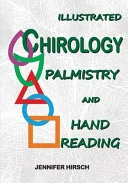
Illustrated Chirology Palmistry and Hand Reading
 76
76

Illustrated Chirology Palmistry and Hand Reading
Jennifer Hirsch's "Illustrated Chirology Palmistry and Hand Reading" offers a commendable attempt at systematizing a field often shrouded in ambiguity. The sheer volume of visual material—illustrations, photographs, and print samples—is its strongest asset, providing a clear visual lexicon for learners. Hirsch’s methodical, step-by-step approach to dissecting hand features, from the subtle variations in finger lengths to the nuanced interpretations of palm lines, is particularly effective for beginners. The book succeeds in making chirology feel less like arcane magic and more like a structured interpretive discipline. However, while comprehensive, the sheer density of information can occasionally feel overwhelming. A more focused exploration of specific, less common hand markings, perhaps drawing on less-documented historical case studies, would have added further depth. The interpretation of the "headline" and its various breaks, for instance, is well-explained but could benefit from more comparative examples across diverse hand types. Despite this, the work is a valuable, visually-driven resource for anyone serious about understanding the mechanics of hand analysis.
📝 Description
76
Jennifer Hirsch's Illustrated Chirology Palmistry and Hand Reading was published in 2022.
This 2022 reference work systematically guides readers through the art of hand analysis. It uses hundreds of detailed illustrations, tutorials, and hand print examples to explain palmistry. The book's visual approach aims to make complex concepts accessible to anyone interested in chirology.
It is designed for both newcomers to palmistry and experienced practitioners. The structured layout and clear explanations suit those who prefer a methodical approach to learning. Readers interested in esoteric studies, self knowledge, or character analysis through physiognomy will find its systematic presentation useful. The book connects basic curiosity with detailed analytical techniques.
The study of the hand is broken down into its core components: mounts, lines, fingers, and palm shapes. It shows how interpreting these features, such as the Mount of Jupiter or the Line of Apollo, can reveal personality traits, life potential, and energetic patterns. The focus is on a complete reading that considers the interaction of all hand features.
Palmistry, or chiromancy, has a history extending back to ancient India and Greece, with notable growth in Renaissance Europe. This modern guide connects to that long tradition, which includes practitioners like William Lilly. While esoteric arts see renewed interest today, this book updates and illustrates ancient principles for a modern audience, placing it within a continuous lineage of hand readers and theorists.
💡 Why Read This Book?
• Learn a systematic method for hand analysis, moving beyond generalized interpretations by engaging with the specific structure of palm lines and mounts as detailed in the book's tutorials. • Gain practical skills in interpreting character and potential through the study of hand shapes and finger characteristics, a core component of chirology Hirsch meticulously illustrates. • Understand the historical trajectory of palmistry from ancient roots to modern practice, appreciating how concepts like the "Mount of Venus" have been consistently analyzed across centuries.
⭐ Reader Reviews
Honest opinions from readers who have explored this book.
❓ Frequently Asked Questions
What is the primary focus of Jennifer Hirsch's "Illustrated Chirology Palmistry and Hand Reading"?
The book offers an encyclopedic, systematic guide to palmistry and hand reading, emphasizing a step-by-step approach supported by hundreds of illustrations, photographs, and hand print samples for beginners and experts.
When was "Illustrated Chirology Palmistry and Hand Reading" first published?
The initial publication date for Jennifer Hirsch's comprehensive guide to chirology was August 31, 2022.
Who would benefit most from reading this book on palmistry?
Individuals new to hand reading, experienced practitioners seeking a detailed reference, and those interested in esoteric studies or character analysis through physiognomy will find this book beneficial.
Does the book explain the meaning of different palm lines?
Yes, the book provides detailed lessons and illustrations on interpreting various palm lines, such as the headline, lifeline, and heart line, as part of its systematic approach to chirology.
What makes this palmistry guide different from others?
Its extensive visual content, including hundreds of tutorials and hand print samples, combined with a structured, systematic learning path, distinguishes it as a practical, encyclopedic reference for hand analysis.
Are there specific hand shapes discussed in the book?
Yes, the book systematically categorizes and explains various hand shapes and their corresponding interpretations within the framework of chirology, offering detailed visual examples.
🔮 Key Themes & Symbolism
Systematic Hand Analysis
The core of Hirsch's work is its methodical breakdown of chirology. It moves beyond intuitive readings to offer a structured curriculum covering mounts, lines, fingers, and hand shapes. The emphasis on step-by-step tutorials and visual aids aims to explain the process, allowing readers to build analytical skills systematically. This approach treats hand reading as a learnable discipline, rather than solely an innate gift, making complex interpretations accessible through clear instruction and extensive examples.
Visual Lexicon of Chirology
This book functions as an extensive visual dictionary for the practice of palmistry. Hundreds of illustrations, photographs, and actual hand print samples are integrated throughout the text. These visuals are not merely decorative; they serve as direct teaching tools, allowing readers to compare theoretical concepts with tangible examples of hand features and markings. This visual emphasis is crucial for understanding the subtle nuances of lines, mounts, and finger formations.
Character and Destiny Interpretation
At its heart, chirology seeks to illuminate the individual's character, potential, and life path. Hirsch's guide systematically explores how different features of the hand correlate with psychological traits and life experiences. From the energetic indicators of the "Mount of Jupiter" to the communication style suggested by the "headline," the book provides frameworks for interpreting these physical attributes as symbolic representations of the self.
Bridging Beginner and Expert
The design of this reference guide is intentionally inclusive. It caters to those just beginning their study of palmistry with clear, foundational lessons, while also offering depth and detail that seasoned practitioners can reference. The encyclopedic nature and systematic organization ensure that readers at any stage can find relevant information and advance their understanding of hand reading techniques.
💬 Memorable Quotes
Direct passages from the work, attributed to the author.
“The informative and easy to read lessons offer a step-by-step systematic approach to the study and practice of chirology and palmistry.”
— This statement from the original blurb highlights the book's pedagogical design. It emphasizes a structured, learnable method for understanding hand reading, moving it towards a more accessible and teachable discipline.
“Hundreds of tutorials, illustrations, photographs and hand print samples.”
— This factual description points to the book's significant reliance on visual aids. It suggests a learning experience that is highly practical and visually driven, aiming to clarify complex concepts through concrete examples.
💡 Key Ideas
Editorial paraphrase of the work's core concepts — not direct quotes.
Designed for hand reading beginners and experts alike, this chirology and palmistry reference guidebook is an encyclopedic presentation.
This quote underscores the book's dual purpose: to serve as an introductory text for novices and a comprehensive reference for those already familiar with the subject matter, indicating its broad scope and depth.
The work explores the systematic analysis of mounts, lines, and fingers.
This paraphrased concept emphasizes the book's structured methodology. It suggests a detailed examination of the distinct elements of the palm, indicating a comprehensive approach to interpreting the hand's geography.
Offers an encyclopedic presentation of hand reading techniques.
This paraphrased concept emphasizes the book's breadth and depth. It implies that the work aims to cover a vast amount of information on chirology in a thorough and exhaustive manner, serving as a definitive resource.
🌙 Esoteric Significance
Tradition
Chiromancy, as presented in this work, aligns broadly with the Western Esoteric tradition, particularly its Hermetic and Renaissance roots. It draws upon a symbolic language where the hand is seen as a microcosm reflecting the macrocosm and the individual's unique energetic blueprint. While not explicitly Kabbalistic or Gnostic, it shares with these traditions an emphasis on hidden correspondences and the potential for self-knowledge through symbolic interpretation. The book updates these ancient ideas with modern psychological understandings and a systematic, visual approach.
Symbolism
Key symbols in chirology include the major palm lines (Life, Head, Heart) representing core energies and life trajectories, and the mounts (e.g., Venus, Jupiter, Luna) symbolizing different facets of personality and potential. The shape of the hand itself—often categorized into elemental types like Earth, Air, Fire, and Water—provides a foundational symbolic framework for understanding temperament. These symbols are treated not as fixed prophecies but as indicators of tendencies and potentials.
Modern Relevance
This work finds relevance in contemporary self-help, mindfulness, and personal growth movements that explore non-traditional paths to self-understanding. Thinkers and practitioners in areas like intuitive development, psychological astrology, and even certain forms of coaching might reference its principles. It appeals to a generation seeking tangible tools for introspection, bridging the gap between ancient divination and modern psychological exploration.
👥 Who Should Read This Book
• Aspiring practitioners of chirology: Those beginning their journey into hand reading will benefit from the systematic, step-by-step tutorials and extensive visual aids that clarify fundamental concepts. • Experienced palmists seeking a comprehensive reference: Seasoned readers can utilize the book's encyclopedic nature and detailed illustrations to deepen their understanding and find quick references for specific markings. • Students of esoteric arts and physiognomy: Individuals interested in divination, character analysis, and symbolic systems will find this a valuable resource for understanding a historically significant practice.
📜 Historical Context
The practice of palmistry, or chiromancy, boasts a lineage stretching back to antiquity, with significant development occurring in Hellenistic Egypt and later flourishing during the European Renaissance. By the 17th century, figures like William Lilly were publishing influential texts that synthesized earlier knowledge. Jennifer Hirsch's "Illustrated Chirology Palmistry and Hand Reading" (2022) engages with this long tradition, updating and visually enhancing established principles for a contemporary audience. While the 20th century saw esoteric practices often relegated to the fringes or viewed critically by mainstream academia, the late 20th and early 21st centuries have witnessed a resurgence of interest in divination and occult studies. This book emerges within a context where spiritual and self-exploratory practices are increasingly integrated into personal development. Unlike purely academic or historical analyses of chiromancy, Hirsch's work prioritizes practical application and visual learning, distinguishing it from earlier, text-heavy treatises.
📔 Journal Prompts
The 'Mount of Apollo' and its associated line: what immediate aspirations does this combination suggest for your current life phase?
Compare the visual representation of a 'forked headline' in the book with your own hand; what nuances does this comparison reveal about your thought processes?
Reflect on the hand shape categorization (e.g., Earth, Air, Fire, Water) provided in the text; how does your dominant hand align with its described characteristics?
Consider the 'lifeline's' depiction and its potential variations; what does this suggest about your core vitality and life force?
Analyze the 'heart line's' appearance and any accompanying markings as illustrated in the book; what does this indicate about your emotional expression and relationships?
🗂️ Glossary
Chirology
The study and practice of hand reading, encompassing the analysis of palm lines, mounts, finger shapes, and other hand characteristics to interpret personality and predict life events.
Palmistry
A traditional term for the art of reading palms, often used interchangeably with chirology, focusing on the interpretation of lines and features on the palm of the hand.
Mounts
Fleshy, raised areas on the palm, named after classical planets (e.g., Mount of Venus, Mount of Jupiter), each believed to correspond to specific personality traits and potentials.
Lines
Creases on the palm, most notably the headline, heart line, and lifeline, which are interpreted based on their length, depth, shape, and any breaks or markings.
Hand Shape
The overall form and proportions of the hand, often categorized into elemental types (Earth, Air, Fire, Water) or specific descriptive types (e.g., Spatula, Conical), providing a basic temperament profile.
Hand Print Sample
An inked impression of a hand used for detailed analysis, allowing for precise examination of lines and markings that might be difficult to discern on a live hand.
Line of Apollo
A line, often running parallel to the heart line, associated with creativity, artistic talent, success, and public recognition.
This book appears in 1 collection
🔮 Readers Also Liked
Browse all →








From the “Palmistry” Collection
View all →









More Free Occult Philosophy Books
View all →