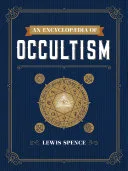
An Encyclopaedia of Occultism
 76
76

An Encyclopaedia of Occultism
Lewis Spence’s An Encyclopaedia of Occultism is less a singular voice and more a meticulously cataloged archive. Its strength lies in its sheer breadth; the 2,500 entries offer an unparalleled snapshot of occult terminology as understood in the early 20th century. However, this encyclopedic approach means depth can sometimes be sacrificed for coverage. For instance, the entry on "Scrying" provides a functional definition but lacks the practical nuance one might seek from a practitioner. The work is undeniably a foundational reference, invaluable for historical research into esoteric subjects. Yet, its value is primarily as a lexicon, a starting point for further investigation rather than a guide to living practice. It remains a crucial, if dry, repository of occult lore.
📝 Description
76
Lewis Spence's An Encyclopaedia of Occultism, published in 1920, collects over 2,500 entries on esoteric subjects.
This 1920 reference work by Lewis Spence offers a dictionary of occult terms, with more than 2,500 entries. Spence, a dedicated researcher, compiled definitions for a wide range of subjects. These include well-known terms like "Abracadabra" and "Vampire," alongside less common topics such as "Martian language" and "bottle imps." The book's organization makes it a useful guide for understanding the history and scope of occult traditions.
Its intended audience includes serious students of the occult, historians of esotericism, and researchers looking for clear definitions and historical background on mystical and magical subjects. It is a valuable resource for anyone needing to grasp the language and ideas that have influenced Western occult thought for centuries. The work is especially suited for those undertaking comparative studies in folklore, mythology, and religious history.
Published in 1920, An Encyclopaedia of Occultism appeared during a period of significant interest in spiritualism and occult movements across Europe and America. This era saw figures like Madame Blavatsky and Aleister Crowley active, with growing public and academic attention to subjects once considered fringe. Spence's aim was to create a structured lexicon for this developing field, addressing the need for organized information previously found in scattered or less academic sources. The book followed earlier, less extensive efforts to document occult phenomena.
💡 Why Read This Book?
• Gain precise definitions for over 2,500 occult terms, from "Abracadabra" to "Zodiac," providing a foundational vocabulary essential for advanced esoteric studies. • Understand the historical context of early 20th-century occultism through Spence’s compilation, offering insights into the intellectual climate of 1920 when the book was first published. • Explore connections between folklore, mythology, and esoteric beliefs by examining entries on mythical creatures and ancient practices, revealing the cross-pollination of ideas.
⭐ Reader Reviews
Honest opinions from readers who have explored this book.
❓ Frequently Asked Questions
When was Lewis Spence's An Encyclopaedia of Occultism first published?
An Encyclopaedia of Occultism by Lewis Spence was first published in 1920. This comprehensive work aimed to catalog the vast landscape of occult knowledge prevalent at the turn of the 20th century.
What kind of subjects does An Encyclopaedia of Occultism cover?
The encyclopedia covers a wide array of subjects including demonology, spiritualism, folklore, mythology, alchemy, astrology, witchcraft, and various magical practices and historical societies.
Is An Encyclopaedia of Occultism suitable for beginners in occult studies?
While comprehensive, its dense, dictionary-style format and historical perspective make it more of a reference tool for serious students and researchers rather than an introductory guide for absolute beginners.
How many entries are in An Encyclopaedia of Occultism?
The encyclopaedia contains over 2,500 entries, ranging from brief definitions to multi-page explorations of complex esoteric topics.
What is the significance of Lewis Spence as an author?
Lewis Spence was a prolific Scottish journalist and folklorist known for his extensive research and writing on mythology, occultism, and ancient history. His work often sought to systematize and explain these subjects.
Can An Encyclopaedia of Occultism be considered a primary source for occult history?
Yes, as a compilation from 1920, it serves as a valuable primary source for understanding the state of occult knowledge and terminology during that specific historical period.
🔮 Key Themes & Symbolism
The Lexicon of Magic
Spence meticulously defines an expansive array of terms fundamental to magical practice and belief. From common incantations like "Abracadabra" to the spectral phenomena of "Poltergeists," the work provides historical and etymological context. It explores the language used to describe supernatural entities, magical objects, and ritualistic actions, illustrating how terminology itself shapes understanding and practice within occult traditions. This comprehensive catalog serves as a vital key for deciphering the specialized vocabulary of esotericism.
Folklore and Esoteric Convergence
A significant aspect of the Encyclopaedia is its integration of folklore and mythological elements with occult concepts. Entries on figures like "Vampires" or legendary phenomena such as "Bottle Imps" demonstrate how ancient myths and regional superstitions are interwoven with more formal esoteric systems. Spence bridges the gap between scholarly folklore studies and the practical application of occult lore, showing how belief systems evolve and cross-pollinate across cultures and historical periods.
Historical Occult Movements
The book offers a historical survey of various occult movements, societies, and belief systems prevalent up to the early 20th century. It documents terms and concepts associated with spiritualism, theosophy, alchemy, and other esoteric traditions, providing a framework for understanding their development and interrelationships. By cataloging these diverse strands of thought, Spence creates a historical map of Western esotericism, highlighting the intellectual currents that shaped its trajectory.
Symbolism and Hidden Meanings
Within its definitions, the Encyclopaedia frequently touches upon the symbolic meanings attributed to various phenomena, creatures, and rituals. The interpretation of symbols is central to occult philosophy, and Spence’s work provides a reference point for understanding these often-complex layers of meaning. Whether discussing astrological symbols or the hidden significance of certain magical artifacts, the book underscores the importance of symbolism in esoteric communication and understanding.
💬 Memorable Quotes
Direct passages from the work, attributed to the author.
“Abracadabra”
— This entry signifies the book's willingness to engage with even the most widely recognized, yet often superficially understood, magical utterances, placing it within a historical and potentially etymological context.
“Poltergeist”
— The inclusion of 'Poltergeist' highlights the Encyclopaedia's focus on phenomena that blur the lines between folklore, spiritualism, and the unexplained, reflecting common occult investigations of the era.
“Martian language”
— This arcane term suggests the book's breadth, extending into speculative or fictional occult concepts that captured the imagination during periods of early science fiction and spiritualist exploration.
“Bottle Imps”
— The definition of 'Bottle Imps' points to the inclusion of folkloric entities and superstitions, demonstrating how common tales and beliefs are cataloged alongside more formalized magical systems.
“Spells”
— The broad category of 'Spells' indicates the book's intent to systematically address the practical application of magical intent, covering a wide range of ritualistic and incantatory practices.
🌙 Esoteric Significance
Tradition
Spence's work draws heavily from the Western Esoteric Tradition, encompassing elements of Hermeticism, Kabbalah, alchemy, and comparative mythology. It functions as a syncretic lexicon, attempting to unify diverse streams of occult knowledge under one umbrella. While not strictly adhering to a single lineage like Rosicrucianism or Gnosticism, it provides a foundational reference for understanding the vocabulary and concepts that permeate these various traditions.
Symbolism
The Encyclopaedia frequently engages with symbolism, offering interpretations for terms like "Alchemy," which represents not only chemical transformation but also spiritual purification and the pursuit of esoteric knowledge. The concept of "Angels" and their hierarchies, detailed within its pages, points to symbolic representations of divine forces and cosmic order. Furthermore, "Zodiac" entries connect celestial symbolism to astrological influences and human destiny, illustrating the pervasive use of symbolic language in occult thought.
Modern Relevance
Contemporary practitioners and scholars of Western Esotericism continue to consult Spence’s Encyclopaedia as a historical touchstone. Its comprehensive definitions are useful for understanding the terminology used by earlier occultists and in historical texts. Modern occult authors, researchers of folklore, and comparative religion scholars often reference its entries to trace the lineage of specific concepts or to grasp the breadth of occult beliefs prevalent in the early 20th century.
👥 Who Should Read This Book
• Students of Western Esotericism: Those beginning their study of Hermeticism, Kabbalah, or alchemy will find essential definitions and historical context for key terms. • Folklore and Mythology Enthusiasts: Individuals interested in the intersection of myth, legend, and occult beliefs will benefit from entries on creatures and ancient practices. • Researchers of Occult History: Scholars examining the development of occult movements and terminology in the late 19th and early 20th centuries will find this a crucial reference work.
📜 Historical Context
Published in 1920, An Encyclopaedia of Occultism emerged during a vibrant period for esoteric thought, coinciding with the height of spiritualist movements and the continued influence of Theosophy, championed by figures like Madame Blavatsky. The early 20th century saw a surge in popular and academic interest in what was termed the 'occult sciences,' a field often contrasted with the burgeoning discipline of psychology and the established sciences. Lewis Spence’s work aimed to provide a structured, almost academic, reference point in a landscape populated by more esoteric journals and less comprehensive popularizations. It followed the foundational works of occultists like Eliphas Lévi and the burgeoning output of the Hermetic Order of the Golden Dawn. While lauded for its scope, it also existed within a broader intellectual milieu that included figures like Aleister Crowley, whose own occult writings presented a different, often more ritualistic and personal, approach to the subject matter.
📔 Journal Prompts
The concept of "Bottle Imps" and its folkloric origins.
Spells as defined by Lewis Spence and their historical application.
The term "Abracadabra" and its evolution through esoteric traditions.
"Martian language" as an indicator of speculative occultism.
The depiction of "Vampires" across folklore and occult belief systems.
🗂️ Glossary
Abracadabra
A word of power, often inscribed as a charm or amulet, whose origins are debated but commonly linked to Gnostic or Hebrew traditions, believed to possess protective or healing properties.
Poltergeist
A phenomenon characterized by unexplained noises, physical disturbances, and the movement of objects, typically attributed to a mischievous or disturbed spirit or entity.
Spells
Formulated magical incantations or rituals intended to influence events, people, or circumstances, often involving specific words, gestures, or symbolic actions.
Vampire
A mythical or folkloric being, often undead, that subsists by feeding on the vital essence (typically blood) of the living, appearing in various cultures with differing characteristics.
Martian Language
A speculative or fictional language purported to originate from Mars, often appearing in occult or science fiction contexts of the late 19th and early 20th centuries, linked to ideas of extraterrestrial intelligence.
Bottle Imp
A supernatural entity or demon confined within a bottle, often associated with European folklore, which grants wishes or powers to its owner in exchange for service or eventual soul possession.
Magic Darts
Mystical projectiles or symbolic weapons used in magical practices, often imbued with specific energies or intentions to affect a target, either physically or energetically.















![BHAGAVAD GITA WIE SIE IST [GERMAN LANGUAGE].](/img/thumb/bhagavad-gita-wie-sie-ist-german-language-ac-bhaktivedanta-swami-prabhupada-691655.webp)