Welcome Homeopathy
 73
73

Welcome Homeopathy
Dr. S.C. Madan's "Welcome Homeopathy" directly confronts the often-unacknowledged drawbacks of allopathic medicine, particularly its capacity to generate complex secondary ailments. The author's assertion that iatrogenic diseases can be more formidable than the initial complaint is a stark, albeit controversial, claim that warrants serious consideration for anyone grappling with chronic illness or treatment side effects. Madan's detailed exploration of comparative results between the two systems is a significant contribution, offering a perspective rarely found in mainstream medical literature. However, the work's polemical tone, while passionate, sometimes overshadows the nuanced presentation of evidence that would strengthen its argument for a broader audience. The specific focus on managing side effects from indispensable allopathic drugs, such as those for heart conditions, is a particularly compelling and under-addressed area. Ultimately, "Welcome Homeopathy" serves as a potent, if sometimes strident, advocate for a more integrated therapeutic approach.
📝 Description
73
Dr. S.C. Madan's 2010 book argues that iatrogenic diseases can be more severe than original ailments.
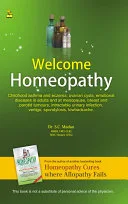
First published in 2010, Dr. S.C. Madan's "Welcome Homeopathy" critically examines the limitations of allopathic medicine, focusing on its adverse effects and the difficulties in treating conditions resistant to conventional therapies. The author asserts that diseases caused by medical treatment itself, known as iatrogenic diseases, can sometimes prove more severe than the initial illness. Madan positions homeopathy not simply as an alternative, but as a necessary addition, particularly for managing the side effects that arise from critical allopathic interventions.
This book is for readers who want a deeper grasp of therapeutic options beyond mainstream medicine. It is especially relevant for those dealing with chronic conditions or experiencing adverse reactions to standard treatments. Patients dissatisfied with allopathic outcomes, caregivers looking into supplementary health strategies, and students of comparative medicine will find value here. Madan also pays specific attention to pediatric cases, a concern for those with children suffering from ailments not easily managed by conventional means.
Madan's work enters a tradition that questions the dominant Western medical paradigm. For centuries, various healing systems have offered alternatives, emphasizing vital force, individual constitution, and subtle energies. Homeopathy, founded by Samuel Hahnemann in the late 18th century, is part of this lineage, proposing that "like cures like" using highly diluted substances. Madan's 2010 text revisits this system within a modern context of rising healthcare costs and chronic disease, arguing for its role alongside, or in response to, conventional medical practices.
💡 Why Read This Book?
• Gain specific insights into treating ailments unresponsive to allopathic care, as detailed in the book's comparative studies. • Understand the concept of iatrogenic disease and its implications, particularly concerning side effects from indispensable allopathic drugs for conditions like heart ailments. • Explore detailed homeopathic treatments for common childhood illnesses and adverse reactions to conventional therapies, offering alternative management strategies.
⭐ Reader Reviews
Honest opinions from readers who have explored this book.
❓ Frequently Asked Questions
What is the main argument of 'Welcome Homeopathy' regarding allopathic treatments?
The book argues that allopathic treatments can cause 'iatrogenic diseases,' which are often more severe than the original ailment, and that homeopathy offers effective solutions for these secondary conditions.
Does 'Welcome Homeopathy' offer treatments for specific medical conditions?
Yes, the book addresses ailments not easily managed by allopathic medicine and provides homeopathic treatments for side effects of indispensable allopathic drugs used for heart ailments and other life-threatening diseases.
Who is Dr. S.C. Madan?
Dr. S.C. Madan is the author of 'Welcome Homeopathy,' first published in 2010, who presents a critical view of allopathic medicine and advocates for homeopathic alternatives.
What makes 'Welcome Homeopathy' unique compared to other books on the subject?
It is noted as the first book to present comparative results of allopathic and homeopathic treatments and specifically addresses homeopathic remedies for side effects of critical allopathic drugs.
When was 'Welcome Homeopathy' first published?
'Welcome Homeopathy' by Dr. S.C. Madan was first published on July 1, 2010.
Are pediatric conditions discussed in 'Welcome Homeopathy'?
Yes, the book mentions common childhood diseases, suggesting it offers homeopathic approaches for these conditions, particularly when allopathic treatments are not fully effective or cause adverse reactions.
🔮 Key Themes & Symbolism
Iatrogenic Disease and Allopathic Harm
A central theme is the critical examination of 'iatrogenic disease,' conditions arising directly from medical treatments. Madan asserts that the side effects of allopathic interventions, especially for severe illnesses like heart conditions, can be more debilitating than the original disease. This perspective challenges the often-unquestioned safety of conventional medicine, highlighting the need for complementary therapies like homeopathy to mitigate or resolve these iatrogenically induced ailments. The work implies a systemic flaw in allopathic approaches that prioritize symptom suppression over holistic well-being.
Comparative Efficacy of Treatments
The book emphasizes the comparative results between allopathic and homeopathic treatments. It posits that homeopathy is uniquely suited to address certain ailments, particularly those resistant to conventional methods or those stemming from allopathic drug side effects. This comparative analysis is presented as a novel approach, aiming to provide patients and practitioners with a clearer understanding of which therapeutic system might be most beneficial for specific health challenges, moving beyond a singular reliance on one modality.
Homeopathy for Critical Drug Side Effects
A significant focus is the application of homeopathy to manage the adverse effects of indispensable allopathic drugs. This includes medications for life-threatening conditions such as heart ailments. Madan argues that while these allopathic drugs may be necessary, their unavoidable side effects can be effectively treated with homeopathic remedies. This theme underscores homeopathy's role not just as an alternative, but as a crucial supportive therapy for patients undergoing intensive conventional medical treatment.
Pediatric Ailments and Homeopathic Solutions
The book touches upon common diseases affecting children, suggesting that homeopathy offers viable treatment options, particularly when standard medical interventions prove insufficient or problematic. This aspect caters to parents seeking gentler or more effective approaches for their children's health concerns. It highlights the applicability of homeopathic principles across different age groups and for a range of common childhood conditions.
💬 Memorable Quotes
Direct passages from the work, attributed to the author.
“Diseases created by Allopathic treatments are worst than the original disease.”
— This statement captures the core critique of the book: that the unintended consequences of conventional medical interventions can lead to health problems more severe and complex than the initial condition being treated, necessitating alternative or complementary approaches.
“The book is the first of its kind to deal with comparative results of allopathic and homeopathic treatment.”
— This highlights the work's claim to originality in directly contrasting the outcomes of two distinct medical systems, suggesting a gap in existing literature that this publication aims to fill by providing empirical or observational comparisons.
“Homeopathic treatment for side effects of indispensable drugs used for heart ailments or other life threatening diseases.”
— This points to a specific, critical application of homeopathy explored in the book: managing the adverse reactions caused by essential allopathic medications for serious, potentially fatal conditions, positioning homeopathy as a vital adjunct therapy.
“This book has dealt with ailments not amenable to allopathic treatment.”
— This signifies the book's focus on conditions where conventional medicine has historically shown limited success, presenting homeopathy as a viable alternative or supplementary path for patients facing such challenging health issues.
“The common diseases mentioned are children a”
— This indicates the book's practical scope, extending its examination to include common ailments affecting children, suggesting that homeopathic principles and treatments are discussed in the context of pediatric health concerns.
🌙 Esoteric Significance
Tradition
Homeopathy, originating in the late 18th century with Samuel Hahnemann, operates on principles that resonate with vitalist and energetic healing traditions. While not strictly Hermetic or Gnostic, its concept of a 'vital force' ( Lebenskraft) and the use of highly diluted substances to stimulate the body's inherent healing capacity aligns with esoteric philosophies that posit unseen energies influencing physical health. It can be seen as a modern manifestation of older healing arts that sought to work with subtle energies rather than solely material interventions.
Symbolism
The core symbolism in homeopathy lies in the 'like cures like' (similia similibus curentur) principle, suggesting a mirroring or resonance between the remedy's effect and the disease's symptoms. The extreme dilution of remedies, often beyond Avogadro's number, introduces a symbolic element of 'information' or 'energy' being transferred rather than a material substance. This concept of potentized energy, capable of influencing the vital force, is a symbolic departure from purely materialist understandings of medicine.
Modern Relevance
Contemporary interest in personalized medicine, holistic health, and the critique of pharmaceutical-industry dominance provides fertile ground for revisiting works like Madan's. Thinkers and practitioners in integrative medicine, functional medicine, and bioenergetic healing often draw upon principles that acknowledge the energetic or informational aspects of healing, aligning with homeopathic philosophy. The ongoing debate surrounding the efficacy and mechanism of homeopathic remedies continues to engage researchers and the public alike.
👥 Who Should Read This Book
• Patients experiencing chronic conditions or adverse effects from allopathic treatments, seeking to understand alternative or complementary management strategies. • Students and practitioners of homeopathy looking for detailed comparative analyses and specific treatment protocols for challenging cases. • Health-conscious individuals interested in critical perspectives on conventional medicine and exploring diverse therapeutic systems beyond the mainstream paradigm.
📜 Historical Context
Published in 2010, "Welcome Homeopathy" emerged during a period of burgeoning global interest in complementary and alternative medicine (CAM). Patients, increasingly seeking personalized care and disillusioned with the chronic disease management paradigms of conventional medicine, actively explored options like homeopathy. This era saw a significant pushback against the perceived limitations and side effects of pharmaceutical-driven allopathic treatments, a sentiment echoed by authors and practitioners advocating for holistic health. While Samuel Hahnemann established homeopathy in the late 18th century, its 21st-century resurgence was fueled by critiques of the modern medical establishment, often finding parallels in the works of physicians like Andrew Weil who championed integrative approaches. The book's direct comparison of allopathic and homeopathic outcomes addressed a growing demand for evidence-based validation of alternative therapies, challenging the established medical consensus.
📔 Journal Prompts
The concept of iatrogenic disease: how might allopathic treatments for chronic conditions inadvertently exacerbate symptoms?
Comparative efficacy: reflect on specific ailments where you've observed or experienced limitations with allopathic care.
Homeopathic side effect management: consider the potential benefits of homeopathic remedies for managing drug-induced adverse reactions.
Pediatric homeopathy: explore the arguments for using homeopathic approaches in children's common ailments.
The 'like cures like' principle: contemplate the resonance between a remedy's symptom profile and a patient's illness.
🗂️ Glossary
Allopathic Treatment
A system of medicine that treats disease by the use of remedies known to produce effects different from or opposite to those produced by the disease; conventional Western medicine.
Homeopathy
A system of alternative medicine based on the principle of 'like cures like' (similia similibus curentur), using highly diluted substances to stimulate the body's own healing response.
Iatrogenic Disease
Illness or injury caused by medical examination or treatment. The book specifically refers to diseases created or worsened by allopathic interventions.
Indispensable Drugs
Medications considered essential for managing life-threatening conditions or critical diseases, such as those used for heart ailments, despite potential side effects.
Comparative Results
A comparison of the outcomes and effectiveness of different treatment modalities, in this context, specifically contrasting allopathic and homeopathic approaches.
Vital Force
A concept in vitalist philosophy and homeopathy referring to an animating principle or life energy that sustains living organisms and influences health and disease.
Side Effects
Unintended or adverse effects resulting from a medical treatment or medication, which can range from mild discomfort to severe health issues.