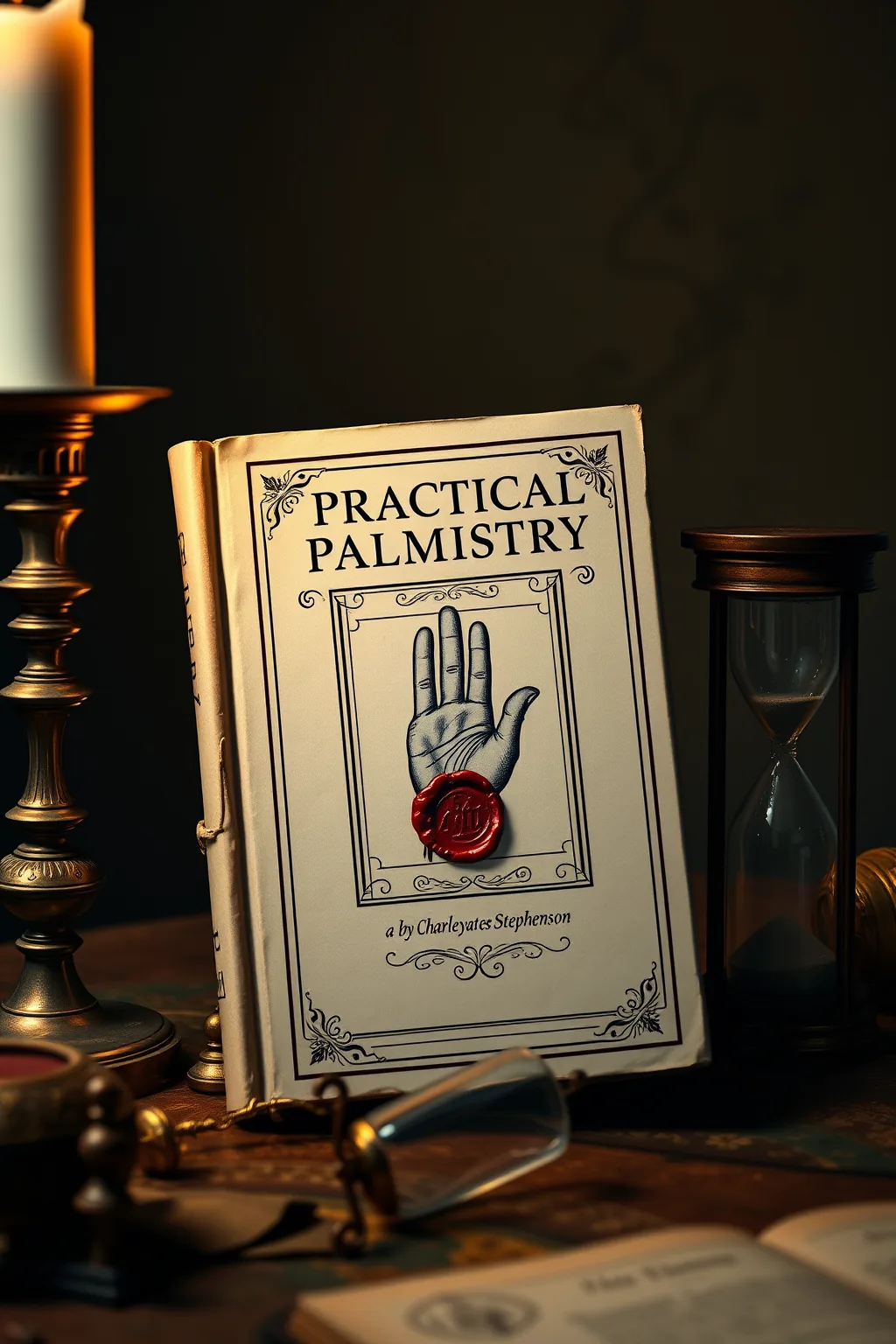
Practical palmistry
 62
62

Practical palmistry



Celeste Moreau, Divination & Symbolism Reviewer: Charles Yates Stephenson's "Practical Palmistry" stands as a beacon of clarity and depth in the often-murky waters of hand analysis. Stephenson masterfully decodes the complex language of the palm, presenting esoteric principles with an accessible yet authoritative voice. He moves beyond superficial predictions, revealing the profound psychological and spiritual insights embedded within each line and mound. This text is an indispensable resource for those seeking to understand the energetic blueprint of their lives, offering practical guidance for self-awareness and personal evolution. For both neophyte and seasoned practitioner, Stephenson's work illuminates the hand as a sacred text, a microcosm of the universe, and a powerful ally on the path of spiritual discovery.
📝 Description
62
Charles Yates Stephenson published 'Practical Palmistry' to demystify hand reading in 1924.
Charles Yates Stephenson's 'Practical Palmistry,' first released in 1924, presents chiromancy as a serious system for self-knowledge. Stephenson moves beyond simple predictions, viewing the hand as a detailed record of an individual's character and life path. He instructs readers on interpreting the various mounts, lines, and fingers, explaining their connection to inner states and potential experiences. The book aims to equip serious students with the knowledge to understand these markings not as arbitrary signs, but as a coherent language of the self.
This guide focuses on the philosophical and practical applications of palmistry. Stephenson argues it is a valuable method for personal insight and spiritual development. The text teaches readers how to decode the symbolic messages within the hand's structure. It offers a way to access a form of knowledge that has been used by many traditions throughout history, emphasizing introspection and the connections between inner life and outward expression.
Published in the early 20th century, 'Practical Palmistry' emerged during a period of renewed interest in esoteric subjects. It sits within the Western tradition of chiromancy, which views the hand as a microcosm reflecting the macrocosm. Unlike sensationalized fortune-telling, Stephenson's approach aligns with movements seeking deeper psychological and spiritual meaning in ancient divinatory arts. It connects to broader occult studies that explored correspondences between the human body and universal principles.
💡 Why Read This Book?
Embark on a journey of profound self-discovery with "Practical Palmistry." This book offers a tangible method to decipher your life's purpose, understand your inherent strengths and challenges, and gain insight into your karmic patterns. It's ideal for seekers of hidden knowledge, students of esoteric arts, and practitioners looking to deepen their intuitive abilities and connect with ancient wisdom.
⭐ Reader Reviews
Honest opinions from readers who have explored this book.
❓ Frequently Asked Questions
What is palmistry?
Palmistry, or chiromancy, is an ancient art of divination that interprets the lines, mounds, and shapes of the hand to understand a person's character, potential, and life path. It is viewed as a symbolic language of the self.
Is palmistry a reliable form of prediction?
While not a deterministic fortune-telling method, palmistry is considered a powerful tool for self-awareness and understanding potential tendencies. It reveals the energetic landscape of an individual's life, offering guidance rather than fixed outcomes.
What is the significance of the lines on the palm?
The major lines (Life, Head, Heart) and minor lines are believed to represent significant aspects of an individual's life, including vitality, intellect, emotions, and relationships. Their depth, length, and clarity offer nuanced interpretations.
Can palmistry help with personal growth?
Absolutely. By understanding the patterns and potentials revealed in the palm, individuals can gain self-awareness, identify areas for development, and make more conscious choices to shape their personal and spiritual journey.
Who is Charles Yates Stephenson?
Charles Yates Stephenson was a notable author and practitioner in the fields of occultism and esoteric studies, dedicated to demystifying complex metaphysical subjects and making them accessible to a wider audience.
🔮 Key Themes & Symbolism
The Hand as a Cosmic Map
This theme explores the profound belief that the human hand is not merely a physical appendage but a microcosm of the universe, imprinted with cosmic energies and karmic destinies. Stephenson argues that the lines, mounts, and fingers are symbolic representations of celestial influences and the soul's journey through life. Understanding this divine cartography allows for a deeper connection to the self and the greater cosmic dance, revealing the interconnectedness of the physical and spiritual realms. It's a perspective that elevates palmistry from mere fortune-telling to a sacred dialogue with the universe.
Decoding the Language of the Palm
This theme focuses on the intricate system of symbols and meanings embedded within the palm. Stephenson meticulously guides readers through the interpretation of the major and minor lines, the significance of the mounts (Venus, Jupiter, Saturn, etc.), and the subtle nuances of finger shapes and phalanges. Each element is presented as a chapter in the book of one's life, offering insights into character, talents, challenges, and potential destinies. The process of decoding this ancient language is presented as a journey of self-discovery and empowerment, useful the hidden potentials within.
Palmistry as a Tool for Spiritual Evolution
Stephenson positions "Practical Palmistry" as more than just a predictive art; it is a vital instrument for spiritual growth and self-mastery. By understanding the patterns and karmic imprints revealed in the palm, individuals are empowered to confront their shadow aspects, cultivate their virtues, and make conscious choices that align with their higher purpose. This theme emphasizes the transformative power of self-knowledge gained through chiromancy, enabling readers to navigate life's challenges with wisdom and grace, ultimately fostering a path toward greater enlightenment and spiritual fulfillment.
💬 Memorable Quotes
Direct passages from the work, attributed to the author.
“Lines are not fate, but tendencies.”
— This highlights the agency of the individual, suggesting that palmistry reveals potentials and inclinations, not unchangeable destinies, empowering readers to shape their future.
“The mounts speak of our elemental nature.”
— This points to the connection between the raised areas on the palm and our fundamental character traits, influenced by cosmic energies and primal forces.
“Wisdom is etched not only in books, but in flesh.”
— This evocative phrase suggests that profound knowledge and spiritual insight are accessible through the physical body, specifically the hand, as a sacred text.
“To know the hand is to begin to know the self.”
— This emphasizes the introspective and self-discovery aspect of palmistry, positioning it as a fundamental pathway to understanding one's own being.
💡 Key Ideas
Editorial paraphrase of the work's core concepts — not direct quotes.
The hand is a living map of the soul.
This quote captures the core belief that our palms hold profound spiritual and psychological truths, acting as a divine atlas of our inner landscape and life's journey.
🌙 Esoteric Significance
Tradition
This work is deeply rooted in the Western esoteric tradition, drawing heavily from Hermeticism, Neoplatonism, and Kabbalistic principles that view the human form as a reflection of the divine cosmos. It aligns with the Hermetic maxim 'As above, so below,' asserting that the microcosm (the hand) mirrors the macrocosm (the universe). The symbolic language of palmistry is seen as a sacred script, passed down through ancient mystery schools and occult orders.
Symbolism
The symbolism in palmistry is rich and many-sided. Lines represent energetic flows and life experiences, mounts signify primal drives and potentials (e.g., Venus for love, Jupiter for ambition), and fingers correspond to planetary influences and individual faculties. Each mark, curve, and elevation is a glyph, a visual metaphor for psychological states, karmic lessons, and potential life trajectories, forming a complex symbolic language for understanding the human condition.
Modern Relevance
In an age often characterized by disconnection and existential searching, "Practical Palmistry" offers a tangible and deeply personal path to self-understanding. Its emphasis on introspection, potential, and the interconnectedness of our inner and outer worlds remains highly relevant. The book provides a framework for navigating personal challenges, identifying strengths, and fostering a more conscious and empowered approach to life, making it a valuable resource for modern seekers of wisdom and self-awareness.
👥 Who Should Read This Book
This seminal text is useful for the curious beginner eager to explore the foundational principles of chiromancy and unlock the secrets held within their own hands. It is essential for the dedicated esoteric scholar seeking to deepen their understanding of ancient divination systems and their symbolic language. The earnest seeker of self-knowledge will find it a profound guide to understanding their inherent potentials and life path. Practitioners of occult arts and divination will benefit from its clear, systematic approach to a complex and mystical subject, enhancing their intuitive insights and analytical skills.
📜 Historical Context
Written during an era of burgeoning interest in spiritualism and esoteric knowledge, "Practical Palmistry" by Charles Yates Stephenson emerged in a period where the veil between the material and mystical was perceived as thinner. The late 19th and early 20th centuries saw a resurgence of occult studies, with figures like Madame Blavatsky and the Hermetic Order of the Golden Dawn popularizing ancient wisdom traditions. Stephenson's work contributed to this intellectual current by presenting palmistry not as mere superstition, but as a legitimate system of understanding human nature and destiny, grounded in symbolism and philosophical inquiry. It resonated with a public seeking deeper meaning and connection beyond the rationalism of the age.
📔 Journal Prompts
Reflect on the 'Life Line' in your palm. What does its depth and curvature suggest about your vitality and life experiences? How can you honor or nurture this aspect?
Examine the 'Head Line.' Does it appear straight, curved, or broken? What insights does this offer about your thinking patterns, logic, and communication style?
Consider the 'Heart Line.' What does its depth, length, and any markings reveal about your emotional landscape, romantic tendencies, and capacity for connection?
Identify the dominant 'mount' on your palm. What qualities or energies associated with this mount do you recognize most strongly in your personality?
Beyond the major lines, what other subtle markings or shapes appear on your palm, and what intuitive feelings do they evoke about your unique journey?
🗂️ Glossary
Chiromancy
The art or practice of telling fortunes by the lines and features of the hand. It is synonymous with palmistry and is viewed as an ancient system of divination.
Mounts
The fleshy, raised pads on the palm, named after classical planets (e.g., Mount of Venus, Mount of Jupiter). Each mount is associated with specific character traits, desires, and potentials.
Lines (Major)
The primary creases on the palm, typically including the Life Line, Head Line, and Heart Line, which are believed to represent fundamental aspects of an individual's existence.
Phalanges
The segments of each finger, separated by creases. The size and shape of these segments can offer further insights into specific personality traits and aptitudes.
Tracing Lines
Minor lines on the palm that can indicate specific events, influences, or challenges related to the major lines or mounts they intersect or accompany.
This book appears in 1 collection
🔮 Readers Also Liked
Browse all →







From the “Palmistry” Collection
View all →








More Free Divination & Tarot Books
View all →