Exorcism and Its Texts
 77
77

Exorcism and Its Texts
Hilaire Kallendorf’s *Exorcism and Its Texts* offers a rigorous examination of how literary works have conceptualized spiritual or psychological affliction. By focusing on the metaphor of 'infection,' Kallendorf moves beyond simplistic theological readings to unearth a rich vein of narrative exploration concerning vulnerability and restoration. The book’s strength lies in its broad scope, encompassing canonical and obscure texts alike, demonstrating a consistent literary engagement with these themes across centuries. A particularly compelling section details the representation of exorcism in early modern drama, where the dramatic tension often hinges on the ambiguity of the afflicted state. However, the sheer breadth of texts occasionally leads to a slightly generalized treatment of individual works; a deeper dive into a smaller corpus might have yielded even sharper insights. Nevertheless, *Exorcism and Its Texts* provides a valuable critical lens for understanding how literature has grappled with notions of spiritual and psychic disturbance, offering a scholarly yet accessible account.
📝 Description
77
Hilaire Kallendorf analyzes thirty literary works on spiritual or psychological affliction.
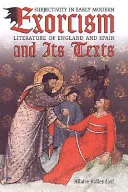
Hilaire Kallendorf's Exorcism and Its Texts scrutinizes how roughly thirty literary works represent spiritual or psychological 'infection.' The study covers a range of authors, from famous writers to anonymous scribes, demonstrating a consistent focus on possession, affliction, and deliverance in Western literature. Kallendorf's work does not investigate the theological practice of exorcism but rather examines the depiction of affliction and subsequent cleansing within narrative and dramatic contexts.
This book is intended for scholars of literature, religious studies, and cultural history. It will also appeal to readers interested in the connections between belief, narrative, and the human mind. Those who study the development of literary ideas about spiritual distress, the uncanny, or the self's boundaries will find it particularly valuable. The text is also relevant for those researching historical views of mental illness and how it was framed metaphorically in pre-modern and early modern societies.
This work situates the literary exploration of affliction within historical periods where spiritual, psychological, and physical ailments were not clearly distinguished. It examines texts from times when demonic possession and divine intervention were common explanations for distress, predating modern psychiatric frameworks. By analyzing the symbolic language and narrative structures used in these works, the book illuminates how states of suffering and their resolutions were understood in a pre-modern and early modern milieu.
💡 Why Read This Book?
• Gain insight into the literary trope of 'infection' as a metaphor for affliction, as explored through approximately thirty works by fifteen authors, offering a unique analytical framework not found in general literary criticism. • Understand the historical context of spiritual and psychological distress before modern psychiatric frameworks, specifically by examining texts from periods where demonic possession was a common literary and cultural motif. • Discover how canonical and lesser-known literary works, from classical antiquity through the early modern period, represent the process of spiritual cleansing or deliverance, providing concrete examples of narrative resolution strategies.
⭐ Reader Reviews
Honest opinions from readers who have explored this book.
❓ Frequently Asked Questions
What is the primary focus of Hilaire Kallendorf's 'Exorcism and Its Texts'?
The book's primary focus is not on the theological practice of exorcism, but on the literary representation of spiritual or psychological 'infection' and subsequent deliverance in approximately thirty works by fifteen authors.
What historical periods does 'Exorcism and Its Texts' cover?
The book analyzes literary works spanning from classical antiquity through the early modern period, examining how different eras conceptualized and depicted affliction and its textual remedies.
Does the book discuss actual exorcism rituals?
No, the book concentrates on how the *concept* of affliction and spiritual cleansing was depicted in literature, rather than detailing the historical or theological specifics of exorcism rituals themselves.
Who are some of the authors or types of works examined?
Kallendorf examines a range of authors from canonical literary figures to obscure, anonymous writers, demonstrating the widespread engagement with these themes across different literary traditions.
What is the main literary concept explored by Kallendorf?
The central concept is 'infection,' used as a metaphor to explore various forms of spiritual or psychological ailment and the narrative means of their textual resolution or expulsion.
Is this book suitable for readers interested in occult practices?
While the book touches upon themes related to spiritual affliction and deliverance, its primary approach is literary and historical analysis, not a guide to occult practices.
🔮 Key Themes & Symbolism
Literary 'Infection' Tropes
Kallendorf foregrounds the concept of 'infection' as a pervasive literary trope, serving as a metaphor for a wide array of spiritual, psychological, and even moral afflictions. This extends beyond simple demonic possession to include states of spiritual malaise, psychological disturbance, or societal corruption that permeate characters and narratives. The analysis reveals how authors, from ancient dramatists to early modern prose writers, employed this metaphor to explore the boundaries of the self, the nature of vulnerability, and the anxieties surrounding internal and external contamination.
Narratives of Deliverance and Restoration
Alongside the depiction of affliction, the texts analyzed frequently engage with the narrative arc of deliverance or restoration. This can manifest as formal exorcism rites within the plot, but more often involves subtler forms of spiritual or psychological purification, catharsis, or the re-establishment of order. Kallendorf examines how these narratives function, whether as expressions of religious belief, explorations of human resilience, or literary conventions for resolving dramatic tension. The focus remains on the textual representation of overcoming the 'infection'.
The Pre-Modern Self and Its Boundaries
By studying these literary representations, Exorcism and Its Texts offers insights into pre-modern conceptions of the self. The ease with which spiritual or demonic forces could be seen to 'infect' an individual highlights a different understanding of personal boundaries compared to modern psychological paradigms. The works explored often depict the self as porous, susceptible to external spiritual influences, and capable of being restored through various means, reflecting a worldview where the spiritual and material realms were intricately intertwined.
Canonical vs. Obscure Literary Traditions
A significant aspect of Kallendorf's study is its inclusion of both canonical literary masterpieces and lesser-known, sometimes anonymous, works. This comparative approach demonstrates that engagement with themes of exorcism and spiritual affliction was not confined to celebrated authors but permeated a broader literary landscape. By juxtaposing well-known texts with more obscure ones, the book provides a more comprehensive picture of how these concerns were articulated across different social and literary strata.
💬 Memorable Quotes
Direct passages from the work, attributed to the author.
“The concept of 'infection' offers a way to understand how literary texts represented afflictions that were neither purely spiritual nor purely physical.”
— This highlights the central analytical tool of the book, positioning 'infection' as a flexible metaphor that bridges theological and psychological interpretations of distress in literature.
“Literary representations of exorcism often focus on the dramatic and symbolic aspects of affliction and its expulsion.”
— This interpretation emphasizes that Kallendorf is less concerned with the practicalities of exorcism and more with its narrative function and symbolic meaning within literary works.
“The study includes works ranging from canonical classics to obscure texts by anonymous writers.”
— This points to the book's broad scope, indicating that it draws on a diverse literary corpus to illustrate its arguments about the representation of spiritual affliction.
“The texts examined predate modern psychiatric classifications of mental and spiritual disturbances.”
— This contextualizes the literary analyses within a historical framework, underscoring the different conceptual tools available for understanding affliction before the advent of modern psychology.
“The narrative arc often involves not just the depiction of possession but also the process of cleansing or restoration.”
— This emphasizes that the book analyzes the full trajectory of afflictions in literature, from their inception to their resolution, focusing on how texts construct these processes.
🌙 Esoteric Significance
Tradition
While not strictly an esoteric text itself, *Exorcism and Its Texts* engages with themes that are foundational to many Western esoteric traditions, particularly those concerned with spiritual warfare, psychic cleansing, and the nature of spiritual influence. It provides a historical and literary lens through which practitioners and scholars of Hermeticism, ceremonial magic, or demonology can understand the cultural narratives that shaped perceptions of spiritual intrusion and purification long before the formalization of modern esoteric orders.
Symbolism
The central symbol is 'infection,' representing the infiltration of negative spiritual, psychological, or moral forces into the individual or community. This can be seen as analogous to concepts in esoteric traditions of energetic entanglement, psychic vampirism, or the descent of the soul into material illusion. The 'texts' themselves become symbolic of the written word's power to both diagnose affliction and enact (or at least, depict) its cure, echoing the importance of sacred texts and incantations in magical practice.
Modern Relevance
Contemporary practitioners of energy healing, shadow work, or those exploring psychological archetypes of possession and liberation may find resonance in Kallendorf's analysis. The book offers a historical perspective on how these phenomena were framed literarily, providing context for modern interpretations. Thinkers in fields like comparative mythology, depth psychology, and even contemporary occult literary criticism can draw upon its detailed examination of narrative structures surrounding spiritual vulnerability and its textual resolution.
👥 Who Should Read This Book
• Scholars of Comparative Literature and Religious Studies seeking to understand the historical representation of spiritual affliction and deliverance in Western narrative. • Students of Cultural History interested in pre-modern and early modern perceptions of the self, psychological disturbance, and their literary framing. • Readers of Esoteric Literature who wish to contextualize literary depictions of possession, exorcism, and spiritual purification within broader historical and narrative traditions.
📜 Historical Context
Published in 2003, Hilaire Kallendorf's *Exorcism and Its Texts* entered a scholarly landscape where literary analysis of religious themes was robust, yet often focused on theological exegesis rather than narrative representation of 'affliction.' The work engaged with the burgeoning field of cultural studies and the history of emotions, seeking to understand pre-modern and early modern perceptions of the self. It emerged in a period that saw increasing scholarly interest in the historical interplay between religion, medicine, and psychology, particularly regarding phenomena like witchcraft and possession. While not directly engaging with contemporary esoteric movements of the early 2000s, the book provided a critical historical grounding for understanding the literary roots of concepts that continue to hold symbolic power. Its rigorous textual analysis offered a counterpoint to more purely theological or anthropological studies of exorcism, emphasizing its persistent presence in narrative imagination. The book’s exploration of anonymous and lesser-known texts also contributed to a broader re-evaluation of the literary canon.
📔 Journal Prompts
The literary trope of 'infection' as a metaphor for spiritual or psychological ailment.
The narrative arc of deliverance and restoration in pre-modern texts.
Representations of the self and its boundaries in literature concerning spiritual affliction.
Comparing canonical and obscure literary works on the theme of exorcism.
The symbolic power of written texts in depicting and resolving spiritual crises.
🗂️ Glossary
Affliction
In the context of the book, 'affliction' refers to a state of suffering or distress, often interpreted as spiritual, psychological, or even demonic in origin, as depicted in literary works.
Deliverance
The process or outcome of being freed from spiritual, psychological, or demonic affliction, as represented through narrative events or textual resolution in the analyzed literature.
Literary Trope
A common or overused theme, image, or device that has a conventional interpretation, such as the 'infection' metaphor used to represent spiritual or psychological maladies.
Spiritual Malaise
A condition of spiritual unwellness, low energy, or despondency, often depicted in literature as a precursor to or form of affliction.
Canonical Works
Literary texts widely recognized for their artistic merit and cultural significance, often studied as foundational examples within a particular tradition.
Obscure Texts
Literary works that are not widely known or studied, often including anonymous writings or those from less prominent authors, which Kallendorf includes for a broader analysis.
Pre-Modern Self
The conception of individual identity and consciousness prevalent in historical periods before the modern era, often characterized by a less distinct separation between the spiritual, psychological, and physical realms.