A Crown of Swords
 78
78

A Crown of Swords
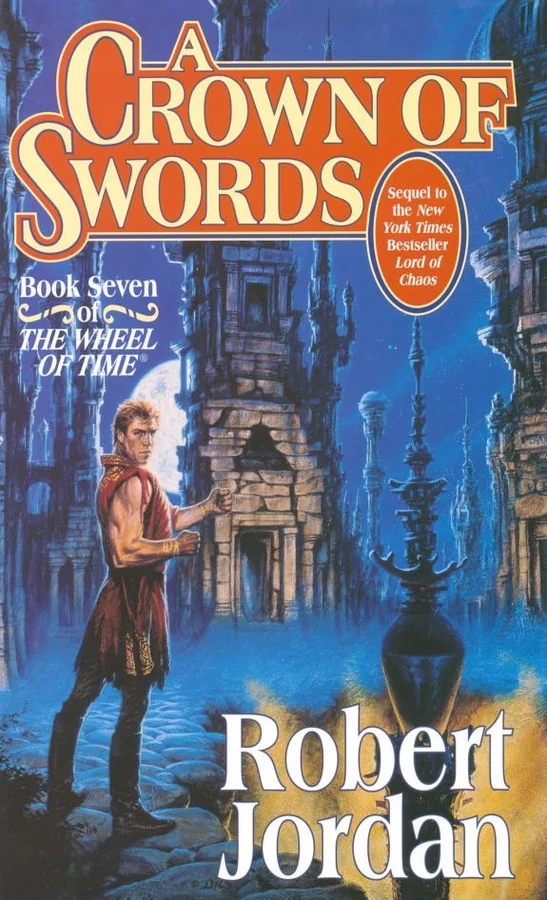
The seventh volume in Robert Jordan’s sprawling Wheel of Time saga, A Crown of Swords, offers a continuation of established character arcs and escalating conflicts. While the series is known for its meticulous world-building, this installment sometimes strains under the weight of its own complexity. The narrative, particularly concerning the political machinations in regions like Altara, can feel dense, occasionally slowing the momentum built by the overarching struggle against the Shadow. However, the exploration of Rand al'Thor’s growing power and the psychological toll it takes remains a compelling element. A particular strength lies in the depiction of the Seanchan empire's encroaching influence, a palpable threat that forces characters into difficult alliances and desperate measures. Jordan's depiction of the White Tower's internal politics also continues to be a source of fascinating character conflict. Ultimately, A Crown of Swords is a necessary, if sometimes ponderous, step forward in the grand narrative, solidifying the stakes and deepening the thematic explorations of leadership and sacrifice.
📝 Description
78
Robert Jordan published A Crown of Swords, the seventh Wheel of Time novel, in 1996.
A Crown of Swords continues Robert Jordan's vast fantasy saga, picking up the narrative threads from the previous volumes. The story intensifies the conflict with the Dark One, as various factions maneuver for control in a world facing imminent, prophesied destruction. Multiple protagonists confront their destinies, navigating political schemes and the encroaching darkness.
This installment is best suited for readers already immersed in The Wheel of Time. Those who appreciate complex world-building, detailed lore, and characters facing significant trials will find this volume rewarding. The novel appeals to readers who enjoy slow narrative development, elaborate magic systems, and examinations of fate, individual will, and the cyclical nature of existence.
Published in 1996, A Crown of Swords arrived during a period of resurgence for epic fantasy. Jordan's work builds on established mythic narratives, engaging with archetypal conflicts between good and evil. It differentiates itself from simpler heroic quests through its extensive scope and detailed political machinations, drawing parallels to philosophical inquiries into power and corruption within its fantasy framework.
💡 Why Read This Book?
• Gain insight into the complex political landscape of the world in 1996, specifically the intricate alliances and betrayals between nations like Tarabon and Arad Doman, as detailed in its narrative. • Understand the evolving internal struggles of Rand al'Thor as he grapples with the immense power of the One Power and the prophecies surrounding him, a core element explored throughout the book. • Witness the escalating conflict with the Shadow and its agents, observing how the encroaching darkness tests the resolve of characters and the stability of their societies.
⭐ Reader Reviews
Honest opinions from readers who have explored this book.
❓ Frequently Asked Questions
When was A Crown of Swords first published?
A Crown of Swords, the seventh novel in The Wheel of Time series, was first published on May 15, 1996.
What is the primary conflict in A Crown of Swords?
The primary conflict involves the ongoing struggle against the Dark One and his forces, alongside intricate political battles and the protagonists' personal journeys toward fulfilling their prophesied roles.
Who are some of the main characters featured in A Crown of Swords?
Key characters include Rand al'Thor, Mat Cauthon, Perrin Aybara, Egwene al'Vere, and Nynaeve al'Meara, each pursuing their own critical paths within the larger narrative.
What role do the Aes Sedai play in A Crown of Swords?
The Aes Sedai, particularly those within the White Tower, play a significant role through their political maneuvering, their attempts to control or guide the Dragon Reborn, and their internal divisions.
Does A Crown of Swords introduce new magical concepts?
While building on the established magic system of the One Power and channeling, the book explores the practical and psychological implications of its use by various characters under duress.
How does A Crown of Swords contribute to the overall Wheel of Time series?
This installment advances the main plotlines, escalates the global conflict, deepens character development, and further elaborates on the intricate lore and prophecies central to the series' overarching narrative.
🔮 Key Themes & Symbolism
The Burden of Prophecy
A Crown of Swords deeply examines the weight of destiny, particularly for Rand al'Thor, the Dragon Reborn. The narrative explores how individuals grapple with foretold paths, the struggle between embracing their role and the desire for personal freedom, and the psychological toll this imposes. The concept of the Wheel of Time itself, representing a cyclical history, underscores the idea that past, present, and future are intertwined, and that fulfilling prophecy is not a passive event but an active, often agonizing, process.
Political Intrigue and Power
The novel presents a complex web of political machinations across various nations, including Tarabon, Arad Doman, and the Seanchan Empire. Power dynamics, alliances, betrayals, and the pursuit of dominance are central themes. The struggle for control within the White Tower, the governing body of Aes Sedai, further highlights how institutions can be both sources of order and centers of conflict. This intricate plotting serves to ground the epic fantasy elements in realistic human ambition and societal structures.
The Encroaching Shadow
The ever-present threat of the Dark One and his agents forms the narrative's core conflict. This theme is explored not just as a physical battle against Darkfriends and Shadowspawn but as a pervasive influence that corrupts individuals and societies. The book illustrates how despair, fear, and manipulation are tools of the Shadow, and how maintaining hope and integrity becomes a significant act of resistance. The scale of this conflict emphasizes the cosmic stakes of the Wheel of Time's turning Ages.
Leadership and Sacrifice
The characters in A Crown of Swords are constantly tested in their leadership capabilities, often forced to make difficult decisions with far-reaching consequences. The theme of sacrifice is paramount, as protagonists must often give up personal desires, safety, or even parts of themselves to protect others or further the greater cause. This exploration of leadership is not confined to kings and queens but extends to those who must guide and protect their communities against overwhelming odds.
💬 Memorable Quotes
Direct passages from the work, attributed to the author.
“The Wheel of Time turns and Ages come and go. What was, what will be, and what is, may yet fall under the Shadow.”
— This foundational statement captures the series' core theme: the cyclical nature of history and the ever-present threat of darkness, suggesting that even established realities are vulnerable to corruption.
“He was the Lord Dragon. He was the one who would save them. Or damn them.”
— This highlights the dual nature of Rand al'Thor's destiny as the Dragon Reborn. His power is immense, capable of both salvation and destruction, placing a heavy burden of choice and consequence upon him.
“There are consequences to everything. You must learn to live with them.”
— This reflects the mature thematic focus of the series, emphasizing that actions have unavoidable repercussions and that characters must confront and accept the results of their choices.
“The Wheel ties as the Wheel wills.”
— A recurring phrase that underscores the concept of fate and destiny within the series' cosmology, suggesting an overarching plan or force guiding events, though individual agency still plays a role.
“A Crown of Swords means war.”
— This direct statement from the book's title suggests the escalating conflict and the harsh realities of leadership and battle that the characters must face in this particular volume.
🌙 Esoteric Significance
Tradition
The Wheel of Time series, and by extension A Crown of Swords, draws heavily on archetypal symbolism found across various spiritual traditions, particularly those concerned with cycles of creation, destruction, and rebirth. While not explicitly tied to a single lineage like Hermeticism or Kabbalah, its exploration of a cosmic struggle between Light and Shadow, a prophesied savior figure (the Dragon Reborn), and the concept of a guiding cosmic force (the Wheel) echoes Gnostic and Manichaean dualistic frameworks and Zoroastrian concepts of a universal battle.
Symbolism
The series employs potent symbols. The 'Wheel of Time' itself represents cyclical existence and the interconnectedness of all events across Ages. The 'Dragon Reborn' is a powerful messianic archetype, symbolizing both destructive potential and the hope for renewal. The 'Shadow' represents primal chaos and the absence of divine order, a force seeking to unravel creation. The 'One Power,' with its male (Saidin) and female (Saidar) halves, symbolizes a fundamental duality inherent in the universe's fabric, and the dangers of its imbalance.
Modern Relevance
Contemporary fantasy writers continue to explore grand narratives of good versus evil and complex character journeys, often indebted to the scale Jordan established. Discussions around destiny versus free will, the psychological impact of leadership, and the ethical dilemmas faced by powerful individuals remain relevant in both fiction and philosophical discourse. The series' intricate world-building also serves as a touchstone for those interested in constructing detailed fictional universes with consistent internal logic and lore.
👥 Who Should Read This Book
• Established fans of The Wheel of Time series who are invested in the ongoing saga and character development. • Readers of epic fantasy seeking intricate world-building, complex political intrigue, and a vast cast of characters. • Those interested in exploring themes of prophecy, destiny, the nature of good and evil, and the burdens of leadership within a high-fantasy context.
📜 Historical Context
Published in 1996, A Crown of Swords emerged during a robust period for epic fantasy, with Robert Jordan’s The Wheel of Time series being a central to the genre’s popularity. The late 20th century saw authors like George R.R. Martin (A Game of Thrones, 1996) also pushing the boundaries of complexity and realism within fantasy. Jordan’s work, with its intricate magic system, vast cast, and deep lore, stood apart from some of the more traditional heroic narratives of the time. The series engaged with themes of prophecy, destiny, and the cyclical nature of history, drawing from mythological archetypes while constructing a unique cosmology. Reception was generally positive among fans eager for the next installment, though critics sometimes noted the sprawling nature of the narrative. The sheer ambition of the world-building and plot construction positioned Jordan as a leading figure in contemporary fantasy literature, influencing subsequent authors.
📔 Journal Prompts
The burden of being the Dragon Reborn, as Rand al'Thor experiences it, and its implications for personal identity.
The political maneuvering within the White Tower and its reflection in real-world institutional dynamics.
The concept of the Shadow's influence as a force of corruption and despair, and how characters resist it.
The cyclical nature of history as represented by the Wheel of Time, and its potential impact on individual agency.
The personal sacrifices characters make in pursuit of a greater cause, examining the ethical considerations involved.
🗂️ Glossary
The Wheel of Time
A cosmic force that governs the turning of Ages, representing the cyclical nature of existence, history, and the lives of all beings within the narrative's universe.
The Dark One
The primary antagonist, a primordial entity of pure evil imprisoned by the Creator, whose ultimate goal is to break free and dominate the world.
Dragon Reborn
A prophesied individual destined to be reborn throughout history, who will either save the world from the Dark One or destroy it in the process. Rand al'Thor is the current incarnation.
Aes Sedai
Women who can channel the One Power, forming a powerful order that traditionally guides and protects the world, though often entangled in politics and internal strife.
One Power
The fundamental magical force that permeates the universe, divided into male (Saidin) and female (Saidar) halves, which channelers can draw upon to perform magic.
Saidin
The male half of the One Power, accessible only to men. It is tainted by the Dark One's corruption, making its use dangerous for male channelers.
Saidar
The female half of the One Power, accessible only to women. It is considered pure and stable, though still requires great discipline to wield.
This book appears in 1 collection
🔮 Readers Also Liked
Browse all →









From the “Prophecy” Collection
View all →
More Free Occult Philosophy Books
View all →