I Ching
 64
64

I Ching



Alaric Kestrel, Metaphysical Studies Reviewer: Sam Reifler's I Ching is a masterful distillation of this ancient Chinese oracle, offering profound esoteric insights for the modern seeker. Reifler’s adept translation and insightful commentary unlock the subtle energies and philosophical depths of the text, moving beyond simple fortune-telling to reveal its power as a tool for self-awareness and cosmic alignment. This edition is particularly potent for those who appreciate the philosophical underpinnings of divination and seek a more integrated understanding of cyclical change. Its strength lies in its clarity, accessibility, and faithful rendition of the I Ching's timeless wisdom, making it an indispensable resource for practitioners and scholars alike.
📝 Description
64
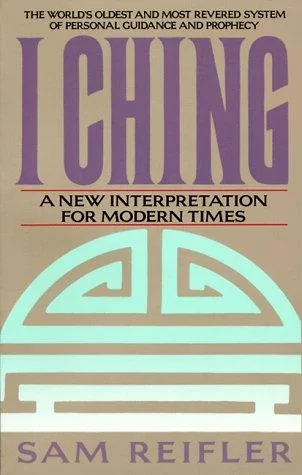
Sam Reifler's 1994 translation of the I Ching presents the Book of Changes as a map of cosmic transformations.
Sam Reifler's translation of the I Ching, published in 1994, treats the ancient Chinese text not simply as a divination tool, but as a comprehensive system for understanding universal change. Reifler details the hexagrams and their lines, showing a method of cyclical transformation that touches upon destiny and human experience. The book uses the interplay of yin and yang to illustrate the constant flux of all things. This edition is designed for those seriously interested in the text, whether for contemplation, scholarly study, or practical application. It aims to reveal the philosophical ideas that have influenced leaders and thinkers for centuries, offering a way to apply this ancient oracle to contemporary life.
Readers will find the philosophical foundations of the I Ching explained, along with its symbolic language. The translation emphasizes the text's role as a guide for comprehending the forces that shape reality. It encourages a deeper understanding of personal circumstances through the lens of the Book of Changes. The goal is to provide clarity and wisdom for navigating life's complexities.
The I Ching, or Book of Changes, is a foundational text in Chinese tradition, predating much of Taoist and Confucian philosophy. Its origins are debated, but it has been used for divination and as a source of wisdom for over two millennia. The text's structure, based on 64 hexagrams formed by combinations of yin and yang lines, is seen by practitioners as a symbolic representation of all possible situations and their transformations. Its esoteric significance lies in its perceived ability to offer insight into the patterns of the universe and provide guidance for human action within those patterns.
💡 Why Read This Book?
The I Ching by Sam Reifler is essential for anyone seeking to understand the fundamental principles of change that govern the cosmos and human life. It offers a unique blend of philosophical depth and practical guidance, empowering readers to navigate challenges with wisdom and foresight. Ideal for seekers of spiritual knowledge, students of Chinese philosophy, and practitioners of divination who desire a profound and accessible connection to this ancient oracle.
⭐ Reader Reviews
Honest opinions from readers who have explored this book.
❓ Frequently Asked Questions
What is the I Ching?
The I Ching, or Book of Changes, is an ancient Chinese divination text and philosophical classic, revered for its profound insights into the cyclical nature of the universe and human existence. It comprises 64 hexagrams, each representing a distinct cosmic situation and offering guidance.
How does one use the I Ching for divination?
Traditionally, divination involves casting yarrow stalks or coins to generate hexagrams. The resulting hexagram, and any changing lines, are then interpreted using the text's commentary to provide guidance on a specific question or situation.
Is this a literal translation or an adaptation?
Sam Reifler's work is a carefully crafted adaptation, aiming for both faithful interpretation of the original meaning and accessible language for contemporary readers. It seeks to convey the essence and esoteric wisdom effectively.
Who was the intended audience for the original I Ching?
Originally, the I Ching served as a guide for rulers, scholars, and spiritual leaders, offering counsel on governance, personal conduct, and understanding the will of Heaven. Its wisdom transcends its historical context, speaking to all who seek understanding.
What are the core philosophical concepts within the I Ching?
Key concepts include the dynamic interplay of Yin and Yang, the principle of constant change, the interconnectedness of all things, and the importance of aligning one's actions with the natural order of the universe.
🔮 Key Themes & Symbolism
The Cosmic Dance of Yin and Yang
At the heart of the I Ching lies the fundamental principle of Yin and Yang, the primordial dual forces whose dynamic interplay orchestrates the universe's ceaseless transformations. This edition meticulously explores how these seemingly opposing energies – the passive and the active, the dark and the light, the feminine and the masculine – are not in conflict but in perpetual, harmonious motion, creating and dissolving all phenomena. Understanding their ebb and flow is crucial to comprehending the cyclical nature of existence, from the grandest cosmic events to the most intimate personal experiences, offering a profound framework for navigating life's inherent dualities.
Cycles of Change and Transformation
The I Ching stands as a timeless proof of the universal law of change. It teaches that nothing is static; all things are in a state of constant flux, evolving, decaying, and regenerating. This adaptation by Sam Reifler emphasizes the wisdom embedded within these transformations, presenting the 64 hexagrams as archetypal patterns of change that govern every situation. By understanding these cycles, individuals can learn to adapt, anticipate shifts, and align their actions with the opportune moments, fostering resilience and wisdom in the face of life's inevitable transitions. It is a guide to embracing impermanence with grace.
The Oracle of Self-Knowledge and Destiny
Beyond mere prediction, the I Ching serves as a profound mirror to the soul, offering useful insights into one's inner landscape and one's place within the cosmic order. Reifler's work illuminates how the hexagrams can act as oracles, not to dictate a fixed fate, but to reveal the underlying currents and potential outcomes of present circumstances. By consulting the Book of Changes, seekers gain clarity on their motivations, potential challenges, and the most auspicious paths forward. It empowers individuals to become active participants in their destiny, making conscious choices informed by ancient wisdom and self-awareness.
💬 Memorable Quotes
Direct passages from the work, attributed to the author.
“When you are in doubt, do not move.”
— A powerful reminder to pause and reflect when faced with uncertainty. Acting impulsively in a state of confusion can lead to unintended consequences; patience and clarity are paramount.
“The superior man understands the influences of things. He does not wait for them to develop.”
— This emphasizes foresight and proactive engagement with the forces shaping events. The wise individual perceives subtle shifts and acts accordingly, rather than being caught unaware by unfolding circumstances.
“He who knows the times can let himself be carried by them.”
— This speaks to the wisdom of aligning oneself with the natural flow of events. Understanding the 'times' or opportune moments allows for effortless progress, much like a sailor adjusting their sails to the wind.
“Nature does not hurry, yet everything is accomplished.”
— A profound observation on the patience and persistence of natural processes. It encourages a similar approach in human endeavors, trusting in the unfolding of time and the power of steady effort.
💡 Key Ideas
Editorial paraphrase of the work's core concepts — not direct quotes.
The superior man acts before he speaks, and then speaks according to his actions.
This quote highlights the importance of integrity and authenticity. True wisdom lies in embodying one's principles through deeds rather than mere pronouncements, ensuring that words reflect a life well-lived.
🌙 Esoteric Significance
Tradition
The I Ching is a foundational text within the Taoist and Confucian traditions, deeply embedded in Chinese esoteric thought. Esoterically, it is viewed as a cosmological map, detailing the fundamental principles that govern all creation and transformation. It provides a symbolic language for understanding the unseen forces at play in the universe and within the human psyche. Its study is considered a path to spiritual enlightenment, enabling practitioners to harmonize their inner world with the outer cosmic order, thereby achieving balance, wisdom, and a deeper connection to the Tao.
Symbolism
The core symbolism of the I Ching revolves around the 64 hexagrams, each composed of six lines that are either solid (Yang) or broken (Yin). These lines and their combinations represent archetypal situations, energies, and transformations. The trigrams (three-line figures) are fundamental building blocks, symbolizing elements like Heaven, Earth, Fire, Water, and so on. The interactions between these symbols – the changing lines, the relationships between trigrams – reveal the dynamic processes of cause and effect, offering a rich, multi-layered system of interpretation that speaks to the interconnectedness of all things.
Modern Relevance
In the modern era, the I Ching remains remarkably relevant as a tool for introspection, decision-making, and spiritual growth. Its principles of adaptability, understanding cyclical patterns, and aligning with natural forces offer profound guidance for working through the complexities of contemporary life. For individuals seeking a deeper understanding of themselves and their place in the world, the I Ching provides a timeless wisdom that transcends cultural and temporal boundaries. It serves as an accessible oracle for personal development and a philosophical touchstone for those interested in ancient wisdom traditions and their application today.
👥 Who Should Read This Book
This edition of the I Ching is a treasure for a diverse readership. For the **beginner** seeking an accessible entry into the world of ancient divination, Sam Reifler's clear prose and insightful commentary provide an excellent starting point. **Scholars** of Chinese philosophy and comparative religion will appreciate the meticulous attention to detail and the nuanced exploration of its cultural significance. **Spiritual seekers** will find a powerful guide for self-discovery, introspection, and aligning with universal energies. **Practitioners of divination** and those interested in esoteric traditions will benefit from its depth and the practical application of its wisdom for understanding life's intricate currents.
📜 Historical Context
The I Ching, or Book of Changes, emerged from the mystical and philosophical milieu of ancient China, with roots tracing back to the Shang Dynasty (c. 1600–1046 BCE) and further developed during the Zhou Dynasty (c. 1046–256 BCE). It was compiled and expanded by scholars and sages, most notably attributed in part to King Wen, Duke of Zhou, and Confucius. During its formative periods, China was undergoing significant social, political, and spiritual transformations. The I Ching provided a framework for understanding these changes, offering guidance to rulers on governance, to individuals on personal conduct, and to mystics on the nature of the cosmos. Its influence permeated Chinese culture, shaping not only divination practices but also philosophy, art, medicine, and military strategy, becoming a central to East Asian intellectual tradition.
📔 Journal Prompts
Reflect on a recent situation where you felt a strong sense of change. How did the principles of Yin and Yang manifest?
Consider a hexagram that has appeared for you recently. What message does its symbolism hold for your current life path?
In what ways can you apply the I Ching's emphasis on 'knowing the times' to your daily decisions and long-term goals?
How does the concept of 'transformation' resonate with your personal growth journey? Identify one area where you are actively transforming.
Explore the balance of action and non-action in your life. When is it more beneficial to act, and when is it wiser to wait?
🗂️ Glossary
Hexagram
A figure composed of six stacked horizontal lines, each of which is either solid (Yang) or broken (Yin). There are 64 unique hexagrams in the I Ching, representing archetypal situations and states of being.
Trigram
A figure composed of three stacked horizontal lines, either solid (Yang) or broken (Yin). There are eight fundamental trigrams, often associated with natural elements and cosmic forces, which combine to form hexagrams.
Yang
The active, masculine, light, and assertive principle in the I Ching. Represented by a solid line (—).
Yin
The passive, feminine, dark, and receptive principle in the I Ching. Represented by a broken line (--).
Changing Lines
Lines within a hexagram that indicate a transition or transformation to another hexagram. These lines are crucial for interpreting the evolving nature of a situation.
This book appears in 3 collections
🔮 Readers Also Liked
Browse all →








More by Sam Reifler
All books →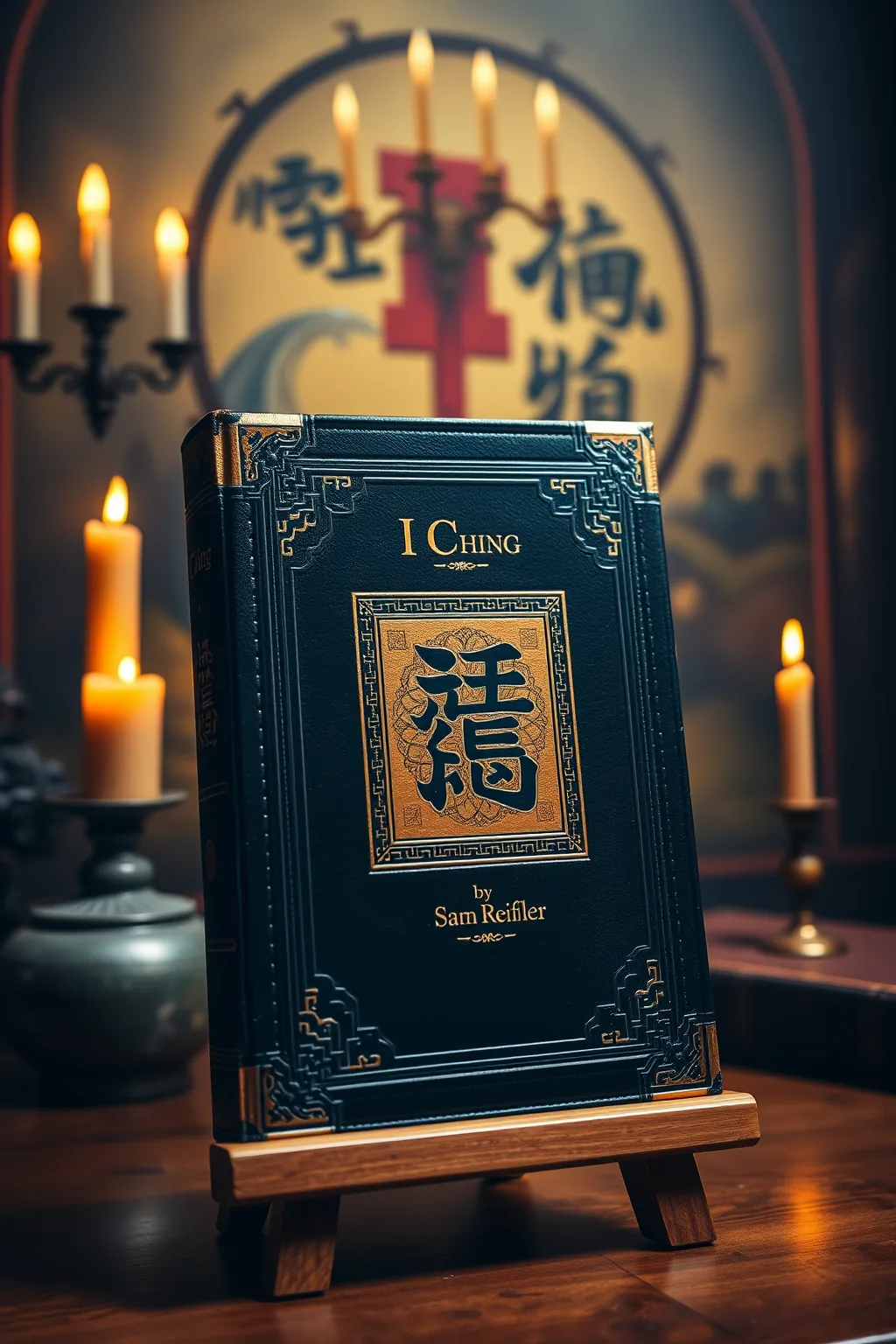
From the “Tarot” Collection
View all →







More Free Divination & Tarot Books
View all →