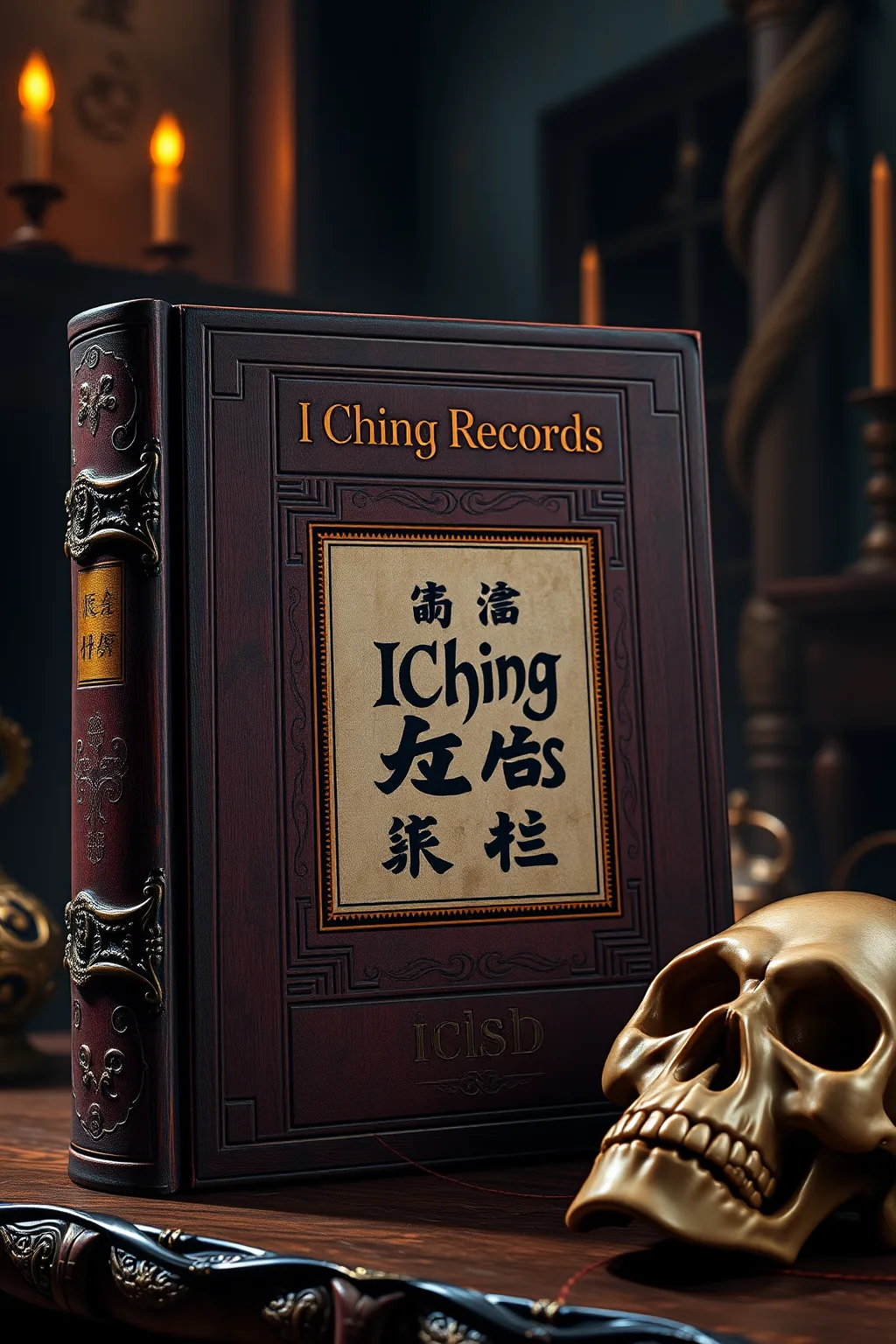
I Ching Records
 61
61

I Ching Records



Isolde Whitaker, Sacred Texts Editor, writes: The I Ching Records by Running Press Staff is a remarkable distillation of the profound wisdom embedded within the ancient Chinese oracle. Eschewing superficial interpretations, this volume delves into the philosophical and spiritual underpinnings of the hexagrams, offering a rich tapestry of symbolism and meaning. Its strength lies in its accessible yet deep exploration, making the complex concepts of the Yi Jing comprehensible to both neophytes and seasoned practitioners. This book is an invaluable resource for those seeking not just answers, but a framework for understanding the ever-changing nature of reality and their place within it. Highly recommended for spiritual seekers and students of ancient wisdom.
📝 Description
61
The I Ching Records compiles key texts from the ancient Chinese Book of Changes.
This volume collects foundational material from the I Ching, also known as the Book of Changes. It presents the hexagrams and their associated commentaries, which form the core of this oracle system. The book aims to make these classical Chinese texts accessible to a modern audience.
Readers will find explanations of the sixty-four hexagrams, each built from six lines that represent either Yin or Yang. The interpretations within focus on the patterns of change and the relationships between natural forces and human events. It is not a book of simple fortune telling, but rather a guide to understanding the cyclical nature of existence and the principles of balance and harmony.
The I Ching is one of the oldest Chinese philosophical texts, dating back to the Western Zhou dynasty. It is considered a foundational work within Taoism and Chinese cosmology. Its system of divination uses hexagrams, formed by combining yin and yang lines, to comment on situations and predict outcomes. The text has influenced philosophy, art, and governance for millennia.
💡 Why Read This Book?
Unravel the enigmatic wisdom of the I Ching, a cornerstone of Eastern philosophy and divination. This book offers a unique opportunity to connect with ancient insights into the flow of life and the interconnectedness of all things. Ideal for seekers of spiritual growth, scholars of comparative religion, and practitioners of divination arts who wish to deepen their understanding beyond mere fortune-telling. Discover a profound path to self-awareness and cosmic harmony.
⭐ Reader Reviews
Honest opinions from readers who have explored this book.
❓ Frequently Asked Questions
What is the I Ching?
The I Ching, or Book of Changes, is an ancient Chinese divination text and philosophical work that has been used for centuries to provide guidance and insight into life's challenges and decisions. It is based on a system of 64 hexagrams, each representing a unique cosmic situation.
How does one use the I Ching?
Traditionally, the I Ching is consulted through a process of casting coins or yarrow stalks to generate a hexagram. This hexagram is then interpreted with the aid of commentaries and texts associated with the specific combination.
Is the I Ching only for divination?
While often used for divination, the I Ching is also a profound philosophical text. Its teachings explore the principles of change, balance, and the cyclical nature of the universe, offering insights into ethics, strategy, and personal development.
Who is the intended audience for this book?
This book is ideal for anyone interested in ancient wisdom, philosophy, Eastern spirituality, or divination practices. It caters to both beginners seeking an introduction and experienced practitioners looking for a deeper understanding.
What makes this edition special?
This edition, compiled by Running Press Staff, aims to provide a comprehensive and accessible exploration of the I Ching, emphasizing its esoteric and philosophical dimensions for a modern audience seeking profound insights.
🔮 Key Themes & Symbolism
The Philosophy of Change (Yi)
Fundamentally, the I Ching is a evidence of the ceaseless nature of change that governs the universe. It posits that nothing is static, and understanding the patterns of transformation is key to navigating life effectively. This theme explores how the hexagrams represent various stages and forces of change, encouraging adaptability, foresight, and acceptance of impermanence. It teaches that by recognizing the ebb and flow of existence, one can align themselves with the Dao and make wiser decisions, transforming potential challenges into opportunities for growth and evolution.
The Interplay of Yin and Yang
The fundamental duality of Yin (passive, receptive, feminine) and Yang (active, creative, masculine) permeates every aspect of the I Ching. This theme examines how the interaction and balance of these two primal forces manifest in the formation of the hexagrams and, by extension, in all phenomena. Understanding this dynamic interplay is crucial for comprehending the underlying energies of any situation, fostering harmony within oneself and with the external world. It highlights the necessity of balance in all things, from personal relationships to societal structures, and how imbalance leads to disruption.
Symbolism and Archetypal Wisdom
The I Ching employs a rich lexicon of symbolic imagery, with each hexagram and its constituent trigrams representing archetypal forces and situations. This theme focuses on deciphering this profound symbolic language, revealing how it encodes universal truths about human experience, cosmic principles, and the interconnectedness of all things. The hexagrams act as symbolic maps, offering useful insights into the nature of reality, human psychology, and the spiritual journey. By learning to read these symbols, individuals can gain a deeper understanding of themselves and the world around them.
💬 Memorable Quotes
Direct passages from the work, attributed to the author.
“When the way is blocked, it is time to wait. When the way is clear, it is time to act.”
— This highlights the wisdom of timing and discernment. The I Ching teaches patience and observation, advising against rash actions when circumstances are unfavorable, and encouraging decisive movement when opportunities arise.
“The superior man understands the changes that he observes.”
— This points to the core philosophy of the I Ching: understanding the constant flux of existence. True wisdom involves recognizing and adapting to the evolving nature of reality, rather than resisting it.
“Simplicity is the easiest way to attain greatness.”
— This suggests that clarity and straightforwardness are powerful tools. By stripping away complexity and focusing on essential truths, one can achieve profound understanding and impact.
“When you know others, you will understand yourselves.”
— This emphasizes the interconnectedness of human experience. By observing and understanding the motivations and actions of others, we gain invaluable insights into our own inner workings and the universal patterns of behavior.
💡 Key Ideas
Editorial paraphrase of the work's core concepts — not direct quotes.
The superior man acts before he speaks, and afterwards speaks according to his action.
This quote emphasizes the importance of proactive engagement and integrity. True wisdom lies not just in knowledge, but in the alignment of one's actions with their words, demonstrating a commitment to principles and a grounded approach to life.
🌙 Esoteric Significance
Tradition
The I Ching is a foundational text within the Taoist and Confucian traditions, deeply embedded in Chinese esoteric philosophy. It serves as a primary tool for understanding the Tao, the fundamental principle of the universe. Its esoteric significance lies in its ability to reveal the hidden patterns and subtle energies that govern reality, providing a framework for spiritual cultivation, aligning oneself with cosmic forces, and achieving inner harmony. It is a key text for those seeking to grasp the deeper, unseen currents of existence.
Symbolism
The I Ching's symbolism is rich and many-sided, with the 64 hexagrams serving as archetypal representations of all possible life situations. The eight trigrams (Heaven, Earth, Thunder, Wind, Water, Fire, Mountain, Lake) are the building blocks, each imbued with specific symbolic meanings and elemental associations. These symbols are not mere pictograms but potent carriers of cosmic energy and wisdom, offering useful insights into the dynamic interplay of forces, the cycles of transformation, and the inherent order of the universe.
Modern Relevance
In the modern era, the I Ching offers a profound antidote to the fragmentation and uncertainty of contemporary life. Its emphasis on change, balance, and interconnectedness provides a timeless framework for navigating complex challenges, fostering resilience, and cultivating inner peace. For individuals seeking meaning and guidance, the I Ching serves as a powerful tool for self-reflection, ethical decision-making, and spiritual growth, offering a deep well of wisdom applicable to personal, professional, and societal issues.
👥 Who Should Read This Book
This volume is a treasure for the discerning reader. **Beginners** will find a clear and insightful introduction to a profound system, explaining its core concepts. **Scholars** of Eastern philosophy and comparative religion will appreciate its depth and the nuanced exploration of its historical and philosophical significance. **Spiritual seekers** yearning for a deeper connection to universal wisdom and guidance will discover a powerful oracle for self-discovery and enlightenment. **Practitioners** of divination and ancient arts will find it an invaluable resource to deepen their understanding and application of the I Ching's profound teachings.
📜 Historical Context
The I Ching, or Book of Changes, emerged from ancient Chinese culture, with its origins tracing back to the Shang Dynasty (c. 1600–1046 BCE). Initially used for divination through methods like bone burning, it evolved over centuries, with significant philosophical contributions from Confucian scholars during the Warring States period (475–221 BCE) and later commentaries by figures like King Wen and the Duke of Zhou. Its influence spread throughout East Asia, shaping not only divination practices but also profoundly impacting Chinese philosophy, art, medicine, and governance. The I Ching represents a key point in human intellectual history, offering a sophisticated system for understanding the dynamics of the cosmos and human existence that remains relevant today.
📔 Journal Prompts
Reflect on a recent situation where you felt 'stuck.' How might the principles of the I Ching offer a new perspective or course of action?
Consider the concept of 'change' as presented in the I Ching. Where in your life are you resisting change, and where could embracing it lead to growth?
Identify a personal dilemma you are facing. How can the symbolic language of the hexagrams offer insights into the underlying energies at play?
Explore the balance of Yin and Yang in your own life. Are there areas where one force is dominating, and how can you cultivate greater harmony?
How can the wisdom of the I Ching be applied to foster greater understanding and compassion in your relationships?
🗂️ Glossary
Hexagram
A symbol composed of six stacked horizontal lines, each representing either a solid (Yang) or broken (Yin) line. There are 64 unique hexagrams in the I Ching, each representing a specific cosmic situation or stage of change.
Trigram
A symbol composed of three stacked lines, either solid (Yang) or broken (Yin). There are eight trigrams (Heaven, Earth, Thunder, Wind, Water, Fire, Mountain, Lake), which are the building blocks of the hexagrams.
Yin
The passive, receptive, feminine principle in Chinese philosophy. Represented by a broken line (--) in the I Ching, it embodies darkness, coolness, and introspection.
Yang
The active, creative, masculine principle in Chinese philosophy. Represented by a solid line (—) in the I Ching, it embodies light, warmth, and action.
Dao (Tao)
The fundamental principle of the universe in Taoism, often translated as 'The Way.' It represents the natural order, the source of all existence, and the path to harmony and balance.
This book appears in 3 collections
🔮 Readers Also Liked
Browse all →








From the “Tarot” Collection
View all →







More Free Divination & Tarot Books
View all →