I Ching or Book of Changes

 73
73

I Ching or Book of Changes
Brian Browne Walker’s rendition of the I Ching offers a commendable clarity, particularly in its translation of the Judgment and Image texts associated with each hexagram. The edition succeeds in making the archaic language of the original more digestible for a contemporary audience, a significant achievement given the text’s dense philosophical underpinnings. For instance, the explanation of Hexagram 1, Qian (The Creative), avoids overly abstruse terminology, presenting the concept of pure potentiality with accessible metaphors. However, the work’s primary limitation lies in its brevity for certain commentaries; some readers might desire a more extensive exploration of the historical or philosophical nuances that underpin specific hexagrams. Despite this, the edition's straightforward approach is its greatest asset. It provides a functional oracle for immediate guidance without sacrificing the underlying wisdom. This translation is a practical tool for self-inquiry.
📝 Description
73
Brian Browne Walker's 2005 translation of the I Ching offers a clear entry into this ancient Chinese divination text.
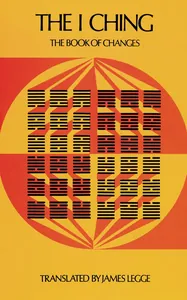
The I Ching, or Book of Changes, is an ancient Chinese divination text and philosophical work. Its origins trace back to the Western Zhou dynasty, around the 11th century BCE. The text is built upon 64 hexagrams, each composed of six stacked lines, either solid (yang) or broken (yin). These hexagrams serve as interpretations to guide individuals through a variety of life situations.
Walker's edition is designed for those new to the I Ching, providing an accessible starting point. It also appeals to experienced practitioners who prefer contemporary language to understand and apply the ancient wisdom in their daily lives. Readers interested in Eastern philosophy, divination, and self-reflection will find this version valuable. It aims to connect ancient Chinese thought with modern Western understanding of wisdom literature.
The I Ching has influenced philosophical and spiritual thought for millennia, becoming central to Confucianism and Taoism. Its continuous reinterpretation highlights its adaptability. This translation enters a long tradition of scholarship and practice, seeking to make the text's core principles of change, balance, and the interplay of complementary forces understandable to a contemporary audience.
💡 Why Read This Book?
• You will learn to interpret the 64 hexagrams, understanding their symbolic representations of archetypal situations, as presented in Brian Browne Walker’s accessible 2005 translation. • You will gain a practical method for seeking guidance, learning how the I Ching’s principles of change and balance can be applied to contemporary life challenges. • You will engage with the core philosophical concepts of yin and yang, and how their dynamic interplay is depicted through the stacking of lines in each hexagram.
⭐ Reader Reviews
Honest opinions from readers who have explored this book.
❓ Frequently Asked Questions
When was Brian Browne Walker's translation of the I Ching first published?
Brian Browne Walker's accessible translation of the I Ching, or Book of Changes, was first published in 2005, aiming to make its ancient wisdom more approachable for modern readers.
What are the basic components of the I Ching?
The I Ching is composed of 64 hexagrams, each made of six lines that are either solid (yang) or broken (yin), representing fundamental archetypal situations and their transformations.
How is the I Ching used as an oracle?
It is consulted by generating hexagrams through methods like coin tossing, with the resulting hexagram's text providing guidance or insight into a specific question or situation.
What philosophical ideas are central to the I Ching?
Key philosophical concepts include the principle of constant change, the balance and interplay of complementary forces (yin and yang), and the cyclical nature of existence.
Is this translation suitable for beginners?
Yes, Brian Browne Walker's edition is specifically designed with an easy-to-use format and contemporary language, making it highly accessible for new users of the I Ching.
What historical period does the I Ching originate from?
The origins of the I Ching are traced back to the Western Zhou dynasty in ancient China, approximately the 11th century BCE, making it one of the world's oldest texts.
🔮 Key Themes & Symbolism
The Dynamic Nature of Change
The I Ching fundamentally posits that change is the only constant. Each of the 64 hexagrams represents a specific phase or situation within the perpetual flux of existence. The text encourages an understanding of these transformations, advising on how to act in accordance with the prevailing 'tendencies' of a given moment. This perspective moves beyond static problem-solving to an embrace of life's inherent fluidity, urging the reader to adapt and flow rather than resist.
Yin and Yang Complementarity
Central to the I Ching's philosophy is the concept of yin and yang, the primordial feminine and masculine, dark and light, passive and active forces that shape reality. These are visually represented by broken (yin) and solid (yang) lines. The hexagrams are built from combinations of these lines, illustrating how these seemingly opposing forces are interdependent and constantly interact to create the myriad phenomena of the world. Their balance, or imbalance, dictates the character of any given situation.
The Hexagram as Archetypal Situation
Each of the 64 hexagrams is not merely a random symbol but an archetypal representation of a universal human experience or circumstance. From 'The Creative' (Qian) to 'The Receptive' (Kun), and 'The Wanderer' (Lin), these structures offer a symbolic map of life's possibilities. By consulting the I Ching, one seeks to identify which archetypal situation currently applies, thereby gaining insight into the dynamics at play and potential pathways forward.
Wisdom Through Divination
The I Ching functions as both a philosophical text and a practical oracle. The process of casting hexagrams through methods like coin-tossing transforms random chance into meaningful communication. This act of consultation is designed to bring subconscious awareness or external influences into focus, providing a mirror to the querent's situation and offering counsel that aligns with the natural order of change. It is a tool for self-reflection and informed decision-making.
💬 Memorable Quotes
Direct passages from the work, attributed to the author.
“The superior man understands the omens and corrects his mistakes before they appear.”
— This interpretation highlights the proactive wisdom embedded in the I Ching. It suggests that true sagacity lies not just in reacting to events, but in recognizing subtle signs and addressing potential issues before they manifest fully, thus maintaining harmony and control.
“Heaven and Earth are not partial; they treat all things as straw dogs.”
— This relates to the impersonal and impartial nature of the cosmos as understood through the I Ching. 'Straw dogs' were figures used in ancient rituals, then discarded. The quote implies that the universe operates according to its own principles, without favoritism, and individuals should align themselves with these natural laws.
“What is bent will be straightened; what is worn out will be renewed.”
— This speaks to the cyclical nature of change and the inherent potential for restoration within the I Ching's worldview. It offers a message of hope, suggesting that even damaged or corrupted states are temporary and can be transformed into states of renewal and integrity.
“When you have an aim, and are not yet successful, it is advantageous to persevere.”
— This reflects the I Ching's encouragement of focused effort and persistence. It acknowledges that success is not always immediate and that maintaining a clear objective while continuing to act diligently is often the path to eventual achievement, especially when aligned with the hexagram's advice.
“The Book of Changes is a book of wisdom that helps one to understand the world and to live in harmony with it.”
— This captures the dual nature of the I Ching as both an interpretive tool for understanding the universe and a practical guide for living a balanced and harmonious life within its natural cycles and forces.
🌙 Esoteric Significance
Tradition
The I Ching is a foundational text within East Asian esoteric traditions, particularly Taoism and various forms of Chinese folk religion and cosmology. While not strictly Hermetic or Kabbalistic in origin, its emphasis on universal principles, the interplay of opposites (yin/yang), and cyclical change shares conceptual parallels with Western esoteric systems. Its divinatory aspect aligns with practices found across many mystical traditions, serving as a method for discerning cosmic patterns and applying them to human life.
Symbolism
The primary symbols are the yin (broken line) and yang (solid line), representing fundamental dualities like passive/active, dark/light, feminine/masculine. These lines combine to form 64 hexagrams, each a potent symbol for a specific archetypal situation or phase of transformation. For example, Hexagram 1, Qian (The Creative), symbolizes pure yang energy, potential, and heaven, while Hexagram 2, Kun (The Receptive), represents pure yin, earth, and responsiveness.
Modern Relevance
Contemporary thinkers and practitioners in fields ranging from psychology (particularly Jungian analysis, which explored archetypes and synchronicity) to systems theory and even artificial intelligence have drawn inspiration from the I Ching's structural principles and its model of dynamic change. Its approach to divination and wisdom seeking continues to inform modern self-help, mindfulness practices, and comparative religion studies, offering a unique perspective on navigating complexity and seeking balance.
👥 Who Should Read This Book
• Students of comparative religion and philosophy interested in the foundational texts of East Asian thought, seeking to understand the historical and cultural context of the I Ching. • Individuals exploring divination and esoteric practices who desire a structured system for self-reflection and guidance, particularly those who find traditional Western methods less resonant. • Practitioners of mindfulness and personal development seeking tools to understand life's changes and cultivate a more harmonious approach to challenges, drawing upon ancient wisdom for contemporary application.
📜 Historical Context
The I Ching, or Book of Changes, emerged from ancient China, with its foundational layers attributed to the Western Zhou dynasty (c. 1046–771 BCE). It became a core part of Chinese philosophy, deeply influencing Confucianism and Taoism. The text itself is a complex compilation, evolving over centuries, with commentaries like the Ten Wings added during the Han Dynasty (206 BCE – 220 CE), which significantly shaped its philosophical interpretation. Unlike purely philosophical treatises, the I Ching integrated divination with cosmology and ethics. Its enduring relevance meant it was continuously studied and re-translated, notably by figures such as James Legge in the 19th century, whose translations introduced it to the West. Brian Browne Walker’s 2005 edition enters this long lineage, seeking to present the text's wisdom in a format accessible to a contemporary, global audience, distinct from earlier, more academic or religiously-focused interpretations.
📔 Journal Prompts
The hexagram's representation of your current situation and its potential development.
The interplay of yin and yang forces within the specific hexagram you received.
How the advice of the 'superior man' in the hexagram text applies to your actions.
Instances where 'what is bent will be straightened; what is worn out will be renewed' has manifested in your life.
The symbolic meaning of Hexagram 1, Qian, in relation to your personal aspirations.
🗂️ Glossary
Hexagram
A figure composed of six stacked horizontal lines, where each line is either solid (yang) or broken (yin). There are 64 unique hexagrams in the I Ching, each representing a specific archetypal situation or principle.
Yin
The passive, dark, feminine, receptive, and yielding principle in the I Ching. Represented by a broken line (--).
Yang
The active, light, masculine, creative, and assertive principle in the I Ching. Represented by a solid line (—).
Line
The fundamental building block of a hexagram, either solid (yang) or broken (yin). Each line within a hexagram can also have specific interpretations.
Judgment (or Decision)
The primary text associated with each hexagram, offering an overall assessment of the situation and general advice for action or attitude.
Image
A text that explains the symbolism of the trigrams (three-line combinations) that form the hexagram, and draws moral or practical lessons from this imagery.
Trigram
A figure composed of three stacked lines, either yin or yang. The eight trigrams (e.g., Heaven, Earth, Thunder) are fundamental components that combine to form the 64 hexagrams.
This book appears in 1 collection
🔮 Readers Also Liked
Browse all →








From the “I Ching” Collection
View all →







More Free Divination & Tarot Books
View all →