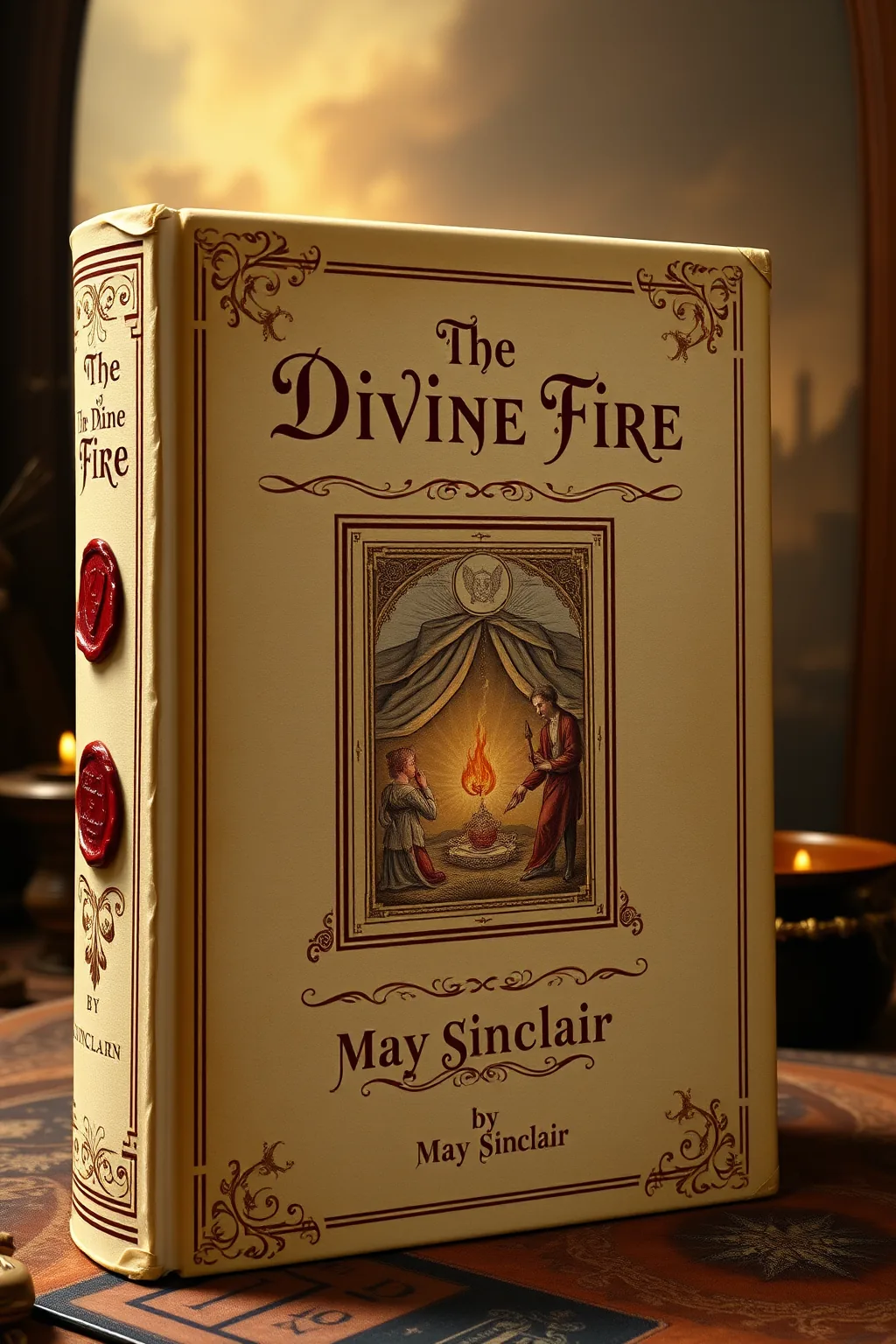
The Divine Fire
 70
70

The Divine Fire



Cassian Rothmann (Senior Critic, Ancient Wisdom): May Sinclair’s 'The Divine Fire' is a luminous gem for seekers of esoteric truths. Sinclair navigates the intricate landscape of spiritual awakening with remarkable insight, offering a profound exploration of psychic phenomena and the soul’s innate yearning for transcendence. The novel’s strength lies in its subtle yet powerful evocation of mystical experiences, making the unseen palpable. It resonates deeply with those who ponder the nature of consciousness and the subtle energies that shape our reality. This work is indispensable for students of mysticism and anyone captivated by the hidden dimensions of human experience.
📝 Description
70
Published in 1904, May Sinclair's 'The Divine Fire' examines the spiritual life of a poet.
May Sinclair's 1904 novel, 'The Divine Fire,' centers on the character of the poet Savage. The narrative traces his internal struggles and his relationship with the unseen forces that he believes influence his life and work. Sinclair uses Savage's experiences to question the nature of inspiration and the connection between artistic creation and a deeper, possibly supernatural, reality.
The book portrays a world where everyday existence can hold a hidden significance, hinting at spiritual truths accessible to those who are attuned to them. It follows Savage's engagement with these ideas, his search for self-understanding, and the inherent spiritual potential within human beings. The writing style aims to reflect the subject matter, focusing on the internal life and the quest for meaning.
Published in the early 20th century, 'The Divine Fire' engages with currents of thought prevalent in esoteric circles at the time. It touches upon themes of spiritualism, theosophy, and the belief in hidden realities that influenced many writers. The novel reflects an interest in the inner life, the nature of consciousness, and the potential for direct experience of the divine or unseen, aligning with a broader movement exploring these concepts outside traditional religious frameworks.
💡 Why Read This Book?
Embark on a profound journey into the heart of spiritual awakening and the unseen forces that shape our lives. 'The Divine Fire' offers a rare glimpse into the nature of consciousness and the potential for divine revelation within the human experience. Ideal for seekers of esoteric wisdom, students of metaphysics, and anyone yearning to connect with a deeper, more mystical understanding of existence. Discover the symbolic language of the soul and ignite your inner flame.
⭐ Reader Reviews
Honest opinions from readers who have explored this book.
❓ Frequently Asked Questions
What is the primary esoteric theme in 'The Divine Fire'?
The primary esoteric theme revolves around spiritual awakening, the exploration of psychic abilities, and the discovery of the divine spark within the human soul, suggesting an inherent connection to a higher cosmic order.
Is this book a historical account or fiction?
'The Divine Fire' is a work of fiction, but it draws heavily on contemporary spiritualist and metaphysical ideas prevalent during its publication era, imbuing its narrative with a profound sense of esoteric exploration.
Who is the intended audience for this novel?
The intended audience includes individuals fascinated by spirituality, mysticism, psychic phenomena, and philosophical inquiries into the nature of reality and human consciousness.
What kind of symbolism can one expect in the book?
Expect rich symbolism related to light, fire, the soul, and the interconnectedness of all things, reflecting the author's exploration of spiritual illumination and inner transformation.
Does the book offer practical guidance for spiritual practice?
While not a direct guide, 'The Divine Fire' inspires contemplation and introspection, indirectly encouraging readers to explore their own inner spiritual landscape and potential for awakening.
🔮 Key Themes & Symbolism
Spiritual Awakening and Inner Illumination
The narrative delves deeply into the process of spiritual awakening, portraying characters who grapple with nascent psychic abilities and the overwhelming influx of divine consciousness. Sinclair illustrates this transformation not as a sudden event, but as a gradual unfolding, a 'divine fire' that purifies and illuminates the soul. The book emphasizes the internal struggle and eventual surrender to a higher awareness, suggesting that true enlightenment comes from within, ignited by an unseen force. This theme appeals to traditions that speak of the 'inner light' and the soul's journey toward cosmic unity.
The Interplay of the Seen and Unseen Realms
Sinclair masterfully bridges the gap between the tangible world and the ethereal dimensions. The novel is imbued with a sense of the supernatural subtly interwoven into the fabric of everyday life. Characters experience premonitions, telepathic connections, and profound spiritual insights that suggest a reality far more complex than perceived by the senses. This exploration highlights the esoteric belief that the physical world is merely a veil, and that a vibrant, potent spiritual realm constantly interacts with and influences our existence, often through symbolic manifestations.
The Nature of Consciousness and the Soul
Fundamentally, , 'The Divine Fire' probes the profound mysteries of consciousness and the immortal soul. Sinclair presents a view of the soul as an enduring entity, capable of evolving and transcending the limitations of the physical body. The book explores how consciousness can expand to encompass higher planes of understanding, hinting at reincarnation and the soul's eternal quest for knowledge and spiritual perfection. This perspective aligns with ancient philosophical and mystical traditions that view the soul as a divine fragment seeking reunion with its source.
💬 Memorable Quotes
Direct passages from the work, attributed to the author.
“There are depths in the human soul that the ordinary eye cannot perceive.”
— This highlights the esoteric concept of the soul's vast, hidden potential and the existence of unseen spiritual dimensions accessible only through deeper introspection and heightened awareness.
“The fire of the spirit burns away the dross of the material world.”
— This metaphor speaks to the purifying power of spiritual transformation, suggesting that the divine spark within us can transcend worldly attachments and lead to spiritual liberation.
“We are but instruments for a symphony we cannot fully comprehend.”
— This conveys a sense of cosmic interconnectedness and surrender, implying that individual lives play a part in a grander, divinely orchestrated plan that extends beyond human understanding.
“To see is not always to understand, but to feel is to know.”
— This emphasizes the importance of intuitive and emotional knowing over purely intellectual comprehension in grasping spiritual truths and the deeper realities of existence.
💡 Key Ideas
Editorial paraphrase of the work's core concepts — not direct quotes.
The light came not from without, but from within.
This quote signifies the novel's core theme of inner spiritual awakening, emphasizing that true enlightenment and understanding originate from the individual's own consciousness, not external sources.
🌙 Esoteric Significance
Tradition
This work resonates strongly with the Western Esoteric Tradition, particularly its branches concerned with spiritualism, mysticism, and the exploration of consciousness. It touches upon themes found in Neoplatonism regarding emanation and the divine spark, as well as the burgeoning interest in psychic phenomena and mediumship characteristic of the late 19th and early 20th centuries. The 'divine fire' itself can be seen as a metaphor for the awakening Kundalini energy or the clear 'light' described in various mystical paths.
Symbolism
The central symbol is 'the divine fire,' representing spiritual awakening, divine inspiration, and the purifying force of transformation. Light is consistently used to denote spiritual understanding and revelation, contrasting with the darkness of ignorance. Other potent symbols include the soul's journey, the deeper meaning of the psyche, and the subtle interconnectedness between individuals and the cosmos, all pointing towards an underlying spiritual order.
Modern Relevance
In an era still grappling with the dichotomy of science and spirituality, 'The Divine Fire' offers a literary exploration of profound questions about consciousness, intuition, and the existence of unseen realities. Its themes of inner awakening and the search for meaning remain deeply relevant for individuals seeking spiritual growth and a deeper understanding of their place in the universe, resonating with contemporary interests in mindfulness, energy work, and quantum spirituality.
👥 Who Should Read This Book
This book is a treasure for the discerning reader. Beginners to esoteric literature will find a compelling and accessible entry point into mystical themes, guided by Sinclair's evocative prose. Scholars of literature and philosophy will appreciate its nuanced exploration of consciousness and its historical context within the New Age movement. Seekers of spiritual truth will discover a narrative that mirrors their own inner journey, offering inspiration and validation for their quest. Practitioners of contemplative arts and those interested in psychic phenomena will find resonances with their experiences and studies, making 'The Divine Fire' a profoundly enriching read for a wide spectrum of souls.
📜 Historical Context
Published in 1904, 'The Divine Fire' emerged during a period of intense spiritual and intellectual ferment in Britain, often termed the 'New Age' or the 'Decadent' era. This was a time when traditional religious dogma was being questioned, leading to widespread interest in spiritualism, Theosophy, psychic research, and Eastern philosophies. Authors like May Sinclair were deeply influenced by these movements, seeking to explore the boundaries of human consciousness and the possibility of a richer, more mystical existence beyond the material. The novel reflects the era's fascination with the subconscious mind, telepathy, and the potential for latent psychic powers, challenging the purely rationalist worldview of the preceding Victorian age and paving the way for modern explorations of spirituality and the paranormal in literature.
📔 Journal Prompts
Reflect on a time you felt a 'divine fire' or profound inner inspiration. What triggered it, and how did it change your perspective?
How does Sinclair's depiction of the unseen realms influence your understanding of your own reality?
Consider the 'dross of the material world' mentioned in the book. What aspects of your life represent this dross, and how can you spiritually purify them?
Explore the idea of the soul as an 'instrument for a symphony.' What role do you believe your soul plays in the grand cosmic design?
What does it mean to 'feel to know' in your spiritual journey? Describe a moment when intuition or feeling provided a deeper understanding than intellect.
🗂️ Glossary
Ethereal
Extremely delicate and light in a way that seems not to be of this world; relating to the upper regions of space, or the pure, refined essence of something.
Psychic Phenomena
Events or abilities that appear to be beyond the scope of normal sensory perception or scientific explanation, such as telepathy, clairvoyance, or precognition.
Transcendence
Existence or experience beyond the normal or material level; the state of being or going beyond limitations, especially those of the physical world or ordinary consciousness.
Metaphysical
Concerning the fundamental nature of reality, including the relationship between mind and matter, substance and attribute, potentiality and actuality.
Consciousness
The state of being aware of and responsive to one's surroundings; a person's awareness or perception of something.
This book appears in 3 collections
🔮 Readers Also Liked
Browse all →








More by May Sinclair
All books →
From the “Tarot” Collection
View all →






More Free Divination & Tarot Books
View all →