I Ching
 83
83

I Ching
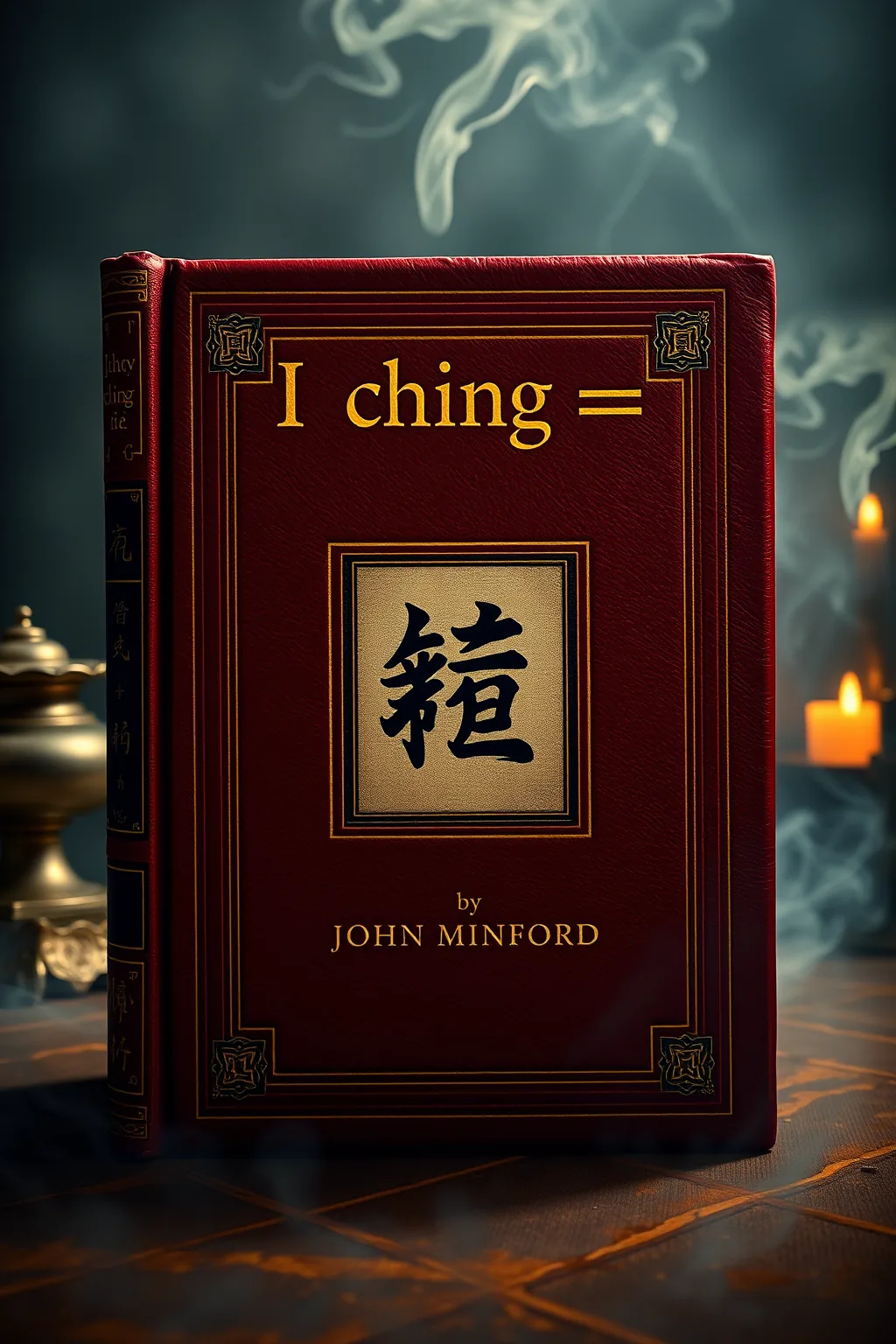
John Minford’s rendition of the I Ching offers a lucid entry point into this venerable oracle. The translation’s clarity, particularly in rendering the often-abstruse lines of the hexagrams, is commendable. Minford successfully bridges the gap between the text’s ancient roots and contemporary understanding, a feat not easily achieved with such a layered work. A particular strength lies in the contextualization provided, illuminating the philosophical underpinnings that have made the I Ching a cornerstone of East Asian thought since at least the Zhou Dynasty.
However, the sheer volume of commentary and interpretation, while comprehensive, can occasionally feel overwhelming for the novice. The sheer density of the 'Ten Wings,' the traditional commentaries, requires significant focus. One passage that stands out is the explanation for Hexagram 1, Qian (The Creative), detailing the progression of the yang line through different stages, which vividly illustrates the I Ching's dynamic cosmology. Minford’s edition serves as a robust, scholarly gateway to the Book of Change, best suited for those willing to invest the time in its intricate wisdom.
📝 Description
83
John Minford's 2021 translation presents the I Ching, a Chinese text with origins possibly from the 10th century BCE.
The I Ching, or Book of Change, is an ancient Chinese text that functions as both a divination manual and a philosophical work. Its 64 hexagrams, each formed from six stacked yin (broken) or yang (solid) lines, map archetypal situations and cosmic transformations. The text's commentary, traditionally linked to Confucius and his disciples, evolved over centuries from a divinatory tool to a complex philosophical system influencing East Asian thought.
Minford's translation aims for a scholarly yet accessible approach for those interested in Chinese philosophy, comparative religion, and divination. It addresses readers seeking guidance, whether for personal matters or a deeper understanding of esoteric traditions. The work's core concept is change itself, viewed as the universe's fundamental principle, with yin and yang illustrating these dynamic processes. Consulting the oracle provides insight into present configurations and potential future shifts.
The I Ching occupies a unique space within esoteric traditions, bridging ancient Chinese cosmology and philosophy with practices of divination. Its system of hexagrams and line changes offers a framework for understanding universal patterns and human affairs, aligning with traditions that seek knowledge through symbolic interpretation and pattern recognition. Its influence on Taoist and Confucian thought, as well as its use in various fortune-telling practices, places it as a significant text for those studying systems of symbolic communication and spiritual guidance.
💡 Why Read This Book?
• Gain a structured understanding of the 64 hexagrams and their symbolic language, moving beyond rote memorization to grasp the underlying principles of change, as exemplified by Hexagram 1, Qian (The Creative). • Learn practical methods for consulting the I Ching, such as the coin toss or yarrow stalk divination, enabling you to engage directly with its oracular function for personal guidance. • Appreciate the I Ching's historical significance as a foundational text in Chinese philosophy and divination, understanding its influence since the Zhou Dynasty on thinkers and societal structures.
⭐ Reader Reviews
Honest opinions from readers who have explored this book.
❓ Frequently Asked Questions
How old is the I Ching and when was it first published in its current form?
The I Ching's origins are ancient, with elements dating back to the 10th century BCE during the Zhou Dynasty. While continuously developed, John Minford's translation, a significant modern interpretation, was first published on October 30, 2014.
What are the primary methods for consulting the I Ching?
Traditional methods for consulting the I Ching involve casting yarrow stalks or, more commonly today, tossing three coins. The results of these actions determine the hexagrams and changing lines used for divination.
What does 'I Ching' mean and why is it called the Book of Change?
'I Ching' translates to 'Book of Change'. It is named so because its central philosophy posits that change is the fundamental, constant principle of the universe, and the text provides a framework for understanding and navigating these transformations.
Who are some key historical figures associated with the I Ching?
While its origins are ancient, figures like Confucius and his disciples are traditionally credited with adding significant commentary, known as the Ten Wings, which greatly expanded the philosophical depth of the I Ching.
What is the significance of Yin and Yang in the I Ching?
Yin (broken lines) and Yang (solid lines) are the fundamental building blocks of the I Ching's hexagrams. Their dynamic interplay represents the opposing yet complementary forces that drive all natural phenomena and human events.
Is John Minford's translation suitable for beginners?
Yes, John Minford's translation is designed to be both scholarly and accessible, making it suitable for beginners interested in the I Ching. It provides context and clear renderings of the hexagrams and their associated texts.
🔮 Key Themes & Symbolism
Cosmic Pattern and Transformation
The I Ching posits that the universe operates according to discernible patterns of change, driven by the dynamic interplay of Yin and Yang. Each of the 64 hexagrams represents a specific archetypal situation or phase within this continuous cosmic flux. Understanding these patterns, as elucidated through the text's commentaries like the Ten Wings, allows individuals to align themselves with the natural flow of events, moving from potentiality to manifestation and back again. This perspective offers a framework for interpreting the world not as static, but as a process of perpetual becoming.
Oracular Wisdom and Decision Making
At its heart, the I Ching functions as an oracle, providing guidance for decision-making. By casting hexagrams through methods like coin tossing, individuals can receive insights into current circumstances and potential future developments. The text's wisdom lies in its ability to illuminate the subtle dynamics at play, offering advice on how to act in accordance with the prevailing energies. It encourages a reflective approach, suggesting that awareness of the 'way of Heaven' fosters opportune action and avoids misfortune.
The Taoist and Confucian Influence
While predating formal Taoism and Confucianism, the I Ching deeply influenced both philosophical traditions. Its concepts of natural order, balance, and cyclical change align closely with Taoist principles of Wu Wei (non-action) and living in harmony with the Tao. Similarly, Confucian scholars extensively studied and commented upon the I Ching, integrating its ethical dimensions and cosmological views into their understanding of social order and self-cultivation. This translation highlights these interwoven philosophical threads.
The Nature of Lineage and Legacy
The I Ching's transmission through centuries, from its earliest roots in the Zhou Dynasty to its scholarly commentaries and modern translations like Minford's, represents a profound lineage of wisdom. The work itself addresses themes of succession, inheritance, and the unfolding of potential across generations. It speaks to how ancient knowledge endures and adapts, offering enduring principles that can inform contemporary understanding of personal growth, societal development, and the cyclical nature of history itself.
💬 Memorable Quotes
Direct passages from the work, attributed to the author.
“The superior man, when he is active, is always striving to do good; when he is at rest, he is always mindful of the right way.”
— This highlights the ethical imperative within the I Ching's wisdom. It suggests that true progress involves not just external action but also internal cultivation, emphasizing the importance of moral conduct and adherence to principles regardless of circumstance.
“When one sees the signs of coming change, one can act accordingly.”
— This captures the predictive and guiding function of the I Ching. It implies that by understanding the subtle indicators of evolving situations, one can make informed choices that align with the natural course of events, thereby increasing the likelihood of success.
“The Book of Change is not something that can be exhausted by talking about it.”
— This acknowledges the profound depth and complex nature of the I Ching. It suggests that the text's wisdom transcends simple verbal explanation and requires direct engagement, contemplation, and personal experience to be fully appreciated.
“What is unchanging is the Way.”
— This statement points to the underlying, eternal principles that govern the constant flux of phenomena. While external circumstances shift, the fundamental 'Tao' or 'Way' provides a stable foundation for understanding and working through the ever-changing world.
“The superior man makes himself strong and untiring.”
— This emphasizes the virtue of perseverance and self-discipline. It suggests that achieving one's goals and fulfilling one's potential requires consistent effort, resilience in the face of challenges, and a commitment to continuous self-improvement.
🌙 Esoteric Significance
Tradition
The I Ching is foundational to many East Asian esoteric traditions, particularly those influenced by Taoism and later syncretic movements. While not strictly Hermetic or Kabbalistic, its emphasis on cosmic patterns, symbolic language, and the interconnectedness of all things aligns with universal esoteric principles. It provides a systematic framework for understanding spiritual and material reality as a process of continuous transformation, offering a non-dualistic perspective that speaks to mystical thought across various cultures.
Symbolism
The primary symbols are the Yin (broken line) and Yang (solid line), representing primordial complementary forces. Their combination into trigrams and then 64 hexagrams forms a complex symbolic language describing archetypal situations. For instance, Hexagram 1, Qian (The Creative), embodies pure Yang, representing heaven, strength, and initiative, while Hexagram 2, Kun (The Receptive), symbolizes pure Yin, earth, yielding, and devotion. The progression and interaction of these lines and hexagrams map the dynamic unfolding of existence.
Modern Relevance
Contemporary practitioners of Jungian psychology, systems thinking, and various forms of Western esotericism draw heavily on the I Ching's archetypal imagery and its model of cyclical change. Its hexagrams are often used as a symbolic map for understanding psychological states and developmental processes. Furthermore, its divination methods continue to inspire modern approaches to intuitive guidance and self-reflection, demonstrating its persistent relevance in seeking meaning and navigating life's complexities.
👥 Who Should Read This Book
• Students of Chinese philosophy and comparative religion seeking to understand a foundational text that shaped East Asian thought for millennia. • Practitioners of divination and esoteric arts looking for a sophisticated oracular system with deep historical and philosophical roots. • Individuals undergoing significant life transitions or seeking clarity on complex decisions, who can utilize its symbolic framework for introspection and guidance.
📜 Historical Context
The I Ching's journey from an ancient divination manual to a philosophical cornerstone is a remarkable arc. Its earliest components likely emerged during the Zhou Dynasty (c. 1046–256 BCE), a period of significant intellectual ferment that also saw the rise of early forms of Taoism and Confucianism. While the text’s core divination system predates them, Confucius and his disciples are traditionally credited with composing the 'Ten Wings'—a series of commentaries that imbued the I Ching with profound ethical and cosmological significance, solidifying its place in the Confucian canon. This period saw intense philosophical debate, with thinkers exploring concepts of governance, morality, and the natural order. The I Ching's enduring influence meant it was continually studied and reinterpreted, facing occasional suspicion from ruling dynasties seeking to control intellectual discourse, yet always re-emerging as a vital source of wisdom. Its reception was consistently high among scholars and rulers alike, cementing its status as one of China's Five Classics.
📔 Journal Prompts
The transformation of Yin and Yang lines within a hexagram.
Reflecting on the 'superior man' archetype presented in the text.
The relationship between Hexagram 1 (Qian) and Hexagram 2 (Kun).
Interpreting a specific hexagram's imagery for a current challenge.
The cyclical nature of change as illustrated by the hexagram sequence.
🗂️ Glossary
Hexagram
A figure composed of six stacked horizontal lines, each line being either solid (Yang) or broken (Yin). There are 64 unique hexagrams, representing archetypal situations and transformations.
Trigram
A figure composed of three stacked lines (Yin or Yang). Eight basic trigrams form the building blocks for the 64 hexagrams.
Yin
Represented by a broken line (--) in the I Ching. Symbolizes passive, dark, feminine, yielding, and receptive qualities.
Yang
Represented by a solid line (—) in the I Ching. Symbolizes active, light, masculine, assertive, and creative qualities.
Ten Wings
A collection of ten commentaries traditionally attributed to Confucius and his disciples, which greatly expanded the philosophical and interpretive dimensions of the I Ching.
The Creative (Qian)
Hexagram 1, composed of six solid Yang lines. It represents Heaven, strength, initiative, and the primordial creative force.
The Receptive (Kun)
Hexagram 2, composed of six broken Yin lines. It represents Earth, devotion, receptivity, and the supportive, yielding force.