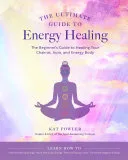
The Ultimate Guide to Energy Healing
 73
73

The Ultimate Guide to Energy Healing
Kat Fowler’s *The Ultimate Guide to Energy Healing* arrives at a moment when interest in non-traditional wellness is at a peak. Fowler’s strength lies in her capacity to translate complex energetic concepts into digestible prose, a necessary skill given the subject’s often esoteric nature. The book excels in its structured approach, moving from foundational principles to practical application without overwhelming the reader. A particularly effective section details the concept of energetic blockages and offers straightforward techniques for their release, demonstrating the book’s commitment to immediate utility. However, the work occasionally treads close to generalities when discussing the more subtle energetic interactions. While the aim is accessibility, some readers familiar with more nuanced energetic theories might find certain explanations simplified. The 2022 publication date places it firmly within contemporary discussions of holistic health, but its grounding in established practices is evident. Ultimately, *The Ultimate Guide to Energy Healing* offers a competent and approachable entry point into the field for the uninitiated.
📝 Description
73
Kat Fowler's 2022 book introduces accessible energy healing techniques for personal well-being.
The Ultimate Guide to Energy Healing, published in 2022, aims to make various energy healing methods understandable for a general audience. Kat Fowler wrote this guide to demystify practices that combine spiritual ideas with physical health. The book offers simple techniques readers can use right away for their own healing and daily routines. It recognizes that energy healing can seem confusing because it sits between science and spirituality. Fowler provides a clear structure to help people understand these practices better. The goal is to help those curious about alternative health options move toward practical knowledge. It sets up a way to learn about energy work without needing prior experience, serving as a starting point for beginners or a resource for those already practicing.
The guide stresses that readers can start using the techniques immediately to see real results. It covers a range of approaches, showing the variety in today's energy healing field. Fowler's book starts by explaining what energy healing is, moving past general ideas to specific methods. It discusses the energetic principles behind these practices and connects them to historical healing traditions. The book also identifies who would benefit most. This includes people new to holistic health, practitioners wanting to add to their skills, and those dealing with specific physical or emotional issues.
This book enters the tradition of modern spiritual and holistic health movements that seek to integrate mind, body, and spirit. It follows in a lineage that views the body's energy systems as central to well-being, drawing from various historical and contemporary practices. While it simplifies complex concepts for accessibility, it engages with ideas found in traditions that explore subtle energies, such as certain forms of Qigong, Reiki, and other energy work modalities that have gained traction in Western wellness culture.
💡 Why Read This Book?
• Gain practical, immediate techniques for self-care and healing, directly applicable from Chapter 3, "Foundational Energy Practices," to manage daily stress. • Understand the historical lineage of energy work, connecting modern practices to ancient traditions discussed in the "Historical Context" section, offering deeper insight than generic wellness books. • Learn to identify and work with specific energetic concepts like chakras and meridians, as detailed in the "Key Concepts" section, providing a tangible framework for personal energetic well-being.
⭐ Reader Reviews
Honest opinions from readers who have explored this book.
❓ Frequently Asked Questions
What specific energy healing modalities does Kat Fowler's book cover?
The book explores a range of modalities, including Reiki, Therapeutic Touch, and sound healing, as well as foundational concepts applicable across various energy work practices.
Is "The Ultimate Guide to Energy Healing" suitable for complete beginners?
Yes, the book is specifically designed for beginners, demystifying complex topics and offering accessible techniques for immediate use, as highlighted in its original 2022 blurb.
Does the book explain the scientific basis of energy healing?
Fowler's work addresses the intersection of the scientific and spiritual, offering explanations that bridge the gap, though it primarily focuses on practical application rather than in-depth scientific validation.
Can I use the techniques in this book for self-care?
Absolutely. The guide emphasizes self-care and provides accessible techniques that readers can employ immediately for personal healing and well-being.
When was Kat Fowler's "The Ultimate Guide to Energy Healing" first published?
The book was first published on January 11, 2022, reflecting contemporary interest in alternative healing methods.
What makes this guide different from other books on energy healing?
Its focus on demystifying practices and offering immediately usable techniques differentiates it, making energy healing approachable for a wider audience beyond esoteric circles.
🔮 Key Themes & Symbolism
Accessible Modalities
This guide excels by breaking down complex energy healing techniques into manageable steps. Fowler avoids overly academic or jargon-filled explanations, focusing instead on practical application. The book introduces readers to modalities like Reiki and sound healing, explaining their core principles and offering straightforward methods for personal practice. The emphasis is on empowerment, ensuring that individuals can begin incorporating these healing practices into their daily lives for immediate benefits in self-care and stress reduction. This approach makes esoteric concepts relevant and actionable for a broad audience seeking wellness solutions.
Bridging Science and Spirituality
The work navigates the often-perceived divide between the scientific and spiritual aspects of energy healing. Fowler presents concepts in a way that respects both empirical inquiry and intuitive understanding. By acknowledging the popular perception of energy healing as potentially intimidating, the book aims to offer a balanced perspective. It suggests that these practices, while rooted in subtle energies, can yield observable results, thereby appealing to both the spiritually inclined and the pragmatically minded seeker of well-being. This balanced approach is crucial for its broad appeal.
Foundational Energetic Concepts
Central to the guide is an exploration of fundamental energetic principles that underpin various healing modalities. Concepts such as the energetic body, chakras, and meridians are explained clearly, providing readers with a vocabulary and framework for understanding their own internal energy systems. The book elucidates how imbalances in these systems can manifest as physical or emotional distress, and conversely, how balancing them promotes health. This foundational knowledge is presented as essential for anyone starting a journey of energy healing, whether for oneself or others.
Empowerment Through Practice
A core message of *The Ultimate Guide to Energy Healing* is the reader's inherent capacity for self-healing. Fowler provides practical exercises and techniques designed for immediate implementation, fostering a sense of personal agency. The book encourages readers to become active participants in their wellness journey, moving beyond passive consumption of healing services. By offering actionable tools and clear guidance, it aims to equip individuals with the confidence and skills to manage their energy and promote their own well-being, making healing a personal, ongoing practice.
💬 Memorable Quotes
Direct passages from the work, attributed to the author.
“Energy healing explains styles and practices.”
— This core statement from the blurb captures the book's primary goal: to make the often-perceived complex world of energy work accessible and understandable to a wider audience.
“Offers accessible techniques that you can use immediately.”
— This highlights the practical, action-oriented nature of the guide, emphasizing that readers will gain immediately applicable skills rather than just theoretical knowledge.
“Popularity of energy healing is surging.”
— This observation grounds the book in current societal trends, acknowledging the growing public interest in alternative wellness and positioning the guide as a timely resource.
“Sits at the intersection of the scientific and the spiritual.”
— This phrase precisely defines the challenging but crucial space that energy healing occupies, suggesting the book will attempt to bridge these two domains.
“Understandable and practical approach.”
— This emphasizes the book's pedagogical strategy: to provide clarity and utility, making the subject matter approachable for those who might find it otherwise daunting.
🌙 Esoteric Significance
Tradition
While not explicitly aligning with a single historical esoteric lineage like Hermeticism or Kabbalah, Kat Fowler's work draws implicitly from a broad spectrum of spiritual and energetic healing traditions. It synthesizes concepts that echo Theosophical ideas about subtle bodies and vital force (prana, chi), Western Esotericism's focus on intentionality and energetic manipulation, and New Age philosophies emphasizing personal empowerment and holistic well-being. The book's departure lies in its deliberate effort to present these often-esoteric concepts in an accessible, secularized manner, aiming for broad appeal rather than adherence to strict traditional doctrines.
Symbolism
The guide frequently employs archetypal symbols relevant to energetic systems. Chakras, often depicted as colored lotus-like wheels, represent vital energy centers within the subtle body, each associated with specific physical, emotional, and spiritual functions. Meridians, conceptualized as pathways for vital energy (Qi), are akin to energetic circulatory systems, and their balance is crucial for health, drawing parallels to ancient Chinese medicine. The concept of the 'energetic body' itself functions symbolically as a map for understanding the non-physical dimensions of health and consciousness.
Modern Relevance
Fowler's work is highly relevant to contemporary wellness movements, particularly those focused on mindfulness, stress reduction, and holistic health. Its accessible approach makes it a gateway for individuals exploring practices that complement conventional medicine. Modern practitioners of yoga, meditation, and even some therapists integrate concepts of energetic balance and flow, mirroring the principles discussed in the book. It also informs the growing field of integrative health, where the mind-body connection is increasingly recognized as central to patient care.
👥 Who Should Read This Book
• Individuals new to energy healing seeking a clear, practical introduction to foundational concepts and techniques. • Wellness practitioners aiming to expand their toolkit with accessible methods for self-care and client support. • Skeptics or the curious who are interested in the intersection of spirituality and physical well-being but require a grounded, understandable approach.
📜 Historical Context
Published in 2022, *The Ultimate Guide to Energy Healing* emerged during a period of intensified interest in holistic and alternative wellness practices, accelerated by global events that prompted many to re-evaluate their health paradigms. This era saw energy healing methods like Reiki, which gained traction in the West following figures like Hawayo Takata in the mid-20th century, moving from niche spiritual circles into mainstream wellness discourse. Fowler’s work arrived alongside a proliferation of books and online resources attempting to explain these practices. It engaged with an intellectual current that sought to integrate mind-body-spirit approaches, often drawing upon concepts from Eastern philosophies and modern physics, albeit sometimes speculatively. While not directly engaging with specific contemporaries in a confrontational manner, the book operates within a landscape populated by authors like Donna Eden, whose work on energy medicine predates Fowler’s guide by decades, and various proponents of quantum healing. The reception of such works generally tends to be divided, with practitioners and adherents embracing the methods, while skeptical scientific communities often demand more rigorous empirical evidence, a debate that has been ongoing since at least the late 20th century.
📔 Journal Prompts
Energy blockages: How might my current emotional state be influencing my energetic flow?
Chakra alignment: Which chakra feels most out of balance today, and why?
Self-care techniques: How can I integrate the 'accessible techniques' from Chapter 3 into my daily routine?
Energetic body awareness: What subtle sensations am I noticing in my body right now?
Spiritual-scientific intersection: How do my personal beliefs about healing align with the concepts presented?
🗂️ Glossary
Energy Healing
A broad category of complementary therapies that involve manipulating subtle energies in and around the body to promote healing, balance, and well-being.
Chakras
The seven primary energy centers located along the spine, each associated with specific physical, emotional, and spiritual functions and colors.
Meridians
Invisible pathways or channels through which vital life force energy (Qi) flows throughout the body, according to traditional Eastern medicine.
Qi (Chi)
The vital life force energy believed to flow through all living things in traditional Chinese medicine and other Eastern philosophies.
Energetic Body
A non-physical aspect of the human being comprising subtle energies, chakras, meridians, and auric fields, believed to influence physical and emotional health.
Reiki
A Japanese form of energy healing where practitioners lay their hands on or just above specific points on the body to channel universal life energy.
Self-Care
Intentional actions taken to care for one's physical, mental, and emotional health, often including practices learned from wellness guides.