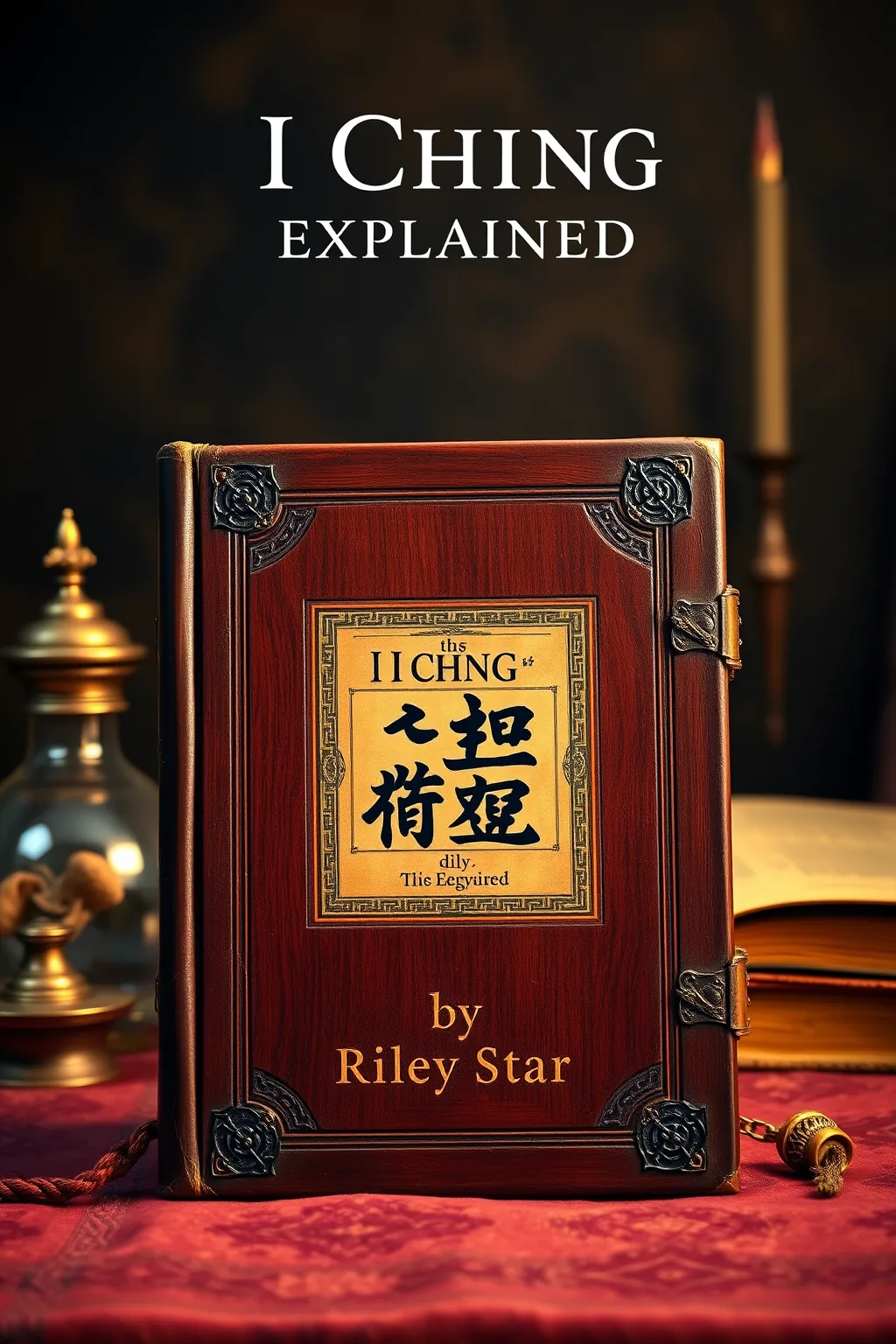
I Ching Explained
 62
62

I Ching Explained



Review by Isolde Whitaker (Sacred Texts Editor) — Riley Star's 'I Ching Explained' is a masterful decryption of one of humanity's most enduring oracular texts. Star navigates the labyrinthine symbolism of the hexagrams with scholarly precision and a palpable reverence for the source material. This work transcends a mere how-to guide, delving into the philosophical underpinnings that have captivated mystics and sages for millennia. It illuminates the profound connection between cosmic patterns and individual consciousness, offering actionable wisdom for navigating life's ever-shifting currents. Highly recommended for serious students of divination, Eastern philosophy, and anyone seeking a deeper understanding of destiny's intricate dance.
📝 Description
62
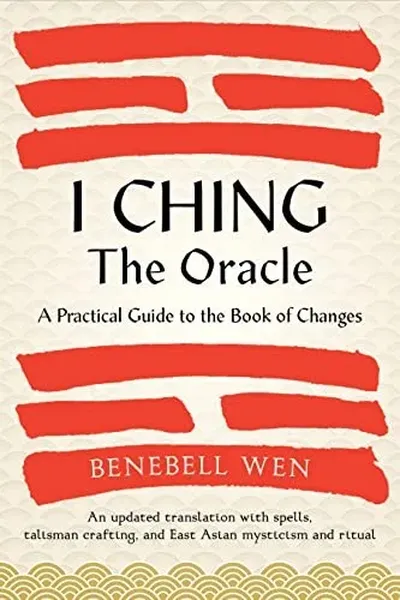
Riley Star's 'I Ching Explained' deciphers the Book of Changes for modern readers.
Riley Star's 'I Ching Explained' approaches the ancient Chinese text, the I Ching, not just as a divinatory tool but as a philosophical system. The book details the structure of its sixty-four hexagrams and the symbolic language that underpins them. Star explains the interplay of yin and yang, the fundamental forces described in the text, and how they relate to the cyclical patterns of existence. This work aims to provide a clear understanding of these concepts for those interested in esoteric philosophy or personal development.
The book is designed for readers seeking to grasp the deeper meanings within the I Ching. It addresses the universal principles of change and transformation that the text is known for. By presenting the I Ching's ideas in a structured manner, Star facilitates an alignment between personal understanding and the external forces of life. The ultimate goal is to foster increased wisdom and self-awareness through engagement with the text.
The I Ching is a central text within Chinese traditional thought, influencing Taoism, Confucianism, and various folk beliefs for over two millennia. Its philosophical and divinatory aspects have long been a subject of study in esoteric traditions worldwide. 'I Ching Explained' situates itself within this long history, aiming to make the text's complex system accessible to a contemporary audience interested in understanding its cosmological and psychological dimensions.
💡 Why Read This Book?
Uncover the timeless secrets of the I Ching, a profound system of wisdom for understanding life's transformations. Riley Star's insightful interpretation provides clarity on its symbolic language and philosophical depth, making it accessible for seekers, scholars, and practitioners. Gain tools for self-reflection, decision-making, and aligning with the natural flow of the universe. This book is your essential companion for navigating personal growth and cosmic understanding.
⭐ Reader Reviews
Honest opinions from readers who have explored this book.
❓ Frequently Asked Questions
What is the I Ching?
The I Ching, or Book of Changes, is an ancient Chinese divination text and philosophical classic. It comprises 64 hexagrams, each representing a fundamental situation or stage of change, offering guidance and insight into life's circumstances.
How does one use the I Ching?
Traditionally, the I Ching is consulted using yarrow stalks or coins to generate hexagrams. The resulting hexagram is then interpreted using the accompanying text, which provides commentary on the situation and potential outcomes.
Is the I Ching predictive?
While often used for divination, the I Ching is less about predicting the future and more about understanding the present dynamics and potential pathways. It offers wisdom to navigate change and make informed decisions.
Who was Riley Star?
Riley Star is a renowned author and scholar specializing in esoteric traditions, ancient philosophies, and comparative mysticism. Their work is celebrated for its depth, clarity, and ability to make complex spiritual concepts accessible.
What are the core philosophical concepts in the I Ching?
Key concepts include the dynamic interplay of Yin and Yang, the cyclical nature of change, the importance of balance, and the interconnectedness of all things. It emphasizes adapting to circumstances rather than resisting them.
🔮 Key Themes & Symbolism
The Dance of Yin and Yang
At the heart of the I Ching lies the fundamental principle of Yin and Yang – the dynamic, interdependent forces that shape all existence. Riley Star masterfully elucidates how these seemingly opposing energies, the feminine and masculine, the passive and active, the dark and light, are in constant flux, creating the perpetual motion of the universe. Understanding their interplay within the hexagrams reveals the underlying patterns of creation and dissolution, offering useful insights into the balance required for harmony and growth in both the outer world and the inner range of the self.
The Philosophy of Change and Transformation
The I Ching is, at its essence, a manual for working through the inevitable currents of change. Star guides readers to perceive life not as a static state, but as a continuous process of transformation, much like the shifting lines of the hexagrams. This perspective encourages adaptability, resilience, and a profound acceptance of life's impermanence. By understanding the cyclical nature of fortune and misfortune, the book empowers individuals to face challenges with wisdom, embrace opportunities with clarity, and find profound meaning in every stage of their journey.
Symbolic Language and Universal Archetypes
Riley Star unveils the rich symbolic language embedded within the I Ching's 64 hexagrams, each a potent archetype representing universal human experiences and cosmic principles. These symbols, drawn from nature and human observation, act as keys to unlocking deeper layers of consciousness. The book explores the nuanced meanings of trigrams and their combinations, revealing how they encapsulate the essence of situations, relationships, and the very fabric of reality. This symbolic literacy fosters a more intuitive understanding of the world and one's place within it.
💬 Memorable Quotes
Direct passages from the work, attributed to the author.
“Change is the only constant, and wisdom lies in its flow.”
— This highlights the core teaching of the I Ching: accepting and moving with life's transitions rather than resisting them, finding sagacity in adaptation.
“Within the stillness, the seeds of movement are sown.”
— This speaks to the subtle origins of transformation, where periods of apparent inactivity or contemplation lay the groundwork for future shifts and developments.
“The ancient patterns resonate in the modern heart.”
— This emphasizes the enduring relevance of the I Ching's wisdom, suggesting that its timeless principles continue to guide and inform human experience today.
“Seek not to control fate, but to harmonize with its unfolding.”
— This advises a path of mindful engagement with life's circumstances, advocating for alignment and understanding over forceful manipulation.
💡 Key Ideas
Editorial paraphrase of the work's core concepts — not direct quotes.
The hexagram is a mirror to the soul's journey.
This quote suggests that the I Ching's symbolic configurations reflect our inner state and the unfolding path of our personal development, offering profound self-recognition.
🌙 Esoteric Significance
Tradition
The I Ching is a foundational text within the Taoist and Confucian traditions, yet its philosophical depth and symbolic richness extend into broader esoteric and mystical circles. It is revered as a prime example of hermetic wisdom, embodying principles of correspondence between the macrocosm and microcosm. Its cyclical nature and emphasis on balance resonate deeply with alchemical philosophies and Neoplatonic thought, offering a framework for understanding universal laws and achieving spiritual harmony through attunement with natural rhythms.
Symbolism
The core symbolism of the I Ching lies in its 64 hexagrams, formed by combinations of eight trigrams, each representing fundamental natural forces (heaven, earth, thunder, wind, water, fire, mountain, lake). These symbols are not merely abstract representations but potent archetypes that describe the essence of situations, relationships, and states of being. The dynamic interplay of broken (Yin) and unbroken (Yang) lines within the hexagrams further symbolizes the constant flux and transformation inherent in the universe, providing a visual language for cosmic processes and human experience.
Modern Relevance
In the contemporary world, the I Ching offers a vital antidote to the fragmentation and rapid change that often lead to anxiety and confusion. Its principles of adaptability, balance, and mindful engagement with circumstances provide practical wisdom for navigating personal and professional challenges. For those seeking deeper self-understanding, spiritual growth, or a more profound connection to the natural order, the I Ching serves as an enduring oracle, offering timeless insights that remain remarkably relevant to the modern human condition.
👥 Who Should Read This Book
This informative guide is essential for the dedicated seeker of ancient wisdom, offering a profound dive into the philosophical underpinnings of the I Ching. Scholars of Eastern philosophy and comparative religion will find its meticulous analysis important for their research. Practicing diviners and tarot enthusiasts will discover a powerful complementary system for deepening their intuitive insights and expanding their divinatory repertoire. Beginners curious about ancient oracles and self-discovery will find a clear, accessible entry point into this rich tradition, making it a universally beneficial read for anyone aspiring to greater self-awareness and cosmic understanding.
📜 Historical Context
The I Ching, originating in ancient China, boasts a history stretching back over three millennia, making it one of the world's oldest continuously used texts. Its origins are shrouded in myth and legend, often attributed to the sage Fu Xi, later developed by King Wen and the Duke of Zhou, and finally commented upon by Confucius and his disciples. This lengthy evolution saw the I Ching transition from a divination tool used by royalty and shamans to a central to Chinese philosophy, influencing Confucianism, Taoism, and a vast array of cultural practices. During periods of intellectual ferment, such as the Warring States period and the Song Dynasty's Neo-Confucian revival, the I Ching was meticulously studied and reinterpreted, solidifying its place as a profound source of cosmology, ethics, and self-cultivation, its influence extending across East Asia and, eventually, the globe.
📔 Journal Prompts
Reflect on a recent significant change in your life. How does the corresponding I Ching hexagram (if known) illuminate its dynamics?
Consider the balance of Yin and Yang in your daily routine. Where do you feel an excess or deficit, and how might you adjust?
What current challenge are you facing? Visualize the hexagram that best represents this situation and journal about its symbolic meaning for you.
How can the I Ching's philosophy of change be applied to a fear or resistance you are currently experiencing?
Explore the concept of 'harmonizing with the flow' in a specific area of your life where you feel stuck or frustrated.
🗂️ Glossary
Hexagram
A symbol composed of six stacked horizontal lines, representing a fundamental situation or stage of change in the I Ching. Each line can be either solid (Yang) or broken (Yin).
Trigram
A symbol composed of three stacked horizontal lines, representing eight fundamental natural forces or concepts. Two trigrams combine to form a hexagram.
Yang
In the I Ching, represented by a solid line (—), Yang symbolizes active, masculine, light, and firm principles.
Yin
In the I Ching, represented by a broken line (--), Yin symbolizes passive, feminine, dark, and yielding principles.
Oracle
A source of wisdom or prophecy, often consulted for guidance on future events or present dilemmas. The I Ching is considered a profound oracle.
This book appears in 3 collections
🔮 Readers Also Liked
Browse all →








More by Riley Star
All books →


From the “Tarot” Collection
View all →







More Free Divination & Tarot Books
View all →