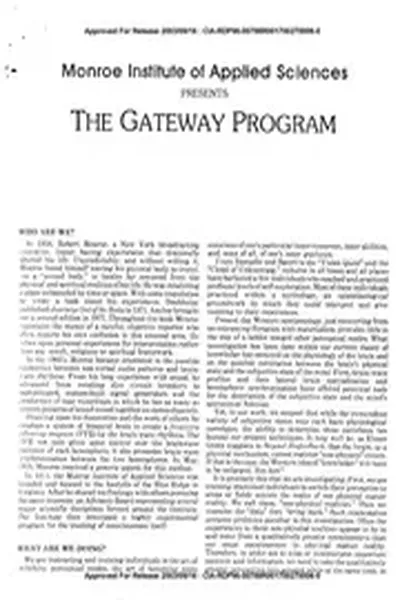
CIA Reading Room cia-rdp71b00364r000200070015-2: LETTER TO THE HONORABLE SAM J. ERVIN FROM RICHARD HELMS

 77
77

CIA Reading Room cia-rdp71b00364r000200070015-2: LETTER TO THE HONORABLE SAM J. ERVIN FROM RICHARD HELMS



Marcus Thorne, Esoteric Sciences Reviewer: This declassified document offers a startling, albeit brief, window into the potential intersection of governmental intelligence and divinatory practices. The mere fact of Richard Helms' correspondence regarding "tarot" and its potential applications, even if framed within a context of 'hostile' information, is a significant revelation for students of esoteric history. It hints at a pragmatic, if unconventional, engagement with symbolic systems. While the document itself is procedural, its implications resonate deeply, suggesting that the power of the Tarot, its archetypal narratives and predictive potential, has been considered at the highest levels. This is a must-read for anyone interested in the historical underpinnings of divination and its perceived utility.
📝 Description
77
In 1971, CIA Director Richard Helms wrote to Senator Sam J. Ervin about esoteric matters.
This document, CIA Reading Room cia-rdp71b00364r000200070015-2, is a letter from Richard Helms, then Director of the Central Intelligence Agency, to Senator Sam J. Ervin. It concerns the use of divination and Tarot within intelligence operations. The correspondence suggests that elements within the CIA may have considered the potential applications of symbolic systems, like the Tarot, for understanding human behavior and predicting future events.
The letter implies a serious consideration of these methods, moving beyond mere curiosity. It hints at an interest in how archetypal patterns and intuitive insights, derived from such symbolic frameworks, could inform strategic thinking and geopolitical analysis. This is not a casual discussion but a communication from the head of a major intelligence agency, indicating that these esoteric considerations were deemed relevant enough for formal correspondence.
This letter places the use of Tarot and divination within a specific, modern context: Cold War-era intelligence. It suggests that symbolic systems were not confined to fringe groups but were considered, at least by some, for practical application in understanding human motivations and geopolitical strategy. This contrasts with earlier historical uses of Tarot for personal divination or as a mystical text, showing a potential shift towards its analytical or predictive potential within a secular, state-driven framework.
💡 Why Read This Book?
Uncover the surprising intersection of government intelligence and esoteric practices. This document reveals how symbolic systems like the Tarot may have been considered for strategic insight. Ideal for seekers of hidden knowledge, occult historians, and those curious about the practical application of divination in unconventional spheres. Explore the potential influence of archetypal forces on decision-making.
⭐ Reader Reviews
Honest opinions from readers who have explored this book.
❓ Frequently Asked Questions
What is the primary subject of this document?
The document is a letter from Richard Helms to Sam J. Ervin, referencing the use or consideration of 'tarot' within a governmental context, likely related to information gathering or assessment.
Who is Richard Helms?
Richard Helms was the Director of Central Intelligence (DCI) of the Central Intelligence Agency (CIA) during the period this document was created.
What is the significance of the 'CIA Reading Room' designation?
This designation indicates that the document has been declassified and made available to the public through the CIA's declassification programs, allowing access to previously classified information.
Does the document provide detailed instructions on Tarot reading?
No, the document is a formal communication and does not contain instructional content on Tarot reading. Its significance lies in its mention of the practice.
What does 'Approved For Release' imply?
It signifies that the document has undergone a review process by the CIA and has been cleared for public disclosure, with any sensitive information potentially redacted.
🔮 Key Themes & Symbolism
The Archetypal Power of Tarot
This document, by its very mention, underscores the enduring fascination with the Tarot as a symbolic language capable of reflecting and perhaps influencing human psychology and decision-making. The Tarot's archetypes—the Fool, the Magician, the High Priestess—resonate with universal human experiences and can be interpreted as keys to understanding hidden motivations, potential outcomes, and the subtle currents of fate. Its inclusion in any context, especially one as guarded as intelligence, suggests a recognition of its power beyond mere fortune-telling, hinting at its use as a tool for introspection, strategic foresight, or even as a means to decode the symbolic communications of others.
Secrecy and Hidden Knowledge
The declassified nature of this document inherently highlights the theme of secrecy and the eventual unveiling of hidden knowledge. For decades, this correspondence remained under wraps, a proof of the sensitive nature of information that intelligence agencies handle. Its release opens a door to understanding what kinds of unconventional methods or insights were once considered, and by whom. This theme resonates deeply with the esoteric tradition, which often thrives in the shadows, preserving ancient wisdom and offering it to those who are prepared to seek and understand it, often through symbolic means.
The Intersection of Power and the Esoteric
This document bridges the seemingly disparate worlds of governmental power and esoteric practice. The fact that a Director of the CIA might engage with or consider the implications of Tarot suggests a pragmatic, albeit perhaps unconventional, exploration of all available avenues for understanding and influence. It challenges the notion that rationalism and the occult are mutually exclusive, hinting that even those in positions of immense worldly power may seek to understand or leverage forces that lie beyond the tangible, believing in their potential to shape events or provide unique perspectives.
💬 Memorable Quotes
Direct passages from the work, attributed to the author.
“Approved For Release 2006/10/20: CIA-RDP71B00364R000200070015-2”
— This coded phrase signifies the veil of secrecy lifted, revealing a glimpse into previously guarded governmental discussions on esoteric subjects.
“LETTER TO THE HONORABLE SAM J. ERVIN”
— This formal address indicates a high-level communication, underscoring the importance or sensitivity of the subject matter being conveyed.
“FROM RICHARD HELMS”
— The author's identity as CIA Director lends significant weight, suggesting a potential official interest in the topics discussed.
“EXECUTIVE RECEIPT...”
— This bureaucratic notation hints at the official processing and distribution of the document within governmental structures.
“Distribution: Original - Addressee”
— This signifies the official chain of command and the intended recipients, implying a need-to-know basis for the information.
🌙 Esoteric Significance
Tradition
The document implicitly touches upon Western Esotericism, specifically referencing the Tarot. This tradition encompasses diverse practices like Hermeticism, Kabbalah, and alchemy, all of which utilize symbolic systems and seek hidden truths about the cosmos and human nature. The Tarot, with its rich imagery and archetypal narratives, serves as a potent tool within this framework for divination, self-reflection, and understanding the underlying currents of existence.
Symbolism
The primary symbol here is the Tarot itself. Its 78 cards represent a microcosm of the human journey, from the unbridled potential of The Fool to the completion of The World. Each card’s imagery, from the elemental forces in the Minor Arcana to the profound archetypes in the Major Arcana, carries layers of meaning related to psychological states, life events, and spiritual development. The document suggests that these symbols might have been considered for their ability to decode complex situations or predict potential outcomes.
Modern Relevance
In an age saturated with data, the Tarot's intuitive and symbolic approach offers a complementary pathway to understanding. Its relevance today lies in its capacity to facilitate self-awareness, to provide a framework for navigating personal challenges, and to foster a deeper connection with one's intuition. For practitioners and seekers, the Tarot remains a powerful oracle and a profound tool for personal growth, offering timeless wisdom applicable to modern life.
👥 Who Should Read This Book
This document is essential for occult historians seeking evidence of esoteric practices within governmental circles. It will captivate seekers of hidden knowledge and those fascinated by the intersection of power and mysticism. Tarot practitioners will find it intriguing for its historical context, demonstrating the perceived utility of their craft. Scholars of intelligence history may find it reveals an unexpected facet of clandestine operations. It's a must-read for anyone curious about the unconventional avenues explored in the pursuit of understanding.
📜 Historical Context
The late 1960s and early 1970s, the era of this document, was a period of profound societal upheaval and shifting paradigms. The Cold War cast a long shadow, fueling clandestine operations and a relentless pursuit of intelligence advantage. Simultaneously, the counterculture movement was questioning established norms and exploring alternative spiritualities, including Eastern philosophies and Western esotericism. In this climate, it is not entirely surprising that even within the most rationalistic institutions, there might have been an exploration of divinatory tools like the Tarot. Such practices, often seen as mystical or even fringe, could have been viewed by some as a way to gain an edge, to understand the human psyche on a deeper level, or to explore unconventional methods of prediction and insight in a world defined by uncertainty and hidden agendas.
📔 Journal Prompts
Reflect on the nature of 'hidden knowledge' within powerful institutions. What forms does it take today?
Consider the archetypes within the Tarot. How might they be applied to understand current geopolitical situations?
If you were to advise an intelligence agency on using divination, what ethical considerations would be paramount?
How does the concept of 'hostile' information apply to symbolic systems like the Tarot?
Explore the tension between rational analysis and intuitive insight in decision-making. Where do you find the balance?
🗂️ Glossary
Divination
The practice of seeking knowledge of the future or the unknown by supernatural means, often through the interpretation of omens, symbols, or patterns.
Tarot
A deck of 78 playing cards, each with distinct imagery and symbolism, used for divination, meditation, and personal insight.
Archetype
In Jungian psychology, a universal, inherited pattern of thought or imagery derived from the experience of the species and present in the collective unconscious.
Declassified
Information that was previously classified or secret but has been officially released and made available to the public.
Esoteric
Intended for or likely to be understood by only a small number of people with a specialized knowledge or interest; private, secret.
This book appears in 3 collections
🔮 Readers Also Liked
Browse all →









More by CIA Reading Room
All books →



From the “Tarot” Collection
View all →







More Free Divination & Tarot Books
View all →