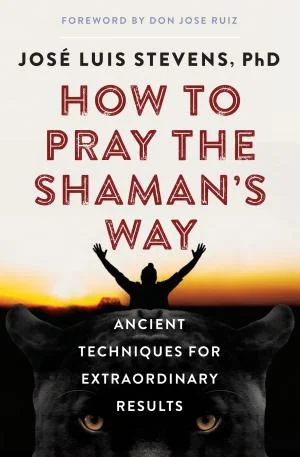
How to Pray the Shaman's Way
 74
74

How to Pray the Shaman's Way
José Luis Stevens's "How to Pray the Shaman's Way" presents a compelling alternative to traditional prayer, framing it as a reciprocal dialogue with the cosmos. The book's strength lies in its practical, down-to-earth approach to engaging with spirit, demystifying concepts often relegated to esoteric circles. Stevens skillfully bridges the gap between ancient shamanic practices and modern spiritual seeking, offering actionable techniques for fostering deeper connection. A notable limitation, however, is that some readers might find the initial conceptual leap from conventional prayer challenging without further grounding. The discussion around "spirit allies" in Chapter 3, while central to the shamanic paradigm, could benefit from more extensive examples of their tangible interaction in everyday life. Ultimately, "How to Pray the Shaman's Way" is a valuable resource for those ready to explore a more active and responsive form of spiritual communion.
📝 Description
74
José Luis Stevens's 2021 book reframes prayer as active communication with the spirit world.
Published in 2021, José Luis Stevens's "How to Pray the Shaman's Way" presents prayer not as a passive request, but as a direct, interactive exchange with the universe and its inhabitants. Stevens argues that this approach fosters a deeper connection to the sacred, leading to greater inner peace and a more integrated spiritual life. The book guides readers to establish this dynamic relationship, encouraging a way of living informed by ancient traditions. It is for those who wish to move beyond conventional prayer and embrace a more participatory spiritual path.
This work is especially relevant for individuals interested in shamanic practices, animism, and indigenous spiritual systems. Stevens applies these principles to the universal act of prayer, offering methods to enhance one's connection to nature, the cosmos, and internal guidance. Readers seeking to redefine their understanding of prayer and its potential will find practical applications within these pages. The book is for the spiritual seeker ready to engage more actively with their faith.
Stevens's work emerges during a 21st-century resurgence of interest in indigenous spiritualities and non-Western cosmologies. This period is characterized by a critique of materialistic views and a growing desire for embodied, nature-connected spiritual practices. "How to Pray the Shaman's Way" contributes to this trend by articulating shamanic principles for contemporary prayer. It follows earlier scholarly work on shamanism, such as Mircea Eliade's mid-20th-century studies, but shifts focus to practical application for modern practitioners.
💡 Why Read This Book?
• You will learn to view prayer as an active, reciprocal dialogue rather than a one-sided plea, as detailed in the "sacred dialogue" concept discussed in Chapter 2. • You can discover practical methods for connecting with spirit allies and nature spirits, enhancing your daily spiritual practice as outlined in the "spirit allies" section. • You will gain tools to integrate shamanic principles into everyday life, transforming mundane moments into opportunities for sacred connection, a core tenet explored throughout the book.
⭐ Reader Reviews
Honest opinions from readers who have explored this book.
❓ Frequently Asked Questions
What is the core difference between the prayer taught in 'How to Pray the Shaman's Way' and traditional prayer?
Traditional prayer often involves supplication or petition. José Luis Stevens's book frames prayer as a dynamic, reciprocal dialogue with the universe and spirit, emphasizing communication, relationship, and co-creation rather than mere asking.
Who is José Luis Stevens and what is his background?
José Luis Stevens is an anthropologist and shamanic practitioner. His work, including "How to Pray the Shaman's Way," draws from his extensive studies and personal experience with indigenous traditions, particularly in Mesoamerica.
Does this book require prior knowledge of shamanism?
While prior knowledge can be helpful, the book is designed to be accessible. Stevens introduces shamanic concepts like spirit allies and sacred dialogue in a way that guides newcomers, making it suitable for those new to these specific traditions.
What kind of 'spirit' does the book refer to?
The book refers to a universal spirit or consciousness inherent in all things – the animate essence of the cosmos, nature, and individual beings. It's not tied to a specific religious deity but rather a pervasive spiritual presence accessible through shamanic practices.
When was 'How to Pray the Shaman's Way' first published?
The book "How to Pray the Shaman's Way" by José Luis Stevens was first published in 2021.
Can these prayer techniques be used alongside existing religious beliefs?
Yes, many find that the principles of reciprocal communication and connection to spirit can complement their existing faith traditions, offering a new layer of engagement with the sacred.
🔮 Key Themes & Symbolism
Sacred Dialogue
The book redefines prayer as an active, two-way conversation with the spirit world. This concept moves beyond passive petition, encouraging readers to engage in reciprocal communication with the universe. It involves active listening, intentionality, and a willingness to participate in a co-creative process with spiritual forces. Stevens outlines methods for initiating and maintaining this dialogue, fostering a deeper, more interactive relationship with the sacred realms.
Spirit Allies and Reciprocity
A central theme is the cultivation of relationships with spirit allies – guides, nature spirits, and other non-physical intelligences. The work stresses that these relationships are built on mutual respect and reciprocity, not on command or control. Understanding the energetic exchange and the importance of giving back to the spirit world is crucial. This principle extends to our relationship with the natural world, advocating for a balanced give-and-take.
Integration of Shamanic Principles
Stevens bridges ancient shamanic wisdom with contemporary life, demonstrating how to apply these practices outside of formal ritual settings. The book explores how to imbue everyday activities with sacred intention, transforming mundane moments into opportunities for spiritual connection. This integration aims to foster a holistic approach to spirituality, where the sacred is not separate from daily existence but woven into its very fabric.
Inner Peace Through Connection
The ultimate aim of shamanic prayer, as presented in the book, is the attainment of profound inner peace and healing. By fostering a strong connection to the universe and its inherent wisdom, individuals can find solace, clarity, and a sense of belonging. This connection helps to alleviate feelings of isolation and disconnection, grounding practitioners in a larger, supportive spiritual reality.
💬 Memorable Quotes
Direct passages from the work, attributed to the author.
“Prayer is not asking the universe for what you want; it is about engaging in a sacred dialogue.”
— This statement captures the book's core premise, shifting the understanding of prayer from a transactional request to a relational exchange with the cosmos. It highlights the active, communicative nature Stevens advocates for.
“We must learn to listen to the whispers of the wind and the rustling of leaves as much as we speak.”
— This emphasizes the importance of receptivity and attunement to nature in shamanic prayer. It suggests that spiritual communication is multi-sensory and requires an open awareness to subtle messages from the environment.
“Gratitude opens the channels to receive the blessings of the spirit world.”
— This highlights gratitude not just as an emotion, but as a functional key within the shamanic prayer system. It's presented as a prerequisite for effective spiritual connection and receiving guidance.
“Spirit allies are not servants; they are partners in the journey of life.”
— This clarifies the nature of the relationship with spiritual helpers in shamanism. It underscores the need for respect, equality, and mutual participation, countering any notion of dominance or subservience.
“To pray the shaman's way is to remember your place within the web of life.”
— This speaks to the interconnectedness central to shamanic worldview. It suggests that authentic spiritual practice involves recognizing one's role and belonging within the larger ecological and spiritual system.
🌙 Esoteric Significance
Tradition
This work draws heavily from animistic and shamanic traditions, particularly those found in indigenous cultures of the Americas. It departs from Western esoteric lineages like Hermeticism or Kabbalah by focusing on a direct, non-mediated relationship with the spirit inherent in nature and all beings, rather than complex symbolic systems or divine hierarchies.
Symbolism
Key symbols include the 'web of life,' representing interconnectedness and the shaman's understanding of spiritual and physical realms as a unified whole. 'Spirit allies' function symbolically as personalized aspects of this universal consciousness or guides that aid in navigating spiritual landscapes. The concept of 'sacred dialogue' itself symbolizes the active, participatory relationship Stevens advocates for with the cosmos.
Modern Relevance
Contemporary thinkers and practitioners in fields like ecopsychology, depth psychology, and indigenous spirituality studies find resonance with Stevens's emphasis on reciprocal relationships with nature and the spirit world. His work informs modern shamanic practitioners and those exploring non-dualistic spiritual perspectives, offering a grounded approach to connecting with the unseen.
👥 Who Should Read This Book
• Individuals interested in shamanism and indigenous spirituality seeking practical application: This book offers concrete methods for engaging with spirit allies and the natural world, moving beyond theoretical understanding. • Seekers of alternative prayer methods looking for deeper connection: Those dissatisfied with conventional prayer may find Stevens's concept of sacred dialogue offers a more interactive and fulfilling spiritual practice. • Anthropologically curious readers interested in living traditions: The book provides insights into shamanic cosmology and practice as a living, adaptable system, relevant to understanding contemporary spiritual movements.
📜 Historical Context
Published in 2021, "How to Pray the Shaman's Way" emerged during a period of significant global upheaval and a concurrent rise in interest in holistic and indigenous spiritual practices. The early 21st century has witnessed a widespread questioning of established norms, fostering a search for more embodied, nature-connected spiritual paths. Stevens's work aligns with this broader movement, offering a practical framework for engaging with animistic and shamanic principles, which gained academic attention through figures like anthropologist Mircea Eliade in the mid-20th century. While Eliade focused on documenting shamanic traditions, Stevens aims to translate these practices for contemporary Western seekers. The book also arrives at a time when the New Age movement, which often incorporated elements of shamanism, had matured, leading to more refined and integrated approaches. Unlike purely academic studies, Stevens's book emphasizes direct experience and personal application, positioning itself as a guide for those seeking to reconnect with a perceived spiritual dimension often overlooked in modern, secularized societies.
📔 Journal Prompts
Reflect on your current understanding of 'sacred dialogue' and how it differs from your past notions of prayer.
Identify potential 'spirit allies' in your local environment and consider what reciprocity might look like with them.
Explore the concept of 'web of life' and articulate your personal connection to it.
Consider a daily activity and how you could imbue it with intentionality and spiritual connection.
Write about a time you felt a strong sense of connection to nature and what that experience communicated to you.
🗂️ Glossary
Sacred Dialogue
The book's term for prayer as a reciprocal, two-way communication with the universe and its spirits, emphasizing active engagement and listening.
Spirit Allies
Non-physical beings or intelligences (e.g., nature spirits, guides) with whom a practitioner cultivates a relationship of mutual respect and assistance.
Reciprocity
The principle of mutual exchange and balance in relationships with the spirit world and nature, involving both giving and receiving.
Animism
A worldview that recognizes spirit or consciousness as present in all things, including plants, animals, rocks, and natural phenomena.
Web of Life
A metaphor representing the interconnectedness of all beings and elements within the cosmos, central to shamanic understanding.
Intentionality
The focused, conscious direction of one's will or attention towards a specific purpose or outcome in spiritual practice.
Shamanic Practitioner
An individual who engages in shamanic practices, often involving altered states of consciousness, to interact with the spirit world for healing or guidance.
This book appears in 1 collection
🔮 Readers Also Liked
Browse all →









From the “Shamanism” Collection
View all →







More Free Occult Philosophy Books
View all →