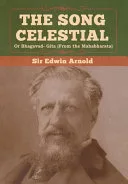
The Song Celestial Or Bhagavad- Gita (From the Mahabharata)
 72
72

The Song Celestial Or Bhagavad- Gita (From the Mahabharata)
Arnold’s "The Song Celestial" is less a scholarly rendering and more a poetic invocation of the Bhagavad Gita’s central dialogue. Its strength lies in its lyrical quality, making the philosophical exchanges between Arjuna and Krishna accessible to a Victorian English sensibility. Arnold masterfully captures the emotional weight of Arjuna’s dilemma on the battlefield of Kurukshetra, particularly in passages where Krishna urges Arjuna to fulfill his warrior’s duty. However, the translation’s primary limitation is its inherent subjectivity; it is filtered through Arnold’s own poetic and perhaps Christian-influenced lens, which at times may smooth over the starker, more alien aspects of the original Sanskrit. The emphasis on Krishna’s divine nature, while central, might feel overly romanticized to a scholar seeking strict textual fidelity. Nevertheless, for its time, it was a significant literary bridge, offering a compelling, albeit interpretative, rendition of a profound spiritual text.
📝 Description
72
Sir Edwin Arnold's 1885 translation brought the Bhagavad Gita to a wide English-speaking audience.
Sir Edwin Arnold, a poet and journalist active in the late 19th century, produced an English translation of the Bhagavad Gita in 1885. This volume is not a strictly literal rendering of the Sanskrit scripture but rather an artistic interpretation. Arnold aimed to capture the spiritual and philosophical essence of the dialogue between Prince Arjuna and Lord Krishna, set on the battlefield of Kurukshetra.
Arnold's version uses accessible blank verse, making the text approachable for readers unfamiliar with the original language. It speaks to those interested in the philosophical aspects of Indic traditions, particularly the concepts of duty (dharma), devotion (bhakti), and knowledge (jnana). The translation offers a poetic, Western literary presentation of these ideas. It is also of interest to students of comparative religion and philosophy, as well as individuals seeking spiritual texts for personal reflection. The work provides a historical view of how Eastern thought was transmitted to the West during a period of growing interest.
The Bhagavad Gita, as presented by Arnold, examines the conflict between spiritual obligations and personal desires. It discusses the nature of the self (Atman) and the divine (Brahman), along with the means to achieve liberation. A central idea is the performance of actions without attachment to their outcomes.
Arnold's translation appeared during the late 19th century, a time when Western interest in Eastern religions and philosophies was increasing. Figures like Helena Blavatsky and the Theosophical Society were also instrumental in popularizing Indian thought. Arnold, already known for his poetic treatment of Eastern subjects like his 1879 work "The Light of Asia" on the Buddha, approached the Bhagavad Gita as both a literary and a spiritual text. His translation helped introduce this core Hindu scripture to a broader English-speaking readership, shaping subsequent Western discussions of Indian philosophy.
💡 Why Read This Book?
• Understand the concept of Dharma through Arjuna's struggle, learning how duty can be a spiritual path, as detailed in the text's initial dialogues. • Explore Bhakti Yoga, the path of devotion, by examining Krishna’s divine pronouncements and the emphasis placed on surrender to the divine will. • Grasp the essence of Karma Yoga, the principle of selfless action, by analyzing the teachings on performing actions without attachment to their outcomes, a core tenet discussed throughout the Gita.
⭐ Reader Reviews
Honest opinions from readers who have explored this book.
❓ Frequently Asked Questions
When was Sir Edwin Arnold's translation of the Bhagavad Gita first published?
Sir Edwin Arnold's poetic translation, "The Song Celestial," was first published in 1885, bringing the ancient Indian scripture to a wider Western audience.
What is the main subject of the Bhagavad Gita?
The Bhagavad Gita is a dialogue between Prince Arjuna and his charioteer Lord Krishna, discussing dharma (duty), karma (action), devotion, and the nature of the soul.
Is Arnold's translation considered a literal or poetic rendition?
Arnold's translation is primarily a poetic interpretation, aiming to capture the spirit and philosophical depth in accessible English verse rather than a strictly literal rendering.
What philosophical paths are discussed in the Bhagavad Gita?
The text explores major paths to spiritual liberation, including Karma Yoga (path of action), Bhakti Yoga (path of devotion), and Jnana Yoga (path of knowledge).
Who was Sir Edwin Arnold and what else is he known for?
Sir Edwin Arnold was an English poet and journalist, best known for his epic poem 'The Light of Asia' (1879), which depicted the life of Buddha.
Where does the Bhagavad Gita originate from?
The Bhagavad Gita is a section of the ancient Indian epic, the Mahabharata, one of the two major Sanskrit epics of ancient India.
🔮 Key Themes & Symbolism
Dharma and Duty
The translation emphasizes Arjuna's crisis of conscience as he faces his kin on the battlefield, highlighting the conflict between personal relationships and warrior duty. Krishna's counsel on fulfilling one's prescribed dharma, or righteous duty, without attachment to personal desires or outcomes, forms a central pillar of the text. This concept is crucial for understanding the Gita's ethical framework, urging action aligned with one's social and spiritual responsibilities.
Paths to Liberation
Arnold's rendition clearly delineates the three primary yogic paths: Karma Yoga, the path of selfless action; Bhakti Yoga, the path of loving devotion to the divine; and Jnana Yoga, the path of wisdom and self-knowledge. The text presents these not as mutually exclusive but as interconnected routes toward spiritual realization and union with the divine, offering a comprehensive approach to spiritual practice.
The Nature of the Divine
Krishna's discourse reveals his divine nature, often described in majestic and awe-inspiring terms, particularly in his universal form. Arnold's verse conveys the concept of a personal, supreme deity who is both immanent and transcendent. This understanding of the divine as a focal point for devotion is central to Bhakti Yoga and offers a devotional aspect to the philosophical inquiry into the nature of reality.
The Eternal Soul
A core tenet explored is the immortality of the soul (Atman). Krishna reassures Arjuna that the soul is eternal and indestructible, merely transmigrating from one body to another after death. This understanding is presented as a key to overcoming fear of death and attachment to the material world, facilitating a focus on spiritual progress and detachment.
💬 Memorable Quotes
Direct passages from the work, attributed to the author.
“Act, but leave the fruit to me.”
— This is a direct expression of Karma Yoga, advocating for performing one's duties with dedication and skill, while relinquishing any personal claim or anxiety over the results of those actions.
“For the soul, there is neither birth nor death.”
— This represents the doctrine of the eternal nature of the Atman, emphasizing its unchanging essence beyond the cycles of physical existence and dissolution.
“Thou hast the right to work, but none to the fruits of work.”
— This reiterates the principle of detached action, asserting that one's obligation lies in the performance of duty, not in the attainment or avoidance of specific outcomes.
💡 Key Ideas
Editorial paraphrase of the work's core concepts — not direct quotes.
If you know not, ask; enlighten me.
This line captures Arjuna's intellectual and spiritual humility, his willingness to admit ignorance and seek guidance from Krishna, a posture essential for receiving profound wisdom.
The soul that sinneth, it shall surely die.
This paraphrase reflects the Gita's teaching on accountability and the consequences of actions, framed within the context of the soul's journey and karmic repercussions.
🌙 Esoteric Significance
Tradition
Arnold's translation situates the Bhagavad Gita within the broader Hindu philosophical tradition, particularly the Vedanta school. Esoterically, it is seen as a manual for spiritual liberation (moksha) applicable to all paths of action and devotion. Its emphasis on inner transformation, the nature of consciousness, and the divine presence aligns with perennialist philosophies and has been adopted by various modern esoteric orders seeking to integrate Eastern wisdom into their systems.
Symbolism
Key symbols include the battlefield of Kurukshetra, representing the human psyche engaged in the internal struggle between higher and lower impulses. Lord Krishna, as the divine charioteer and guide, symbolizes the indwelling divine or Higher Self. Arjuna's chariot, pulled by senses and controlled by the mind, is a metaphor for the individual soul working through the material world under the guidance of wisdom.
Modern Relevance
Contemporary spiritual teachers and practitioners across various disciplines, from yoga and meditation to comparative mysticism, continue to draw upon the Bhagavad Gita. Its principles of mindful action (Karma Yoga) and devotion (Bhakti Yoga) remain highly relevant for individuals seeking to live a purposeful life in the modern world, offering frameworks for ethical conduct and spiritual grounding amidst complexity.
👥 Who Should Read This Book
• Students of comparative religion and philosophy seeking accessible poetic translations of foundational Eastern texts. • Individuals exploring the concepts of duty, selfless action, and devotion as spiritual practices. • Western readers interested in the historical reception and interpretation of Indian scriptures in the late 19th century.
📜 Historical Context
Sir Edwin Arnold's "The Song Celestial," first published in 1885, arrived during a period of intense Western fascination with Eastern spirituality, largely fueled by the rise of movements like Theosophy. Arnold, already renowned for "The Light of Asia" (1879), approached the Bhagavad Gita not as a scholar but as a poet, aiming for an evocative English rendition. This era saw figures like Swami Vivekananda introducing Vedanta philosophy to Western audiences at the Parliament of Religions in Chicago in 1893. Arnold's translation provided an accessible, lyrical entry point into Hindu thought for a public less familiar with Sanskrit. While not a philologically precise text, its literary merit made the Gita's core teachings on dharma and devotion widely known, influencing spiritual seekers and writers across the Anglophone world.
📔 Journal Prompts
Arjuna's chariot as a metaphor for the self.
The concept of Dharma and its personal application.
Krishna's divine manifestations and their significance.
Reflecting on the fruits of one's own actions.
The role of devotion in spiritual progress.
🗂️ Glossary
Dharma
One's duty, righteousness, or moral law. In the Gita, it refers to the inherent nature and prescribed actions based on one's social role and spiritual path.
Karma
Action, work, or deed. The principle of cause and effect, where actions in this life influence future lives. Karma Yoga is the path of selfless action.
Yoga
Discipline or union. A system of spiritual, mental, and physical practices aimed at achieving liberation or enlightenment. The Gita outlines several types of yoga.
Atman
The individual soul or self. In Hindu philosophy, the Atman is considered eternal, unchanging, and ultimately identical with Brahman.
Bhakti
Devotion or love towards a deity. Bhakti Yoga is the path of intense, loving devotion as a means to spiritual union.
Jnana
Knowledge or wisdom. Jnana Yoga is the path of intellectual understanding and direct perception of reality, leading to liberation.
Moksha
Liberation or release from the cycle of birth, death, and rebirth (samsara). The ultimate goal of spiritual practice in Hinduism.