Heir of Fire
 75
75

Heir of Fire


Silas Hawthorne (Hermetic Studies Editor) — 'Heir of Fire' masterfully transcends typical YA fantasy, offering a rich exploration of self-mastery and ancestral burdens. Maas crafts a narrative steeped in the archetypal struggle for individuation, mirroring esoteric principles of confronting the shadow self. Celaena's journey is a potent allegory for alchemical transformation, where trials forge inner resilience. The novel's strength lies in its nuanced portrayal of magic not just as power, but as an intrinsic part of heritage and identity. It will resonate deeply with readers drawn to the mystical underpinnings of personal growth and the profound impact of one's lineage. A truly compelling read for those seeking depth beyond the surface.
📝 Description
75
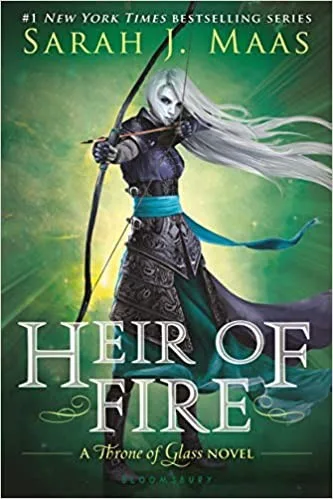
In 'Heir of Fire,' Celaena Sardothien confronts her heritage and a land of hidden power.
Celaena Sardothien seeks refuge in a land rich with ancient secrets and latent magic in 'Heir of Fire,' the third novel in Sarah J. Maas's series. She carries the weight of past losses and faces trials that force her to examine the hidden truths of her ancestry. This heritage is key to her future and potentially to the world around her. The story uses symbolic imagery to look at how characters find themselves, deal with internal struggles against external threats, and learn to control their own abilities. Readers enter a world where the fight between good and evil is constant, and self-understanding is as dangerous as any battle. It appeals to those drawn to mystery, old magic, and the strength that comes from accepting one's true self. The book touches on ideas about who we are, the influence of our ancestors, and the bravery needed to overcome hardship.
This novel engages with themes often found in esoteric literature, particularly concerning the discovery and development of latent magical abilities. It examines the idea of a hidden lineage and a preordained destiny that characters must actively embrace or reject. The narrative's focus on confronting inner demons and external darkness, alongside the arduous path to self-mastery, resonates with traditions that explore spiritual growth and the integration of one's shadow self. The struggle to awaken and control one's power mirrors concepts of initiation and the unfolding of higher consciousness within certain magical frameworks.
💡 Why Read This Book?
For seekers of profound self-discovery, 'Heir of Fire' offers a compelling narrative of confronting inner shadows and embracing a hidden, potent heritage. Ideal for readers who appreciate intricate world-building, the mystical dance of destiny, and the transformative power of facing one's deepest truths. This book speaks to the soul of those who believe in the magic that resides within, waiting to be awakened.
⭐ Reader Reviews
Honest opinions from readers who have explored this book.
❓ Frequently Asked Questions
What esoteric concepts are explored in 'Heir of Fire'?
The novel delves into themes of confronting one's shadow self, the weight of ancestral power, and the alchemical process of transformation through hardship. It touches upon the idea of destiny intertwined with hidden lineage and the internal struggle for self-mastery.
Is this book suitable for beginners interested in esoteric themes?
Yes, 'Heir of Fire' presents esoteric concepts within an accessible fantasy framework. While rich in symbolism, the narrative remains engaging for those new to metaphysical exploration, acting as an excellent gateway into deeper understanding.
How does the magic system in the book relate to real-world occult practices?
While fictional, the magic system draws on archetypal energies and the concept of innate power tied to lineage, echoing principles found in various esoteric traditions that emphasize the inherent magical potential within individuals and their ancestry.
What is the philosophical significance of Celaena's journey?
Celaena's journey is a profound exploration of identity, resilience, and the courage required to face one's past and embrace a daunting future. It highlights the philosophical notion that true strength is forged not just in outward battles, but in the internal conquest of fear and self-doubt.
Does the book offer practical insights for personal growth?
Indirectly, yes. By portraying Celaena's struggle and eventual growth, the book inspires readers to consider their own challenges, the importance of confronting personal demons, and the power of embracing one's unique strengths and heritage.
🔮 Key Themes & Symbolism
The Shadow Self and Inner Transformation
The narrative poignantly explores the concept of the 'shadow self,' the repository of repressed fears, traumas, and darker impulses. Celaena's journey is a descent into this inner darkness, a necessary confrontation with the aspects of herself she has long denied or suppressed. This process mirrors alchemical principles of dissolution and reintegration, where acknowledging and integrating these hidden parts of the psyche is crucial for true growth and the unlocking of latent power. The novel suggests that authentic strength and mastery are achieved not by eradicating the shadow, but by understanding and harmonizing with it, transforming its destructive potential into a source of clear insights and resilience.
Ancestral Echoes and Karmic Inheritance
A central pillar of 'Heir of Fire' is the exploration of inherited power and the 'karmic' weight of one's lineage. Celaena grapples with a heritage that is both a source of immense power and a heavy burden, hinting at past actions and destinies that echo through generations. This theme speaks to esoteric traditions that speak of ancestral spirits, soul contracts, and the influence of past lives on the present. The novel posits that understanding and accepting one's ancestry, with all its light and shadow, is integral to defining one's own path and fulfilling one's unique destiny. It's a powerful reminder that we are connected to those who came before us, and their legacies shape our potential.
The Crucible of Trials and Forging of Will
The novel presents adversity not merely as an obstacle, but as a sacred crucible designed to refine the spirit and forge an unbreakable will. Celaena endures immense hardship, both internal and external, each trial serving as a test of her resolve and a catalyst for her spiritual and magical development. This aligns with the esoteric concept of the 'hero's journey,' where suffering and challenges are essential rites of passage that lead to enlightenment and empowerment. The book emphasizes that true strength is not innate but cultivated through perseverance, the willingness to face pain, and the unwavering determination to rise above overwhelming circumstances, ultimately shaping one's destiny through sheer force of spirit.
💬 Memorable Quotes
Direct passages from the work, attributed to the author.
“The greatest truths are often whispered in the heart of a storm.”
— This aphorism highlights the idea that profound self-knowledge and spiritual insights are most often revealed during times of intense personal turmoil and challenge, when the usual distractions of life are stripped away.
“Her heritage was a range woven with threads of starlight and shadow.”
— This metaphor beautifully captures the duality of Celaena's lineage, suggesting it is imbued with both celestial, benevolent power and darker, more formidable forces, emphasizing the complex and often contradictory nature of destiny.
“To face the demons within is the truest form of magic.”
— This profound statement elevates the internal struggle for self-mastery and psychological integration to the highest form of arcane art, suggesting that conquering one's inner darkness is the ultimate act of power and transformation.
💡 Key Ideas
Editorial paraphrase of the work's core concepts — not direct quotes.
She was a creature of darkness and fire, a storm waiting to break.
This quote evokes the powerful, untamed magical essence within Celaena, suggesting a latent force that is both destructive and vital, mirroring the primal elements of nature and the potential for immense power residing in the less-obvious layers of the soul.
The future is not written, but forged in the fires of the present.
This quote underscores the agency of the individual in shaping their destiny. It emphasizes that while ancestry and fate may play a role, it is through present actions, choices, and resilience that one truly molds their future path.
🌙 Esoteric Significance
Tradition
The novel draws heavily from Jungian archetypes, particularly the Shadow, the Hero, and the Great Mother (manifested in powerful maternal figures and the concept of lineage). It also echoes Gnostic ideas of hidden knowledge, the soul's journey, and the struggle against oppressive forces. The alchemical concept of transformation through fire and ordeal is a strong undercurrent, suggesting that suffering is a necessary catalyst for spiritual refinement and the unlocking of one's true potential.
Symbolism
Key symbols include fire, representing purification, passion, and destruction; darkness, symbolizing the unknown, the subconscious, and latent power; and the concept of lineage as a living force that carries both blessings and curses. The journey to a new land represents a descent into the subconscious or an exploration of uncharted territories of the self. The monstrous forces gathering on the horizon symbolize external societal or cosmic challenges that mirror internal struggles, requiring the integration of one's full power to overcome.
Modern Relevance
In an age often marked by external pressures and internal anxieties, 'Heir of Fire' offers a compelling narrative of confronting personal demons and embracing one's unique power. Its exploration of heritage and identity speaks to contemporary discussions about ancestry and belonging. The novel's emphasis on resilience, self-discovery, and the arduous but rewarding path of transformation provides a powerful, albeit fictional, framework for individuals seeking to navigate their own life's challenges and unlock their inherent potential.
👥 Who Should Read This Book
This book is a body of work for a diverse readership. **Beginners** to esoteric themes will find an accessible and engaging entry point through its compelling fantasy narrative and relatable protagonist. **Scholars** of mythology and psychology will appreciate the nuanced exploration of archetypes and the shadow self. **Seekers** of spiritual growth and self-discovery will be inspired by Celaena's journey of confronting her inner darkness and embracing her true power. **Practitioners** of esoteric arts may find resonance in the novel's portrayal of latent magical potential, ancestral influence, and the transformative power of trials and self-mastery.
📜 Historical Context
While 'Heir of Fire' is a contemporary fantasy work, its themes resonate with enduring archetypes and philosophical inquiries that have echoed through human history. The exploration of destiny, the burden of lineage, and the struggle against inner and outer darkness find parallels in ancient myths, epic poems, and religious texts across various cultures. The concept of a chosen hero facing insurmountable odds and discovering hidden power is a core part of heroic narratives from the epics of Homer to Arthurian legends. Furthermore, the psychological depth, particularly the confrontation with the 'shadow self,' aligns with the development of depth psychology in the 20th century, influenced by thinkers like Carl Jung. The novel taps into a universal human fascination with the unknown, the mystical, and the potential for extraordinary transformation that has been a constant throughout our intellectual and spiritual evolution.
📔 Journal Prompts
Reflect on a time you had to confront a 'shadow self' or a hidden aspect of your personality. What was the experience like, and what did you learn?
Consider your own heritage. What 'threads of starlight and shadow' do you feel are woven into your lineage?
Describe a personal 'storm' you have weathered. How did this experience shape your inner strength and what truths did it reveal?
If your destiny were a range, what elements would you actively choose to tie into it through your present actions?
What does 'true magic' mean to you, and how can the process of confronting your own inner demons be considered a form of it?
🗂️ Glossary
Archetype
In esoteric psychology, a universal, archaic pattern of thought or imagery derived from the collective unconscious and capable of deeply influencing behavior. Examples include the Hero, the Shadow, and the Great Mother.
Shadow Self
The unconscious, repressed aspects of the personality, often perceived as negative or undesirable, but which hold vital energy and potential for integration and growth when acknowledged.
Alchemical Transformation
A symbolic process of purification, refinement, and integration of elements (often representing psychological states) to achieve a higher, more perfect form. It involves confronting darkness and undergoing trials.
Karmic Inheritance
The concept that one's lineage or past actions carry energetic imprints or consequences that influence present circumstances and potential, a theme explored in various spiritual traditions.
Individuation
A psychological term, particularly associated with Carl Jung, referring to the process of becoming a whole, integrated, and distinct individual by reconciling conscious and unconscious elements of the psyche.
This book appears in 2 collections
🔮 Readers Also Liked
Browse all →





More by Sarah J. Maas
All books →




From the “Ceremonial Magic” Collection
View all →






More Free Magic & Ritual Books
View all →