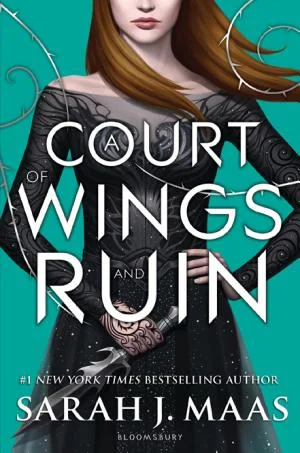
A Court of Wings and Ruin
 74
74

A Court of Wings and Ruin
Sarah J. Maas’s "A Court of Wings and Ruin" (2017) escalates the conflict to a war footing, a necessary evolution after the more intimate struggles of earlier installments. The sheer scope of the narrative, depicting the vast mobilization against Hybern's forces, is ambitious. Feyre’s dual role as infiltrator and High Lady is a compelling tightrope walk, though at times the sheer number of characters and subplots can feel overwhelming, diluting the impact of individual moments. A particular strength lies in the depiction of the uneasy alliances formed between previously warring Fae factions, showcasing the pragmatic, often brutal, nature of survival. However, the resolution of certain long-standing character arcs feels somewhat accelerated to accommodate the grand finale. Ultimately, the novel delivers a climactic, albeit dense, chapter in the ongoing saga of Prythian.
📝 Description
74
Published in 2017, A Court of Wings and Ruin details the Fae War's escalation.
Sarah J. Maas's 2017 novel, A Court of Wings and Ruin, centers on Feyre Archeron's mission into the Spring Court to gather intelligence against King Hybern's approaching army. Her infiltration is a dangerous act, requiring her to navigate complex political alliances and personal betrayals. The narrative escalates the stakes for Prythian, a land facing imminent destruction.
The war forces characters to confront the true cost of leadership and the consequences of long held societal divisions. Alliances are strained, and significant sacrifices become necessary for survival. The book widens its focus beyond the Spring Court to include the broader political structures of Prythian.
Hybern's threat prompts unlikely coalitions between the different Fae courts and even human populations. This demonstrates how interconnected these territories are and their shared vulnerability. The story examines themes of sacrifice, finding a sense of belonging, and redefining family.
This novel continues the tradition of modern fantasy that draws on fae folklore and romantic entanglement. It expands on the established lore of a magical world, examining power structures and the impact of conflict on individuals and societies. The narrative explores themes of destiny, chosen family, and the balance of power within a complex supernatural hierarchy.
💡 Why Read This Book?
• Understand the strategic necessity of infiltration and political maneuvering through Feyre's mission within the Spring Court, a critical element for assessing enemy intentions. • Experience the complex ethical dilemmas faced during widespread conflict, particularly the difficult choices presented by the looming threat of King Hybern's invasion. • Explore the intricate social and political structures of Prythian's Fae courts, witnessing how alliances shift and societal norms are challenged under extreme pressure.
⭐ Reader Reviews
Honest opinions from readers who have explored this book.
❓ Frequently Asked Questions
When was A Court of Wings and Ruin first published?
Sarah J. Maas's "A Court of Wings and Ruin" was first published on May 2, 2017, marking a significant point in the series' narrative progression.
What is the primary conflict in A Court of Wings and Ruin?
The primary conflict is the impending war against King Hybern, who threatens to conquer Prythian, forcing the Fae courts to unite or face destruction.
Who is Tamlin in A Court of Wings and Ruin?
Tamlin is the High Lord of the Spring Court. Feyre returns to his court in this novel to gather intelligence, navigating a complex and often hostile environment.
What role does Feyre play in the war effort?
Feyre plays a dual role: she infiltrates the Spring Court to gather information and acts as the High Lady of the Night Court, rallying allies and strategizing for the war.
Does A Court of Wings and Ruin involve political intrigue?
Yes, the novel is heavily laden with political intrigue as Feyre must deceive Tamlin and his court, while broader alliances are forged and tested among the Fae lords.
What are the main themes explored in the book?
Key themes include sacrifice, the search for home, the burden of leadership, and the nature of loyalty and betrayal amidst a devastating war.
🔮 Key Themes & Symbolism
The Weight of Command
The narrative grapples with the immense pressure of leadership, particularly for Feyre as High Lady of the Night Court. She must make agonizing decisions that affect not only her personal relationships but the fate of entire Fae courts and human territories. This theme explores the psychological toll of responsibility and the sacrifices demanded when one is tasked with protecting a world on the precipice of destruction. The interplay between her personal desires and her public duty forms a significant part of her character arc in this installment.
Inter-Court Diplomacy and Conflict
"A Court of Wings and Ruin" expands the focus beyond singular court dynamics to encompass the complex, often fractious, relationships between all the Fae courts. The existential threat posed by King Hybern necessitates unprecedented alliances, forcing ancient rivalries and simmering tensions to the forefront. The work examines how external pressures can forge fragile bonds and reveal underlying political strategies, highlighting the precarious balance of power within Prythian and the desperate measures taken to preserve it.
Redefining Home and Belonging
The concept of 'home' is central, as characters are displaced, forced to fight for territories they once considered safe, or question where their true allegiance lies. Feyre's own journey is marked by a struggle to reconcile her past with her present role, questioning whether her original home or her newly forged bonds represent her true belonging. This theme is explored through the sacrifices made for a sense of place and the emotional cost of war on individuals seeking stability.
The Nature of Sacrifice
Sacrifice is a pervasive motif, manifesting in myriad forms: personal relationships, political allegiances, and the ultimate sacrifice of life. Characters confront situations where they must give up cherished ideals or loved ones for the greater good. The narrative questions the limits of such sacrifice and its true cost, examining whether the ends justify the means when a world is at stake. The consequences of these sacrifices ripple through the characters' lives long after the immediate crisis.
💬 Memorable Quotes
Direct passages from the work, attributed to the author.
“The greatest power was the power to protect.”
— This interpretation of a thematic sentiment suggests that true strength lies not in dominance but in the capacity to defend and safeguard others, a guiding principle for Feyre and her allies.
“Every choice had a consequence. Every life had a price.”
— This reflects the grim reality of war and difficult decisions, emphasizing that actions carry weight and that survival often comes at a profound cost, a recurring motif in the narrative.
💡 Key Ideas
Editorial paraphrase of the work's core concepts — not direct quotes.
Feyre had been a prisoner in the Spring Court. Now, she was its spy.
This line captures Feyre's perilous mission in the Spring Court, highlighting her shift from captive to active operative. It underscores the dangerous deception she must employ and the high stakes of her infiltration.
War was coming. And it would be terrible.
A stark foreshadowing of the novel's central conflict, this quote emphasizes the unavoidable and devastating nature of the war against King Hybern, setting a tone of grim anticipation.
She would not be a pawn. She would be the hand that moved the pieces.
This quote reflects Feyre's assertion of agency and her determination to control her own destiny and influence the course of events, even in the face of overwhelming odds.
🌙 Esoteric Significance
Tradition
While not explicitly grounded in a single esoteric tradition, "A Court of Wings and Ruin" draws heavily from archetypal narratives found across mythologies and folklore, which often inform esoteric thought. The concept of courts, High Lords, and ancient pacts echoes themes present in Gnostic cosmology's hierarchical structures and Hermetic principles of correspondence. The series explores the inherent duality of power and corruption, a common concern in many mystical systems that examine the balance between opposing forces.
Symbolism
The Fae courts themselves can be interpreted as symbolic representations of elemental forces or distinct psychological states, a concept familiar in Neoplatonic thought and various pagan traditions. Feyre's transformation and mastery over her powers often mirror alchemical processes of refinement and integration. The encroaching darkness embodied by King Hybern serves as a primal symbol of chaos or the shadow self, representing forces that threaten to unravel established order and require profound internal and external struggle to overcome.
Modern Relevance
Contemporary fantasy literature, particularly within the romantasy subgenre, frequently borrows from Maas's playbook of intricate world-building, powerful female protagonists, and interwoven romantic and political plots. Thinkers exploring modern myth-making and archetypal psychology might find the series a valuable case study in how ancient narrative structures are reinterpreted for contemporary audiences. The exploration of trauma, healing, and finding strength in community also appeals to current discussions in popular psychology and self-help spheres.
👥 Who Should Read This Book
• Readers interested in epic fantasy narratives that blend high-stakes warfare with intricate political maneuvering and significant romantic subplots. • Fans of Sarah J. Maas's previous works in the A Court of Thorns and Roses series seeking the continuation of Feyre's story and the unfolding of the war against Hybern. • Individuals who enjoy character-driven stories where protagonists face immense personal growth, make difficult sacrifices, and forge complex alliances under duress.
📜 Historical Context
Published in 2017, "A Court of Wings and Ruin" emerged during a period of immense popularity for adult fantasy, particularly series driven by strong romantic elements and intricate world-building. Maas's work capitalized on a trend that saw authors like Leigh Bardugo and V.E. Schwab gaining significant traction, blending epic scope with character-driven narratives. The novel's reception was largely positive, aligning with the established fanbase's expectations for high-stakes conflict and romantic tension. While not directly engaging with specific philosophical movements, the series taps into a broader cultural interest in escapism and complex moral landscapes, offering a counterpoint to more grimdark fantasy trends. Its success positioned it alongside other major YA/NA fantasy series that dominated bestseller lists throughout the 2010s.
📔 Journal Prompts
Feyre's dual role as spy and High Lady, and the ethical tightrope she walks.
The strategic necessity of forging alliances between historically antagonistic Fae courts.
The personal cost of war and the definition of 'home' for displaced characters.
The symbolic significance of King Hybern as an encroaching force of destruction.
Tamlin's evolving position and motivations within the Spring Court's political landscape.
🗂️ Glossary
High Lord
The supreme ruler of one of the seven Fae courts in Prythian. High Lords wield significant power and are responsible for the well-being and governance of their respective territories and peoples.
Spring Court
One of the seven Fae courts, ruled by High Lord Tamlin. It is depicted as a field of beauty and art, but also one with complex political loyalties and hidden dangers.
Night Court
The court ruled by High Lord Rhysand, where Feyre is High Lady. It is often portrayed as a more pragmatic and dangerous realm, yet one that values fierce loyalty and protection.
King Hybern
The primary antagonist of the novel, a ruthless and ancient king from across the sea who seeks to conquer Prythian and enslave its inhabitants.
Prythian
The magical land inhabited by Fae, comprising seven distinct courts. It is the primary setting for the A Court of Thorns and Roses series.
Fae
A race of immortal, magical beings who inhabit Prythian. They are often depicted with distinct courts, powers, and complex social structures.
Attor
A dangerous creature or type of Fae, often associated with predatory behavior and serving as a threat within the narrative.
This book appears in 1 collection
🔮 Readers Also Liked
Browse all →







From the “Witchcraft” Collection
View all →





More Free Occult Philosophy Books
View all →