House of Earth and Blood

 79
79

House of Earth and Blood
Sarah J. Maas’s House of Earth and Blood presents a vibrant, if occasionally overstuffed, entry into the adult fantasy landscape. The initial premise, centering on Bryce Quinlan’s awakening after profound loss, immediately grounds the fantastical elements in relatable human emotion. Maas excels at crafting compelling romantic subplots that feel earned rather than tacked on, particularly the evolving dynamic between Bryce and Hunt Athalar. However, the sheer density of the world-building, with its introduction of numerous species, political factions, and magical systems, can sometimes feel overwhelming, threatening to overshadow the emotional core. A standout element is the depiction of Crescent City itself, a character in its own right, pulsing with both danger and allure.
Ultimately, House of Earth and Blood delivers a potent mix of action and emotional depth, marking a strong, albeit ambitious, start to its series.
📝 Description
79
Sarah J. Maas's 2019 novel, House of Earth and Blood, begins a new saga in urban fantasy.
House of Earth and Blood follows Bryce Quinlan after a personal tragedy propels her into a murder investigation. This inquiry draws her into the hidden powers governing her world, a place where ancient beings and humans coexist. The story unfolds in Crescent City, a place where magic and technology intertwine.
The novel is for readers who appreciate detailed world-building and the dynamics of complex relationships. It combines supernatural elements with a modern, urban backdrop. Themes of overcoming loss, enduring hardship, and fighting against oppressive powers are central to the narrative. Maas creates a world that feels both familiar and alien, drawing readers into its conflicts and mysteries.
Published in 2019, the book arrived as adult urban fantasy saw significant growth. It built on existing trends that merged magical realism with mature, grounded storytelling. The market was ready for intricate mythologies and characters with moral ambiguities.
The book draws upon occult and supernatural traditions, featuring a hidden dimension populated by various immortal species like Fae, shifters, and angels, each with their own hierarchies and histories. The narrative explores themes of ancient pacts, the consequences of magical power, and the influence of these older beings on the mortal world. It positions these supernatural elements within a contemporary urban setting, creating a modern mythology that touches on ideas of destiny and the struggle against dark forces.
💡 Why Read This Book?
• Understand the foundational mythology of Crescent City, including the distinct roles of angels and demons as introduced in the novel's initial chapters. • Experience the intricate power dynamics and hidden agendas within the city’s various supernatural factions, such as the ruling Asteri, as depicted throughout the book. • Explore the complex relationship between Bryce and Hunt Athalar, examining how their initial animosity evolves against the backdrop of a shared investigation into a series of murders.
⭐ Reader Reviews
Honest opinions from readers who have explored this book.
❓ Frequently Asked Questions
What is the primary genre of House of Earth and Blood?
House of Earth and Blood is primarily an adult urban fantasy novel, first published in 2019. It blends elements of the supernatural, romance, and mystery within a contemporary, albeit fantastical, city setting.
Who are the main protagonists in House of Earth and Blood?
The main protagonists are Bryce Quinlan, a half-Fae, half-human woman whose life is shattered by personal tragedy, and Hunt Athalar, a powerful Archangel enslaved to serve the city’s ruling elite.
What are some of the key supernatural species featured in the book?
The book features a variety of supernatural species, including Fae, angels, demons, shifters, witches, and mermaids. The city of Crescent City is home to many such beings, operating under the rule of the Asteri.
What is the significance of Crescent City in the novel?
Crescent City serves as the primary setting and a character in itself. It's a metropolis where supernatural beings live alongside humans, governed by ancient and often oppressive entities known as the Asteri.
When was House of Earth and Blood first published?
House of Earth and Blood was first published in 2019, marking the beginning of Sarah J. Maas's 'Crescent City' series.
Does House of Earth and Blood have connections to other Sarah J. Maas series?
While set in a new world, House of Earth and Blood does contain subtle connections and Easter eggs that link it to Maas's previous series, particularly the 'A Court of Thorns and Roses' universe, often revealed later in the series.
🔮 Key Themes & Symbolism
Trauma and Resilience
The narrative deeply explores the impact of profound personal loss and trauma on its characters, particularly Bryce Quinlan following the death of her best friend. Her journey becomes one of navigating grief, seeking justice, and ultimately finding strength and agency in the face of overwhelming adversity. This theme is central to her character arc as she moves from a state of despair to one of fierce determination, challenging the established order and her own limitations.
The Nature of Power and Oppression
House of Earth and Blood scrutinizes the corrupting influence of power, embodied by the ruling Asteri in Crescent City. This ancient race maintains a rigid hierarchy, suppressing lower species and enforcing their will through fear and control. The book examines how power dynamics shape society, the ethical implications of absolute authority, and the constant struggle of the oppressed to reclaim their autonomy and fight for freedom against an entrenched system.
Interconnectedness of Worlds
The novel posits a universe where multiple realms and species coexist, with Crescent City acting as a nexus. This interconnectedness is not merely geographical but also spiritual and magical. Ancient beings, celestial entities, and mortal races all interact, their fates intertwined. The book explores the consequences of this proximity, the tensions that arise from difference, and the potential for both conflict and cooperation between disparate groups.
Forbidden Love and Loyalty
Central to the plot is the burgeoning romance between Bryce Quinlan and Hunt Athalar, an angel bound to serve the very powers that oppress her people. Their relationship develops amidst danger and secrecy, challenging societal norms and personal loyalties. This theme highlights the power of connection and love to transcend boundaries, offering a source of hope and rebellion against a bleak and controlled existence.
💬 Memorable Quotes
Direct passages from the work, attributed to the author.
“The world was a dangerous, fragile place, and she was its most fragile inhabitant.”
— This statement captures Bryce's initial feelings of vulnerability and despair after experiencing significant loss, setting the stage for her eventual transformation and fight for survival.
“Justice was a luxury, and mercy was a forgotten language.”
— This highlights the grim reality of Crescent City under the Asteri's rule, where fairness and compassion are scarce commodities, emphasizing the pervasive corruption and lack of true justice.
“There were no gods, only kings and queens and the slaves they kept.”
— This interpretation underscores the secular and hierarchical nature of power in the novel's world, where divine authority is absent, replaced by the dominance of ruling factions and their subjugated populations.
“She was going to find him. She was going to destroy him. And she was going to get justice.”
— This represents Bryce's fierce resolve and her commitment to seeking retribution for the wrongs committed against her and her loved ones, signaling her transition into an active agent of change.
💡 Key Ideas
Editorial paraphrase of the work's core concepts — not direct quotes.
She was the darkness and the light, the sinner and the saint.
This quote speaks to the many-sided nature of characters within the story, suggesting that individuals are not easily categorized and often contain contradictory aspects, reflecting the moral complexity of the world.
🌙 Esoteric Significance
Tradition
While not strictly adhering to a single esoteric lineage, *House of Earth and Blood* draws heavily from Gnostic and Hermetic concepts concerning dualistic realities, fallen angelic hierarchies, and the struggle for gnosis (knowledge) against an oppressive, materialist order. The ruling Asteri can be seen as analogous to the Demiurge, a lesser, flawed creator who traps souls in a flawed creation. The narrative follows a path of awakening and rebellion, reminiscent of Gnostic narratives where the divine spark within seeks liberation from material bondage.
Symbolism
The novel employs potent symbols, notably the 'Ouroboros,' representing cycles of life, death, and rebirth, and the inherent interconnectedness of all things, a concept found in Hermeticism. Angels and demons are not merely archetypes but literal beings with complex social structures and motivations, representing primal forces and the eternal conflict between order and chaos, or divine will and subjugated existence. The city itself, Crescent City, functions as a symbolic microcosm of the universe, filled with hidden layers and ancient powers.
Modern Relevance
Contemporary readers and writers exploring themes of cosmic horror, spiritual rebellion, and complex power structures within fantasy find resonance in Maas's work. Thinkers and practitioners interested in modern interpretations of Gnostic cosmology, the Luciferian archetype as a symbol of rebellion, or the exploration of divine and infernal hierarchies in fictional contexts often cite or draw inspiration from the detailed world-building and character arcs presented in the 'Crescent City' series.
👥 Who Should Read This Book
• Fans of adult urban fantasy seeking intricate world-building and mature themes, particularly those who enjoyed Maas's previous works. • Readers interested in exploring complex mythological structures, including angels, demons, and Fae, and their interactions within a modern setting. • Those who appreciate character-driven narratives with strong romantic subplots interwoven with high-stakes action and mystery.
📜 Historical Context
Published in 2019, Sarah J. Maas's *House of Earth and Blood* arrived as the adult urban fantasy market was experiencing a surge in popularity, building on foundations laid by authors like Laurell K. Hamilton and Jim Butcher. The novel entered a literary landscape where readers actively sought complex, often dark, narratives featuring supernatural beings integrated into contemporary or near-contemporary settings. Maas herself had already cultivated a significant following with her *Throne of Glass* and *A Court of Thorns and Roses* series, both published by Bloomsbury. The reception of *House of Earth and Blood* was largely enthusiastic among her established fanbase, drawn to her signature blend of intricate world-building, high-stakes plots, and prominent romantic elements. While not directly engaging with a specific competing school of thought in the way a philosophical treatise might, its success implicitly reinforced the market viability of expansive, multi-species urban fantasy narratives, contrasting with the more grounded or singular-focus paranormal romance trends that preceded it.
📔 Journal Prompts
Bryce Quinlan's transformation from grief-stricken survivor to determined protagonist.
The societal structure of Crescent City under the Asteri's rule.
The symbolic significance of the Ouroboros in the narrative.
Hunt Athalar's internal conflict as a subservient Archangel.
The concept of 'otherworldly' beings coexisting with humanity.
🗂️ Glossary
Asteri
An ancient, powerful race that rules Crescent City and enforces a strict, often oppressive, hierarchy upon the other supernatural species inhabiting the world.
Fae
A broad category of supernatural beings in the novel, distinct from angels and demons, possessing their own unique magical abilities and societal structures.
Archangel
A high-ranking angel, often depicted as powerful warriors or celestial beings, who play significant roles in the power dynamics of Crescent City, sometimes serving the Asteri.
Shifter
Creatures capable of transforming into animal forms, a common species within Crescent City's diverse supernatural population.
Ouroboros
A symbolic serpent or dragon eating its own tail, representing cycles, infinity, and the interconnectedness of life and death, a motif explored within the book.
Otherworld
A term used to describe the parallel dimensions or realms inhabited by supernatural beings that intersect with or exist alongside the human world.
Gnosis
In the context of the book's esoteric undertones, this refers to a deeper, intuitive knowledge or spiritual understanding sought by characters to comprehend their reality and escape oppression.
🔮 Readers Also Liked
Browse all →









More by Sarah J. Maas
All books →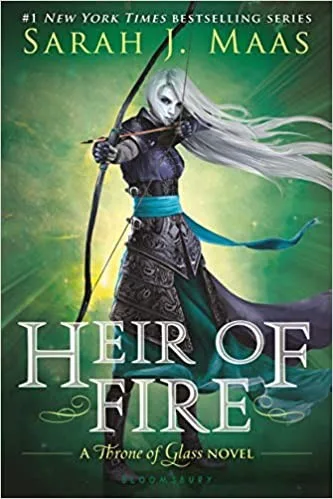



More Free Occult Philosophy Books
View all →