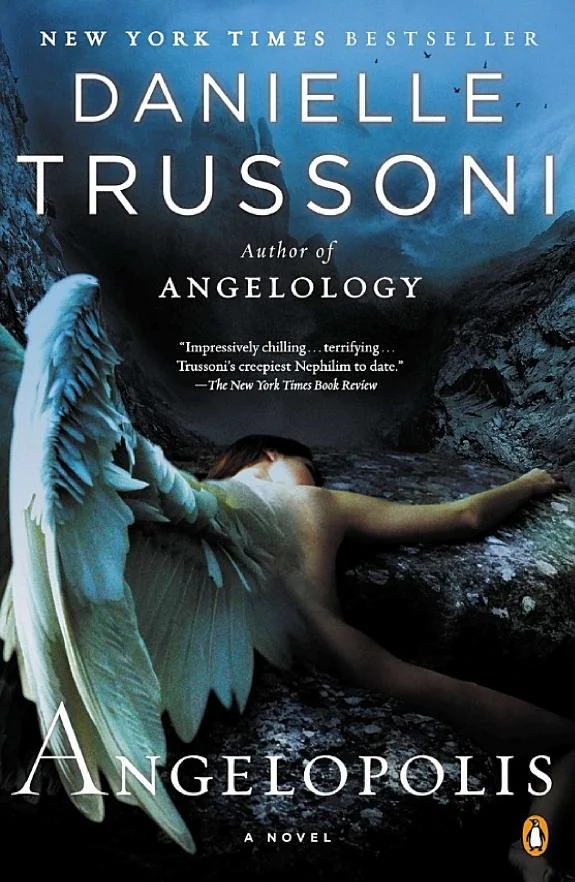
Angelopolis
 73
73

Angelopolis
Danielle Trussoni's Angelopolis is an ambitious sequel, attempting to expand the already vast scope of its predecessor. The novel succeeds in further developing its intricate mythology, particularly concerning the roles and motivations of various angelic factions. Trussoni's prose remains evocative, painting vivid pictures of both celestial strife and earthly peril. However, the narrative occasionally feels overstuffed, with plotlines sometimes struggling for adequate development amidst the sheer density of lore. A particularly compelling aspect is the exploration of Sister Evangeline's past and her complex relationship with the angelic world, offering a glimpse into the personal cost of cosmic battles. While the pacing can be uneven, the book ultimately delivers a potent blend of theological intrigue and high-stakes action, offering a satisfying continuation for devoted readers.
This is a speculative fiction work that rewards patience and immersion.
📝 Description
73
Angelopolis continues Danielle Trussoni's exploration of celestial warfare and hybrid beings.
In Angelopolis, Danielle Trussoni revisits the ancient conflict between fallen angels, celestial beings, and humanity. The narrative centers on the Nephilim, the offspring of angels and humans, whose precarious existence highlights the intersection of divine politics and earthly struggles. Readers are drawn back into a world where the lore of celestial and infernal conflict demands close attention.
The novel appeals to those who appreciated the detailed world-building and theological considerations in Trussoni's earlier work, Angelology. It is suited for readers interested in contemporary fantasy that draws from biblical apocrypha and angelic hierarchies. Those who enjoy speculative fiction that examines the nature of good and evil, divine intervention, and the indistinct boundaries between celestial and human life will find this book particularly rewarding.
Trussoni's work taps into a long-standing fascination with angelic lore found in early Christian and Jewish texts. Angelopolis updates this tradition for a modern audience, engaging with themes of divine intervention and the nature of good and evil. The novel’s focus on the Nephilim, beings born from disrupted divine order, and the consequences of celestial and terrestrial mixing, places it within a contemporary current of fiction that revisits biblical narratives and apocryphal traditions.
💡 Why Read This Book?
• Gain insight into the complex nature of the Nephilim, the angel-human hybrids central to Trussoni's narrative, and their theological implications. • Experience the unfolding of an ancient celestial war that mirrors earthly conflicts, as depicted in the post-2013 literary trend of religiously-themed thrillers. • Explore the concept of divine intervention and its multifaceted consequences as presented in the book's intricate plot, offering a unique perspective on free will.
⭐ Reader Reviews
Honest opinions from readers who have explored this book.
❓ Frequently Asked Questions
Is Angelopolis a standalone novel or a sequel?
Angelopolis is a sequel to Danielle Trussoni's 2010 novel, Angelology. While it can be understood on its own, reading Angelology first provides essential background to the characters and the overarching conflict involving angels and Nephilim.
What is the primary conflict in Angelopolis?
The primary conflict involves an ancient war between angelic beings, fallen angels, and humanity, with a particular focus on the Nephilim, the hybrid offspring of angels and humans, and their precarious place in the world.
What kind of research does Trussoni draw upon for the angelic lore?
Trussoni draws upon biblical apocrypha, religious texts, and theological traditions concerning angels, fallen angels, and creation myths to build her narrative framework.
When was Angelopolis first published?
Angelopolis was first published on March 26, 2013, following the success of its predecessor, Angelology.
Does the book explore themes beyond angelic warfare?
Yes, the book delves into themes of forbidden love, sacrifice, divine judgment, free will versus predestination, and the human condition within a cosmic struggle.
What makes the Nephilim significant in the story?
The Nephilim are significant because their existence represents a disruption of divine order and the consequences of forbidden unions, making them central figures in the celestial conflict.
🔮 Key Themes & Symbolism
The Nephilim and Divine Order
Angelopolis meticulously details the existence of the Nephilim, the offspring of angelic and human beings. These hybrids represent a fundamental disruption of the divine order as established in biblical and apocryphal texts. Trussoni positions them not merely as monsters, but as complex figures caught between two worlds, often bearing the brunt of celestial wrath and human fear. Their plight serves as a critical lens through which the novel examines themes of lineage, purity, and the consequences of forbidden unions that echo throughout religious traditions.
Celestial Warfare and Human Agency
The narrative immerses readers in an ongoing, ancient war between factions of angels, including fallen entities and their adversaries. This cosmic conflict is not confined to ethereal realms but directly impacts humanity, often using humans as pawns or participants. Trussoni explores how divine decrees and angelic machinations intersect with human free will and destiny. The book questions the nature of divine justice and intervention, presenting a world where celestial powers wrestle for control, forcing human characters to make critical choices with eternal ramifications.
Biblical Apocrypha and Modern Mythos
Building on the foundation of Angelology, this work deeply integrates elements from biblical apocrypha and less canonical religious texts concerning angels and demons. Trussoni breathes new life into ancient lore, tying it into a contemporary setting. The novel demonstrates how these ancient narratives can be reinterpreted and expanded to create compelling modern mythologies. It engages with the reader's existing knowledge of angelic hierarchies and creation stories, offering a fresh, speculative perspective that aligns with contemporary interest in religious and occult symbolism.
Forbidden Unions and Their Consequences
A recurring motif in Angelopolis is the concept of forbidden unions, primarily between angels and humans, which results in the birth of the Nephilim. This theme directly confronts established religious doctrines that condemn such intermingling. Trussoni uses these unions to explore the boundaries of divine law, the nature of sin, and the inherent drive for connection that transcends even celestial divides. The narrative illustrates the profound and often tragic consequences that arise when these boundaries are crossed, impacting individuals, families, and the cosmic order.
💬 Memorable Quotes
Direct passages from the work, attributed to the author.
“The Nephilim were everywhere, hidden in plain sight.”
— This statement captures the pervasive and insidious nature of the angel-human hybrids within the narrative. It highlights their ability to blend into human society, making the threat they represent both constant and difficult to identify.
“Heaven and Hell were not distant places, but states of being that bled into the world.”
— This interpretation suggests that the spiritual realms and their conflicts are not separate from earthly existence but actively influence and manifest within it, blurring the lines between the sacred and the mundane.
“Sister Evangeline carried secrets older than the Vatican.”
— This highlights the deep, ancient knowledge and burden carried by the character Evangeline, implying a connection to primordial events and hidden histories far exceeding conventional religious understanding.
“The battle for humanity's soul was being fought in the shadows of New York City.”
— This conveys the central premise of the novel: that epic, cosmic struggles between divine and infernal forces are not abstract but have tangible, hidden manifestations in everyday human environments.
“Love was the most dangerous heresy of all.”
— This suggests that in the context of the rigid, often punitive divine order presented in the book, genuine love—especially between beings of different orders—is seen as a transgressive act, potentially more damning than other sins.
🌙 Esoteric Significance
Tradition
This work operates within the broad sphere of Judeo-Christian angelology, but significantly expands upon it by drawing from apocryphal texts and Gnostic traditions. It doesn't strictly adhere to any single lineage but synthesizes elements to create a unique mythos. The focus on the Nephilim and the celestial war echoes themes found in Enochian literature and early Christian heresies that grappled with the nature of angelic beings and their interaction with humanity, departing from orthodox interpretations.
Symbolism
The primary symbols include the Nephilim themselves, representing the transgression of divine boundaries and the tragic consequences of hybridity. Wings often symbolize divine origin or fallen status, depending on context. Light and darkness are employed to signify good and evil, though Trussoni often blurs these distinctions through complex character motivations. The Vatican and its hidden archives serve as a symbol of preserved, yet often suppressed, ancient knowledge.
Modern Relevance
Angelopolis speaks to contemporary interest in esoteric spirituality and the re-examination of religious texts for hidden meanings. Its exploration of hybrid beings and cosmic conflicts appeals to modern fantasy and paranormal fiction. Thinkers interested in comparative mythology and the evolution of religious narratives find value in its speculative approach. Practices involving angelic communication or the study of fallen entities might find its imaginative framework stimulating, though not directly instructional.
👥 Who Should Read This Book
• Students of comparative religion and mythology interested in how biblical apocrypha and Gnostic concepts are adapted into contemporary fiction. • Fans of urban fantasy and thrillers who enjoy intricate world-building and complex plots rooted in theological lore. • Readers seeking speculative fiction that explores the nature of good, evil, and divine intervention through the lens of angelic conflict and the existence of the Nephilim.
📜 Historical Context
Angelopolis, published in 2013, emerged within a literary environment ripe for religiously-themed speculative fiction. Following the breakout success of its 2010 predecessor, Angelology, this sequel capitalized on a public fascination with angelic lore, a trend evident in popular culture and other contemporary novels. Trussoni's work taps into ancient traditions found in biblical apocrypha and Gnostic texts, reinterpreting them for a modern audience. Unlike purely academic explorations of religious history, Angelopolis presented these concepts through a fast-paced thriller lens, a style that found favor with readers. Its reception was largely positive among fans of the first book, who appreciated the continued world-building and narrative complexity, though some critics noted the challenging density of the lore. The book arrived during a period where authors like Dan Brown had already demonstrated a significant market for mysteries intertwined with religious history and conspiracy.
📔 Journal Prompts
The pervasive presence of the Nephilim: how does their hidden existence shape the world?
Sister Evangeline's secrets: what burdens might ancient knowledge impose?
The intersection of celestial war and human agency: explore a moment of choice.
Forbidden unions: reflect on the concept of boundaries in divine and human law.
Angelopolis's depiction of heaven and hell as 'states of being': what does this imply?
🗂️ Glossary
Nephilim
In the context of Angelopolis, these are the offspring of unions between angels and humans. They are central to the novel's conflict, representing a disruption of divine order and possessing unique, often dangerous, abilities.
Fallen Angels
Angelic beings who have rebelled against God or divine authority. In Trussoni's work, they are often depicted as complex antagonists with their own motivations and hierarchies, distinct from traditional portrayals.
Apocrypha
Religious texts considered canonical by some traditions but not by others. Trussoni draws heavily from these texts for her lore, particularly those concerning angels and cosmic origins.
Angelology
The study of angels. In the novel's context, it refers to the intricate system of angelic hierarchies, roles, and histories that form the basis of the narrative's mythology.
Celestial War
An ongoing conflict between various factions of angelic beings, which has wide implications and often spills over into the human realm, influencing earthly events.
Divine Order
The established structure and laws governing the cosmos as decreed by God or supreme divine entities. The Nephilim and the actions of fallen angels represent a challenge to this order.
Heretic
In the novel, this term is applied broadly to those who defy established divine or ecclesiastical laws, particularly through forbidden unions or actions deemed contrary to celestial will.
This book appears in 1 collection
🔮 Readers Also Liked
Browse all →









From the “Angelology” Collection
View all →
More Free Occult Philosophy Books
View all →