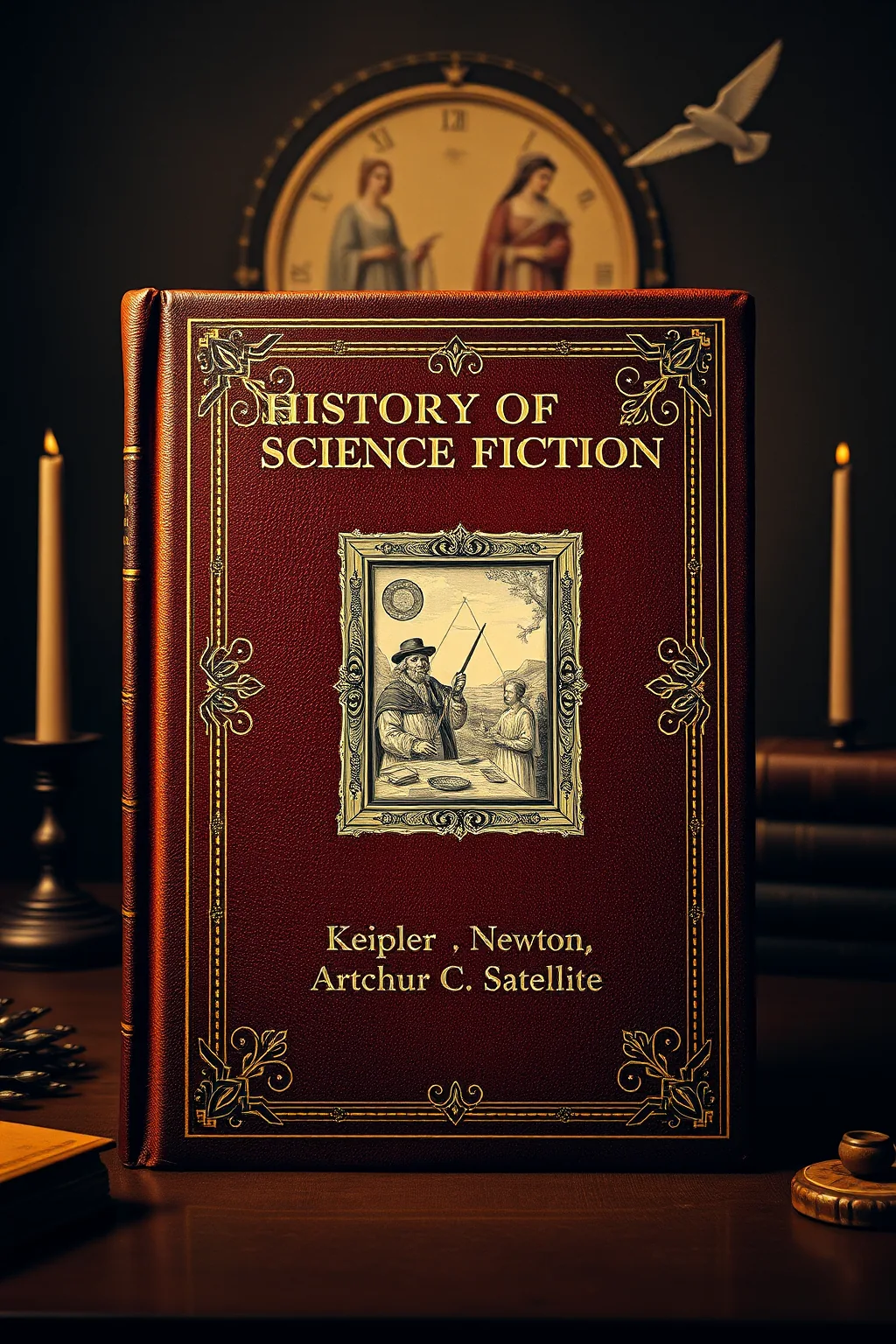
History of science FICTION scientism Kepler Newton AC Clarke Satellites nwo illuminati freemasons flat earth
 74
74

History of science FICTION scientism Kepler Newton AC Clarke Satellites nwo illuminati freemasons flat earth


In 'History of Science Fiction: Kepler, Newton, Arthur C. Clarke & Artificial Satellites,' the author masterfully weaves together the threads of science fiction, occult symbolism, and historical context to create a tapestry of hidden knowledge. The book is a treasure trove of insights for modern esoteric seekers, offering a fresh perspective on the role of secret societies in shaping scientific thought. The detailed analysis of figures like Kepler, Newton, and Clarke provides a fascinating look at how their work has been influenced by and has influenced occult beliefs. The exploration of the Freemasons, Illuminati, and Flat Earth theories adds layers of depth to the narrative, making it a valuable resource for anyone interested in the intersection of science and the occult. The writing is engaging and thought-provoking, making it a standout work in the genre.
📝 Description
74
This book connects science fiction's origins to Kepler, Newton, and early satellite concepts.
Published anonymously, this work examines the relationship between science fiction and what it terms 'scientism.' The author traces this connection through figures like Kepler and Newton, and into the era of Arthur C. Clarke and artificial satellites. It proposes that certain scientific narratives function as modern scriptures, with scientists acting as their interpreters. The text further investigates what it calls a 'Judeo-Masonic matrix,' suggesting a symbolic worship of technology and its role in society. It aims to encourage readers to consider alternative interpretations of scientific progress and its underlying cultural currents.
The book's perspective is that of a seeker of hidden knowledge, inviting readers to look beyond conventional explanations of the modern technological age. It presents a narrative rich in philosophical observations, intended for those interested in the occult or esoteric influences purportedly shaping contemporary science and societal structures. The author encourages a critical examination of accepted scientific history and its symbolic dimensions.
This book operates within a tradition that views science and technology not merely as objective pursuits but as systems imbued with deeper symbolic and even occult meanings. It echoes currents of thought that seek hidden structures or secret societies behind societal developments, particularly in areas of knowledge and progress. The focus on figures like Kepler and Newton, framed within a critique of 'scientism,' suggests an esoteric interpretation of how foundational scientific ideas might have been shaped or later co-opted by specific worldviews, aligning with certain conspiracy theories or alternative histories.
💡 Why Read This Book?
Reading 'History of Science Fiction: Kepler, Newton, Arthur C. Clarke & Artificial Satellites' today offers a unique opportunity to understand the hidden influences behind modern scientific thought. This book provides readers with a deeper appreciation of the occult symbolism and secret societies that have shaped our understanding of the universe. By exploring the lives and works of historical figures like Kepler, Newton, and Clarke, readers gain insights into the complex interplay between science fiction and occult beliefs. This knowledge is invaluable for anyone seeking to uncover the truth behind the worship of technology and the role of secret societies in scientific progress.
⭐ Reader Reviews
Honest opinions from readers who have explored this book.
❓ Frequently Asked Questions
What is the main focus of this book?
The main focus of this book is the intersection of science fiction and occult themes, exploring how secret societies like the Freemasons and Illuminati have influenced scientific thought and technology.
Who should read this book?
This book is ideal for esoteric seekers, science fiction enthusiasts, and anyone interested in the hidden agendas behind technological advancements.
What historical figures are discussed in this book?
The book discusses historical figures like Johannes Kepler, Isaac Newton, and Arthur C. Clarke, examining their contributions to science and the occult influences in their work.
🔮 Key Themes & Symbolism
Scientism as a Religion
This book explores the idea that scientism has become a religion, with science fiction serving as its scripture. It explores how technology is worshipped within this framework, revealing the occult dimensions of modern scientific advancements.
The Judeo-Masonic Matrix
The book uncovers the hidden influences of Freemasonry and other secret societies in the development of science and technology, exploring how these influences shape our understanding of the world.
The Worship of Technology
Technology is presented as a central object of worship within the religion of scientism. The book examines how this worship is perpetuated through science fiction and its impact on modern society.
💬 Memorable Quotes
Direct passages from the work, attributed to the author.
“The New World Order is a product of the religion of scientism.”
— This statement reveals how the New World Order is influenced by the worship of technology and the occult dimensions of scientism.
💡 Key Ideas
Editorial paraphrase of the work's core concepts — not direct quotes.
The scripture of scientism is science fiction.
This quote highlights the central idea that science fiction serves as the religious text for scientism, shaping our beliefs and perceptions.
Technology is the altar at which we worship.
This line underscores the worship of technology within the religion of scientism, revealing its deeper symbolic significance.
The Judeo-Masonic matrix is the hidden hand guiding our scientific advancements.
This quote emphasizes the occult influences of secret societies in the development of modern science and technology.
Arthur C. Clarke's visions have become the scriptures of our technological age.
This line highlights the role of Arthur C. Clarke in shaping the religion of scientism through his science fiction works.
🌙 Esoteric Significance
Tradition
This book belongs to the Hermetic tradition, which emphasizes the hidden knowledge and occult dimensions of science and technology. It explores the influences of Freemasonry and other secret societies in shaping our understanding of the world.
Symbolism
Key symbols include the worship of technology, the Judeo-Masonic matrix, and the role of science fiction as the scripture of scientism. These symbols represent the deeper esoteric truths behind modern scientific advancements.
Modern Relevance
This book is relevant today as it reveals the occult influences in modern technology and the religion of scientism. Modern practitioners of the occult can use its insights to uncover hidden knowledge and esoteric truths.
👥 Who Should Read This Book
Beginners interested in the occult dimensions of science and technology will find this book a fascinating introduction. Scholars and practitioners of the Hermetic tradition will appreciate its deep esoteric insights. Spiritual seekers looking to uncover hidden knowledge will find it a valuable resource. Practitioners of Freemasonry and other secret societies will gain a unique perspective on their influences in modern science and technology.
📜 Historical Context
Written in an era of rapid technological advancement and increasing influence of secret societies, this book explores the occult dimensions of science fiction. It reveals how scientism has become a religion, with science fiction as its scripture and technology as its worshipped entity. The book's influence lies in its ability to uncover the hidden knowledge and esoteric truths behind modern scientific advancements.
📔 Journal Prompts
Reflect on how science fiction has shaped your perceptions of technology.
Consider the role of secret societies in the development of modern science.
Explore the idea of scientism as a religion and its impact on society.
Think about the worship of technology in your daily life.
Examine the influence of the New World Order on modern scientific advancements.
🗂️ Glossary
Scientism
The belief that science is the ultimate authority on all matters, often treated as a religion.
Judeo-Masonic Matrix
The hidden influences of Freemasonry and other secret societies in the development of modern science and technology.
Hermetic Tradition
An esoteric tradition emphasizing hidden knowledge and occult dimensions of science and technology.
New World Order
A concept referring to a secretive, powerful global elite that controls political and economic systems.
Arthur C. Clarke
A renowned science fiction writer whose works have significantly influenced the development of scientism.
This book appears in 2 collections
🔮 Readers Also Liked
Browse all →






From the “Secret Societies” Collection
View all →





More Free Freemasonry & Secret Societies Books
View all →