Teresa Moorey
Teresa Moorey is an author associated with the Earth Mysteries movement, exploring sacred sites and ancient beliefs.
Teresa Moorey is an author connected to the field of Earth Mysteries, a broad category of spiritual and religious ideas centered on the Earth and significant geographic locations. This field, which has roots in the work of 17th-century antiquarians and gained prominence in the 1970s and 80s, often overlaps with modern druidry, New Age beliefs, and paganism. It involves the study of prehistoric monuments, sacred sites, and concepts like ley lines, which are believed to be invisible energy pathways. The term 'Earth mysteries' itself emerged around 1970, building on earlier concepts of 'earth energies' and 'alternative archaeology'.
Believers in Earth Mysteries often view specific locations as holding active spiritual energies and consider ancient monuments to be of particular importance. The movement has seen academic interest and criticism, with some concepts like ley lines being largely disregarded by mainstream archaeology. However, the exploration of 'ritual landscapes' has seen some engagement within academic circles. The scope of Earth Mysteries has broadened over time, encompassing ancient sites, archaeoastronomy, geomancy, and Western magical traditions.
Origins and Development of Earth Mysteries
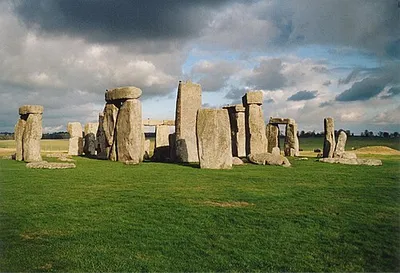
The concept of Earth Mysteries traces its lineage to 17th-century antiquarians like John Aubrey and William Stukeley, who explored the connection between ancient sites such as Stonehenge and Druidic practices. The formal study of ley lines began in the 1920s with Alfred Watkins, who later established the Old Straight Track Club. The term 'Earth mysteries' gained traction around 1970 through The Ley Hunter journal. During the 1970s and 1980s, these ideas were significantly embraced and reinterpreted by movements like the New Age and modern paganism, leading to a surge in publications discussing ley lines, earth energies, sacred landscapes, and folklore.
Key Concepts and Academic Reception
Central to Earth Mysteries is the belief in sacred geography and the spiritual significance of ancient monuments and specific locations, often considered to possess active energies. The field has also been described as 'alternative archaeology.' While proponents view Earth Mysteries as mythopoeic and spiritual, academic archaeology has largely dismissed concepts like ley lines. Researchers focusing on the paranormal aspects have faced considerable criticism from debunkers. Despite this, the movement's adoption of terms like 'ritual landscapes,' used in academic archaeology to describe ceremonial sites, has led to some overlap and discussion, particularly concerning landscape heritage tourism.
Key Ideas
- Spiritual and religious beliefs focused on the Earth and significant geographic locations.
- Importance of prehistoric monuments and sacred sites believed to contain active spiritual energies.
- Study of ley lines, conceptualized as energy pathways.
- Connection between ancient sites, mythology, and idealized visions of nature.
- Exploration of 'ritual landscapes' and sacred geography.
Books by Teresa Moorey
14 free public domain books · Read online or download