Witchcraft, sorcery, magic, and social order among the Ibibio of Nigeria

 79
79

Witchcraft, sorcery, magic, and social order among the Ibibio of Nigeria
Daniel A. Offiong’s "Witchcraft, Sorcery, Magic, and Social Order among the Ibibio of Nigeria" provides a sober, empirical account of how supernatural beliefs are interwoven with the fabric of social control. Unlike more sensationalist accounts, Offiong grounds his analysis in detailed ethnographic observation from the early 1980s, presenting a compelling case for witchcraft accusations as a mechanism for enforcing social norms and resolving disputes within Ibibio society. A particular strength is the meticulous description of judicial processes and community responses to accusations, offering a window into a functioning, albeit fear-driven, social order. However, the prose can be dense, occasionally obscuring the human drama beneath the sociological analysis, and the book’s original publication date means some contemporary ethnographic perspectives might be absent. The section detailing the 'ndi-ọkọ' and their societal role is particularly illuminating. This is a serious anthropological inquiry into belief and order.
📝 Description
79
Daniel A. Offiong's 1991 study examines witchcraft, sorcery, and magic among Nigeria's Ibibio people.
This ethnographic work analyzes the complex interplay between witchcraft, sorcery, magic, and the maintenance of social order within Ibibio society. Daniel A. Offiong, based on extensive fieldwork, moves past superficial views to investigate how these perceived powers function within the community's legal, political, and moral structures. The research details the social positions of magic practitioners, the methods used for accusations and defenses, and the influence of these beliefs on daily life.
Scholars of African anthropology, the sociology of religion, and those interested in cross-cultural magic and belief systems will find this book particularly useful. It serves as a detailed case study for understanding how non-Western communities conceptualize and manage perceived supernatural forces to uphold societal norms and resolve disputes. Students seeking practical applications of ethnographic research in cultural dynamics will also find value in its approach.
This book engages with the anthropological study of belief systems, specifically focusing on how societies conceptualize and manage perceived supernatural forces. It examines the practical application of magic and sorcery not as abstract phenomena, but as integral components of social regulation, legal frameworks, and moral order within a specific cultural context. The work contributes to understanding the role of such beliefs in maintaining community cohesion and addressing social transgressions, placing it within the broader academic tradition of studying folk magic and its societal functions.
💡 Why Read This Book?
• Gain a nuanced understanding of witchcraft accusations as a social control mechanism, as exemplified by the detailed examination of 'ndi-ọkọ' within Ibibio society. • Learn about the specific judicial and ritual processes employed by the Ibibio to manage accusations of sorcery, as documented in Offiong's fieldwork from the early 1980s. • Appreciate the complex interplay between magic, social order, and community regulation, moving beyond simplistic Western interpretations of indigenous belief systems.
⭐ Reader Reviews
Honest opinions from readers who have explored this book.
❓ Frequently Asked Questions
What is the primary focus of Daniel A. Offiong's book on the Ibibio people?
The book primarily focuses on how witchcraft, sorcery, and magic function as integral components of social order and control among the Ibibio of Nigeria, as observed during fieldwork in the early 1980s.
When was 'Witchcraft, Sorcery, Magic, and Social Order among the Ibibio of Nigeria' first published?
The book was first published in 1991, offering an anthropological perspective on Ibibio society during that era.
What role do witchcraft accusations play in Ibibio society according to the book?
According to Offiong's study, witchcraft accusations serve as a critical mechanism for enforcing social conformity, addressing perceived transgressions, and maintaining the existing social order within the Ibibio community.
Who is Daniel A. Offiong?
Daniel A. Offiong is the author of 'Witchcraft, Sorcery, Magic, and Social Order among the Ibibio of Nigeria,' an anthropologist whose work provides an empirical study of social dynamics in Nigeria.
Does the book discuss specific rituals or legal processes related to magic among the Ibibio?
Yes, the book details the judicial and ritual processes the Ibibio community employs to deal with accusations of malevolent magic, illustrating how these systems reinforce societal norms.
What does the term 'ndi-ọkọ' refer to in the context of the Ibibio people?
In the context of Offiong's work, 'ndi-ọkọ' refers to individuals accused of witchcraft, exploring their perceived roles and the community's response to such accusations.
🔮 Key Themes & Symbolism
Magic as Social Regulator
The work meticulously details how beliefs in witchcraft and sorcery are not merely supernatural phenomena but active tools for maintaining social order among the Ibibio. Accusations of 'ndi-ọkọ' function as a potent means of social control, enforcing community norms and punishing deviance. Offiong demonstrates how fear of magical retribution or social ostracization stemming from accusations compels adherence to societal expectations. This theme highlights the practical, functional aspect of magic within the community's governance structure, as observed during Offiong's fieldwork.
The Ibibio Judicial System
A significant portion of the book is dedicated to understanding the Ibibio approach to justice, particularly concerning accusations of magic. Offiong outlines the specific judicial and ritual procedures employed to investigate and adjudicate these claims. This includes the roles of elders, diviners, and community consensus in determining guilt or innocence, and the subsequent sanctions or rituals of purification. The study provides a concrete example of how non-Western legal systems integrate belief in the supernatural into their dispute resolution processes.
Practitioners and Perceptions
Offiong explores the social standing and perceived roles of individuals identified as witches or sorcerers within Ibibio society. The book examines the societal implications of these perceptions, including fear, avoidance, and the dynamics of accusation and defense. It moves beyond a binary view of good versus evil magic, instead focusing on how the *perception* and *accusation* of malevolent practices shape social interactions and community cohesion. The ethnography captures the lived experience of these beliefs.
Ethnographic Methodology
The book itself is a proof of rigorous ethnographic methodology applied to a sensitive and complex topic. Offiong’s research, conducted in the early 1980s, relies on direct observation, interviews, and participation to build a comprehensive picture of Ibibio beliefs and practices. This focus on empirical data collection and analysis provides a valuable case study for students of anthropology and sociology on how to approach the study of cultural phenomena often shrouded in mystery or subject to external bias.
💬 Memorable Quotes
Direct passages from the work, attributed to the author.
“Witchcraft accusations serve as a mechanism for social control and the enforcement of norms.”
— This central idea posits that the fear and reality of being labeled a witch ('ndi-ọkọ') compel individuals within Ibibio society to conform to established rules and expectations, thus maintaining the community's social structure.
“The Ibibio judicial process integrates supernatural beliefs into dispute resolution.”
— Offiong highlights how traditional Ibibio legal practices are not solely secular but actively incorporate notions of magic and spiritual causality when addressing conflicts and accusations, demonstrating a unique legal framework.
“Fear of sorcery influences daily interactions and community cohesion.”
— This concept underscores the pervasive psychological impact of belief in magic, showing how anxieties surrounding potential malevolent acts shape relationships and the overall sense of security within the Ibibio community.
“Ethnographic observation is crucial for understanding complex belief systems.”
— The author's approach emphasizes the necessity of direct, empirical study in grasping the nuances of practices like witchcraft within their specific cultural context, rather than relying on external assumptions.
“The concept of 'ndi-ọkọ' is tied to social deviance and transgression.”
— This interpretation links the label of witch within Ibibio society to individuals who have violated social norms or committed offenses, suggesting the accusation serves to identify and marginalize wrongdoers.
🌙 Esoteric Significance
Tradition
While not strictly within a Western esoteric lineage like Hermeticism or Kabbalah, Offiong's work touches upon universal themes of sympathetic magic, belief systems, and the manipulation of perceived spiritual forces for social ends. It represents a critical examination of practical magic within a specific cultural context, aligning with the broader Hermetic principle of 'As Above, So Below' by demonstrating how cosmic beliefs manifest in terrestrial social structures and individual conduct. The study provides empirical data for comparative analyses of magical practices across diverse cultures.
Symbolism
Within the Ibibio context described, the concept of 'ndi-ọkọ' itself functions as a potent symbol of societal anxieties and the perceived agents of chaos or transgression. The rituals and judicial processes surrounding accusations act as symbolic performances of social purification and restoration. While specific symbolic objects are not detailed in the blurb, the entire framework of witchcraft accusation and its management serves as a symbolic representation of the community's struggle to maintain balance and order against perceived internal threats.
Modern Relevance
Contemporary scholarship on African religions and social control continues to draw upon detailed ethnographic studies like Offiong's. Researchers and practitioners interested in the sociology of belief, comparative magic, and the resilience of indigenous knowledge systems find value in this work. It informs discussions on how communities globally utilize belief in unseen forces to navigate social challenges, influence behavior, and construct their realities, offering a foundational case study for understanding these dynamics in the 21st century.
👥 Who Should Read This Book
• Anthropologists and sociologists studying social control and belief systems in non-Western societies. • Researchers of African cultures and religions seeking detailed ethnographic data on Ibibio practices. • Students of comparative magic and sorcery interested in the functional roles of supernatural beliefs in community governance.
📜 Historical Context
Published in 1991, Daniel A. Offiong’s work emerged within a maturing field of African anthropology, moving beyond earlier, often ethnocentric, analyses of witchcraft. The late 20th century saw scholars like Jack Goody and others re-examining the social functions of belief systems. Offiong’s study of the Ibibio people contributed to this discourse by providing a detailed ethnographic account of how magic and sorcery were intrinsically linked to social order and control in Nigeria. It followed a tradition of studying witchcraft accusations as social phenomena, notably explored by figures like E.E. Evans-Pritchard in his work on the Azande, but offered a contemporary perspective from the specific cultural milieu of the Ibibio. The book appeared at a time when anthropological research in West Africa was increasingly focused on the lived realities and indigenous interpretations of social and spiritual life, offering a counterpoint to colonial-era descriptions.
📔 Journal Prompts
The concept of 'ndi-ọkọ' and its function in maintaining Ibibio social order.
The integration of supernatural beliefs within the Ibibio judicial system.
Reflect on the societal impact of fear of sorcery as described by Offiong.
Compare the Ibibio approach to witchcraft accusations with other cultural examples.
Analyze the role of perceived magical practitioners in community regulation.
🗂️ Glossary
Ndi-ọkọ
The Ibibio term for witches, referring to individuals believed to possess malevolent magical powers used to harm others or disrupt social harmony. Accusations of being 'ndi-ọkọ' were a significant social mechanism.
Sorcery
The practice of magic, especially malevolent magic, often involving the use of spells, charms, or rituals intended to cause harm or influence events negatively. It is a key focus of Offiong's study among the Ibibio.
Social Order
The stability of a society's normal functioning, maintained by shared values, laws, and social control mechanisms. The book examines how magic beliefs contribute to or disrupt this order among the Ibibio.
Ethnography
The scientific description of the customs of individual peoples and cultures, based on fieldwork and direct observation. Offiong's book is an ethnographic study of the Ibibio.
Social Control
The use of sanctions and rewards to influence individual or group behavior. Offiong argues that witchcraft beliefs and accusations function as a form of social control among the Ibibio.
Ritual Processes
Established, ceremonial procedures often employed in societies to address specific social issues, mark transitions, or resolve conflicts. The book details such processes related to magic accusations.
Malevolent Magic
The use of supernatural powers or practices intended to cause harm, misfortune, or suffering to others. This is a primary concern within the Ibibio belief system as studied by Offiong.
🔮 Readers Also Liked
Browse all →







More by Daniel A. Offiong
All books →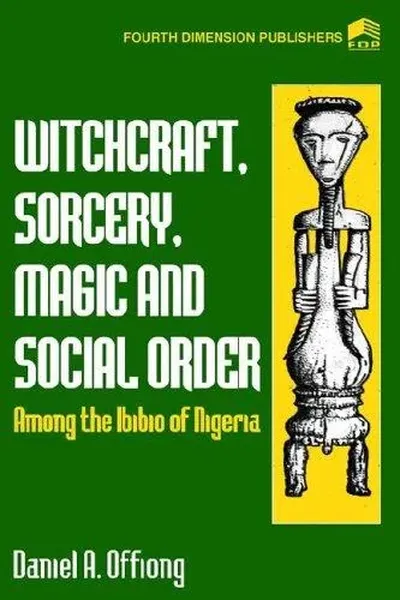

More Free Magic & Ritual Books
View all →