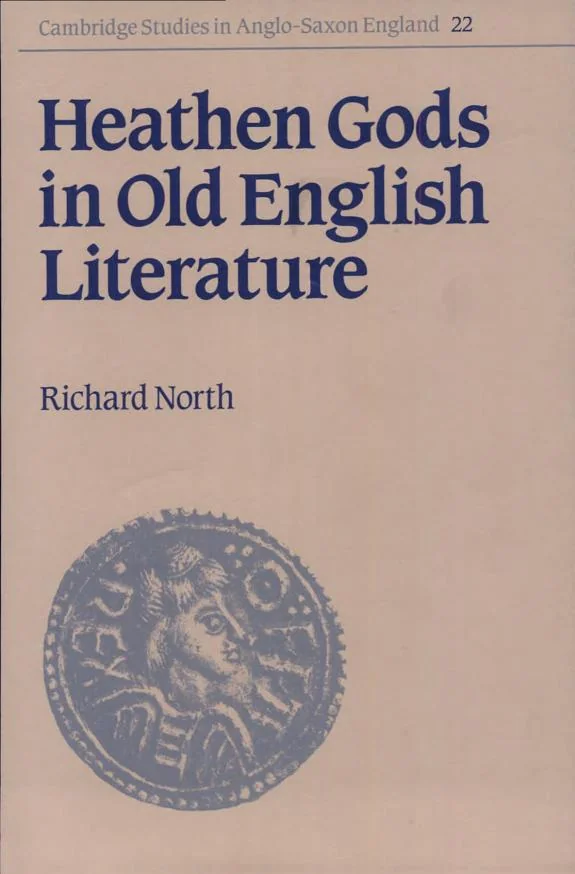
Heathen Gods in Old English Literature
 83
83

Heathen Gods in Old English Literature
Richard North’s "Heathen Gods in Old English Literature" tackles a notoriously difficult subject: the visibility of pagan deities in a predominantly Christian literary output. The book’s strength lies in its scrupulous attention to textual detail, carefully teasing out potential references to figures like Ingui from the often-opaque prose and poetry. North’s discussion of Bede’s *Historia ecclesiastica gentis Anglorum* and its oblique references to pagan progenitors offers a compelling case study in inferential mythology. However, the work sometimes feels overly cautious, its scholarly hesitations sometimes overshadowing the potential for bolder interpretation. The challenge of reconstructing a lost religious landscape from fragmented evidence is palpable throughout, making the book more of an academic inquiry than a definitive statement. It remains a vital, if necessarily incomplete, contribution to understanding Anglo-Saxon religious thought.
📝 Description
83
Richard North's 1997 book examines the scant evidence for Germanic gods in Anglo-Saxon literature.
Richard North's "Heathen Gods in Old English Literature" investigates the limited traces of Germanic deities within the surviving Anglo-Saxon written record. The book details how Christian scribal practices and the scarcity of texts from before conversion obscure a clear view of these figures. North focuses on interpreting indirect mentions, poetic hints, and comparative mythology to rebuild potential ideas about deities like Ingui, considered the ancestor of the Ingvaeones.
The work is aimed at scholars of Old English literature, early medieval history, and comparative mythology. Students of Germanic paganism and those interested in the assimilation of culture and religion in post-Roman Britain will also find it useful. Readers who want a careful, evidence-based method for reconstructing Anglo-Saxon beliefs before Christianity will appreciate its approach. North's study addresses the limited survival of texts and its impact on understanding paganism, the role of Ingui as a possible divine ancestor, and how Scandinavian mythology might have influenced Anglo-Saxon thought. He also looks at how oral traditions changed when written down.
This book fits within the scholarly tradition of reconstructing pre-Christian European religions, particularly the Germanic and Anglo-Saxon branches. It engages with the challenges of interpreting fragmented textual evidence, a common issue in studying ancient paganism. The work acknowledges the impact of Christianization on the preservation and transmission of older beliefs, a recurring theme in the study of historical pagan survivals. By examining literary allusions and employing comparative methods, North follows a path often taken by scholars seeking to understand the religious ideas of cultures whose direct voices are largely silenced by later dominant traditions.
💡 Why Read This Book?
• Gain an understanding of the challenges in reconstructing pre-Christian Anglo-Saxon religion, particularly concerning figures like Ingui, as detailed in North's analysis of Bede's writings. • Explore the methodologies for interpreting scant textual evidence of Germanic deities, learning how scholars infer beliefs from the Viking Age context. • Discover how Scandinavian mythological influences might have interacted with or persisted within Old English literature, offering a specific lens on post-Roman religious syncretism.
⭐ Reader Reviews
Honest opinions from readers who have explored this book.
❓ Frequently Asked Questions
When was Richard North's "Heathen Gods in Old English Literature" first published?
Richard North's "Heathen Gods in Old English Literature" was first published on December 11, 1997, providing a late 20th-century academic perspective on Anglo-Saxon paganism.
What is the main challenge in finding information about heathen gods in Old English literature?
The primary challenge is that most Anglo-Saxon writers were Christian and had little interest in documenting pagan deities, leading to a scarcity of direct references in surviving texts.
Which historical periods does North's study focus on regarding Anglo-Saxon and Scandinavian paganism?
The book concentrates on the pre-Viking and Viking ages, periods when Norse and Germanic pagan influences were potentially most active or in transition within Anglo-Saxon culture.
What is the significance of the figure 'Ingui' in the book?
Ingui is presented as a figure Bede mentions, potentially an orgiastic progenitor associated with the Ingvaeones, whose cultic significance North explores through comparative mythology.
Does the book offer definitive proof of heathen god worship?
No, the book acknowledges the difficulty in finding definitive proof due to textual limitations. Instead, it offers interpretations and reconstructions based on available literary and historical evidence.
What kind of scholarship does Richard North build upon?
North engages with earlier scholarship on Germanic religion, such as that of Jan de Vries, while focusing on the specific evidence within Old English literature and its historical context.
🔮 Key Themes & Symbolism
Textual Scarcity and Pagan Survival
The book grapples with the fundamental problem of evidence: how to reconstruct the beliefs and practices surrounding heathen gods when the surviving literature is overwhelmingly Christian. North meticulously analyzes oblique references, poetic kennings, and historical accounts, like Bede's, to infer the presence and nature of these deities. This theme highlights the interpretive work required to bridge the gap between a culture's dominant religious narrative and its submerged or transforming pagan past.
The Figure of Ingui
A central focus is the figure of Ingui, mentioned by Bede in relation to the Ingvaeones. North explores the potential cultic significance and mythological role of Ingui, considering him as a divine progenitor or culture hero. The investigation into Ingui serves as a model for how other obscure references to deities might be understood, drawing on comparative mythology and linguistic analysis to flesh out the scant textual data.
Norse-Anglo-Saxon Connections
The study examines the interplay between Scandinavian and Anglo-Saxon pagan traditions, particularly during the Viking Age. North considers how Norse mythology and religious concepts might have influenced or been preserved within the Anglo-Saxon cultural sphere. This theme underscores the dynamic religious range of early medieval Britain, where distinct Germanic traditions coexisted and intermingled.
Methods of Reconstruction
Implicit in the entire work is a discussion of methodology. North demonstrates a scholarly approach to reconstructing lost belief systems by carefully weighing textual evidence, considering historical context, and employing comparative analysis. The book is as much about *how* we can know about heathen gods as it is about what we can know, offering a case study in historical and mythological interpretation.
💬 Memorable Quotes
Direct passages from the work, attributed to the author.
“Heathen gods are hard to find in Old English literature.”
— This statement captures the core challenge North addresses: the near-invisibility of pagan deities within the surviving literary record of Anglo-Saxon England, necessitating careful interpretive work.
“Most Anglo-Saxon writers had no interest in them [heathen gods].”
— This highlights the religious and cultural milieu of the time, where Christian writers prioritized their faith, leading to the marginalization or omission of pre-Christian religious figures and beliefs from their works.
“Scholars today prefer to concentrate on the Christian civilization for which the Anglo-Saxons were so famous.”
— This points to a prevailing academic trend that North seeks to counter, arguing for a more balanced consideration of the pagan substratum that informed Anglo-Saxon culture, even after conversion.
“North offers an interesting view of Anglo-Saxon and Scandinavian paganism and mythology in the pre-Viking and Viking age.”
— This blurb excerpt suggests the book's value lies in its contribution to understanding the distinct yet interconnected religious traditions of these closely related Germanic peoples during a crucial transitional period.
“He discusses the pre-Christian gods of Bede's history... with reference to an orgiastic figure known as Ingui.”
— This specific mention of Bede and Ingui indicates a key focus of North's research, demonstrating his method of using specific historical texts to explore the potential existence and nature of pagan deities.
🌙 Esoteric Significance
Tradition
While not strictly aligning with a single esoteric lineage like Hermeticism or Theosophy, North's work serves esoteric practitioners by providing scholarly grounding for the study of pre-Christian European mythologies. It offers a critical lens through which to examine the remnants of Germanic paganism, a tradition often reinterpreted and practiced within contemporary esoteric movements seeking ancestral spiritual connections.
Symbolism
The figure of Ingui, potentially linked to fertility and divine kingship, serves as a potent symbol of ancestral connection and the cyclical nature of life and death. North's analysis implicitly touches upon the symbolic resonance of primordial figures and their role in shaping cultural identity. The scarcity of evidence itself becomes symbolic, representing the hidden wisdom or the 'veiled' truths of a lost spiritual heritage.
Modern Relevance
Contemporary Heathen and Asatru practitioners, as well as scholars of folklore and comparative religion, draw upon North's meticulous research. His work provides a scholarly counterpoint to more romanticized or speculative modern pagan mythologies, offering a foundation of textual analysis for those seeking to understand the historical roots of their spiritual paths.
👥 Who Should Read This Book
• Scholars of Old English literature and early medieval history seeking to understand the limited but significant traces of pagan belief systems within Christianized texts. • Students of Germanic paganism and comparative mythology interested in the methodologies for reconstructing pre-Christian religions from fragmented evidence. • Contemporary Heathen or Asatru practitioners looking for scholarly analysis of figures like Ingui and the broader context of Anglo-Saxon religious practices.
📜 Historical Context
Published in 1997, Richard North's "Heathen Gods in Old English Literature" emerged during a period of increasing academic interest in pre-Christian European cultures, yet within a field still dominated by Christian historiography. The study directly engages with the legacy of scholars like Jan de Vries, whose work on Germanic mythology provided foundational frameworks. North's work distinguished itself by focusing intently on the Anglo-Saxon literary corpus, often overlooked in favor of more robust Scandinavian sources. While not a period of widespread censorship, the reception of such works often involved scholarly debate regarding methodologies for reconstructing pagan beliefs from Christianized texts. The scarcity of direct references meant that North's approach, relying heavily on interpretation and comparative analysis, was crucial for advancing the discussion beyond earlier, more speculative accounts.
📔 Journal Prompts
The challenge of finding heathen gods in Old English literature.
Bede's reference to Ingui and its potential cultic implications.
Interpreting Anglo-Saxon Christian writers' views on pagan predecessors.
The influence of Scandinavian mythology on the pre-Viking Anglo-Saxon world.
Reconstructing pagan beliefs from scarce literary evidence.
🗂️ Glossary
Ingui
A figure mentioned by Bede, potentially a progenitor of the Ingvaeones (a West Germanic people). North explores his possible role as a deity or culture hero within pre-Christian Anglo-Saxon belief systems.
Ingvaeones
A group of West Germanic tribes, also known as the 'people of Ing'. Their connection to the figure Ingui is a key area of discussion in understanding early Germanic religious and social structures.
Bede
The Venerable Bede (c. 672/673 – 735 AD), an English monk and historian, author of *Historia ecclesiastica gentis Anglorum* (Ecclesiastical History of the English People). His work provides crucial historical context but often reflects a Christian perspective.
Kennings
In Old English and Norse poetry, a compound expression (e.g., 'whale-road' for sea) used in place of a simple noun. North may analyze kennings for indirect references to pagan concepts or deities.
Pre-Viking Age
The historical period in England and Scandinavia preceding the major Viking raids and expansions, generally considered to end around the late 8th century.
Viking Age
The period of Norse exploration, expansion, and settlement, roughly from the late 8th to the mid-11th centuries, significantly impacting Anglo-Saxon England.
Comparative Mythology
The study and comparison of myths and mythologies from different cultures to identify common themes, origins, and developmental patterns.
This book appears in 1 collection
🔮 Readers Also Liked
Browse all →







From the “Paganism” Collection
View all →






More Free Witchcraft & Paganism Books
View all →