Curses
 81
81

Curses
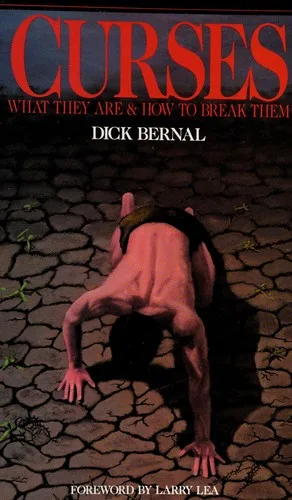
Bernal's *Curses* confronts a topic many occult authors either sensationalize or ignore. The strength of this 1991 text lies in its systematic approach, attempting to dissect the mechanics of malediction with a degree of rigor. Bernal avoids simplistic notions, instead exploring the psychological and energetic underpinnings that might give curses efficacy. A notable section discusses the concept of 'sympathetic magic' as it relates to imprecation, highlighting how perceived connections between objects or individuals can be exploited. However, the book's primary limitation is its occasional reliance on dated terminology and a theoretical framework that, while comprehensive for its time, may feel somewhat insulated from later developments in consciousness studies or quantum physics as applied to magic. The prose can be dense, demanding sustained attention from the reader. Ultimately, *Curses* serves as a valuable, albeit demanding, historical document on the occult theory of imprecation.
📝 Description
81
Dick Bernal's 1991 book *Curses* examines imprecations in esoteric traditions.
Published in 1991, Dick Bernal's *Curses* addresses the occult concept of imprecations. The book moves past sensationalism to look at the theoretical basis and practical use of curses across different esoteric systems. Bernal aims to clarify the subject, showing it not as simple superstition but as a complex part of magical theory and practice. This work is for serious students of occult philosophy and comparative religion ready to consider difficult ideas. It is especially helpful for those interested in the darker or less often discussed parts of magical systems. Readers wanting a scholarly yet understandable look at how curses are formed and undone will find it useful.
The book focuses on the energetic and psychological means thought to be involved in cursing. This includes looking at intent, symbolic representation, and how belief can make magical effects happen. Bernal discusses ways to both create and defend against curses, treating them as events tied to manipulating subtle energies and consciousness. The early 1990s saw growing interest in esoteric studies outside of academic circles, with many older books being reissued and new analyses appearing. Bernal's work came out during a time when occultism was starting to lose some of its fringe associations but still operated outside mainstream conversation. It connected with a line of magical thought that often dealt with malediction, a subject sometimes avoided by more modern occult writers.
Bernal's *Curses* emerged in the early 1990s, a period of renewed interest in esoteric subjects beyond purely academic spheres. Occultism was beginning to gain broader, albeit still limited, acceptance. This book engaged with a tradition of magical thinking that included malediction, a topic often treated with caution or omission by other contemporary occult authors. It sought to provide a more grounded analysis of curse phenomena, linking them to energetic and psychological principles rather than mere folklore.
💡 Why Read This Book?
• Understand the theoretical framework behind imprecations, learning how Bernal posits curses function through intent and symbolic action, a concept detailed in the early chapters. • Explore specific defensive measures against curses, gaining insight into the protective rituals and mental disciplines Bernal outlines as crucial for warding off negative magical influence. • Gain historical perspective on occult thought regarding malediction, appreciating how *Curses* (1991) positioned itself within the esoteric landscape of its publication era.
⭐ Reader Reviews
Honest opinions from readers who have explored this book.
❓ Frequently Asked Questions
What is the primary focus of Dick Bernal's *Curses*?
The book's primary focus is the occult concept of cursing. It aims to examine the theoretical underpinnings and practical aspects of imprecations within esoteric traditions, moving beyond sensationalism to a more analytical approach.
When was Dick Bernal's *Curses* first published?
Dick Bernal's *Curses* was first published in 1991, a period of renewed interest in esoteric studies.
Who is the intended audience for *Curses*?
The book is intended for serious students of occult philosophy and comparative religion interested in the less common aspects of magical systems, particularly those who appreciate a scholarly yet accessible analysis.
Does the book offer methods for protection against curses?
Yes, *Curses* explores methods for both enacting and defending against curses, treating them as phenomena that can be addressed through specific magical and psychological practices.
What kind of historical context does *Curses* provide?
Published in 1991, the book reflects the esoteric discourse of its time, engaging with established magical theories and offering a structured perspective on a sensitive topic often overlooked in contemporary occult literature.
Are there specific esoteric traditions discussed in *Curses*?
While not explicitly detailing every tradition, the work examines concepts that are prevalent across various esoteric lineages, focusing on the universal principles believed to govern the efficacy of curses.
🔮 Key Themes & Symbolism
The Energetics of Imprecation
Bernal's work posits that curses are not merely psychological phenomena but involve the manipulation of subtle energies. The book details how focused intent, amplified by symbolic actions and belief systems, can project negative force. It explores the concept of the 'curse-object' or 'curse-site' as a focal point for this energy, drawing parallels to sympathetic magic. The discussion emphasizes that the perceived power of a curse is intrinsically linked to the practitioner's understanding and application of these energetic principles, treating malediction as a calculated magical operation rather than an emotional outburst.
Psychological Activation
A significant theme is the role of the target's psyche in the efficacy of a curse. Bernal examines how fear, belief, and psychological vulnerability can create an opening for the projected energies to take hold. The book discusses the importance of the victim's awareness or subconscious receptivity to the curse's influence. This psychological dimension is presented as a critical component, often working in tandem with the energetic mechanisms, highlighting that the effectiveness of an imprecation is a confluence of external projection and internal susceptibility.
Defensive Counter-Magics
Complementing the analysis of curse-casting, *Curses* dedicates considerable attention to methods of protection and dissolution. Bernal outlines various techniques, including the use of amulets, protective rituals, mental fortitude exercises, and counter-spells. These defenses are presented as essential tools for anyone engaged in esoteric practices, emphasizing the need for a balanced understanding of both offensive and defensive magical operations. The work suggests that awareness and preparedness are the primary shields against unwanted magical influence.
Historical and Comparative Perspectives
Bernal situates the concept of cursing within a broader historical and comparative context, referencing its presence across diverse cultures and historical periods. The book implicitly acknowledges a lineage of thought on malediction within occultism, examining how different practitioners and traditions have approached this potent aspect of magic. By exploring these historical currents, the work aims to provide a grounded understanding of cursing, distinguishing studied practice from folkloric superstition.
💬 Memorable Quotes
Direct passages from the work, attributed to the author.
“The efficacy of a curse is often tied to the belief system of both the caster and the target.”
— This highlights the crucial interplay between the practitioner's focused intent and the recipient's susceptibility. It suggests that psychological factors are as vital as energetic projection in making a curse 'work'.
“Protection involves not just external wards but internal fortitude.”
— This points to the book's emphasis on psychological resilience as a primary defense. It implies that mental strength and a stable belief system are fundamental to warding off negative magical influence.
“Understanding the mechanics of curses is the first step to neutralizing them.”
— This reflects the book's analytical approach, suggesting that knowledge and comprehension of how curses are formed and function are paramount for developing effective countermeasures.
“Malediction is a deliberate projection of negative force.”
— This concise interpretation emphasizes the intentional and active nature of cursing, differentiating it from accidental harm or misfortune. It frames cursing as a specific type of magical operation.
💡 Key Ideas
Editorial paraphrase of the work's core concepts — not direct quotes.
Symbolic links are the conduits through which imprecations travel.
This paraphrased concept refers to the principle of sympathetic magic, where connections between representations (like effigies or personal items) and their subjects are utilized to transmit magical effects.
🌙 Esoteric Significance
Tradition
Bernal's work fits within the broader Western Esoteric Tradition, particularly drawing from magical theories that emphasize focused will, symbolic representation, and the manipulation of subtle energies. It aligns with practices found in ceremonial magic and folk magic traditions that acknowledge the potential for both constructive and destructive magical operations. The book's approach is less tied to specific lineages like Kabbalah or Theosophy and more focused on the universal principles believed to underpin magical causation, particularly concerning malediction.
Symbolism
Key symbolic motifs explored implicitly include the 'effigy' or 'representation' used in sympathetic magic, acting as a proxy for the target. The 'symbol of binding' or 'curse-object' serves as a focal point and anchor for projected energies. The 'protective sigil' or 'ward' represents the counter-force and the practitioner's will to defend, symbolizing the active resistance against negative magical influence.
Modern Relevance
Contemporary practitioners of chaos magic and traditional witchcraft may find Bernal's analytical approach to curse mechanics relevant, particularly regarding the psychological and energetic components. Modern discussions on psychic self-defense and the ethics of magical practice often touch upon the concepts Bernal explored. His systematic breakdown of curse formation and dissolution offers a foundational perspective for those seeking to understand the darker aspects of magical theory and its potential applications or defenses.
👥 Who Should Read This Book
• Students of comparative occultism seeking to understand the historical and theoretical frameworks surrounding malediction across different magical traditions. • Practitioners of Western Esotericism interested in the mechanics of focused intent and symbolic action, especially concerning defensive counter-magic. • Researchers of folklore and belief systems who wish to analyze the practical application and perceived efficacy of curses beyond mere superstition.
📜 Historical Context
Dick Bernal's *Curses* emerged in 1991, a period where esoteric studies were experiencing a resurgence, albeit still largely operating outside mainstream academic and cultural spheres. The early 1990s saw increased availability of occult texts and a growing interest in practical magic. Bernal's work contributed to this landscape by offering a focused, analytical perspective on a topic often relegated to sensationalism or folklore. It engaged with a tradition of magical thought that acknowledged the reality and potential efficacy of imprecation, a subject sometimes sidestepped by contemporaries focused on more benign forms of magic. While not a direct response to a specific event, the book appeared during a time when figures like Israel Regardie were influential, and the legacy of Golden Dawn-influenced magical theory remained potent. The work implicitly addressed the need for a structured understanding of darker magical arts, distinguishing scholarly inquiry from mere sensationalism in a field rife with both.
📔 Journal Prompts
The energetic projection of a curse, as detailed by Bernal.
The role of belief in the efficacy of malediction.
Personal strategies for maintaining internal fortitude against negative influence.
Symbolic representations used in curse-breaking rituals.
The ethical considerations of employing imprecation.
🗂️ Glossary
Imprecation
A spoken curse or prayer invoking evil or misfortune upon someone or something. In an occult context, it refers to the act of casting a curse.
Malediction
The act of cursing; a curse. Often used synonymously with imprecation, emphasizing the spoken or written invocation of harm.
Sympathetic Magic
A principle of magic based on the belief that like produces like, or that a circle of contact, once established, remains. It involves acting upon a representation (like a doll or personal item) to affect the actual person or object.
Subtle Energies
Non-physical energies believed to permeate the universe and living beings, manipulated in various esoteric practices. Often referred to as 'qi,' 'prana,' or 'life force'.
Sigil
A symbol, often a uniquely designed glyph, created to represent a specific magical intention or purpose. Used in magical workings for focus and activation.
Ward
A protective magical barrier or enchantment designed to repel unwanted influences, energies, or entities from a specific space or person.
Counter-spell
A magical working intended to neutralize, undo, or reverse the effects of another spell or curse.
🔮 Readers Also Liked
Browse all →









More by Dick Bernal
All books →
More Free Witchcraft & Paganism Books
View all →