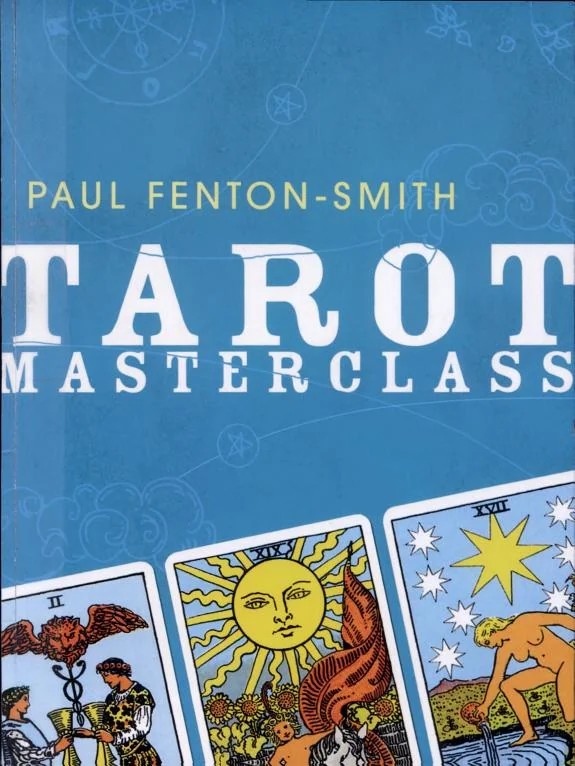
Tarot Masterclass
 72
72

Tarot Masterclass
Paul Fenton-Smith’s "Tarot Masterclass" approaches the Rider-Waite-Smith deck not as a mere oracle, but as a complex symbolic language. The book’s strength lies in its systematic breakdown of each card’s multifaceted meanings and its detailed examination of how to interpret card interactions, a crucial skill often glossed over. Fenton-Smith’s discussion of the spiritual significance of the Major Arcana, particularly the journey of the Fool, offers a compelling archetypal framework. However, the sheer volume of information, while comprehensive, can feel dense for absolute beginners without a dedicated study partner. The section on card layouts, while practical, might have benefited from more visual examples beyond the standard 3-card or Celtic Cross. Nevertheless, for serious students aiming to move beyond rote memorization, "Tarot Masterclass" provides a solid, well-researched foundation. It’s a rigorous manual for those committed to understanding the tarot's depth.
📝 Description
72
Paul Fenton-Smith's 2007 book, Tarot Masterclass, details the 78 cards of the Rider-Waite-Smith deck.
Tarot Masterclass examines the Rider-Waite-Smith tarot deck with a focus on its 78 cards. The book explains the symbolism and meaning of each card, building a base for interpreting tarot readings. It moves beyond simple definitions to discuss how different cards interact in a spread, even when their meanings seem to conflict. The text is structured for both newcomers to tarot and experienced practitioners. Beginners receive clear guidance and exercises to start their practice. Those already familiar with tarot will find deeper insights, especially regarding the Major Arcana's spiritual basis and the analysis of complex card combinations. The book aims for readers who want to develop a tarot practice that goes beyond basic fortune-telling.
Fenton-Smith organizes the material by separating the Major and Minor Arcana. A central idea is following the narrative of the Fool's journey through the Major Arcana, which he relates to archetypal stages of human growth. The book also covers various card layouts, or spreads, and when to use them for different types of questions. This structured approach helps readers understand the tarot system as a whole.
Published in 2007, Tarot Masterclass arrived during a time of growing interest in occult studies. The book builds on the Rider-Waite-Smith deck, first created by A.E. Waite and Pamela Colman Smith in 1909. Fenton-Smith places this deck within the history of divination arts, noting its changes and adaptations in modern esoteric thought. The work reflects a contemporary interest in these symbolic systems, viewing them not only as tools for prediction but also as methods for psychological and spiritual growth.
💡 Why Read This Book?
• Learn to interpret the nuanced interplay between cards, moving beyond individual meanings, as demonstrated in the chapter discussing "conflicting cards" and their resolution within a spread. • Understand the spiritual and psychological journey represented by the Major Arcana, particularly the archetypal progression from The Fool to The World, as explored in Fenton-Smith's analysis. • Gain practical skill in applying various card layouts, like the Celtic Cross, for specific divinatory or self-reflective purposes, as detailed in the section on "various card layouts."
⭐ Reader Reviews
Honest opinions from readers who have explored this book.
❓ Frequently Asked Questions
What specific tarot deck does Paul Fenton-Smith's "Tarot Masterclass" focus on?
The book primarily concentrates on the Rider-Waite-Smith tarot deck, first published in 1909. It delves into the meanings and symbolism specific to this influential deck, making it a core resource for users of this particular tarot system.
Is "Tarot Masterclass" suitable for someone completely new to tarot reading?
Yes, the book is designed as a comprehensive guide for novices, explaining card meanings, interpretation techniques, and various layouts from a foundational level.
Does the book cover interpretations for reversed tarot cards?
While the original blurb doesn't explicitly mention reversed cards, comprehensive tarot guides like this typically address both upright and reversed meanings to offer a fuller interpretive scope.
What distinguishes the "Tarot Masterclass" from other tarot books?
It offers a structured, masterclass approach, focusing on interpreting conflicting cards and the spiritual significance of the Major Arcana, aiming for a deeper understanding beyond basic definitions.
When was "Tarot Masterclass" first published?
The first edition of "Tarot Masterclass" by Paul Fenton-Smith was published on March 1, 2007.
Does the book discuss different tarot spread patterns?
Yes, "Tarot Masterclass" includes a dedicated section on various card layouts, explaining their structure and application for different types of questions and readings.
🔮 Key Themes & Symbolism
Archetypal Journeys
The book maps the progression through the Major Arcana as a representation of the Fool's journey, an archetypal path mirroring human spiritual and psychological development. This concept frames the tarot not merely as a divinatory tool but as a symbolic map of life's challenges and transformations, drawing parallels to Jungian psychology and mythological narratives. Understanding this progression allows readers to contextualize individual card meanings within a larger, cohesive narrative of growth and self-discovery.
Symbolic Language of Cards
Central to "Tarot Detailed look" is the detailed exploration of the Rider-Waite-Smith deck's iconography. Fenton-Smith dissects the symbolism embedded in each card, from the celestial elements to the human figures and objects, explaining how these visual cues contribute to the card's meaning. This focus on visual literacy encourages readers to look beyond rote memorization and engage with the rich symbolic language that underpins tarot interpretation, fostering a deeper, intuitive connection with the cards.
Interpretive Dynamics
A significant focus is placed on the practical art of interpretation, particularly how to read cards in combination. The book addresses the challenge of "conflicting cards," offering methods to synthesize seemingly opposing meanings within a spread. This approach moves beyond isolated card readings, teaching readers to perceive the dynamic interplay of energies and narratives that emerge when multiple cards are drawn together, leading to more nuanced and insightful readings.
Structured Divination Systems
The work systematically presents various card layouts, or spreads, demonstrating their utility for different types of inquiries. From simple three-card readings to more complex arrangements like the Celtic Cross, Fenton-Smith explains the rationale behind each layout and how to effectively position and interpret the cards within these structures. This provides readers with practical frameworks for applying tarot in both divinatory and self-reflective contexts.
💬 Memorable Quotes
Direct passages from the work, attributed to the author.
“The spiritual significance of each of the Major Arcana.”
— This phrase highlights the book's emphasis on understanding the Major Arcana not just as sequential cards, but as profound symbolic representations of spiritual development and archetypal stages within the human experience.
“How to interpret conflicting cards.”
— This points to a key practical skill the book aims to impart: the ability to synthesize and find meaning when cards in a spread appear to contradict each other, a crucial element for nuanced tarot reading.
“Various card layouts.”
— This indicates the book's focus on practical application, offering readers different structural frameworks (spreads) for asking questions and interpreting the resulting card arrangements.
“Meanings for each card.”
— This refers to the foundational element of the book: a detailed exposition of the individual symbolism and interpretive significance of all 78 cards in the tarot deck.
“A comprehensive guide to tarot reading.”
— This statement underscores the book's ambition to cover the subject matter thoroughly, aiming to equip readers with a complete set of tools and knowledge for engaging with tarot.
🌙 Esoteric Significance
Tradition
The work is firmly situated within the Western Esoteric Tradition, specifically drawing from the lineage influenced by Arthur Edward Waite's Hermetic Order of the Golden Dawn. Fenton-Smith’s approach interprets the tarot as a system of symbolic correspondences and archetypal narratives, aligning with the Golden Dawn's method of studying occult subjects through a structured, comparative lens. It departs from purely divinatory interpretations by emphasizing the psychological and spiritual developmental aspects inherent in the card imagery.
Symbolism
Key symbols explored include the journey of The Fool through the Major Arcana, representing the archetypal path of initiation and spiritual growth from innocence to wisdom. The four suits of the Minor Arcana—Wands, Cups, Swords, and Pentacles—are presented as elemental forces (Fire, Water, Air, Earth) governing different aspects of life and consciousness. The interplay of these elements and archetypes forms the core symbolic language the book seeks to decode for the reader.
Modern Relevance
Fenton-Smith’s "Tarot Detailed look" continues to be relevant for contemporary practitioners seeking a structured understanding of the Rider-Waite-Smith deck. It serves as a foundational text for modern tarot enthusiasts and those interested in comparative esoteric studies. Its emphasis on symbolic interpretation and archetypal psychology appeals to current trends in mindfulness, self-help, and therapeutic applications of esoteric tools, linking historical practices to modern personal development goals.
👥 Who Should Read This Book
• Beginning tarot students seeking a structured, comprehensive introduction to the Rider-Waite-Smith deck, offering clear explanations of card meanings and interpretive techniques. • Intermediate tarot readers aiming to deepen their understanding of symbolic interactions and the spiritual significance of the Major Arcana, moving beyond basic definitions. • Students of esoteric symbolism interested in how the Rider-Waite-Smith deck functions as a cohesive system of archetypal imagery and narrative progression.
📜 Historical Context
Published in 2007, "Tarot Detailed look" by Paul Fenton-Smith entered a spiritual marketplace already robust with tarot literature, yet it carved a niche by focusing intensely on the Rider-Waite-Smith deck. This era saw a significant resurgence of interest in esoteric studies, fueled by the internet and a growing desire for personal meaning outside traditional structures. Fenton-Smith's work builds upon the legacy of Arthur Edward Waite and Pamela Colman Smith, whose deck, first published in 1909, had become the de facto standard for many practitioners. While figures like Rachel Pollack had already explored the deck's depths in works like "Seventy-Eight Degrees of Wisdom" (first published 1980s), Fenton-Smith’s "Detailed look" aimed for a more pedagogical, step-by-step approach. The book reflects a contemporary trend to view tarot not just as fortune-telling but as a psychological and spiritual tool, aligning with the broader New Age movement and its focus on self-exploration.
📔 Journal Prompts
The Fool's journey through the Major Arcana, as presented in the book, and its parallel to personal life stages.
Interpreting the dynamic between seemingly conflicting cards drawn in a hypothetical spread.
Analyzing the elemental symbolism of the Wands suit and its connection to personal action.
Reflecting on the spiritual significance of The High Priestess and its archetypal meaning.
Mapping a personal question onto the structure of a Celtic Cross spread.
🗂️ Glossary
Major Arcana
The set of 22 trump cards in a tarot deck, representing significant life events, archetypal figures, and spiritual lessons. They are often seen as the 'great mysteries' of the tarot's narrative.
Minor Arcana
The 56 cards in a tarot deck, divided into four suits (Wands, Cups, Swords, Pentacles). These cards typically represent daily events, challenges, and circumstances.
Rider-Waite-Smith Deck
A highly influential tarot deck first published in 1909, known for its detailed allegorical illustrations on the Minor Arcana, created by Pamela Colman Smith under the direction of Arthur Edward Waite.
Card Layout (Spread)
A specific arrangement of tarot cards used for divination or self-reflection, designed to answer particular questions or explore specific themes based on the positional meanings within the layout.
Archetype
In Jungian psychology and esoteric studies, a universal, archaic pattern of thought or image derived from the collective unconscious, such as The Fool, The Magician, or The Hermit.
Symbolism
The use of symbols to represent ideas and qualities, particularly the visual imagery within tarot cards that conveys deeper meanings beyond their literal representation.
Divination
The practice of seeking knowledge of the future or the unknown by supernatural means, often through tools like tarot cards, astrology, or runes.
This book appears in 1 collection
🔮 Readers Also Liked
Browse all →









From the “Minor Arcana” Collection
View all →








More Free Occult Philosophy Books
View all →