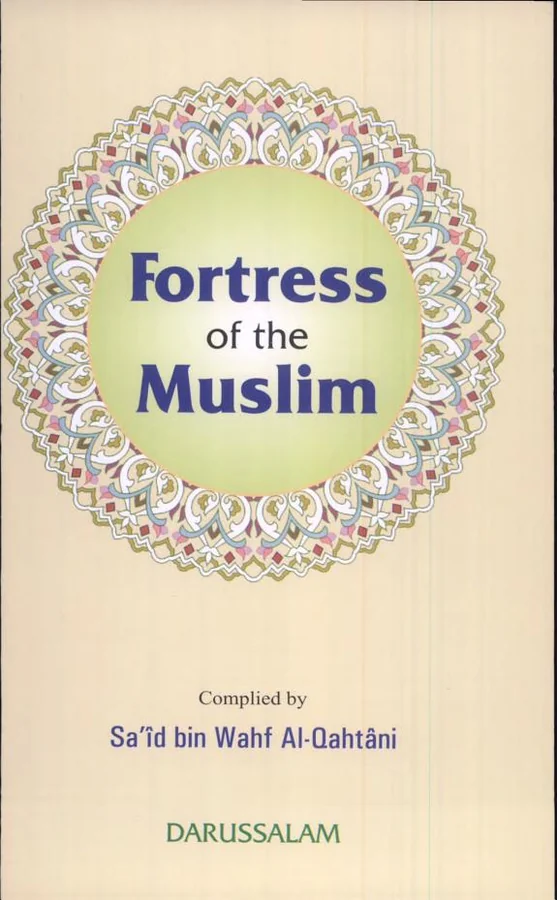
Fortress of the Muslim
 78
78

Fortress of the Muslim
The 'Fortress of the Muslim' functions less as a text to be critically analyzed and more as a spiritual tool. Its strength lies in its direct, unadorned presentation of authentic Islamic supplications, offering a tangible method for engaging with the Divine. The sheer volume and categorization of prayers, covering nearly every conceivable situation, provide a comprehensive devotional framework. However, its lack of narrative or interpretative commentary can be a limitation for those unfamiliar with the underlying theological reasoning. A passage detailing the supplication for entering a home, for instance, is presented plainly, requiring the reader to bring their own understanding of the significance of invoking God's name upon entering any space, physical or metaphorical. Ultimately, it serves its purpose as a practical prayer manual with unwavering adherence to tradition.
📝 Description
78
'Fortress of the Muslim' is a handbook of Islamic supplications and divine remembrance.
This book compiles prayers and recitations (dhikr) central to Islamic devotional life. It offers a structured method for spiritual protection and connection with God, focusing on specific phrases and their power. The text is not a narrative or theological argument, but a practical manual for daily worship. Its aim is to help observant Muslims deepen their faith through consistent invocation. Readers use these prayers for solace, to ward off negativity, and to cultivate inner peace. It is also a useful resource for those studying Islamic devotional practices and the role of prayer.
Within Islamic tradition, 'Fortress of the Muslim' represents a vital channel for maintaining spiritual awareness and seeking divine aid. The practice of dua and adhkar forms a cornerstone of Sufi thought and broader Islamic mysticism, emphasizing a direct, personal relationship with God. These recitations are seen not just as requests, but as active means of cultivating God's presence and building a spiritual defense. The book’s structure, linking specific phrases to daily activities and needs, reflects a holistic approach to faith that permeates the lives of many Muslims seeking closeness to the Divine.
💡 Why Read This Book?
• Gain a structured method for daily spiritual fortification through authentic Islamic supplications, as presented in the book's organized chapters on various invocations. • Cultivate a deeper, more consistent connection with the Divine by learning specific 'adhkar' (remembrance) for daily routines and challenges, as outlined in the text. • Understand the practical application of faith in warding off negativity and seeking divine protection, by reciting the precisely worded prayers for specific circumstances found within the 'Fortress of the Muslim'.
⭐ Reader Reviews
Honest opinions from readers who have explored this book.
❓ Frequently Asked Questions
What is the origin of the prayers in 'Fortress of the Muslim'?
The supplications are derived from authentic Hadith (sayings and actions of Prophet Muhammad) and Quranic verses, compiled over centuries by Islamic scholars to guide believers in their daily devotion.
Is 'Fortress of the Muslim' a religious text or a spiritual guide?
It functions primarily as a spiritual guide, offering practical, actionable prayers and invocations rooted in Islamic religious tradition for personal use.
When was 'Fortress of the Muslim' first published?
While its content is ancient, the specific compilation known widely as 'Fortress of the Muslim' was first published in its modern booklet form around the year 2000, though its origins are much older.
Who compiled the 'Fortress of the Muslim'?
The author is listed as Unknown, as the compilation draws from widely accepted Islamic traditions and Hadith collections rather than a single author's original work.
What does 'dhikr' mean in the context of this book?
'Dhikr' refers to the remembrance of Allah, often through specific phrases, prayers, and recitations included in the 'Fortress of the Muslim' to maintain spiritual awareness.
Can non-Muslims benefit from reading 'Fortress of the Muslim'?
While written for Muslims, non-Muslims can study it to understand Islamic devotional practices, the significance of prayer in Islam, and the cultural importance of these specific invocations.
🔮 Key Themes & Symbolism
Divine Protection and Refuge
The central theme is seeking God's protection against all forms of harm, both spiritual and physical. This is achieved through consistent recitation of specific supplications, known as 'dua' and 'adhkar'. The book presents these invocations as a spiritual shield, creating a 'fortress' around the believer. Examples include prayers for protection from evil, envy, and the trials of this life and the hereafter. The emphasis is on the believer's reliance on Allah as the ultimate source of safety and security, turning to Him in times of fear and vulnerability.
Constant Remembrance (Dhikr)
Beyond seeking protection, the text promotes the concept of 'dhikr', the continuous remembrance of Allah. This involves incorporating specific phrases and short prayers into daily activities – waking up, entering one's home, before eating, etc. The goal is to maintain a state of spiritual awareness and connection throughout the day, preventing heedlessness. This practice is presented as a way to purify the heart, increase faith, and draw closer to the Divine, making every moment an opportunity for spiritual growth and devotion.
Structure of Devotion
The 'Fortress of the Muslim' provides a structured, systematic approach to personal devotion. It categorizes supplications based on specific occasions, times of day, or needs, making it accessible even for beginners. This organization transforms abstract faith into concrete, repeatable actions. By offering clear guidance on what to say and when, the book empowers individuals to actively engage in their spiritual journey, fostering discipline and consistency in their worship and remembrance of God.
The Power of Invocation
This theme underscores the belief in the efficacy of sincere prayer and invocation. The specific wording of the supplications, derived from prophetic tradition, is seen as carrying inherent spiritual power. The act of reciting these phrases is not just symbolic but is believed to actively invoke divine assistance, mercy, and guidance. The book implicitly teaches that through heartfelt and consistent invocation, a believer can influence their spiritual state and their relationship with the Creator.
💬 Memorable Quotes
Direct passages from the work, attributed to the author.
“In the name of Allah, by whose name nothing on earth or in the heaven can harm.”
— This supplication expresses the core principle of seeking divine protection. It asserts that invoking Allah's name is the ultimate safeguard, rendering worldly threats powerless when under His divine care and decree.
“O Allah, grant me guidance, piety, chastity, and self-sufficiency.”
— This prayer highlights the holistic nature of Islamic supplication, seeking not just external protection but internal spiritual qualities and contentment, reflecting a desire for comprehensive well-being.
“There is no god but Allah, the One, who has no partner.”
— This declaration of monotheism ('Tawhid') is a foundational pillar of Islam. Its frequent recitation serves as a constant affirmation of God's absolute oneness and sovereignty, central to the practice of 'dhikr'.
“O Allah, I seek refuge in You from knowledge that does not benefit.”
— This signifies a discerning approach to learning, prioritizing beneficial knowledge that serves spiritual and practical good over mere accumulation of information without purpose.
“Praise be to Allah, who fed us and gave us to drink, and sufficed us and gave us refuge.”
— A comprehensive expression of gratitude recited after meals, acknowledging God's provision for fundamental human needs: sustenance, hydration, protection, and shelter.
🌙 Esoteric Significance
Tradition
While 'Fortress of the Muslim' is primarily a manual for mainstream Islamic devotional practice, its emphasis on the efficacy of specific invocations and the creation of a spiritual 'fortress' can be seen through an esoteric lens. Within Islamic mysticism (Sufism), the rigorous remembrance of God ('dhikr') is central to achieving spiritual states and divine proximity. This text, though accessible to all Muslims, provides the foundational 'dhikr' that Sufi orders often expand upon. It aligns with a Gnostic-like pursuit of direct divine connection and protection through sacred utterances.
Symbolism
The title itself, 'Fortress of the Muslim', is symbolic, representing the believer's spiritual defense and sanctuary provided by God's grace through prayer. Specific symbols include the invocation of Allah's ninety-nine names, each carrying distinct attributes and powers, functioning as keys to divine mercy and protection. The act of recitation, often facing the Kaaba (though not explicitly stated in the booklet), symbolizes orienting one's spiritual life towards the Qibla, the focal point of Muslim worship, reinforcing unity and direction.
Modern Relevance
Contemporary Muslims, particularly those seeking a structured approach to spirituality amidst the distractions of modern life, continue to rely heavily on this compilation. It serves as an anchor for maintaining faith and finding peace. Its principles of seeking divine refuge and practicing constant remembrance are echoed in various modern self-help and mindfulness practices, albeit within a different spiritual framework. The book’s enduring presence highlights a persistent human need for spiritual security and connection, which this text directly addresses through time-honored Islamic tradition.
👥 Who Should Read This Book
• Observant Muslims seeking a practical, accessible guide to strengthening their daily spiritual connection and seeking divine protection through authentic supplications. • Students of comparative religion or Islamic studies interested in understanding the core devotional practices and the role of prayer ('dua' and 'dhikr') within Islam. • Individuals exploring personal spirituality who wish to learn about established traditions of invocation and remembrance as pathways to inner peace and resilience.
📜 Historical Context
The practice of collecting and disseminating authentic Islamic supplications, or 'dua', has deep roots tracing back to the time of Prophet Muhammad himself. Early compilers like Imam Al-Tirmidhi (d. 892 CE) and Imam Al-Nasa'i (d. 915 CE) included many such prayers within their authoritative hadith collections. The specific format and widespread dissemination of 'Fortress of the Muslim' as a standalone booklet gained significant traction in the late 20th century, becoming a ubiquitous resource in Muslim households globally. This surge in popularity occurred during a period of increased Islamic revivalism, where individuals sought readily accessible tools for personal devotion. While not a direct response to a specific intellectual movement, its rise paralleled a broader interest in authentic Islamic practice, contrasting with more syncretic or heterodox spiritual trends that may have existed. Its unassuming nature and reliance on established tradition likely contributed to its unhindered reception among a vast Muslim populace.
📔 Journal Prompts
The concept of seeking refuge in Allah before beginning any action.
The specific supplications for entering and leaving a dwelling.
Reflecting on the significance of 'Bismillah' (In the name of Allah) in daily life.
The role of gratitude ('Shukr') as expressed in post-meal invocations.
How consistent 'dhikr' might alter one's perception of daily challenges.
🗂️ Glossary
Dua
Arabic for supplication or invocation. It is the act of calling upon God, asking for needs, expressing gratitude, or seeking refuge.
Dhikr
Arabic for remembrance. Specifically refers to the remembrance of Allah, often through reciting His names, praises, or specific phrases from the Quran and Sunnah.
Hadith
Reports or traditions concerning the words, actions, and approvals of the Prophet Muhammad. They serve as a primary source for Islamic jurisprudence and practice alongside the Quran.
Sunnah
The practices, teachings, and example of the Prophet Muhammad. It is the second primary source of Islamic law and guidance after the Quran.
Tawhid
The absolute oneness and uniqueness of God (Allah) in Islam. It is the central and most fundamental concept of the Islamic faith.
Bismillah
An Arabic phrase meaning 'In the name of Allah'. It is commonly recited before undertaking any action, signifying reliance on God.
Qibla
The direction of the Kaaba in Mecca, towards which Muslims turn when performing Salat (formal prayer).
This book appears in 1 collection
🔮 Readers Also Liked
Browse all →









From the “Invocation” Collection
View all →








More Free Occult Philosophy Books
View all →