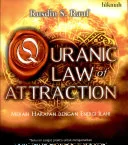
Quranic Law of Attraction
 78
78

Quranic Law of Attraction
Rusdin S. Rauf's "Quranic Law of Attraction" attempts a bold reconciliation between the Abrahamic tradition and modern self-help metaphysics. The strength lies in its earnest effort to find resonance between Quranic concepts and manifestation principles, particularly in its exploration of `Dua` as a powerful vibrational tool. However, the work occasionally strains to fit Quranic verses into the Law of Attraction framework, sometimes overlooking the primary theological and historical contexts of the scripture. A notable passage discusses the story of Prophet Yunus (Jonah) as an example of attracting a desired outcome through intense focus and divine connection, which is an insightful, albeit speculative, interpretation. The limitation is the potential for readers to misinterpret complex theological tenets through a purely self-focused lens. Ultimately, it offers a provocative, though not universally accepted, bridge between faith and personal empowerment.
📝 Description
78
Rusdin S. Rauf's 2023 book connects Quranic verses to modern manifestation principles.
In "The Quranic Law of Attraction," Rusdin S. Rauf proposes that Islamic scripture contains directives for manifesting desired outcomes. Rauf suggests that by interpreting the Quran through the lens of universal attraction laws, individuals can achieve spiritual and material fulfillment. The work moves beyond standard theological readings to show how verses and narratives within the Quran can function as energetic blueprints for shaping one's reality.
This book is for readers who wish to align their faith with personal empowerment and manifestation techniques. It will interest Muslims curious about the subtler dimensions of their scripture, as well as Law of Attraction practitioners seeking historical parallels. The text also serves those involved in comparative religious studies or anyone looking for a fresh perspective on spiritual texts.
This work engages with the contemporary trend of reinterpreting religious texts within self-help and New Thought frameworks. It positions the Quran not merely as a theological document but as a source of actionable principles for personal creation, drawing parallels with concepts found in Western esotericism. By framing concepts like divine will and supplication through the language of energetic alignment and manifestation, Rauf contributes to a broader discussion about the universal nature of spiritual laws across different traditions.
💡 Why Read This Book?
• Gain a novel perspective on Islamic scripture by understanding `Dua` (supplication) not just as prayer, but as a focused energetic projection method, offering a unique spiritual practice distinct from secular manifestation techniques. • Explore the concept of `Tawakkul` (reliance on God) as presented in the book, learning how to cultivate trust and release energetic resistance to achieve desired outcomes, a nuanced approach to faith-based manifestation. • Examine Quranic narratives, such as the story of Prophet Musa (Moses) as detailed in the text, not merely as historical accounts but as practical illustrations of divine principles at work, providing concrete examples of faith-driven success.
⭐ Reader Reviews
Honest opinions from readers who have explored this book.
❓ Frequently Asked Questions
Is 'Quranic Law of Attraction' a mainstream Islamic text?
No, this work presents an interpretative approach that synthesizes Islamic scripture with modern Law of Attraction principles. It is not considered a mainstream theological text but rather an esoteric or comparative spiritual study.
What is the core difference between this and secular Law of Attraction books?
The Quranic approach integrates faith, divine will (`Qadar`), and reliance on God (`Tawakkul`) into the manifestation process, framing personal effort within a spiritual covenant, unlike purely secular methods.
Does the book suggest that the Quran explicitly teaches the Law of Attraction?
The book argues that the Quran contains principles and narratives which, when interpreted through the lens of universal attraction, reveal potent methods for spiritual and material creation, rather than stating it's explicitly named as such.
What are some key Quranic concepts discussed in relation to manifestation?
Key concepts include `Dua` (supplication) as energetic projection, `Tawakkul` (reliance on God) as trust, and understanding divine will (`Qadar`) as responsive to human intention, as explored in the text.
Who is the author, Rusdin S. Rauf?
Rusdin S. Rauf is an author who focuses on the intersection of Islamic teachings and esoteric or New Thought principles, seeking to offer contemporary interpretations of religious texts.
Can non-Muslims benefit from reading 'Quranic Law of Attraction'?
Yes, individuals of any faith or no faith can benefit from exploring the book's unique perspective on intention, faith, and the power of focused thought, as presented through a Quranic framework.
🔮 Key Themes & Symbolism
Divine Will and Personal Agency
This theme examines the intricate relationship between divine decree (`Qadar`) and individual human action within the Quranic framework. It challenges a purely fatalistic interpretation, proposing that God's will is responsive to sincere supplication (`Dua`) and consistent effort. The book explores how understanding one's agency, guided by divine principles, is crucial for manifesting desired outcomes. Narratives of prophets are presented as examples of individuals who actively engaged with divine guidance to shape their destinies, demonstrating that faith and action are intertwined in the creation of reality.
Supplication as Energetic Projection
The work reinterprets `Dua` (supplication or prayer) not merely as a request to God, but as a powerful mechanism for projecting focused intention and energy into the universe. It suggests that the sincerity, clarity, and emotional conviction behind a `Dua` directly influence its energetic impact, thereby attracting corresponding realities. This perspective aligns the spiritual practice of prayer with the energetic principles central to the Law of Attraction, framing it as a potent tool for co-creation with the Divine.
Trust and Energetic Alignment
This theme examines the concept of `Tawakkul` (reliance on God), reframing it as a state of profound trust that facilitates energetic alignment. `Tawakkul` is presented as more than passive acceptance; it involves releasing doubt, fear, and mental blocks that impede manifestation. By cultivating this deep trust, individuals create an energetic resonance that allows divine blessings and desired outcomes to manifest smoothly and effectively, harmonizing personal desires with the divine plan.
Quranic Narratives as Manifestation Blueprints
The book analyzes stories of prophets and righteous individuals found in the Quran as practical case studies in applied spiritual law. These narratives are presented not just as historical or moral accounts, but as detailed blueprints demonstrating how faith, intention, and action, when aligned with divine principles, led to extraordinary manifestations. By dissecting these stories, readers can identify universal patterns and techniques applicable to their own lives for achieving spiritual and material goals.
💬 Memorable Quotes
Direct passages from the work, attributed to the author.
“The sincerity of your `Dua` is the frequency you broadcast.”
— This statement suggests that the emotional and spiritual depth of one's prayer or supplication is the primary factor determining its effectiveness in attracting a response or outcome, emphasizing the energetic quality of intention.
“`Tawakkul` is not idleness, but the energetic release after focused effort and sincere `Dua`.”
— This interpretation clarifies that relying on God (`Tawakkul`) is an active state of trust that follows diligent action and prayer, rather than a passive resignation, highlighting the importance of releasing energetic resistance.
“Every story of divine intervention in the Quran is a evidence of aligned human intention.”
— This concept posits that miraculous events or significant positive shifts described in the Quran are not random but are the result of individuals' focused intentions and faith, aligning them with divine support.
“The Quran provides the energetic architecture for manifestation.”
— This interpretation frames the Quran as a foundational text offering the underlying principles and structures necessary for individuals to consciously create their desired realities through spiritual means.
💡 Key Ideas
Editorial paraphrase of the work's core concepts — not direct quotes.
Understanding `Qadar` allows you to co-create, not merely accept.
This paraphrased idea suggests that divine decree (`Qadar`) is not a rigid, unchangeable fate, but a framework within which human free will and intention can actively participate in shaping one's reality and future.
🌙 Esoteric Significance
Tradition
This work situates itself within an esoteric interpretation of Islam, a lineage that has historically explored mystical and allegorical meanings within the Quran and Hadith. It draws parallels with broader New Thought and Law of Attraction movements, which often have roots in Hermeticism and Transcendentalism. Rauf's approach departs from purely orthodox theological interpretations by applying universal energetic principles, often found in Western esotericism, to Islamic scripture, aiming to bridge these seemingly disparate traditions.
Symbolism
Key symbols include the concept of `Noor` (Divine Light), interpreted as the fundamental energetic substance of creation that responds to focused human intention. The Kaaba in Mecca can be seen as a symbolic focal point for collective intention and energetic alignment. Furthermore, the narrative of the `Mi'raj` (Prophet Muhammad's ascension) can be symbolically understood as a journey of consciousness and energetic transcendence, illustrating the potential for spiritual elevation and manifestation.
Modern Relevance
Contemporary thinkers and practitioners in fields like Islamic psychology, positive psychology, and spiritual coaching are increasingly exploring Rauf's synthesis. His work speaks to modern seekers who wish to integrate their faith with personal development and manifestation practices. Schools of thought that emphasize mindfulness, intentionality, and the power of belief, such as certain branches of positive psychology and even some secular coaching methodologies, find common ground in the principles discussed.
👥 Who Should Read This Book
• Muslim practitioners seeking to deepen their spiritual practice by understanding the energetic principles behind `Dua` and `Tawakkul`, offering a novel framework for faith-based manifestation. • Students of comparative religion and esotericism interested in how Islamic scripture can be interpreted through the lens of universal attraction laws, providing unique cross-cultural insights. • Individuals new to manifestation principles who are drawn to exploring its potential roots in ancient religious traditions, offering a faith-inclusive pathway to personal empowerment.
📜 Historical Context
Rusdin S. Rauf's "Quranic Law of Attraction" emerges from a contemporary intellectual milieu where comparative religion and New Thought philosophies increasingly intersect. While the concept of divine favor and answered prayer has existed in Islam for centuries, explicitly framing these within the modern 'Law of Attraction' paradigm is a development of the late 20th and early 21st centuries. This period saw a global surge in self-help literature and a renewed interest in the esoteric dimensions of various religious traditions. Rauf's work participates in a broader trend, exemplified by thinkers like Neville Goddard (though not directly engaging with Islamic texts, his work on subjective reality influenced many), who sought to find universal principles across diverse spiritual expressions. The reception of such works within traditional Islamic scholarship can be varied, with some viewing it as innovative and others cautioning against interpretations that might deviate from established theological doctrines, particularly concerning the nature of divine will and human agency.
📔 Journal Prompts
Reflect on the energetic quality of your `Dua` as described in the book.
Analyze a Quranic narrative through the lens of manifestation principles.
How does your understanding of `Tawakkul` influence your actions?
Identify personal blocks to manifestation, linking them to potential energetic resistance.
Consider the concept of divine will (`Qadar`) in relation to your personal goals.
🗂️ Glossary
`Dua`
Arabic term for supplication, prayer, or invocation. In this context, it is interpreted as a powerful energetic projection of intention and desire towards the Divine.
`Tawakkul`
Arabic term signifying reliance on God or absolute trust in Divine Providence. The book interprets it as an active state of energetic release and alignment, crucial for manifestation.
`Qadar`
Arabic term for divine decree or predestination. The work explores interpretations that allow for human agency and co-creation within the framework of God's will.
`Noor`
Arabic for 'light'. In esoteric Islamic traditions, it often refers to Divine Light, the essence of creation, or spiritual illumination. Here, it relates to the energetic fabric of reality.
Manifestation
The process of bringing thoughts, beliefs, desires, or intentions into physical reality through focused energy, intention, and often, divine cooperation.
Esoteric Islam
Refers to the mystical or inner dimensions of Islam, often involving allegorical interpretations of scripture and spiritual practices aimed at direct experience of the Divine, such as Sufism.
New Thought
A spiritual movement originating in the 19th century that emphasizes the power of thought and belief in shaping reality, often drawing from various religious and philosophical traditions.
This book appears in 1 collection
🔮 Readers Also Liked
Browse all →









From the “Law of Attraction” Collection
View all →







More Free Occult Philosophy Books
View all →