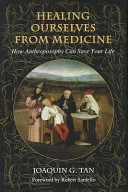
Healing Ourselves from Medicine
 76
76

Healing Ourselves from Medicine
Joaquin G. Tan's Healing Ourselves from Medicine offers a refreshing perspective that moves beyond the symptom-focused approach often prevalent in contemporary healthcare. The author's thirty years of experience lend significant weight to his explanations of anthroposophic medicine, particularly in how he articulates the philosophical underpinnings. His clear exposition of concepts like the fourfold human constitution, while complex, is presented accessibly. A limitation, however, is that some readers may find the initial philosophical sections dense, requiring careful attention. The section detailing the 'etheric body' as a vital force is particularly illuminating, illustrating the book's capacity to reframe understanding of biological processes. Tan successfully bridges theory and practice, making a case for a more integrated view of self-healing. The work is a valuable addition for those seeking to deepen their understanding of health from an esoteric viewpoint.
📝 Description
76
Joaquin G. Tan published Healing Ourselves from Medicine in 2011, detailing anthroposophic health applications.
Healing Ourselves from Medicine presents a practical guide to applying anthroposophic principles to personal health. Joaquin G. Tan, drawing on three decades of experience, outlines a method for self-healing. The book aims to clarify a distinct perspective on human vitality and illness.
This work is for individuals seeking a deeper understanding of health and sickness outside standard medical views. It addresses those interested in the philosophical basis of healing and offers a clear path to applying esoteric ideas for personal well-being. The book serves both those new to these concepts and those with prior knowledge.
The book was published in 2011, a time when interest in complementary and alternative medicine was growing. It connects with earlier movements such as biodynamic agriculture, founded by Rudolf Steiner. The focus on anthroposophy positions the book within a particular intellectual tradition.
This book is rooted in anthroposophy, a spiritual philosophy developed by Rudolf Steiner. Anthroposophy views the human being as a complex unity of physical, etheric, astral, and spiritual bodies, and suggests that understanding these components is key to health and illness. Tan's work applies these ideas to practical self-care, suggesting that a conscious awareness of these subtle bodies and their interactions can lead to greater personal well-being. It follows Steiner's broader influence on fields like education, agriculture, and medicine.
💡 Why Read This Book?
• Learn how to apply anthroposophic principles to your own health, moving beyond conventional treatment models as detailed in the book's practical manual sections. • Gain a deeper understanding of the philosophical underpinnings of health and illness, informed by the esoteric tradition of anthroposophy, first articulated in the early 20th century. • Discover the interconnectedness of spiritual and physical well-being, equipping you with a new framework for self-care and vitality that draws from decades of practical experience.
⭐ Reader Reviews
Honest opinions from readers who have explored this book.
❓ Frequently Asked Questions
What is anthroposophic medicine?
Anthroposophic medicine is an extension of conventional medicine, originating from the spiritual-scientific teachings of Rudolf Steiner. It views the human being as a complex interplay of physical, etheric, astral, and 'I' (ego) bodies, integrating spiritual insights into diagnosis and treatment.
Who developed the principles of anthroposophic medicine?
The principles of anthroposophic medicine were primarily developed by Rudolf Steiner in the early 20th century, with significant contributions from physicians like Ita Wegman. Joaquin G. Tan builds upon this foundation in his 2011 work.
Is this book suitable for someone with no prior knowledge of esotericism?
Yes, the book aims to explain the philosophical underpinnings clearly. While it delves into esoteric concepts, the author's practical approach and thirty years of experience facilitate understanding for those new to these ideas.
What does 'Healing Ourselves from Medicine' mean in the context of the book?
It suggests an active, self-directed approach to health that complements or offers an alternative to purely external medical interventions. The book empowers readers to understand their own healing capacities through an anthroposophic lens.
What is the 'fourfold human constitution' mentioned in the book?
The fourfold human constitution, a core concept in anthroposophy, refers to the physical body, etheric body (life forces), astral body (consciousness/soul), and the 'I' or ego (spirit). The book explores how imbalances in these can manifest as illness.
How does Joaquin G. Tan's approach differ from conventional medicine?
Tan's approach, rooted in anthroposophy, emphasizes the spiritual and energetic dimensions of health, viewing the human being holistically. This contrasts with conventional medicine's primary focus on the physical body and biochemical processes.
🔮 Key Themes & Symbolism
The Etheric Body
The work extensively explores the concept of the etheric body, often described as the field of life forces or formative energies. Tan posits that understanding and nurturing this subtle body is crucial for maintaining physical health and facilitating recovery. Unlike purely physical explanations, this perspective suggests that illness can arise from disruptions in these vital energies, and healing involves restoring their harmonious flow and structure. The book provides practical insights into how one might perceive and influence these forces.
Spiritual-Physical Interplay
A central theme is the profound connection between the spiritual and physical dimensions of human existence. Tan argues that true healing necessitates addressing the spiritual roots of physical ailments. This anthroposophic view transcends a materialistic understanding of health, proposing that the 'I' or ego, the spiritual core of the individual, plays a vital role in maintaining balance. The book guides readers to recognize how their spiritual state influences their physical condition.
Practical Application of Anthroposophy
Beyond theoretical discourse, the book functions as a practical manual. Tan draws on thirty years of experience to offer actionable methods for applying anthroposophic principles to self-healing. This includes guidance on diet, lifestyle, and potentially the use of specific remedies derived from nature, all viewed through an esoteric lens. The emphasis is on empowering the individual to become an active participant in their own well-being journey.
The Fourfold Human Being
The book elaborates on the anthroposophic model of the fourfold human constitution: the physical body, etheric body, astral body, and the 'I'. Each component is explored in relation to health and illness. Understanding the distinct functions and interactions of these layers allows for a more nuanced diagnosis and approach to healing, acknowledging that imbalances in one sphere can manifest in another. This holistic framework is fundamental to Tan's method.
💬 Memorable Quotes
Direct passages from the work, attributed to the author.
“The philosophical underpinnings of this unique approach to self-healing.”
— This phrase expresses the book's core aim: to reveal the conceptual framework behind anthroposophic medicine, making its principles understandable and applicable for personal well-being.
“Based on thirty years of practical experience...”
— This highlights the author's extensive background, lending credibility and depth to the presented methods. It signals that the advice is not purely theoretical but grounded in real-world application.
“...a detailed manual for applying the principles of an anthroposophic approach to medicine.”
— This indicates the book's functional purpose: to serve as a guide. It promises concrete steps and instructions for readers interested in integrating anthroposophy into their health practices.
“Anyone can use.”
— This suggests the accessibility of the methods described. Despite the esoteric nature of anthroposophy, the author aims to present the information in a way that is comprehensible and usable by a broad audience.
“Seeking a deeper understanding of human health and illness.”
— This points directly to the target reader – someone unsatisfied with conventional explanations and looking for more comprehensive, perhaps spiritual or vitalistic, perspectives on the nature of well-being.
🌙 Esoteric Significance
Tradition
This work is firmly rooted in the esoteric tradition of Anthroposophy, a spiritual philosophy founded by Rudolf Steiner. Anthroposophy itself draws from various esoteric streams, including Hermeticism, Gnosticism, and Theosophy, but synthesizes them into a unique spiritual-scientific worldview. Tan's book applies this specific lineage to the domain of medicine, viewing the human being not just as a physical organism but as a complex interplay of spiritual and vital forces.
Symbolism
The book implicitly engages with symbols of vitality and formation, central to anthroposophic thought. Concepts like the 'etheric body' can be seen as symbolic representations of life forces, distinct from but interacting with the physical body. The 'fourfold human being' itself functions as a symbolic map, delineating the different levels of human existence—physical, life, soul, and spirit—providing a framework for understanding health and disease.
Modern Relevance
Contemporary thinkers and practitioners in holistic health, biodynamic agriculture, and Waldorf education continue to draw inspiration from anthroposophy. Tan's book contributes to this ongoing relevance by offering a practical guide for individuals seeking to integrate these principles into their personal health practices, aligning with a modern resurgence of interest in vitalistic and spiritual approaches to well-being.
👥 Who Should Read This Book
• Individuals interested in Anthroposophy: Those seeking to understand or deepen their knowledge of Rudolf Steiner's spiritual science and its application to health and healing. • Seekers of holistic health: Readers dissatisfied with purely materialistic medical models who are looking for approaches that consider the spiritual and energetic dimensions of the human being. • Practitioners of alternative medicine: Therapists, healers, or individuals engaged in complementary health practices who wish to expand their understanding with an esoteric perspective on vitality and illness.
📜 Historical Context
Published in 2011, Healing Ourselves from Medicine emerges from the continuing legacy of anthroposophy, a spiritual philosophy developed by Rudolf Steiner in the early 20th century. Steiner, along with physician Ita Wegman, laid the groundwork for anthroposophic medicine, which seeks to understand the human being holistically, integrating physical, etheric, astral, and 'I' (ego) dimensions. This approach offered a spiritual-scientific alternative to the increasingly mechanistic and materialistic medical science of the time, such as the burgeoning field of pharmacology. Tan’s work builds upon these foundations, presenting them in a more accessible, practical format for contemporary readers. While Steiner's ideas were gaining some traction in alternative health circles by the 2000s, they remained largely outside the mainstream medical discourse, often met with skepticism by proponents of purely evidence-based, allopathic medicine.
📔 Journal Prompts
Reflect on the concept of the etheric body as presented in the book and its potential influence on physical vitality.
How does the 'fourfold human being' framework alter your perception of personal health and illness?
Consider the practical applications of anthroposophic principles discussed for self-healing.
Analyze the relationship between spiritual well-being and physical health as described by Joaquin G. Tan.
Explore how the 'I' or ego might influence one's approach to overcoming illness.
🗂️ Glossary
Anthroposophy
A spiritual philosophy founded by Rudolf Steiner, seeking to understand the human being and the cosmos through spiritual perception and scientific inquiry. It posits a spiritual dimension to existence accessible through specific methods of inner development.
Etheric Body
In anthroposophy, the etheric body, or 'life body,' is considered the field of formative forces and life energies that organize and maintain the physical body. It is seen as the source of vitality, growth, and reproduction.
Astral Body
The astral body, or 'soul body,' is understood in anthroposophy as the seat of consciousness, feeling, and instinctual life. It is responsible for subjective experience, movement, and the capacity for sensation.
The 'I' (Ego)
The 'I,' or ego, represents the spiritual core of the human being in anthroposophy. It is the principle of individuality, self-awareness, and conscious thought, considered the highest aspect of the human constitution.
Fourfold Human Being
The anthroposophic model describing the human being as composed of four interconnected principles: the physical body, the etheric body, the astral body, and the 'I' (ego). Each plays a distinct role in health and consciousness.
Spiritual Science
A term used by Rudolf Steiner to describe his method of investigating the spiritual world with clarity and rigor, akin to natural science but employing different faculties of perception and cognition.
Self-Healing
An active process where an individual utilizes their own inherent capacities, often guided by specific principles or practices, to restore and maintain health, moving beyond passive reliance on external treatments.