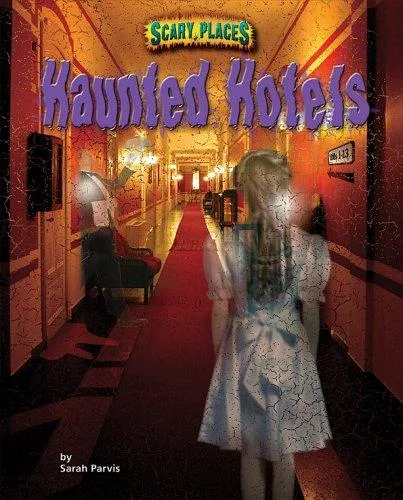
Haunted Hotels (Scary Places)
 73
73

Haunted Hotels (Scary Places)
Sarah Parvis's Haunted Hotels (Scary Places) offers a straightforward catalog of allegedly haunted lodging establishments. The strength of the book lies in its direct presentation of numerous anecdotes, providing a broad overview of well-known spectral inns. However, the work's primary limitation is its lack of critical analysis or deeper investigation into the psychological or historical underpinnings of these hauntings. For instance, the accounts of the Stanley Hotel in Estes Park, Colorado, often presented with a matter-of-fact tone, could benefit from more context regarding its historical significance beyond its alleged ghostly inhabitants. While informative for a casual reader, it falls short of providing nuanced perspectives on the phenomenon of haunted places. It serves as a compendium rather than an exploration.
📝 Description
73
Sarah Parvis's 2008 book examines hotels allegedly inhabited by spectral presences.
Haunted Hotels, published in 2008, collects accounts and lore surrounding lodging establishments believed to be haunted. Sarah Parvis compiles stories and historical details from sites alleged to host spectral inhabitants, aiming to inform readers about these reported hauntings. The book is for those interested in the paranormal, folklore, and the history of famous haunted locations, appealing to fans of ghost stories and urban legends.
This work is suited for a general audience, including young adults and adults curious about supernatural claims associated with hotels. It is not intended for academic study but for enthusiasts of the macabre. The book emerged during a time of heightened public fascination with the paranormal, often amplified by reality television and online discussions. Its focus on hotels taps into a specific niche within this broader interest, drawing on the long history of ghost stories connected to inns and lodging places.
This book fits within the broader tradition of ghost lore and paranormal investigation, which has roots in spiritualism and folklore studies. While not an academic treatise, it taps into a popular cultural fascination with hauntings that has persisted for centuries. The focus on hotels specifically highlights locations with a dense history of transient populations and dramatic events, often seen as fertile ground for lingering spiritual energy or 'place memory' in popular paranormal belief systems. It reflects a modern iteration of the Victorian fascination with the spectral, adapted for a contemporary audience.
💡 Why Read This Book?
• Gain exposure to specific haunted hotels like the Stanley Hotel, understanding the historical narratives that contribute to their spectral reputation. • Discover various reported paranormal phenomena, such as apparitions and unexplained noises, linked to these specific locations. • Explore the cultural significance of hotels as sites of reported supernatural activity, a recurring motif in ghost lore since the early 20th century.
⭐ Reader Reviews
Honest opinions from readers who have explored this book.
❓ Frequently Asked Questions
What are some of the most famous haunted hotels mentioned in Sarah Parvis's book?
The book features several well-known haunted hotels, including the Stanley Hotel in Estes Park, Colorado, and the Queen Mary in Long Beach, California, both famous for their long histories of reported paranormal activity.
Does Haunted Hotels discuss the history of the locations alongside the ghost stories?
Yes, Sarah Parvis's work typically includes historical background for each hotel, providing context for the alleged hauntings and the people associated with them, often dating back to their initial construction or significant events.
Is Haunted Hotels suitable for young adults?
Yes, the book is generally considered suitable for young adults and older due to its straightforward narrative style and focus on ghost stories, making it accessible to a younger audience interested in the paranormal.
What kind of evidence does the book present for hauntings?
The book primarily relies on anecdotal evidence, personal testimonies from guests and staff, and local legends that have accumulated over time regarding the spectral occurrences at these hotels.
When was Haunted Hotels first published?
Haunted Hotels (Scary Places) was first published in 2008 by Sarah Parvis, placing it within a period of heightened interest in paranormal literature and media.
Does the book offer explanations for the hauntings?
While the book presents the stories and phenomena associated with haunted hotels, it generally refrains from offering definitive explanations, allowing readers to draw their own conclusions about the nature of the alleged hauntings.
🔮 Key Themes & Symbolism
The Hotel as a Nexus of Spirits
The book posits hotels as unique environments where the transient nature of guests and the long history of the buildings can foster lingering spectral energy. Unlike static homes, hotels witness constant comings and goings, creating a layered history of human experience. This constant flux, coupled with potentially dramatic events that may have occurred within their walls, is presented as a fertile ground for reported hauntings. The concept suggests that the collective memories and emotional residue of countless visitors can manifest as ghostly phenomena.
Architecture and Atmosphere of Fear
Parvis highlights how the physical structures of old hotels – their grand ballrooms, dimly lit corridors, and forgotten service areas – contribute to an atmosphere conducive to ghost stories. The architectural elements themselves are often described as playing a role in the perceived hauntings, with creaking floors, rattling doors, and echoing hallways becoming part of the spectral narrative. This theme explores the interplay between the built environment and the human imagination in creating and perpetuating tales of the supernatural.
Legends and Local Lore
A significant aspect of the book involves the collection and presentation of local legends and anecdotal accounts passed down through generations. These stories, often involving former guests, staff, or notable historical figures associated with the hotels, form the backbone of the hauntings. The book treats these legends as integral to the identity of the haunted hotels, showcasing how folklore shapes our understanding and perception of these places.
The Persistence of Memory
The underlying theme suggests that certain locations, particularly those with significant human history and emotional intensity like hotels, can retain a form of 'memory.' This concept, often referred to as psychometry or place memory in esoteric circles, posits that strong events or emotions can imprint themselves onto the environment, leading to phenomena perceived as hauntings. The book explores how these perceived elements of the past continue to manifest in the present.
💬 Memorable Quotes
Direct passages from the work, attributed to the author.
“Many guests and staff at the Queen Mary report unexplained phenomena.”
— This statement, representing a common sentiment in the book, underscores the reliance on eyewitness accounts and continuous reports of paranormal activity as primary evidence for the ship's haunted status.
“Old hotels often become repositories for stories of past lives and lingering presences.”
— This idea captures the essence of the book's exploration into how hotels, with their long histories and constant turnover of people, are seen as sites where spectral energies and residual memories might accumulate.
“The atmosphere of a historic hotel can feel charged with unseen activity.”
— This interpretation points to the book's emphasis on the sensory and emotional experience of being in these locations, suggesting that the ambiance itself contributes to the perception of paranormal presence.
“Local tales and legends are key to understanding a hotel's haunted reputation.”
— This concept emphasizes the book's reliance on folklore and community narratives as foundational elements in building the legends surrounding haunted hotels.
💡 Key Ideas
Editorial paraphrase of the work's core concepts — not direct quotes.
The Stanley Hotel's reputation for hauntings is deeply intertwined with its history and architecture.
This paraphrased concept highlights how the book connects the spectral claims to the hotel's past events and physical characteristics, suggesting that the location's history is integral to its ghostly lore.
🌙 Esoteric Significance
Tradition
While not explicitly tied to a specific esoteric lineage, Haunted Hotels touches upon themes relevant to animism and the concept of 'place memory' found in various spiritual traditions. It aligns with folk magic and local hauntology, where the energy of past events and inhabitants is believed to linger in physical locations. The book presents these phenomena without the rigorous theoretical framework of Hermeticism or Kabbalah, focusing instead on the narrative and experiential aspects of hauntings.
Symbolism
The hotel itself can be viewed as a symbol of transition and the liminal spaces between worlds. Its corridors represent journeys, rooms hold private dramas, and the collective atmosphere can symbolize the veil between the living and the dead. Specific reported phenomena, such as apparitions of former guests or staff, symbolize the persistence of human consciousness or emotional residue beyond physical death, embodying the idea that significant life events can leave an imprint on a place.
Modern Relevance
In contemporary times, the themes explored in Haunted Hotels remain relevant to the burgeoning field of hauntology, which examines the cultural impact of hauntings and spectrality. It also appeals to paranormal investigation groups and enthusiasts who continue to explore haunted locations, seeking evidence of the supernatural. The book’s accessible format makes it a gateway for individuals interested in exploring the intersection of history, folklore, and the unexplained in everyday environments.
👥 Who Should Read This Book
• Enthusiasts of ghost stories and paranormal investigations seeking a collection of haunted hotel accounts. • Readers interested in folklore and urban legends who want to explore the stories behind famous haunted locations. • Young adults and casual readers looking for accessible and entertaining non-fiction about the supernatural.
📜 Historical Context
Published in 2008, Sarah Parvis's Haunted Hotels arrived during a peak period of popular interest in the paranormal, largely driven by media like ghost-hunting reality shows and a surge of online content. This era saw a widespread fascination with haunted locations, making books like Parvis's a natural fit for the market. Contemporaries like Hans Holzer, who had been actively investigating and publishing on ghosts since the 1960s, had already laid groundwork for this genre. While Parvis's work is more of a compilation for a general audience rather than academic research, it tapped into a cultural zeitgeist that embraced supernatural narratives. The reception was generally positive among enthusiasts of ghost stories, fitting neatly into the existing field of paranormal literature without significant controversy or specific critical engagement from academic circles at the time of its release.
📔 Journal Prompts
The spectral reputation of the Stanley Hotel and its historical context.
Consider the role of residual energy in locations like the Queen Mary.
Reflect on how the architecture of old hotels contributes to their haunted lore.
Analyze a specific local legend presented in the book regarding a haunted inn.
Explore the concept of place memory as it applies to the hotels described.
🗂️ Glossary
Apparition
A ghost or ghostlike image of a person. In the context of haunted hotels, these are often reported sightings of figures believed to be spirits of past occupants or staff.
Residual Haunting
A paranormal phenomenon where a location replays past events, like a recording. This is often described as energy imprinted on the environment, rather than an interactive spirit.
Intelligent Haunting
A haunting where a spirit or entity appears to be aware of and interact with the living. This can involve communication, movement of objects, or direct appearances.
Anecdotal Evidence
Information based on personal accounts rather than on facts or research. In ghost stories, this refers to eyewitness testimonies and personal experiences of paranormal events.
Folklore
The traditions, customs, and beliefs of a community or group, often passed down by word of mouth. Haunted hotel stories frequently rely on local folklore.
Place Memory
The idea that locations can retain an imprint of significant past events or emotions, which can manifest as perceived hauntings or spectral presences.
Liminal Space
A transitional or in-between place or state, such as a threshold, hallway, or hotel lobby. These spaces are often considered potent in folklore and spiritual beliefs.
🔮 Readers Also Liked
Browse all →








More by Sarah Parvis
All books →



More Free Occult Philosophy Books
View all →