Haunted Hotels (Scary Places)
 79
79

Haunted Hotels (Scary Places)
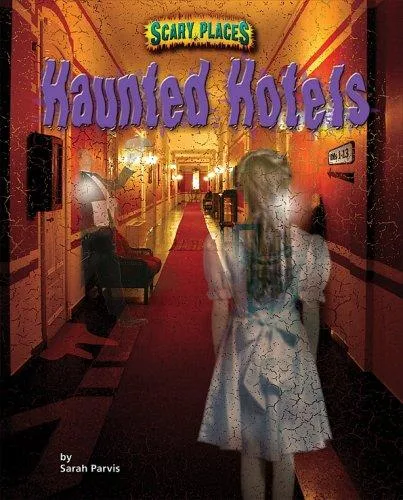
Sarah Parvis's Haunted Hotels (Scary Places) offers a catalog of chilling lodgings, but its true strength lies not in sensationalism, but in the historical fragments it unearths. The book skillfully connects the spectral narratives to the very fabric of the buildings themselves. For instance, the account of the Stanley Hotel, famously inspiring Stephen King's 'The Shining,' links its hauntings to its history as a sanatorium, a detail that lends weight to the unsettling tales. While the compendium format occasionally feels like a series of disconnected anecdotes, the author's focus on the architectural and historical underpinnings of these alleged hauntings provides a grounding element. It avoids the trap of pure sensationalism, instead offering a more nuanced look at why certain places seem to hold onto their past so tenaciously. The work is a competent survey for those intrigued by the geography of fear.
📝 Description
79
Sarah Parvis's 2008 book, Haunted Hotels, collects ghost stories from lodgings worldwide.
Haunted Hotels (Scary Places) compiles unsettling accounts from inns, motels, and other lodgings around the world. The book details reported paranormal activity, from spectral apparitions to unexplained phenomena, and emphasizes the atmospheric and historical aspects of these sites. It gathers anecdotal evidence and historical lore surrounding alleged hauntings.
This work appeals to readers interested in the folklore of haunted places, paranormal investigations, and the intersection of history and ghost stories. It is for those who enjoy exploring the darker side of travel and local legends, especially accounts of supernatural occurrences tied to specific geographical locations. The book reflects a broader cultural fascination with the spectral and the uncanny, building upon a long tradition of ghost lore and haunted house narratives that gained traction throughout the 20th century.
Haunted Hotels emerges during a period of heightened popular interest in paranormal investigation, influenced by reality television and online ghost hunting communities. The book contributes to a long tradition of ghost lore and haunted house narratives. It taps into a cultural fascination with the spectral and the uncanny, examining how locations might retain echoes of past events or emotions, often linking reported hauntings to the specific architectural or historical context of each hotel.
💡 Why Read This Book?
• Learn about the specific paranormal claims associated with the Lizzie Borden House, understanding how its history as a murder scene informs its reputation. • Discover the reported hauntings at The Queen Mary, a ship-turned-hotel, and how its maritime past contributes to its spectral lore. • Explore the connection between the Stanley Hotel's history as a tuberculosis sanatorium and the paranormal phenomena reported there, as detailed in the text.
⭐ Reader Reviews
Honest opinions from readers who have explored this book.
❓ Frequently Asked Questions
What kind of paranormal activity is typically reported in Haunted Hotels?
Reports vary widely but often include sightings of apparitions, disembodied voices, unexplained cold spots, moving objects, and feelings of being watched. The book details these phenomena across numerous establishments.
Does Haunted Hotels focus on a specific geographical region?
No, the book covers haunted hotels from various locations globally, presenting a diverse range of spectral accounts from different countries and cultures.
Is Haunted Hotels suitable for young readers?
Published in 2008 and categorized as 'Scary Places,' the content is geared towards an audience comfortable with ghost stories and potentially frightening narratives, rather than very young children.
What is the historical significance of the Stanley Hotel mentioned in the book?
The Stanley Hotel, located in Estes Park, Colorado, is famous for inspiring Stephen King's novel 'The Shining.' The book likely explores its reported hauntings alongside this literary connection.
Does the book offer explanations for the hauntings?
While the book presents the reported phenomena, it primarily focuses on cataloging and contextualizing the stories. Explanations are often left to the reader's interpretation, drawing on historical events or local folklore.
Can I use Haunted Hotels for travel planning?
While it details many real locations, the book's primary purpose is to explore ghost stories and paranormal lore, not to provide practical travel advice or accommodation reviews.
🔮 Key Themes & Symbolism
Lingering Energies
The book explores the concept that significant emotional events or deaths within hotel walls can leave behind residual energies. These 'hauntings' are presented not necessarily as conscious spirits, but as imprints of past trauma or intense experiences that manifest in unexplained phenomena. This theme looks at how specific locations, particularly those with histories of tragedy or significant human activity, become focal points for reported paranormal occurrences, suggesting a form of psychometric resonance within the architecture.
Archetypal Hauntings
Haunted Hotels categorizes common types of spectral encounters found in lodging establishments. This includes the 'phantom guest' who checks in and out without a trace, the 'sorrowful spirit' tied to a tragic past, and unexplained environmental disturbances. By identifying these recurring motifs, the work suggests a universal language of hauntings, where certain narrative structures and spectral characterizations appear repeatedly across different locations and cultures, reflecting shared anxieties and folklore.
Place and Memory
A core theme is the intrinsic link between a physical place, its history, and the stories it generates. The book posits that hotels, with their transient populations and often long, varied histories, are particularly fertile ground for 'place memory.' Each establishment's unique past—whether a former sanatorium like the Stanley Hotel or a site of historical events—is presented as crucial context for understanding the reported hauntings, suggesting that the building itself acts as a repository of its own spectral narrative.
The Uncanny in Hospitality
This theme examines the unsettling juxtaposition of comfort and fear found in hotels. Places designed for rest and relaxation become settings for dread and the unknown. The book highlights how the familiar environment of a hotel room or corridor can be transformed into a site of the uncanny when paranormal activity is reported, playing on our psychological vulnerability in spaces that are both intimate and impersonal, public yet private.
💬 Memorable Quotes
Direct passages from the work, attributed to the author.
“The history of a place can feel as tangible as its walls.”
— This statement suggests that the past events and human experiences associated with a location are not merely abstract information but can create a palpable atmosphere or presence that influences the present environment.
“Some hotels seem to collect stories as much as they collect guests.”
— This implies that certain establishments possess a unique quality that attracts and retains narratives, particularly those of a supernatural or unsettling nature, making them repositories of folklore.
“The silence in a supposedly empty room can be more unnerving than any noise.”
— This highlights the psychological aspect of fear, suggesting that the absence of expected stimuli, particularly in a place rumored to be haunted, can heighten anxiety and the perception of a hidden presence.
“Spectral echoes are often strongest where life and death have met.”
— This concept links the intensity of reported hauntings to locations that have witnessed significant life events or, more pointedly, deaths, implying a correlation between mortality and residual spiritual energy.
“A hotel's architecture can become a stage for unseen dramas.”
— This interpretation suggests that the physical structure of a hotel provides the setting and context for paranormal events, with its rooms, corridors, and history acting as elements in a spectral narrative.
🌙 Esoteric Significance
Tradition
While not explicitly tied to a specific esoteric lineage like Hermeticism or Kabbalah, Haunted Hotels engages with themes common in Western occultism, particularly those concerning residual energy, place memory, and the manifestation of psychic impressions. It touches upon concepts explored in psychometry and hauntology, where environments are seen as holding elements of the past. The work can be viewed as a popular-level exploration of liminal spaces and their potential for spiritual or psychic phenomena, aligning with broader interests in the paranormal that often intersect with esoteric studies.
Symbolism
The hotel itself serves as a potent symbol: a place of transit, temporary dwelling, and often hidden histories, making it a natural locus for spectral narratives. Specific symbols might include recurring apparitions (e.g., a 'woman in white' trope), unexplained sounds (knocks, whispers), or environmental anomalies (cold spots, flickering lights), which function as archetypal signifiers of unseen presence within the mundane setting.
Modern Relevance
Contemporary paranormal investigation shows, ghost hunting tours, and urban exploration communities continue to draw inspiration from the types of locations and stories documented in works like Haunted Hotels. The book's focus on specific, often historically significant, buildings speaks to modern interests in experiential tourism and the exploration of 'haunted' sites. Thinkers and practitioners exploring hauntology and theories of residual hauntings find such compilations valuable for understanding the cultural persistence of spectral lore.
👥 Who Should Read This Book
• Enthusiasts of paranormal folklore and ghost stories interested in documented accounts of haunted locations. • Researchers of local history and urban legends seeking connections between historical events and reported supernatural phenomena. • Travelers and armchair explorers fascinated by the darker side of hospitality and the uncanny aspects of well-known hotels. • Readers interested in the cultural impact of ghost stories and how they manifest in specific, real-world settings.
📜 Historical Context
Published in 2008, Sarah Parvis's Haunted Hotels (Scary Places) arrived during a surge of popular interest in the paranormal, propelled by cable television shows like 'Ghost Hunters' (debuted 2004) and a growing online community. This era saw ghost stories move from niche folklore collections to mainstream entertainment. The book taps into a tradition stretching back to Victorian ghost stories and the early 20th-century fascination with spiritualism, but adapts it for a contemporary audience seeking tangible, location-based supernatural encounters. Unlike academic folklore studies, which might analyze the sociological roots of ghost tales, Parvis's work leans towards cataloging and presenting the anecdotal evidence of hauntings. Its reception likely mirrored the broader cultural fascination with the uncanny and the possibility of lingering spirits, fitting within a landscape where authors like Peter Haining had already compiled extensive collections of ghost lore.
📔 Journal Prompts
The architectural features of a specific hotel mentioned in the book and their potential connection to reported hauntings.
Reflect on the concept of 'place memory' as it applies to a personal location.
Analyze the recurring motifs in the spectral accounts presented for the Queen Mary.
Consider the psychological impact of staying in a place rumored to be haunted.
Investigate the historical context of the Lizzie Borden House and its relation to its spectral reputation.
🗂️ Glossary
Residual Haunting
A type of paranormal phenomenon where locations are believed to retain an imprint of past events or emotions, replaying them without conscious intelligence. This is often perceived as an echo or energy playback.
Apparition
The visual manifestation of a spirit or ghost, often seen as a distinct figure or form. This can range from a fleeting glimpse to a more solid-seeming presence.
Place Memory
The theory that locations can absorb and retain the emotional or energetic imprints of significant events or the people who inhabited them, influencing the atmosphere or causing phenomena.
Uncanny
A feeling of unease or strangeness evoked by something that is simultaneously familiar and alien, often associated with the supernatural or repressed psychological elements.
Folklore
The traditional beliefs, customs, and stories of a community, passed through generations by word of mouth. Ghost stories fall under this category.
Liminal Space
A transitional or in-between place or state, such as a threshold, hallway, or hotel room, often considered more prone to paranormal activity due to its transient nature.
Psychometry
The supposed psychic ability to sense the history or emotional imprints of an object or location by touching it.
🔮 Readers Also Liked
Browse all →








More by Sarah Parvis
All books →



More Free Occult Philosophy Books
View all →