Prospects for the Soul
 81
81

Prospects for the Soul
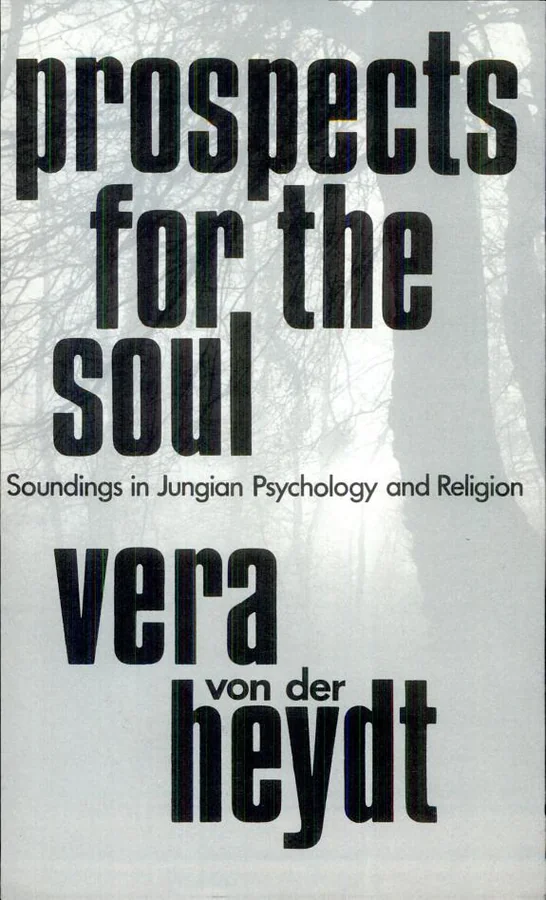
Vera Von der Heydt’s Prospects for the Soul offers a systematic, almost architectural, approach to the soul’s journey, a refreshing departure from more poetic or purely philosophical treatises. Its strength lies in its detailed, step-by-step articulation of spiritual progression, particularly its exploration of the soul's interaction with different planes of existence after physical death. The work is dense, however, and can feel abstract. For instance, the concept of 'spheres of consciousness' is meticulously described, but the experiential quality of these spheres remains somewhat theoretical, requiring significant reader projection. Despite this, the book provides a robust conceptual map for those contemplating the afterlife. It stands as a significant contribution to esoteric thought for its clarity and ordered presentation of complex metaphysical ideas.
📝 Description
81
Vera Von der Heydt's 1976 book, Prospects for the Soul, examines the soul's continuous existence beyond physical death.
Prospects for the Soul is a philosophical and theological inquiry into the nature of being, death, and rebirth, moving beyond conventional religious dogma. Vera Von der Heydt's work structures an understanding of consciousness independent of the physical body. The book posits that the soul's experiences are continuous, shaping its evolution across different states of awareness.
This text is suited for individuals interested in comparative spirituality, esoteric philosophy, and the nature of consciousness. It appeals to those seeking to understand concepts of reincarnation, spiritual progression, and the unseen dimensions of reality. Readers engaged with Theosophy, Anthroposophy, or similar metaphysical traditions will find fertile ground for contemplation.
First published in 1976, Prospects for the Soul emerged during a period of significant interest in Eastern philosophies and Western esotericism, following the countercultural movements of the 1960s. This era saw a surge in individuals exploring alternative spiritual paths, often in reaction to perceived limitations of mainstream religions. Theosophy, with its extensive works on reincarnation and spiritual hierarchies, had already laid groundwork, and authors like Helena Blavatsky and Rudolf Steiner were influential. Von der Heydt's work contributes to this milieu by offering a specific, structured view of the soul's post-mortem existence and its ongoing developmental trajectory, engaging with questions about karma and spiritual evolution prevalent in esoteric circles of the time.
💡 Why Read This Book?
• Gain a structured understanding of post-mortem spiritual progression, moving beyond simplistic notions of heaven and hell, as detailed in the book’s stages of soul evolution. • Explore the concept of spiritual causality, understanding karma not as fate but as a dynamic principle of learning and growth, as presented in Von der Heydt’s framework. • Contemplate the nature of consciousness and its potential to exist and develop across different planes, as illuminated by the book’s discussion of spiritual bodies and their functions.
⭐ Reader Reviews
Honest opinions from readers who have explored this book.
❓ Frequently Asked Questions
What is the primary focus of Vera Von der Heydt's Prospects for the Soul?
The book primarily focuses on the soul's continuous journey and development after physical death, exploring various states of consciousness and spiritual planes it may encounter.
When was Prospects for the Soul first published?
Prospects for the Soul was first published in 1976, a period marked by widespread interest in esoteric and metaphysical subjects.
Does the book discuss reincarnation?
While not always explicitly framed as 'reincarnation' in the common sense, the work explores the soul's ongoing existence and evolution through different states, implying a continuous spiritual life cycle.
Who might benefit most from reading this book?
Individuals interested in comparative spirituality, esoteric philosophy, and detailed explorations of consciousness and the afterlife, particularly those familiar with Theosophical or Anthroposophical concepts, would find it valuable.
Is Prospects for the Soul a religious text?
It is not a religious text in the traditional sense but an esoteric philosophical work that examines spiritual concepts from a metaphysical perspective, distinct from organized religious dogma.
What is the author's background?
Vera Von der Heydt was a writer and thinker within esoteric traditions. Information about her specific biographical details beyond her published works is limited, but her writings place her within the lineage of spiritual philosophers of the 20th century.
🔮 Key Themes & Symbolism
The Soul's Evolutionary Path
The central theme is the soul's continuous journey and development across various planes of existence. Von der Heydt posits that the soul is not static but actively progresses, learning and evolving through distinct phases. This progression is presented as a structured process, where each stage offers new 'prospects' for growth and understanding. The work emphasizes that this journey extends beyond a single physical lifetime, involving multiple experiences and states of awareness designed to refine spiritual consciousness.
Consciousness Beyond the Physical
Prospects for the Soul meticulously examines the nature of consciousness independent of the physical body. It details how the soul, through its associated spiritual bodies, interacts with and perceives different realms. These realms are not merely abstract concepts but are described as distinct energetic and experiential environments. The book provides a framework for understanding how awareness can function and expand in these non-physical states, offering a detailed cartography of unseen dimensions.
Spiritual Causality and Learning
The work interprets spiritual causality, often termed karma, not as a system of reward or punishment, but as an inherent law governing spiritual evolution. Every action and thought has energetic repercussions that shape the soul's future experiences and learning opportunities. This principle is presented as a fundamental mechanism driving the soul’s progress, ensuring that lessons are learned and growth is achieved through direct experience and consequence across its many stages of existence.
The Architecture of Existence
Von der Heydt presents a structured view of the cosmos, detailing the organization of spiritual forces and the hierarchical nature of different planes of existence. The book outlines how souls navigate these structures and the purpose behind their arrangement. This 'architecture' serves to guide and facilitate the soul’s evolution, providing the necessary conditions for spiritual maturation and the eventual attainment of higher states of being.
💬 Memorable Quotes
Direct passages from the work, attributed to the author.
“The soul's existence is a continuous unfolding, not a singular event.”
— This expresses the book's core message that life and consciousness are perpetual processes. It suggests that spiritual development is an ongoing journey with no definitive end, emphasizing continuity over finality.
“Each state of being offers distinct lessons for the evolving spirit.”
— This highlights the educational aspect of the soul’s journey. It implies that every experience, regardless of its plane or form, serves a purpose in the soul's overall growth and refinement.
“Causality shapes the spiritual path, guiding awareness through consequence.”
— This refers to the principle of karma, presented here as a natural law of spiritual interaction. It suggests that actions have inherent outcomes that influence the soul's subsequent journey and learning.
“The spiritual body acts as the vehicle for consciousness in non-physical realms.”
— This points to the intricate nature of the soul's structure, describing a specific energetic form that enables interaction and perception in dimensions beyond the physical body.
“Understanding these prospects is key to conscious spiritual progression.”
— This emphasizes the importance of knowledge and awareness in reading through the soul's evolutionary journey. It suggests that by comprehending the potential paths and laws of existence, one can actively participate in their own spiritual advancement.
🌙 Esoteric Significance
Tradition
Prospects for the Soul fits within the broader Western esoteric tradition, drawing heavily on concepts familiar to Theosophy and Anthroposophy. It shares their focus on the evolutionary nature of consciousness, the existence of spiritual planes, and the principle of karma. However, Von der Heydt's presentation is notable for its systematic, almost architectural, approach, providing a detailed blueprint of the soul's journey that is less common in more speculative or purely inspirational texts. It contributes to the lineage of authors who seek to map the unseen worlds with clarity and order.
Symbolism
While not overtly reliant on dense symbolic language, the work implicitly uses the concept of 'spheres' or 'planes' as symbolic representations of different states of consciousness and energetic realities. The 'soul' itself functions as a primary symbol for the enduring, evolving spiritual essence of an individual. The notion of 'prospects' acts symbolically to represent the open-ended, potential-filled nature of spiritual development, suggesting a range of possibilities rather than a predetermined fate.
Modern Relevance
Contemporary spiritual seekers and practitioners in fields like consciousness studies, comparative religion, and advanced meditation techniques often find Von der Heydt's structured approach to the soul's journey highly relevant. Thinkers exploring the nature of non-physical existence, the mechanics of spiritual evolution, and the practical application of laws like karma can draw from its detailed conceptual framework. It provides a valuable reference for those seeking a coherent model of existence beyond the material, resonating with modern interests in consciousness science and transpersonal psychology.
👥 Who Should Read This Book
• Students of esoteric philosophy seeking a structured understanding of the soul's post-mortem journey and spiritual evolution. • Individuals interested in comparative spirituality who want to explore concepts of consciousness and causality beyond traditional religious doctrines. • Seekers of deeper meaning who are contemplating the nature of existence, death, and the potential for spiritual growth across different planes of reality.
📜 Historical Context
Published in 1976, Vera Von der Heydt's Prospects for the Soul emerged during a vibrant period for esoteric thought. The preceding decades had seen a significant resurgence of interest in spiritualism, theosophy, and Anthroposophy, fueled by authors like Helena Blavatsky and Rudolf Steiner. This era represented a move away from strictly materialist philosophies towards explorations of consciousness and the unseen. The cultural climate of the 1970s, with its continued questioning of established norms, provided fertile ground for works like Von der Heydt's, which offered a structured, almost scientific, framework for understanding the soul's post-mortem existence and spiritual development. It engaged with the broader interest in reincarnation and karma prevalent in Western esoteric circles, offering a distinct perspective on the mechanics and purpose of spiritual evolution. The work provided a detailed conceptual map, complementing the more philosophical or experiential approaches of some contemporaries.
📔 Journal Prompts
The soul's 'prospects' beyond physical life.
Experiences within the described spiritual bodies.
The role of causality in shaping personal spiritual direction.
Reading through the different spheres of consciousness.
The evolutionary purpose of post-mortem states.
🗂️ Glossary
Spiritual Bodies
Energetic or subtle forms distinct from the physical body, believed to be vehicles for consciousness and spiritual activity in non-physical realms. These bodies are seen as comprising different layers of the soul's nature.
Spheres of Consciousness
Distinct planes or levels of existence characterized by specific vibrational frequencies and experiential qualities, through which the soul passes and interacts during its journey.
Spiritual Causality
The principle governing the consequences of actions, thoughts, and intentions in the spiritual realm. It functions as a law of learning and growth, shaping the soul's path.
Evolutionary Path
The ongoing process of development and refinement that the soul undergoes across multiple states of existence, aiming towards higher spiritual awareness and consciousness.
Post-Mortem Existence
The state of consciousness and experience of the soul or spirit after the death of the physical body, as detailed in the book's exploration of its journey.
Spiritual Progression
The advancement of the soul through various stages of awareness and understanding, facilitated by its experiences in different spiritual planes and its interaction with spiritual laws.
Planes of Existence
Different levels or dimensions of reality, each with its own unique characteristics, laws, and inhabitants, through which the soul journeys and evolves.
This book appears in 1 collection
🔮 Readers Also Liked
Browse all →









From the “Jungian Psychology” Collection
View all →








More Free Occult Philosophy Books
View all →