Reiki
 77
77

Reiki
Sandi Leir Shuffrey’s Reiki, published in 2010, presents a lucid entry point into a practice that has seen considerable global diffusion. The text’s primary strength lies in its clear articulation of fundamental Reiki principles, particularly the emphasis on the practitioner as a conduit for universal life force energy. Shuffrey avoids excessive jargon, making the concepts accessible. A notable limitation, however, is the book's relatively brief engagement with the broader historical evolution of energy healing practices beyond its immediate Japanese origins. The section detailing the "five precepts" for daily living offers a practical anchor, connecting the energetic work to ethical and mindful conduct, a valuable inclusion for those seeking holistic application. Ultimately, Reiki serves as a solid, unpretentious primer for newcomers to the discipline.
📝 Description
77
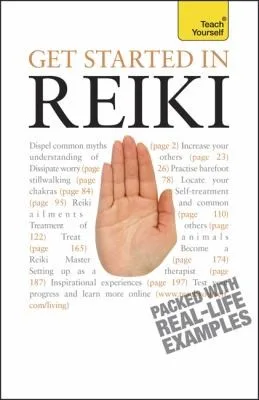
Sandi Leir Shuffrey's 2010 book introduces the Japanese energy healing technique of Reiki.
This 2010 book by Sandi Leir Shuffrey details the principles and practices of Reiki, a Japanese energy healing method. It explains how to channel universal life force energy, referred to as 'Ki' or 'Qi', for physical, emotional, and spiritual well-being. The work moves beyond theory to offer practical instruction on techniques, including specific hand positions and meditative focus. It is written for those new to Reiki, practitioners of complementary medicine, spiritual seekers interested in energy work, and individuals exploring self-healing.
Shuffrey revisits the origins of Reiki, which emerged in Japan in the early 20th century through the work of Mikao Usui. This system focused on hands-on energy transfer, distinct from other Western esoteric traditions developing at the time. The book places these historical roots within the context of contemporary wellness and spiritual exploration. It also discusses the importance of attunements, initiations necessary for effective Reiki practice.
Reiki's origins in early 20th century Japan, attributed to Mikao Usui, place it within a tradition of spiritual healing practices that sought to access and direct vital life force energy. While distinct from Western occultism, Usui's system shares common ground with other esoteric traditions that emphasize the body's energetic systems and the potential for healing through focused intention and energy transfer. Shuffrey's work contextualizes this Japanese practice within a broader modern interest in subtle energies and personal well-being.
💡 Why Read This Book?
• Gain a foundational understanding of "Ki" (universal life force energy), learning how to perceive and work with it as described in Shuffrey's text, a concept central to many Eastern philosophies. • Discover the practical application of specific Reiki hand positions for self-treatment and assisting others, as detailed in the book's instructional sections. • Explore the importance of "attunements" as a necessary initiation for Reiki practice, a key element distinguishing formal training from casual exploration.
⭐ Reader Reviews
Honest opinions from readers who have explored this book.
❓ Frequently Asked Questions
When was Sandi Leir Shuffrey's Reiki book first published?
Sandi Leir Shuffrey's "Reiki" was first published in 2010, offering a contemporary perspective on this ancient healing art.
What is the core concept of energy in Reiki as explained by Shuffrey?
The book explains that Reiki works with 'Ki' (or 'Qi'), the universal life force energy that flows through all living things, and that practitioners learn to channel this energy.
Is Reiki only for spiritual people?
While Reiki has spiritual roots, Shuffrey's book presents it as a complementary healing technique accessible to anyone interested in physical, emotional, or spiritual well-being, regardless of specific spiritual beliefs.
What are 'attunements' in the context of Reiki?
Attunements are described as initiations or energy transmissions performed by a Reiki master, which are believed to enable a student to channel Reiki energy effectively.
Does the book cover the history of Reiki?
Yes, the book touches upon the historical context of Reiki, tracing its origins to Japan and the work of Mikao Usui in the early 20th century.
Can I learn to practice Reiki just by reading this book?
While the book provides theoretical knowledge and practical guidance on techniques, formal Reiki practice typically requires attunements from a qualified practitioner, as mentioned in the text.
🔮 Key Themes & Symbolism
The Nature of Ki
This theme centers on the fundamental concept of 'Ki', the vital life force energy that permeates the universe and all living beings. Shuffrey's work explains Ki not just as an abstract idea but as a tangible force that can be perceived and directed. Understanding Ki is presented as the first step in harnessing Reiki's healing potential, distinguishing it from other forms of energy work by its specific Japanese origin and methodology. The book details how imbalances or blockages in Ki can lead to dis-ease, and how Reiki aims to restore harmonious flow.
Practical Application of Hand Positions
A significant aspect of Shuffrey's exploration is the detailed breakdown of specific hand placements used in Reiki practice. These positions are not arbitrary but are designed to target various energy centers and physical areas of the body to facilitate healing. The book guides readers on how to use these positions for self-treatment and for working with others, emphasizing a gentle, non-invasive approach. This practical element makes the esoteric concept of energy work accessible for everyday use.
The Role of Attunements
The theme of attunements is crucial, as Shuffrey explains that they are essential initiations required to become a Reiki practitioner. These ceremonies, traditionally performed by a Reiki master, are believed to open and balance a person's energy channels, enabling them to effectively channel universal life force energy. The book clarifies that while understanding the principles is important, the ability to practice Reiki is typically activated through these guided energetic transmissions.
Reiki Precepts for Daily Living
Beyond the energetic techniques, Shuffrey also highlights the five Reiki precepts, ethical guidelines intended to foster a balanced and mindful way of life. These principles, such as 'Just for today, I will not worry' and 'Just for today, I will not be angry,' connect the practice of Reiki to personal growth and emotional well-being. This theme underscores that Reiki is not solely a hands-on healing method but also a path toward inner peace and spiritual development.
💬 Memorable Quotes
Direct passages from the work, attributed to the author.
“Ki is the vital life force that animates all living things.”
— This statement expresses the foundational energetic principle of Reiki. It asserts that a universal, intelligent energy is the basis of existence and that understanding its flow is key to healing and vitality.
“The five precepts offer a guide for a balanced life.”
— This highlights the ethical and philosophical dimension of Reiki. It suggests that the practice extends beyond mere energy manipulation to encompass principles for personal conduct and mental well-being.
“Attunements are essential for channeling Reiki energy.”
— This emphasizes the necessity of formal initiation in Reiki. It differentiates the practice from general meditation or energy awareness, pointing to a specific transmission of ability.
“Reiki promotes harmony and balance within the body.”
— This describes the intended outcome of Reiki practice. It suggests that the energy work aims to restore equilibrium, addressing imbalances that may manifest as physical or emotional distress.
💡 Key Ideas
Editorial paraphrase of the work's core concepts — not direct quotes.
Specific hand positions direct energy to different areas.
This paraphrased concept points to the practical, systematic nature of Reiki. It indicates that the placement of hands is a deliberate technique for focusing healing energy effectively.
🌙 Esoteric Significance
Tradition
Reiki, as presented by Shuffrey, finds its roots in Japanese esoteric traditions, particularly those influenced by Shinto and Buddhist practices, rather than directly in Western Hermeticism or Kabbalah. Its focus on channeling a universal life force, termed 'Ki', aligns with broader concepts of 'Prana' in Indian traditions and 'Qi' in Chinese medicine, but the specific methodology, including hand positions and attunements, is unique to the Usui system. The work fits within the contemporary resurgence of interest in somatic and energy-based healing practices that often intersect with spiritual development.
Symbolism
The core symbolism in Reiki revolves around the concept of 'Ki' itself, representing the animating principle of life. Specific Reiki symbols, often introduced in higher levels of training but alluded to in foundational texts, carry potent energetic and conceptual meanings related to healing, power, and connection. The act of placing hands on the body is also symbolic, representing nurturing, comfort, and the direct transmission of healing energy, echoing archetypal imagery of laying on of hands found across many spiritual traditions.
Modern Relevance
Contemporary wellness movements, mindfulness practices, and complementary and alternative medicine (CAM) fields frequently incorporate or acknowledge Reiki. Thinkers and practitioners in fields like somatic psychology and integrative healthcare often reference energy healing modalities, including Reiki, as adjunct therapies. Its accessibility and non-dogmatic approach have allowed it to be adopted by diverse groups, from hospital-based healing touch programs to independent spiritual practitioners seeking practical methods for self-care and assisting others.
👥 Who Should Read This Book
• Individuals new to energy healing practices seeking a clear, structured introduction to the principles and techniques of Reiki. • Aspiring Reiki students who need to understand the foundational concepts of 'Ki' and the importance of 'attunements' before seeking formal training. • Holistic health practitioners looking to broaden their understanding of complementary therapies and potentially integrate basic energy awareness into their work.
📜 Historical Context
Sandi Leir Shuffrey’s Reiki, published in 2010, enters a field already populated by numerous texts on the subject. The practice itself, however, has a distinct lineage, originating with Mikao Usui in Japan in the early 20th century. Usui developed Reiki Ryoho (Reiki Healing Method) in the 1920s, drawing from traditional Japanese healing arts and Buddhist principles. By the late 20th century, Reiki had gained significant traction in the West, often discussed alongside other holistic modalities like acupuncture and therapeutic touch. While Western esoteric traditions like Theosophy and various forms of spiritualism were also influential during this period, Reiki offered a more direct, hands-on approach. Shuffrey’s work, appearing well after Reiki’s international establishment, reflects this established presence, aiming to clarify its core tenets for a generation already familiar with the term but perhaps seeking foundational understanding.
📔 Journal Prompts
The concept of 'Ki' as a universal life force.
The practical application of specific Reiki hand positions for self-healing.
Reflect on the five Reiki precepts for daily living.
The significance of 'attunements' in formal Reiki practice.
How the flow of 'Ki' might manifest in your own body.
🗂️ Glossary
Ki
The Japanese term for the universal life force energy that animates all living things. It is also referred to as 'Qi' in Chinese or 'Prana' in Sanskrit.
Reiki Ryoho
The Japanese name for the system of healing developed by Mikao Usui, often translated as 'Reiki Healing Method' or 'The Art of Universal Energy'.
Attunement
A ceremonial process in Reiki where a master practitioner initiates a student, believed to open their energy channels to receive and channel universal life force energy.
Hand Positions
Specific placements of the hands used in Reiki practice to direct energy to different parts of the body for healing and balancing.
Five Precepts
Ethical guidelines or principles associated with Reiki practice, intended to foster a mindful and balanced approach to life, such as 'Just for today, do not worry'.
Chakra
Energy centers within the subtle body, often discussed in relation to energy healing practices, which can be influenced by Reiki.
Energy Blockage
A disruption or stagnation in the natural flow of life force energy within the body, believed to contribute to physical or emotional discomfort.
🔮 Readers Also Liked
Browse all →









More by Sandi Leir Shuffrey
All books →



More Free Occult Philosophy Books
View all →