Harry Potter

 75
75

Harry Potter
The enduring appeal of J.K. Rowling's Harry Potter series, first appearing in 1997, lies not just in its fantastical elements but in its surprisingly robust thematic underpinnings. While often categorized as children's fantasy, the work grapples with significant moral complexities, particularly the insidious nature of prejudice embodied by Voldemort's pure-blood ideology. A notable strength is the intricate world-building, where every detail, from the Ministry of Magic to the specific properties of wands, feels considered. However, the narrative sometimes leans heavily on convenient plot devices, particularly in later installments, to resolve intricate magical challenges. The depiction of the Sorting Hat, for instance, while a compelling symbol of self-discovery, occasionally feels like an arbitrary arbiter of destiny rather than a true reflection of complex character development. Despite these minor quibbles, the series offers a compelling exploration of chosen-one narratives and the power of community. It remains a foundational text for understanding contemporary YA literature.
📝 Description
75
J.K. Rowling's Harry Potter series began publication in the UK in 1997.
The story follows Harry Potter, an orphan who learns on his eleventh birthday that he is a wizard and is invited to Hogwarts School of Witchcraft and Wizardry. The books trace his school years, his conflict with the dark wizard Lord Voldemort, and their final battle. Rowling created a detailed magical society operating alongside the non-magical world, the Muggle world. This society has its own government, economy, and schooling.
The series targets young adults and adolescents, acting as an introduction to ideas about right and wrong, friendship, loyalty, and bravery. It will appeal to readers who like fantasy, detailed worlds, and stories focused on characters. The clear writing and interesting plots make it suitable for new readers or those looking for an escape. The Harry Potter series achieved widespread international recognition following its 1997 UK debut, with the last book released in 2007. Its appearance coincided with a renewed interest in fantasy and children's literature, questioning the idea that young adult books were less important than adult fiction. The series generated global conversations about its themes and cultural effect.
The work incorporates concepts that echo alchemical and Hermetic traditions, particularly in its depiction of magic as an inherent ability governed by rules and study. The idea of love acting as a potent protective force and the exploration of choices versus predetermined paths align with discussions found in various esoteric philosophies concerning personal power and fate. The structured magical system suggests an underlying order and learning process, similar to how magical traditions approach the acquisition of knowledge and ability.
💡 Why Read This Book?
• Gain an understanding of narrative archetypes like the 'chosen one' and the underworld journey, as exemplified by Harry's repeated descents into the Chamber of Secrets, offering a structured framework for personal growth. • Explore the symbolic power of objects and places, such as the Sorcerer's Stone, to represent unattainable desires and the corrupting influence of power, providing lessons in ethical decision-making. • Witness the manifestation of magical laws akin to Hermetic principles, where intent and belief shape reality, such as the Patronus Charm's reliance on positive emotion, offering insights into the power of focused intention.
⭐ Reader Reviews
Honest opinions from readers who have explored this book.
❓ Frequently Asked Questions
When was the first Harry Potter book published?
The first book, 'Harry Potter and the Philosopher's Stone' (or 'Sorcerer's Stone' in the US), was first published in the United Kingdom on June 26, 1997.
What is the primary setting for the Harry Potter series?
The primary setting is Hogwarts School of Witchcraft and Wizardry, a fictional boarding school for young witches and wizards located in Scotland.
Who is the main antagonist in the Harry Potter books?
The main antagonist is Lord Voldemort, a powerful dark wizard obsessed with achieving immortality and conquering both the wizarding and Muggle worlds.
What magical concept is central to Harry's defense against Voldemort?
The concept of love, particularly the protective magic derived from his mother Lily's sacrifice, is a central theme and a key defense mechanism against Voldemort.
How does the series address themes of prejudice?
The series addresses prejudice through the conflict between 'pure-blood' wizards and those of Muggle-born or mixed heritage, mirroring real-world discrimination.
What year did the final Harry Potter book come out?
The final book, 'Harry Potter and the Deathly Hallows', was released globally on July 21, 2007.
🔮 Key Themes & Symbolism
The Nature of Courage
The narrative consistently explores courage not as the absence of fear, but as the ability to act despite it. Harry and his companions frequently face situations that evoke terror, yet they persevere. This theme aligns with Stoic philosophy, which emphasizes virtue and rational action in the face of adversity. The existence of the Dementors, creatures that feed on happiness and induce despair, serves as a potent metaphor for the internal battles individuals face, requiring an active, 'corporeal' effort—the Patronus Charm—to repel them. This suggests that courage is an active, almost alchemical, process of generating inner light.
The Power of Choice
Despite the overarching narrative of prophecy and destiny, the books repeatedly underscore the significance of individual choice. Harry's sorting into Gryffindor, his decision to confront Voldemort, and even the choices of seemingly minor characters shape the course of events. This speaks to Gnostic ideas that emphasize personal gnosis and the potential for individual awakening to transcend predetermined fates. The series posits that it is our choices, as Dumbledore famously states, that show what we truly are, far more than our abilities. This highlights an agency that can actively alter one's path, even within a seemingly fated existence.
Symbolism of the Wand
The wand is more than a tool; it is an extension of the wizard's will and a conduit for magical energy. The concept of the 'wand choosing the wizard' suggests an inherent connection and compatibility, reminiscent of the symbiotic relationships found in some animistic traditions. The Elder Wand, one of the Deathly Hallows, represents ultimate power, but its history of betrayal and bloodshed illustrates the corrupting influence of unchecked ambition, a common theme in esoteric lore regarding the pursuit of forbidden knowledge or power without ethical grounding. The wand's ability to channel intent is fundamental to the magical system.
The Veil Between Worlds
The Department of Mysteries, particularly the Veil in the Room of Requirement, serves as a potent symbol of the boundary between life and death. Its mysterious nature and the whispers heard near it evoke ancient beliefs about the underworld and the spirit realm. The veil represents the ultimate unknown, a threshold that characters like Sirius Black pass through. The lack of clear understanding surrounding it mirrors humanity's perennial fascination and trepidation regarding mortality and the afterlife, suggesting that some mysteries transcend even the most potent magic.
💬 Memorable Quotes
Direct passages from the work, attributed to the author.
“The truth. It is a beautiful and terrible thing, and should therefore be treated with great caution.”
— This aphorism speaks to the esoteric principle that knowledge, especially profound truth, can be overwhelming or dangerous if not approached with wisdom and preparation. It suggests that not all truths are meant for immediate or universal revelation.
“Fear of a name only increases fear of the thing itself.”
— This highlights the power of language and perception. By refusing to name Voldemort, characters imbue him with an even greater, almost supernatural, terror. It suggests that confronting the reality of a problem, rather than avoiding its name, is the first step to overcoming it.
“It matters not what someone is born, but what they grow to be.”
— A direct refutation of prejudiced ideology, this statement champions meritocracy and self-determination. It aligns with the concept of the 'magician's path,' where one's spiritual and ethical development, rather than birthright, defines their true worth.
“You think the dead we loved ever truly leave us?”
— This reflects a spiritual perspective on grief and memory, suggesting that the essence or influence of loved ones persists beyond physical death. It touches upon concepts of spiritual connection and the enduring impact of relationships on the living.
💡 Key Ideas
Editorial paraphrase of the work's core concepts — not direct quotes.
It is our choices, Harry, that show what we truly are, far more than our abilities.
This quote emphasizes the Gnostic and existentialist idea that character is forged through action and decision, not merely innate talent or potential. It suggests that true identity is revealed by how one navigates moral dilemmas and exercises free will.
🌙 Esoteric Significance
Tradition
The Harry Potter series draws heavily, albeit implicitly, from Western esoteric traditions, particularly Hermeticism and elements of Gnosticism and Kabbalah. The structured magical system, with its spells, potions, and inherent laws, echoes Hermetic principles of correspondence and mastery over nature. The emphasis on inner potential, spiritual struggle against darkness, and the concept of a 'chosen one' finding their destiny aligns with Gnostic narratives of awakening and liberation from a corrupt material world. The symbolic use of numbers and the hierarchical structure of the magical world also bear faint resemblances to Kabbalistic concepts.
Symbolism
Key symbols include the scar, representing both a mark of trauma and a connection to the antagonist, Voldemort, signifying the intertwined nature of light and shadow. The Hogwarts houses (Gryffindor, Hufflepuff, Ravenclaw, Slytherin) can be seen as archetypal representations of personality traits or even elements, influencing character development. The 'Mirror of Erised,' which shows deepest desires, symbolizes the potent, often dangerous, allure of longing and the need for self-mastery in confronting one's inner world.
Modern Relevance
Contemporary spiritual and self-help circles often reference the series' themes of resilience, the power of positive thought (as seen in the Patronus Charm), and the importance of community. Thinkers and practitioners exploring archetypal psychology, inspired by Jung, find fertile ground in the series' character dynamics and symbolic landscapes. The series continues to be analyzed in academic contexts for its exploration of morality, power structures, and the construction of identity in a complex world, influencing how magic and mythology are perceived in popular culture.
👥 Who Should Read This Book
• Aspiring practitioners of Western esotericism: Gain an accessible introduction to archetypal narratives and symbolic systems that echo Hermetic and Gnostic principles, offering a relatable framework for understanding complex magical concepts. • Comparative mythology enthusiasts: Explore how ancient themes of good versus evil, destiny, and the hero's journey are reinterpreted in a modern, accessible context, providing valuable case studies for academic or personal study. • Young readers exploring themes of identity and belonging: Discover narratives that validate the struggles of finding one's place and the power of friendship and courage, offering comfort and inspiration through relatable characters and situations.
📜 Historical Context
The Harry Potter series emerged in the late 1990s, a period marked by a resurgence of interest in fantasy literature and a growing market for young adult fiction. Published in 1997, it arrived during a time when children's books were increasingly scrutinized for their thematic content, with some advocating for more 'realistic' portrayals. Rowling's work, however, offered a complex magical world that resonated globally, challenging these notions. While not directly engaging with contemporaneous esoteric movements like the New Age surge of the 1980s, the series tapped into a popular fascination with magic and hidden worlds. Its unprecedented global success and subsequent adaptations into blockbuster films, starting in 2001, cemented its cultural impact, far surpassing that of many contemporary fantasy authors. Reception was overwhelmingly positive, though occasional calls for censorship arose due to its magical themes, mirroring historical anxieties around witchcraft narratives.
📔 Journal Prompts
Harry Potter's journey from the cupboard under the stairs to Hogwarts.
The concept of Horcruxes and the fragmentation of the soul.
Dumbledore's philosophy on love as the ultimate magic.
The symbolic significance of the Deathly Hallows.
The prejudice faced by Muggle-born wizards and house-elves.
🗂️ Glossary
Muggle
A person who possesses no magical ability and was born into a non-magical family. It denotes individuals outside the wizarding community.
Hogwarts
A fictional school of witchcraft and wizardry located in Scotland, where young witches and wizards are educated in magical arts and sciences.
Voldemort
The primary antagonist, a powerful dark wizard obsessed with immortality and the subjugation of non-magical people (Muggles).
Patronus Charm
A defensive spell requiring intense focus on a single, powerful happy memory to conjure a guardian of light that repels Dementors.
Horcrux
An object in which a wizard or witch has hidden a fragment of their soul in order to achieve immortality. Creating one involves an act of murder.
Gryffindor
One of the four houses at Hogwarts, known for valuing bravery, daring, nerve, and chivalry. Harry Potter belongs to this house.
Deathly Hallows
A set of three legendary magical objects – the Elder Wand, the Resurrection Stone, and the Cloak of Invisibility – said to make the owner the 'Master of Death'.
🔮 Readers Also Liked
Browse all →





More by J. K. Rowling
All books →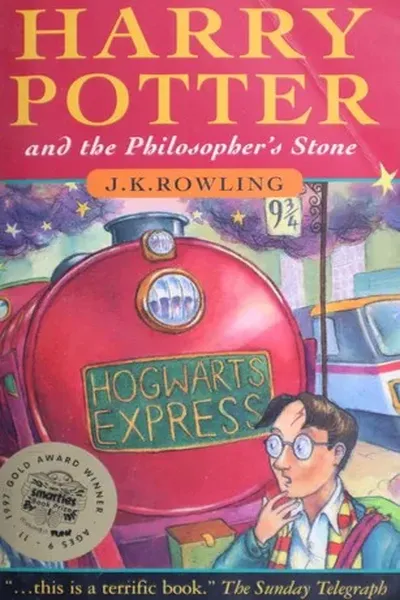


More Free Witchcraft & Paganism Books
View all →



![Practicae novae imperialis Saxonicae rerum criminalium pars I.[-III.] ... Editio quarta correctior, ... 1658: Iss 198](/img/thumb/practicae-novae-imperialis-saxonicae-rerum-criminalium-pars-i-iii-editio-quarta-correctior-1658-iss-198-carpzov-benedict-1595-1666.webp)