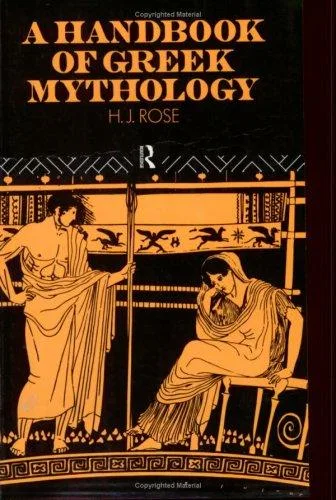
A Handbook of Greek Mythology
 73
73

A Handbook of Greek Mythology
H. J. Rose's A Handbook of Greek Mythology presents a formidable, if dry, compilation of Hellenic lore. Its strength lies in its encyclopedic scope and its commitment to presenting the sheer variety of mythological accounts found in ancient texts, rather than imposing a singular interpretation. This approach, while admirable for its scholarly rigor, can also be its limitation; the narrative momentum sometimes falters under the weight of detail. For instance, the detailed cataloging of the various genealogies of Zeus’s offspring, while accurate, can feel like an exercise in rote memorization. Yet, the careful distinction Rose draws between myth and ritual, and his scrupulous attention to source variations, makes this an indispensable tool for those who value precision. It serves as a robust, if unembellished, foundation for anyone needing to grasp the intricate web of Greek divine and heroic narratives.
📝 Description
73
H. J. Rose's A Handbook of Greek Mythology was first published in 1953.
Published in 1953, H. J. Rose's A Handbook of Greek Mythology offers a systematic survey of the mythological figures and narratives central to ancient Greek culture. Rose prioritizes accuracy and detail, presenting the myths as they were understood and transmitted through various ancient sources. The book catalogs the pantheon, heroes, and foundational stories that shaped Hellenic thought and art, functioning as a comprehensive reference. It is intended for the serious student of classical antiquity, comparative mythology, or the history of religion. Readers seeking a reliable compendium of mythological information, grounded in scholarly research, will find its clear presentation of archetypal figures and narratives useful. Rose's handbook emerged during a period of robust classical scholarship, presenting a conservative, philological approach. It aimed to consolidate existing academic understanding of Greek myth, providing a stable reference point for the field.
The book meticulously outlines core concepts such as the Olympian hierarchy, the roles of primordial deities like Chaos, Gaia, and Uranus, and the genealogies of gods and heroes. It addresses the distinction between poetic myth and religious cult, the variations in myths across different regions of Greece, and the evolution of certain myths over time. The work considers the understanding of divine beings not merely as anthropomorphic figures but as forces within a complex cosmological framework. Rose's scholarship reflects a mid-20th century academic perspective on classical mythology.
While primarily a scholarly reference, A Handbook of Greek Mythology provides a detailed grounding in the archetypes and narratives that have informed Western esoteric traditions for centuries. Rose's meticulous cataloging of divine figures, their relationships, and the foundational stories offers a clear view of the symbolic language that later occult and mystical systems would draw upon. Readers interested in the historical roots of Western esotericism will find Rose's factual presentation of classical myth essential for understanding the symbolic substratum of subsequent magical and philosophical practices.
💡 Why Read This Book?
• Gain a precise understanding of the Olympian pantheon's structure and major figures, as detailed in Rose's 1953 survey, providing a factual basis for comparative mythological study. • Learn to differentiate between mythical narratives and actual religious practices in ancient Greece, a critical distinction Rose emphasizes, offering a more nuanced view than popular accounts. • Appreciate the scholarly method of presenting mythological variations from different ancient sources, equipping you to critically assess diverse interpretations of myths like the Persephone and Hades story.
⭐ Reader Reviews
Honest opinions from readers who have explored this book.
❓ Frequently Asked Questions
What is H. J. Rose's approach to Greek mythology in this handbook?
Rose adopts a scholarly, philological approach, prioritizing the accurate compilation of myths from ancient sources. He focuses on presenting the variety of narratives rather than offering a singular, interpretive framework, making it a reference for factual content.
When was 'A Handbook of Greek Mythology' first published?
The book was first published in 1953, positioning it within mid-20th-century classical scholarship that emphasized detailed textual analysis.
Does the book cover minor deities and figures?
Yes, Rose's handbook aims for comprehensive coverage, including not only the major Olympians like Zeus and Hera but also lesser-known deities, nymphs, and heroes, detailing their associated myths and lineages.
How does this book compare to modern interpretations of Greek myths?
Compared to modern psychological or anthropological readings, Rose's work is more focused on the historical and literary transmission of myths. It provides the raw material and source-based accounts before extensive theoretical overlay.
Is 'A Handbook of Greek Mythology' suitable for beginners?
It is suitable for beginners who seek a structured and factually grounded introduction. However, its scholarly tone and density of information may be more challenging than introductory narratives aimed at a general audience.
What makes this book useful for esoteric studies?
Its value lies in providing the foundational mythological archetypes and narratives that underpin many Western esoteric traditions, offering a clear, source-based understanding of figures like Apollo or the concept of Orphism.
🔮 Key Themes & Symbolism
Divine Hierarchy and Pantheon
Rose meticulously details the structure of the Greek pantheon, from the primordial deities like Chaos and Gaia to the ruling Olympians. The work emphasizes the familial relationships and domains of power assigned to figures such as Zeus, Hera, Poseidon, and Hades. This systematic presentation is crucial for understanding the cosmic order as conceived by the Greeks, a conceptual framework that would later be reinterpreted within various esoteric systems seeking to map divine hierarchies.
Heroic Cycles and Archetypes
The handbook provides extensive accounts of the major heroes – Heracles, Odysseus, Perseus, Theseus – and their legendary exploits. These narratives are presented with attention to source variations, highlighting the archetypal nature of the hero's journey. For esoteric students, these figures represent potent psychological and spiritual archetypes, embodying trials, transformations, and the attainment of wisdom or divine favor, often serving as models for inner work.
Myth as Source for Ritual and Belief
A significant aspect of Rose's approach is his careful distinction between myth (the narrative) and cult (the religious practice). He illustrates how myths often served to explain, justify, or elaborate upon religious rituals and beliefs. This understanding is vital for esoteric traditions that seek to reactivate ancient rites or derive symbolic meaning from the intersection of story and sacred action.
Cosmogony and Theogony
The book looks at the origins of the universe and the birth of the gods, tracing the lineage from primal forces to the established divine order. Concepts like Hesiod's Theogony are explored as foundational texts. This exploration of creation myths provides a cosmological blueprint that speaks to esoteric traditions focused on understanding the emanations of the divine and the structure of reality.
💬 Memorable Quotes
Direct passages from the work, attributed to the author.
“The stories of the gods and heroes are not always consistent.”
— This observation underscores the book's commitment to scholarly accuracy, acknowledging that ancient Greek mythology was fluid and varied across different regions and eras, a point crucial for comparative study.
“Mythology and religion are not identical, though closely related.”
— Rose highlights the distinction between narrative tales and actual religious practice, a key insight for understanding how myths functioned within ancient Greek society and their symbolic weight.
“Hesiod's Theogony is a principal source for the birth of the gods.”
— This points to a specific foundational text that Rose relies upon for understanding the Greek creation myths, emphasizing the importance of classical literature in reconstructing ancient cosmologies.
“The exploits of Heracles are recounted in numerous, often conflicting, versions.”
— This statement exemplifies the book's method of presenting mythological variations, showing how even central heroic narratives differed in their ancient tellings.
“We must distinguish between the myth told and the cult practiced.”
— This reiterates the critical academic approach Rose employs, separating the story from the ritual, which is essential for analyzing the function and meaning of myths in their original context.
🌙 Esoteric Significance
Tradition
This handbook primarily serves the Western Esoteric tradition by providing the foundational mythological corpus upon which many subsequent magical, alchemical, and philosophical systems were built. While not an esoteric text itself, its systematic presentation of Greek deities, heroes, and cosmogonies offers the raw material. It aligns with Hermetic and Neoplatonic traditions that sought to understand the divine through Hellenic philosophical and mythical frameworks, viewing the Greek pantheon as symbolic representations of cosmic forces or divine principles.
Symbolism
Key symbols like the Caduceus of Hermes (Mercury), representing wisdom, commerce, and mediation between worlds, are implicitly present through the figures Rose describes. The cyclical nature of myths, such as the death and rebirth of Persephone, symbolizes transformation and the underworld's mysteries. The concept of divine avatars or manifestations, seen in the numerous forms Zeus takes, reflects the esoteric idea of the One manifesting through the Many.
Modern Relevance
Contemporary practitioners of Hellenistic polytheism, as well as those involved in modern magical orders drawing from classical sources (like some branches of the Golden Dawn or modern Kemetic reconstructionists who engage with Greek influences), rely on works like Rose's for accurate pantheon details. Thinkers exploring archetypal psychology or comparative religion also find its source-based approach useful for understanding the enduring symbolic power of Greek myths in Western culture and consciousness.
👥 Who Should Read This Book
• Students of Western Esotericism: Those beginning their study of traditions like Hermeticism, Theosophy, or ceremonial magic will find the accurate, detailed accounts of Greek deities and myths essential for grasping the symbolic language of these paths. • Comparative Mythology Scholars: Researchers seeking a reliable, text-based reference for the primary Greek myths, their variations, and genealogies will benefit from Rose's rigorous scholarly approach. • Enthusiasts of Ancient Greek Culture: Individuals interested in a factual, academic overview of Greek mythology beyond popular retellings will appreciate the depth and breadth of information presented.
📜 Historical Context
H. J. Rose's A Handbook of Greek Mythology, published in 1953, emerged from a distinguished tradition of classical scholarship. At a time when Freudian and Jungian psychoanalysis were influencing mythological studies, Rose maintained a more conservative, philological stance. His work consolidated existing academic understanding, focusing on the textual evidence and variations found in ancient Greek literature and inscriptions. This approach offered a counterpoint to more speculative interpretations that sought universal psychological patterns. Rose's meticulous cataloging of figures and myths provided a stable reference point, particularly valuable for students needing to understand the primary sources and their historical transmission before engaging with later theoretical frameworks. His work was received as a solid, reliable compendium by the academic community.
📔 Journal Prompts
The cosmogony presented by Rose, tracing origins from Chaos, Gaia, and Uranus.
The specific heroic cycle of Heracles and its twelve labors.
The symbolic significance of the Orphic mysteries as described in the text.
The distinction between the myth of Apollo and his associated cultic practices.
The genealogy of the Olympian gods and their respective domains of power.
🗂️ Glossary
Theogony
The origin and genealogy of the gods. Rose's work often references Hesiod's Theogony as a primary source for understanding the birth and relationships of the Greek deities.
Cosmogony
The origin and creation of the universe. Rose explores the Greek myths concerning the emergence of the cosmos from primal elements like Chaos, Gaia (Earth), and Uranus (Sky).
Olympian Gods
The twelve principal deities who resided on Mount Olympus, led by Zeus. Rose details their individual myths, domains, and relationships within the divine hierarchy.
Heroic Cycle
A collection of myths centered around a particular hero, such as Heracles, Theseus, or Odysseus. Rose catalogs their adventures and their significance in Greek lore.
Primordial Deities
The first beings to exist in Greek mythology, such as Chaos, Gaia, Uranus, Tartarus, and Eros. Rose outlines their emergence and their role in creating the subsequent generations of gods.
Myth vs. Cult
Rose emphasizes the difference between mythological narratives (myth) and religious worship and rituals (cult). Understanding this distinction is key to analyzing the function of myths in ancient society.
Philological Approach
A scholarly method focusing on the study of language in historical sources. Rose's handbook employs this approach, prioritizing textual accuracy and source analysis of mythological accounts.
🔮 Readers Also Liked
Browse all →








More by H. J. Rose
All books →
More Free Witchcraft & Paganism Books
View all →