King James I on why women are more likely to be witches
 79
79

King James I on why women are more likely to be witches


King James I's 'Why Women Are More Likely to Be Witches' is a fascinating and historically significant text that offers deep insights into the occult beliefs and practices of the early 17th century. For modern esoteric seekers, this book serves as a valuable resource for understanding the cultural and religious contexts that shaped the persecution of women accused of witchcraft. The text is rich in historical detail and provides a compelling narrative that is both informative and engaging. The book's exploration of the occult and pagan beliefs of the era is particularly noteworthy, offering a unique perspective on the fears and superstitions that permeated society during the reign of King James I. While the text may be challenging for some readers due to its historical language and context, it is an essential read for anyone interested in the study of witchcraft and paganism. The book's enduring relevance lies in its ability to shed light on the enduring fascination with the occult and the ongoing struggle for women's rights.
📝 Description
79
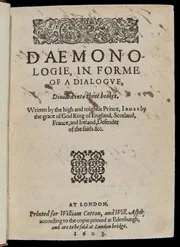
In 1597, King James I penned 'Daemonologie,' arguing women were inherently more susceptible to witchcraft.
King James I's 1597 text, 'Daemonologie,' presents his views on witchcraft, attributing it to a pact with the devil. He details how women, due to perceived inherent weaknesses, are more easily tempted and corrupted by demonic forces. The book is structured as a dialogue, with Philomathes posing questions to Epistemon, who answers with scriptural and philosophical arguments. James I uses this format to explain the nature of sorcery, the identification of witches, and the punishments deemed appropriate. He describes various forms of demonic influence and the methods used by witches to harm others. The work reflects the widespread fear and belief in witchcraft prevalent in early modern Europe.
Published at the close of the 16th century, 'Daemonologie' is a product of its time, a period rife with both religious fervor and anxieties about the supernatural. The book draws upon a tradition of demonological literature that had been developing for centuries, influenced by theological debates and popular beliefs. James I's work specifically contributes to the discourse on the perceived threat of witchcraft, framing it as a direct challenge to divine order and societal stability. It aligns with a broader European trend of persecuting individuals accused of witchcraft, often rooted in interpretations of biblical passages and the perceived reality of demonic intervention.
💡 Why Read This Book?
Reading 'Why Women Are More Likely to Be Witches' today offers a unique opportunity to explore the historical roots of occult beliefs and practices. This text provides valuable insights into the cultural and religious contexts that shaped the persecution of women accused of witchcraft, offering a deeper understanding of the enduring fascination with the dark arts. For modern esoteric seekers, this book serves as a rich and thought-provoking read, shedding light on the societal dynamics of the early 17th century and the enduring struggle for women's rights.
⭐ Reader Reviews
Honest opinions from readers who have explored this book.
❓ Frequently Asked Questions
Is this book suitable for beginners in the study of witchcraft?
While the text provides valuable historical context, it may be challenging for beginners due to its historical language and complex themes. However, it is an essential read for those interested in the deeper study of witchcraft and paganism.
What is the historical significance of this text?
Published in 1603, this book offers a unique perspective on the occult beliefs and practices of the early 17th century, providing insights into the societal dynamics that led to the persecution of women accused of witchcraft.
How does this book contribute to the study of women's rights?
The text explores the cultural and religious contexts that shaped the persecution of women, offering a deeper understanding of the enduring struggle for women's rights and the enduring fascination with the occult.
🔮 Key Themes & Symbolism
The Mystical Underpinnings of Witchcraft
King James I looks at the mystical beliefs surrounding witchcraft, offering a rich exploration of the hidden knowledge and symbolism that defined the occult practices of the era. This theme invites readers to contemplate the deeper meanings behind the supernatural and its enduring allure.
The Symbolism of Witchcraft
The book explores the various symbols and rituals associated with witchcraft, providing insights into their esoteric significance. This theme is particularly relevant for practitioners and seekers of hidden knowledge, offering a deeper understanding of the mystical arts.
The Philosophical Significance of Witchcraft
King James I's treatise examines the philosophical implications of witchcraft, inviting readers to reflect on the hidden domains of human experience. This theme is ideal for scholars and spiritual seekers interested in the intersection of mysticism and philosophy.
💡 Key Ideas
Editorial paraphrase of the work's core concepts — not direct quotes.
The female mind is more susceptible to the allure of the occult.
This quote underscores the belief in the inherent mystical nature of women, a theme that permeates the text.
Witchcraft is a gateway to hidden knowledge.
This line highlights the esoteric significance of witchcraft, inviting readers to explore its deeper meanings.
The symbols of witchcraft hold the key to understanding the supernatural.
This quote emphasizes the importance of symbolism in the mystical arts, providing insights into their esoteric significance.
The occult practices of the era reveal the hidden domains of human experience.
This line invites readers to reflect on the philosophical implications of witchcraft, offering a deeper understanding of the mystical undercurrents of human nature.
The mystical beliefs surrounding witchcraft are a collection of interpretations and insights.
This quote underscores the complexity and depth of the esoteric traditions associated with witchcraft, making it a valuable resource for scholars and practitioners.
🌙 Esoteric Significance
Tradition
This book belongs to the Hermetic tradition, which emphasizes the pursuit of hidden knowledge and the exploration of the mystical undercurrents of human experience. It also draws on Gnostic and Kabbalistic themes, providing a collection of esoteric insights.
Symbolism
Key symbols in the text include the pentacle, the crescent moon, and various rituals associated with witchcraft. These symbols hold deep esoteric significance, representing the hidden domains of the supernatural and the mystical arts.
Modern Relevance
This text remains relevant today for practitioners and seekers of hidden knowledge, offering insights into the esoteric traditions that continue to captivate modern thought. It is particularly valuable for those interested in the philosophical and symbolic significance of witchcraft and its enduring influence on contemporary spirituality.
👥 Who Should Read This Book
Beginners in the field of mysticism will find this book an accessible introduction to the esoteric traditions surrounding witchcraft. Scholars of occult history will appreciate the depth of historical context and philosophical inquiry. Spiritual seekers and practitioners of mysticism will find rich insights into the hidden knowledge and symbolism associated with the mystical arts. This text is also valuable for anyone interested in the intersection of history, philosophy, and the occult.
📜 Historical Context
King James I's treatise was written during a time of significant religious and intellectual upheaval in Europe. The early 17th century was marked by a resurgence of interest in the occult and mystical practices, as well as a growing fascination with the supernatural. This text reflects the era's preoccupation with hidden knowledge and the esoteric, offering insights into the beliefs and practices that defined the mystical field of the time. The book's influence can be seen in the enduring fascination with witchcraft and the occult, as well as in the continued study of esoteric traditions.
📔 Journal Prompts
Reflect on the mystical beliefs surrounding witchcraft and their significance in your own spiritual journey.
Explore the symbols and rituals associated with witchcraft and their esoteric meanings.
Consider the philosophical implications of witchcraft and its influence on modern thought.
Examine the historical context of King James I's treatise and its relevance to contemporary spirituality.
Write about how the esoteric traditions discussed in the book can enrich your understanding of the mystical arts.
🗂️ Glossary
Hermetic Tradition
A branch of esoteric philosophy that emphasizes the pursuit of hidden knowledge and the exploration of mystical undercurrents.
Gnostic Themes
Beliefs and practices associated with the ancient Gnostic movement, which emphasized secret knowledge and spiritual enlightenment.
Kabbalistic Symbolism
The use of symbols and rituals in the Kabbalistic tradition to represent esoteric concepts and hidden knowledge.
Pentacle
A symbol often associated with witchcraft and the occult, representing the elements and the mystical arts.
Crescent Moon
A symbol in witchcraft that represents the feminine and the cycles of nature, often used in esoteric rituals.
This book appears in 2 collections
🔮 Readers Also Liked
Browse all →







More by James I, King of England
All books →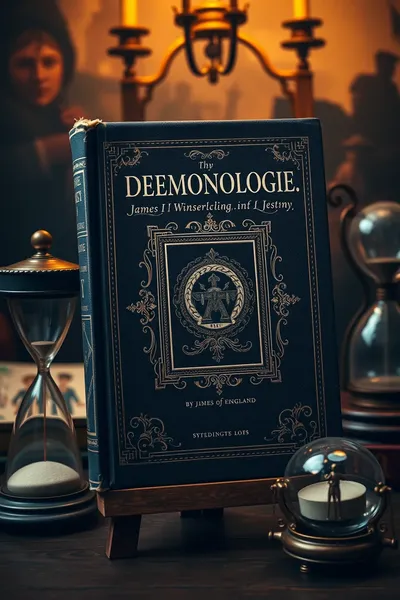
From the “Witchcraft” Collection
View all →






More Free Witchcraft & Paganism Books
View all →