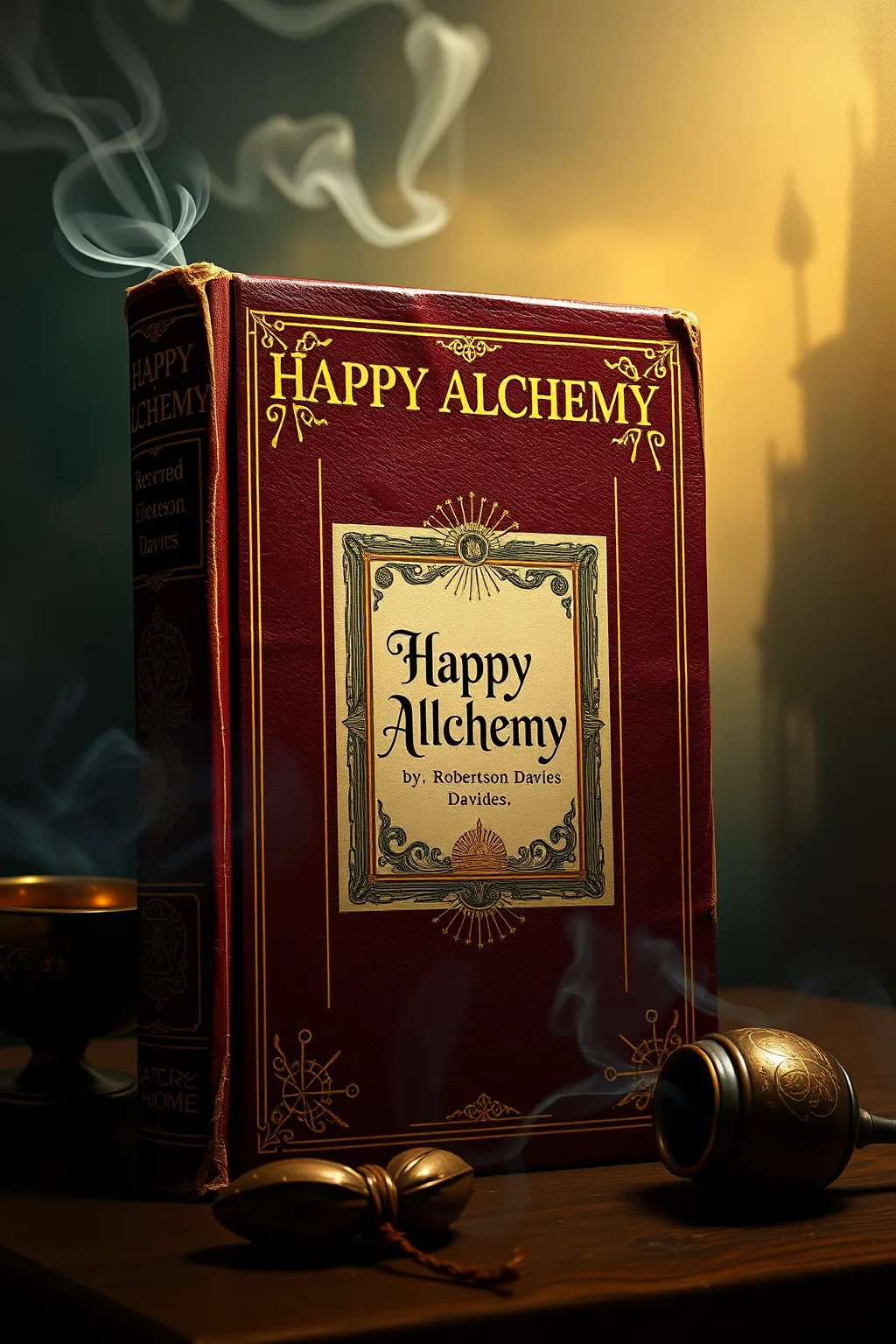
Happy Alchemy
 61
61

Happy Alchemy


Review by Isolde Whitaker (Sacred Texts Editor) — Robertson Davies' Happy Alchemy is a masterful exploration of alchemical symbolism and Hermetic philosophy. Davies' deep understanding of esoteric traditions shines through in his evocative prose, making this book a must-read for anyone interested in the mystical arts. The author's ability to blend historical context with modern insights provides a fresh perspective on ancient alchemical practices. Happy Alchemy is particularly strong in its analysis of the transformative power of alchemy, making it an invaluable resource for both scholars and spiritual seekers. Davies' work is a beacon of esoteric knowledge, guiding readers through the labyrinth of hidden truths and symbolism.
📝 Description
61
Robertson Davies published Happy Alchemy in 1995, examining alchemy through its connection to the theatre.
Robertson Davies' 1995 book, Happy Alchemy, examines the practice of alchemy, particularly its relationship with the theatre and magic. Davies uses his background as a playwright and his knowledge of esoteric traditions to interpret alchemical symbolism and practice. He presents alchemy not merely as a proto-scientific endeavor but as a symbolic system for psychological and spiritual transformation.
The book draws on historical alchemical texts and concepts, relating them to dramatic performance and the creation of illusion. Davies discusses figures like Paracelsus and the Rosicrucians, placing their ideas within a broader cultural and intellectual history. The work is characterized by Davies' distinctive prose, blending erudition with a touch of wit and personal reflection. It invites readers to consider the performative aspects inherent in many spiritual and philosophical systems.
Happy Alchemy situates itself within the Hermetic and alchemical traditions, which have long explored the symbolic transformation of matter and spirit. Davies connects these ancient practices to the theatrical arts, suggesting that the creation of drama shares a common root with alchemical ritual in its aim to affect perception and consciousness. This approach aligns with later esoteric interpretations that view alchemy less as a literal pursuit and more as a metaphor for inner change, drawing parallels with Jungian psychology and other systems that interpret symbolic language as a key to understanding the human psyche.
💡 Why Read This Book?
Happy Alchemy by Robertson Davies is a beacon for seekers of hidden knowledge and mystical truths. Ideal for scholars, practitioners, and spiritual seekers, this book offers a deep dive into the transformative power of alchemy and Hermeticism. Davies' rich narrative and profound insights make it an essential read for anyone looking to understand the deeper mysteries of existence. Whether you are a beginner or an advanced student of the occult, Happy Alchemy provides a unique and enlightening perspective on ancient wisdom.
⭐ Reader Reviews
Honest opinions from readers who have explored this book.
❓ Frequently Asked Questions
What is the main theme of Happy Alchemy?
The main theme of Happy Alchemy is the transformative power of alchemy and Hermeticism, exploring the mystical and esoteric aspects of these ancient practices.
Who is the intended audience for this book?
The intended audience includes scholars, practitioners, and spiritual seekers interested in alchemy, Hermeticism, and the occult.
What makes Happy Alchemy unique?
Happy Alchemy stands out for its rich narrative, deep philosophical insights, and the author's ability to blend historical context with modern relevance.
Is this book suitable for beginners?
While it is accessible to beginners, Happy Alchemy is particularly valuable for those with some prior knowledge of alchemy and Hermeticism.
How does Davies approach the subject of alchemy?
Robertson Davies approaches alchemy through a lens of mystical and esoteric symbolism, emphasizing the transformative and philosophical aspects of the practice.
🔮 Key Themes & Symbolism
Transformative Power of Alchemy
Happy Alchemy examines the transformative power of alchemy, exploring how this ancient practice can lead to spiritual and personal enlightenment. Davies emphasizes the alchemical process as a journey of self-discovery and transformation, making it a central theme of the book.
Hermetic Philosophy
The book is deeply rooted in Hermetic philosophy, which teaches the interconnectedness of all things and the unity of the divine. Davies' exploration of Hermetic principles provides a profound understanding of the mystical and esoteric aspects of alchemy.
Symbolism and Hidden Knowledge
Happy Alchemy is rich in symbolism and hidden knowledge, making it a rich source for those interested in the deeper mysteries of existence. Davies' use of ancient symbols and esoteric teachings adds layers of meaning to the narrative, inviting readers to unravel the secrets within.
💬 Memorable Quotes
Direct passages from the work, attributed to the author.
“The Hermetic path is one of unity and interconnectedness.”
— Davies emphasizes the unity of all things in Hermetic philosophy.
“The journey of alchemy is a journey of the soul.”
— Davies sees alchemy as a spiritual odyssey, focusing on inner transformation.
💡 Key Ideas
Editorial paraphrase of the work's core concepts — not direct quotes.
Alchemy is not just about turning lead into gold; it is about transforming the self.
This quote underscores the spiritual and personal growth aspect of alchemy.
Symbols hold the key to hidden knowledge.
This line highlights the importance of symbolism in understanding esoteric truths.
Ancient wisdom guides us through the labyrinth of existence.
This quote emphasizes the enduring relevance of ancient teachings in modern times.
🌙 Esoteric Significance
Tradition
Happy Alchemy belongs to the Hermetic tradition, which emphasizes the unity of all things and the interconnectedness of the divine. This tradition draws on ancient alchemical practices and esoteric teachings, providing a rich framework for understanding the mystical aspects of alchemy.
Symbolism
Key symbols in the book include the alchemical process of transformation, the unity of opposites, and the journey of the soul. These symbols are integral to understanding the deeper meanings and esoteric insights presented in the text.
Modern Relevance
Today, Happy Alchemy remains relevant for modern practitioners and seekers of hidden knowledge. Its exploration of alchemical symbolism and Hermetic philosophy offers valuable insights for those interested in spiritual growth and personal transformation. Contemporary esoteric scholars and spiritual seekers continue to draw on Davies' work for its profound and enduring wisdom.
👥 Who Should Read This Book
Happy Alchemy is ideal for a diverse range of readers. Beginners interested in the occult and mystical arts will find the book accessible and enlightening, providing a solid foundation in alchemy and Hermeticism. Scholars of esoteric studies will appreciate the depth of Davies' research and his unique perspective on ancient practices. Spiritual seekers will be drawn to the book's emphasis on personal transformation and spiritual growth. Practitioners of alchemy and Hermeticism will find valuable insights and practical applications within its pages.
📜 Historical Context
Happy Alchemy was written during a time of renewed interest in the occult and mystical arts. The 20th century saw a resurgence of esoteric studies, with many scholars and seekers exploring ancient alchemical practices and Hermetic philosophy. Davies' work reflects this trend, offering a modern interpretation of timeless wisdom. The book's influence can be seen in contemporary esoteric literature and spiritual practices, making it a significant contribution to the field of alchemy and Hermeticism.
📔 Journal Prompts
Reflect on the transformative power of alchemy in your own life. How can you apply these principles to your spiritual journey?
Consider the symbolism of the alchemical process. What symbols resonate with you and why?
Explore the concept of the unity of opposites in Hermetic philosophy. How does this idea manifest in your life?
Write about your personal journey of self-discovery and transformation. How does it relate to the alchemical process?
Meditate on the interconnectedness of all things. How does this concept influence your understanding of the divine?
🗂️ Glossary
Alchemy
An ancient practice involving the transformation of matter and the pursuit of spiritual enlightenment.
Hermeticism
A philosophical and spiritual tradition emphasizing the unity of all things and the interconnectedness of the divine.
Esoteric
Relating to knowledge that is intended for a small, select group of people.
Symbolism
The use of symbols to represent ideas or qualities, often in a mystical or hidden context.
Transformation
The process of changing or converting something into a different form or state, often with spiritual significance.
This book appears in 3 collections
🔮 Readers Also Liked
Browse all →








More by Robertson Davies
All books →


From the “Hermeticism” Collection
View all →









More Free Alchemy & Hermeticism Books
View all →